

The 25th anniversary of the 9/11 attacks and the conflict they ignited—the so-called Global War on Terror (GWOT)—offers an opportunity to assess the purposes, achievements, and failures of the United States and its allies and partners in that war:
- Islamist terrorism has suffered heavy blows, with the leaders of al-Qaeda and later Daesh (ISIL) hunted down and killed, their strongholds overrun, and much of their infrastructure destroyed. Israel has achieved similar outcomes against Hamas since 2023 and Hezbollah since 2024. Islamist radicalism, however, remains a force in regional and world affairs, from Africa to Southeast Asia and across our region; it is used by the Iranian regime for proxy purposes and, in some cases, enjoys the support of Turkey. At present, the flash point has moved to the battlefields of Yemen.
- The goal of denying dangerous regional players access to weapons of mass destruction—specifically, the atomic bomb—has so far been achieved: Saddam Hussein was overthrown (whether or not he had in fact planned to recreate his WMD arsenal is an open, controversial issue); Libya was sufficiently frightened by this example to dismantle its nuclear project voluntarily; and Syria was dealt with by Israel in 2007. Even Iran suspended its weaponization program in 2003, only to resume work when its fears subsided and the JCPOA collapsed. The effort now hinges on the fate of the Iranian bomb and, with it, the global challenge of nuclear stability.
- The specifically neoconservative ideological aspect of the GWOT strategy—what Condoleezza Rice called the “agenda of freedom”—fell tragically short of its stated goals. Iraq may no longer be a murderous dictatorship, but it became a byword for internal chaos, not for the democratic experiment the Americans wanted it to be (“the purple finger” of voting did not bring about stable governance). Palestinian elections in 2006 produced a Hamas win. To some extent, the American campaign did help generate the “Arab Spring” of 2011 and the overthrow of several tyrannical regimes, but the result was hardly democratic. Even the country where it all began, Tunisia, is today under authoritarian rule. More recently, Afghanistan ended up once again in the clutches of the Taliban. Democracy, it turns out, cannot be created by fiat. Still, it is ironic that President Donald Trump, who took over the Republican Party by loudly denouncing what he described as the neoconservatives’ folly, now speaks of the need for the people to overthrow the regime in Iran: the lessons of the last generation have come full circle to the realization that the danger lies in the empowerment of a poisonous ideology.
Pain—and Purposes
The eve of the Jewish New Year, 5787, coincided this year with the 25th anniversary of an event—a date that has become a term, a trauma, a turning point, and a test of wills for the world’s leading superpower: 9/11, the unprecedented, massive attack that brought down the Twin Towers, damaged the Pentagon, was aimed at the White House as well, and took the lives of nearly 3,000 people. It also ushered in the era of the GWOT, the Global War on Terror. In a sense, the term GWOT is a misnomer: it is not terrorism as such, with all its horror, that is the actual enemy—it is but a tool in the hands of the true adversary, namely, Islamist totalitarian ideology and its various manifestations. With this in mind, the anniversary is an appropriate point at which to assess the overall impact and outcome (so far) of the conflict launched that day.
It was a specific ideological group within George W. Bush’s administration that saw this tragedy as a validation of its premonitions and gave this war, at the time, its specific sense of purpose. The neoconservatives saw the answer to the challenge of Islamist totalitarianism in terms of an overriding duty to transform the Middle East—in much the same way as the firm American stand in the Cold War (in its late stage, under President Ronald Reagan) ultimately brought about the collapse of Soviet tyranny throughout Eastern Europe and ushered in an age in which democracy also advanced elsewhere, from Latin America to Southeast Asia. In effect, the Bush administration thus sought three goals, the third of which was unique to the neoconservative agenda:
- In common with others around the globe, the Americans obviously wanted to defeat the Islamist terrorists and the regimes that gave them room to operate.
- Like those who thought in more realist terms, the neocons, too, were committed to ensuring that such regimes, including Saddam Hussein’s dictatorship in Iraq, did not acquire weapons of mass destruction.
- Above and beyond these strategic goals, they hoped and aimed to advance, including by force where applicable, the cause of political democracy and personal liberty. They contended, contrary to the theories of Samuel Huntington and others, that democracy and its values need not be alien to the world of Islam.
What was achieved, amid great turmoil, and where has the GWOT led us after a generation of conflict?
Achievements and Failures: Curbing Terrorism
The October 7, 2023, attack in Israel was a reminder that Islamist terrorism is still a dangerous presence worldwide—even if the United States had not suffered another direct attack on its soil. In Africa (particularly Nigeria, where Boko Haram has sworn allegiance to ISIL), incidents have intensified, and there have been sporadic terrorist attacks in various European cities. The problem is far from over.
Still, the blows suffered by major terrorist organizations have been severe. Al-Qaeda (“The Base”) lost its base and its leaders. After a spectacular rise in 2014, the “Islamic State in Iraq and the Levant” (Daesh as it is known by its Arabic acronym) was stopped by courageous Kurds in northeastern Syria and then defeated piecemeal by a U.S.-led coalition. The situation on Israel’s borders was less decisive for a long period of time. American policy did not encourage Israel to act against Hamas or Hezbollah in the way the U.S. went after the jihadists elsewhere. It was Hamas, later followed half-heartedly by Hezbollah, that forced the issue. As a result of the war that began on October 7, 2023 (with varying degrees of American support for Israel’s actions), Hamas is now a shadow of its old self, and so is Hezbollah, despite its bravado. Official U.S. policy, and indeed relevant UN resolutions, call for the disarming of both groups. But it remains to be seen whether forceful Israeli actions will continue to be backed by Washington.
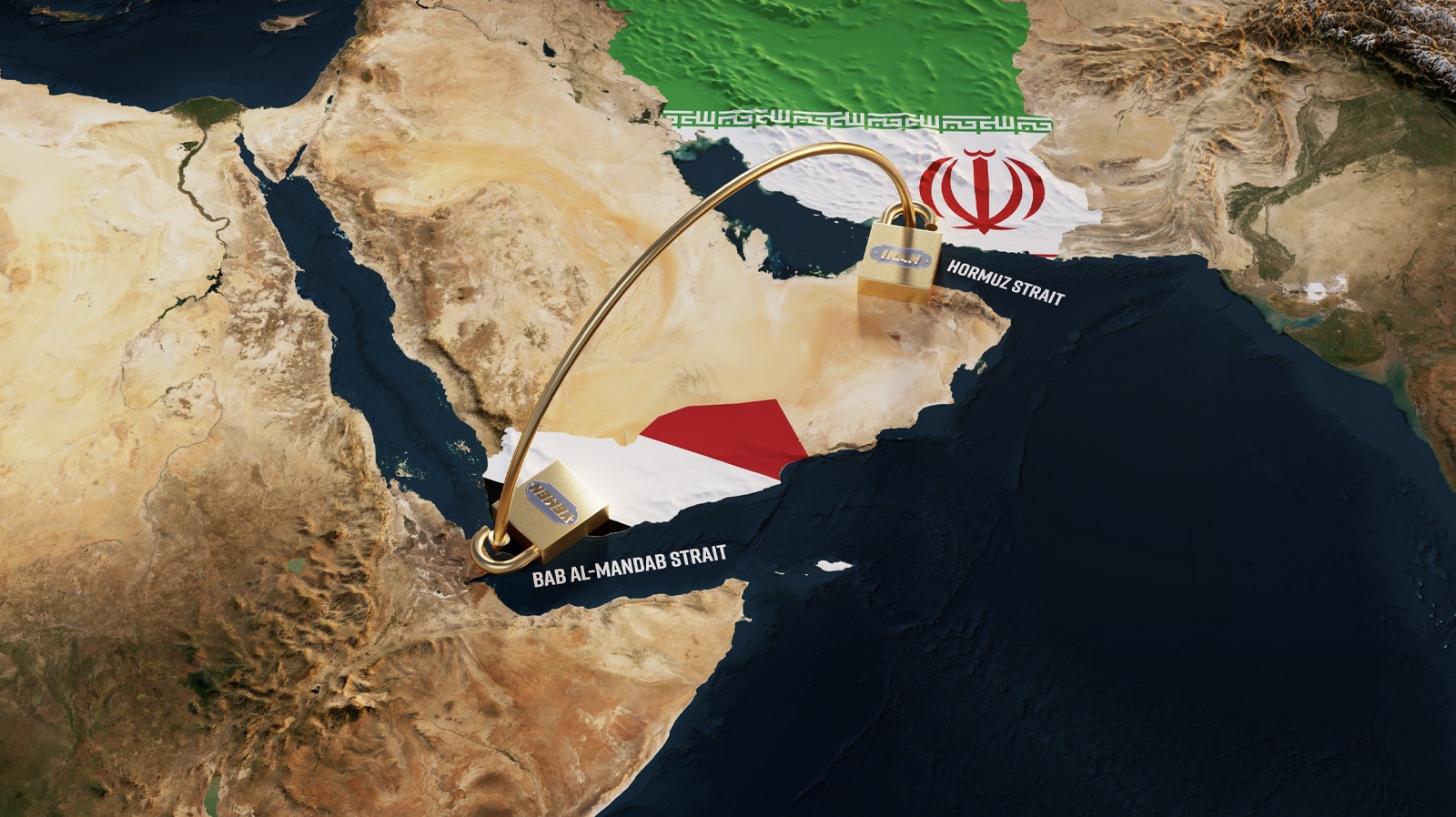
Meanwhile, the key battle against Islamist ideology and its terrorist proxies now centers on Iran and its proxies, with an active and dangerous front in Yemen. Control of the two key straits, Hormuz and Bab al-Mandab—with all that this entails for the world order and the global economy—has now become a test of whether the U.S. can marshal and support the forces of stability in the region against Iran’s revolutionary agenda. So far, the results have been disappointing.
Barring Radical Regimes from Getting the Bomb
The Bush administration’s concept of preventive action against nuclear proliferation—and WMD proliferation more broadly—played a major role in building the case for the invasion of Iraq in 2003 (and therefore also gave rise to accusations of deliberately misleading the American public when the evidence to support this charge failed to emerge). The broader goal, discussed below, of overthrowing tyranny was only made explicit later. And yet the concept has remained valid and, on balance, has produced significant results in the Middle East since 2001 (much less so in North Korea, but there the horse had bolted from the stable much earlier).
The American intervention in Iraq—which ended with Saddam on the gallows—had a decisive effect on Muammar Qaddafi’s decision in 2003 to reveal Libya’s nuclear project voluntarily and dismantle it altogether (the question arises in retrospect as to the lessons others may have drawn, and indeed continue to draw, given his fate in 2011). In Iran, too, what seemed at the time to be a demonstration of overwhelming U.S. power did have a chilling effect—for a while—on the pursuit of a nuclear weapon, although it later resumed when Iran’s fears subsided and the JCPOA failed to curb Tehran’s long-term ambitions and then collapsed.
In Syria, it was Israel that took action in 2007—with a half-nod from President Bush (against the advice of his secretary of defense, who later admitted that he overstated the dangers involved). As for Iran, the push by Vice President Dick Cheney for a U.S. strike was largely thwarted by a deliberately leaked intelligence assessment that focused on the fact that Iran had halted its weaponization efforts; but under Obama, in conjunction with Israel, other means were used to sabotage and delay the project, and at least from the administration’s point of view, the negotiated JCPOA was intended to achieve the same goal of extended delay (Israel, for its own reasons, did not agree).
The present situation reflects President Donald Trump’s deeply held and repeatedly stated conviction that Iran must be prevented from having a nuclear weapon—a reflection, to some extent, of the bitter lessons of his failed attempt to woo the North Korean dictator into negotiating away his nuclear arsenal. The test of this American insistence still lies ahead—both at Pickaxe Mountain and, more generally, in the effort to intensify pressure on the regime—and the outcome will determine not only the fate of proliferation in the Middle East but also the prospect of global nuclear stability for years to come.
The Agenda of Liberty, Its Tragic Failure, and the Irony of Iran
To the strategic challenges of terrorism and proliferation, the neoconservatives in the Bush administration, backed by what they saw as the broader and more profound lessons of 9/11, added a unique set of goals, which took hold more firmly when U.S. troops and their Northern Alliance partners in Afghanistan were welcomed as liberators after the Taliban were overthrown. Beyond the, apparently false, allegations of Saddam’s complicity in 9/11 and his continued pursuit of WMDs (based on faulty intelligence) lay another purpose—namely, to destroy a tyrant and turn Iraq (with its Shi’a majority and centers of religious learning, which could theoretically undermine the legitimacy of the Iranian regime as well) into a model for bringing democracy to the heart of the Middle East.
Sadly, in retrospect, this attempt to emulate in Iraq what was done in Germany and Japan after 1945—”forced democratization” by the victorious conquerors—soon came to be seen as a failure, despite the heartwarming pictures of voters with their fingers smudged purple to show that they had exercised their rights. Iraq does have an active political life, changes of government through parliamentary action, and a degree of personal freedom: it was the only country in the region, other than Israel, invited by the Biden administration to the COVID-era virtual summits of the democracies.—by the way, a well-deserved slap at Recep Tayyip Erdoğan’s Turkey. But in effect, Iraq became a chaotic, failed state governed by armed factions and confessional militias, hardly the advertisement for democracy it was supposed to become.
American mistakes were compounded in the Palestinian case when the elections of 2006 (the last to date—unless the mistake is now made again) produced a Hamas parliamentary majority, a prelude to its violent takeover in Gaza in 2007 with ongoing disastrous consequences.
To some extent, the American “Liberty Agenda”—interestingly echoed by President Barack Obama in his speech at Cairo University in June 2009, although he made it clear it cannot be imposed by force—did play a role in laying the intellectual foundations of the so-called “Arab Spring” in 2011. Sadly, however, the hopes generated at the time have largely been dashed, despite the overthrow of dictatorships in Tunisia, Egypt, and Libya and the rebellion in Syria that ultimately led to Assad’s overthrow 13 years later. Democracy did not flourish: even in Tunisia, where it all began and where there was some hope for pluralist politics for a while, power is now held by an authoritarian president. It is not for nothing that President Donald Trump, in transforming the Republican Party from within, built much of his momentum on an aggressive denunciation of the neoconservative agenda. Afghanistan’s fall back into the clutches of the Taliban seemed to offer a sad epitaph for the experiment in democratization.
And yet the continuing struggle with Iran presents an irony: Trump (but not necessarily all those around him) seems to have come full circle to the conclusion that the “crazy” regime in Tehran—in fact, no longer a system in which religious authority lays down the law, but rather an IRGC military junta—cannot be a partner for a “deal,” and, given the horrors it committed in January 2026, needs to be overthrown by its own people. Whether this purpose—not very far from those once advanced in the wake of 9/11—will be consistently upheld and advanced by “Operation Outcast” and the strangulation of Iran’s exports and financial functions remains to be seen.
Source: https://jiss.org.il/en/lerman-the-global-war-on-terror-a-balance-sheet-after-25-years/