

On October 8, 2023, while Hamas terrorists still roamed the kibbutzim of the Gaza envelope and hundreds of burned bodies remained unidentified in southern Israel—and weeks before the Israel Defense Forces launched its ground campaign—hundreds had already gathered in Times Square, chanting “globalize the intifada” and “resistance is justified.”
Read that timeline again. The ground campaign had not begun. The facts were still buried beneath the ashes. Yet the global verdict had already been rendered.
For years, Israelis—and many Western observers—have comforted themselves with a convenient explanation: Israel is losing the war on public perception because of its foreign policy, its current leadership, or inflammatory declarations by rogue ministers. Although political statements of that nature certainly exacerbate the damage, they mask a far more uncomfortable truth: Israel was caught in a pre-planned influence trap deployed long before October 7. Analysis by social threat intelligence firm Cyabra found that more than 40,000 fake social media profiles were activated within forty-eight hours of the attack. Many had been created months or even years earlier and sat dormant like digital sleeper cells awaiting the signal to strike.
Israel built the Startup Nation on cyber intelligence, missile defense, and technological innovation. Yet in the global battle for public perception, we are fighting 21st-century, technology-driven influence campaigns with 20th-century public diplomacy tools. The core of our challenge lies in two primary structural mismatches:
The first mismatch is technological and operational. The battlefield itself has shifted: we are no longer in an era of standard public diplomacy, but of automated influence operations powered by algorithmic manipulation and advanced AI. Unconstrained by rules, ethics, or regulatory requirements, hostile state actors deploy automated tools to shape digital feeds before facts even emerge. Meanwhile, official public diplomacy remains heavily fixated on traditional media and legacy briefings. By the time a covert digital operation surfaces as a television headline or a street protest, public sentiment has already hardened and the strategic damage is done.
Consider how rapidly these unmonitored digital campaigns operate. When a cargo ship struck a bridge in Baltimore, within two hours of the collapse paid blue-check accounts on X were already suggesting Israel was behind it, and paid accounts produced nearly all the most popular posts tying Israel to the disaster, as documented by PolitiFact. When mass migration strained European borders in Spain, research by the Combat Antisemitism Movement documented how the Ceuta border crisis was transformed into a global antisemitic conspiracy theory within 72 hours by monetized influencers; the most viral among them had paid verification. In both cases, the digital wildfire seemed to spread largely beneath the radar of mainstream media until it raged in the open, and official public diplomacy appeared largely unaware of it as it unfolded.
The second mismatch is organizational: an asymmetry of coordination. Adversaries operate a synchronized, multi-tiered campaign—hostile state intelligence agencies seed the narrative, automated networks amplify it, verified influencers legitimize it, and radicalized movements carry it to scale. In contrast, our side is not yet sufficiently coordinated. While dedicated organizations, philanthropists, and state bodies devote immense energy, we often operate in parallel without a shared intelligence radar or a unified strategic architecture.
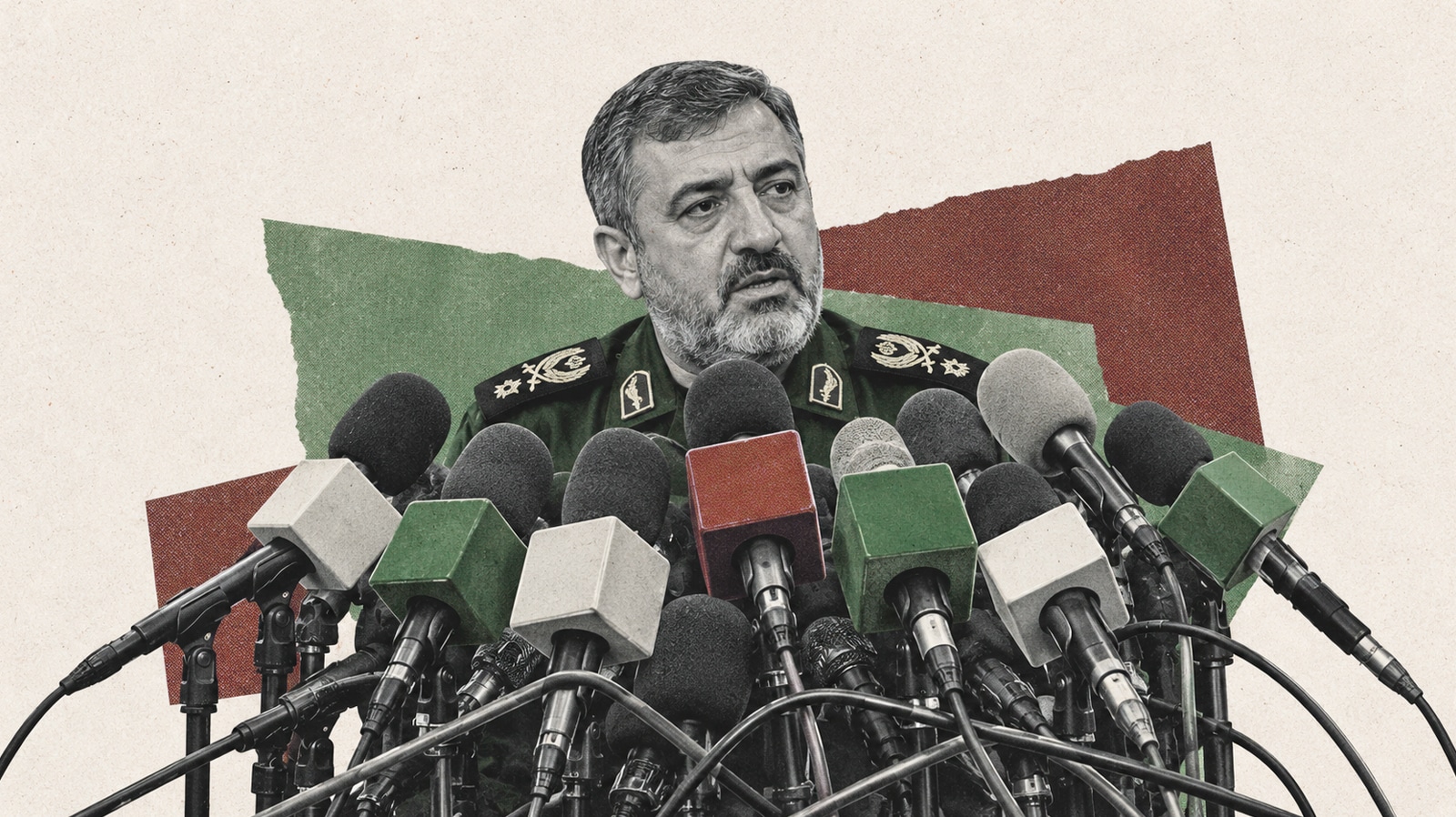
For Western readers, this cognitive war is not a distant Middle Eastern affair. Open, democratic societies are the primary targets. The U.S. Director of National Intelligence issued an official public statement revealing that actors tied to the Iranian government were posing as activists online, seeking to encourage protests over the war in Gaza, and even providing financial support to protesters, all as part of a broader effort to stoke discord in American society. Iran’s then-Supreme Leader Ali Khamenei went so far as to publish an open letter to American university students, declaring that they had formed a branch of the Resistance Front and predicting its victory.
The same regime that arms terror proxies with rockets is running psychological operations against Western citizens on social media. Although legitimate grievances and organic political debates certainly exist, hostile state actors like Iran systematically hijack those authentic debates to radicalize swing demographics and divide Western societies from within. Israel is merely the testing ground for this cognitive weaponry; open Western democracies are the ultimate prize.
Crucially, we must recognize that this digital assault is not merely a public relations challenge for the State of Israel; it is a direct, aggressive revival of global antisemitism. For decades, a divide existed in Jerusalem between hasbara—defending Israel’s state actions—and combating antisemitism in the Diaspora.
Anti-Israel hostility and traditional antisemitism have become deeply interconnected. Antisemitism has existed for centuries independently of anything Israel does, drawing on age-old tropes of conspiracy, malice, and demonization. Today, hostile state actors systematically weaponize these ancient tropes to attack and delegitimize the Jewish state. Simultaneously, on Western streets and college campuses, radical movements operating under the banner of “Free Palestine” weaponize anti-Israel rhetoric to target Jews, making zero distinction between the policies of Jerusalem and the safety of individual Jewish citizens. Whether a Jewish student in New York or London supports Israeli policy, dissents from it, or remains entirely uninvolved, they find themselves under direct personal attack simply for being Jewish.
Israel has long dedicated significant effort and resources to fighting antisemitism worldwide, but post-October 7, the connection between state narrative defense and Diaspora security is more direct than ever. While public diplomacy and the fight against antisemitism remain distinct efforts, they now correspond and overlap far more than in the past. As an Israeli, I believe our state capabilities must serve as an active shield for World Jewry—uniting Israel and the Diaspora in a synchronized, global defense strategy.
To survive this dual threat, Israel must dismantle its reactive messaging apparatus and rebuild it from the ground up. First, we must end our over-reliance on uniformed briefers. To Israelis, a military officer explaining daily events projects reassuring authority. To a Western television audience, a uniformed general speaking about strategic and civilian policy looks like martial law. Using uniformed military personnel for global narrative-building damages Israel’s credibility and plays directly into its adversaries’ branding of Israel as a militarized state. The IDF Spokesperson must be strictly confined to tactical combat briefings, without policy posturing or attempts to chase social media trends.
Strategic leadership for official state communications should instead be centralized within the National Public Diplomacy Directorate under the Prime Minister’s Office, with an authoritative, media-trained civilian spokesperson who speaks directly to the international press. Greater cabinet discipline would also support this effort by ensuring that unscripted, extreme declarations do not unnecessarily erode our national credibility. Beyond official state communications, the Israeli government must develop its partnership with the broader global ecosystem. Crucially, this is not about state control or micromanagement; civil society and global partners must always retain their complete independence. Rather, the state’s role is to leverage its institutional scale to do the heavy lifting on infrastructure that independent actors cannot do alone: absorbing the immense costs of deep-web monitoring, mapping covert foreign influence networks, and producing open-source threat intelligence. The government should function as a data utility, surfacing real-time intelligence on both anti-Israel campaigns and antisemitic threats as a public good for independent communicators worldwide.
This distinction is vital, because state architecture alone cannot win a digital war, and the state was never meant to fight it alone. Since October 7, we have witnessed an unprecedented awakening across the Jewish world. Civil society jumped into the breach—philanthropists, grassroots activists, and tech leaders mobilized immense resources to defend Israel’s truth and fight rising hate.
Yet, as we transition from emergency response to long-term defense, our primary operational challenge is synchronization. Extraordinary organizations often fund similar tools or tackle identical technical problems in isolation. Better coordination would multiply their impact by eliminating duplicated infrastructure costs, allowing every philanthropic dollar to go directly into high-impact, localized messaging, community support, and campus engagement.
To beat a coordinated adversary, the global ecosystem needs a clear division of labor rooted in natural strengths. Israel’s tech sector and intelligence capabilities can act as the central research radar—detecting emerging hostile campaigns before they gain momentum. Meanwhile, narrative building, strategic advocacy, and local defense must remain decentralized and locally owned. Diaspora leaders understand the nuances of the Western public square, campus dynamics, and local media far better than any Israeli official ever could. Armed with real-time threat intelligence rather than government talking points, local communicators retain absolute authenticity, complete legal independence, and the precise data needed to deploy proactive, culturally resonant campaigns.
When Israel provides the research foundation and World Jewry drives independent advocacy, the entire ecosystem wins. Frontline communicators gain the tools needed to protect both Israel and their local communities, turning our parallel efforts into an unbeatable shield.
An earlier version of this article was published on JNS
Source: https://jiss.org.il/en/roll-one-shield-two-fronts/