


Key Points
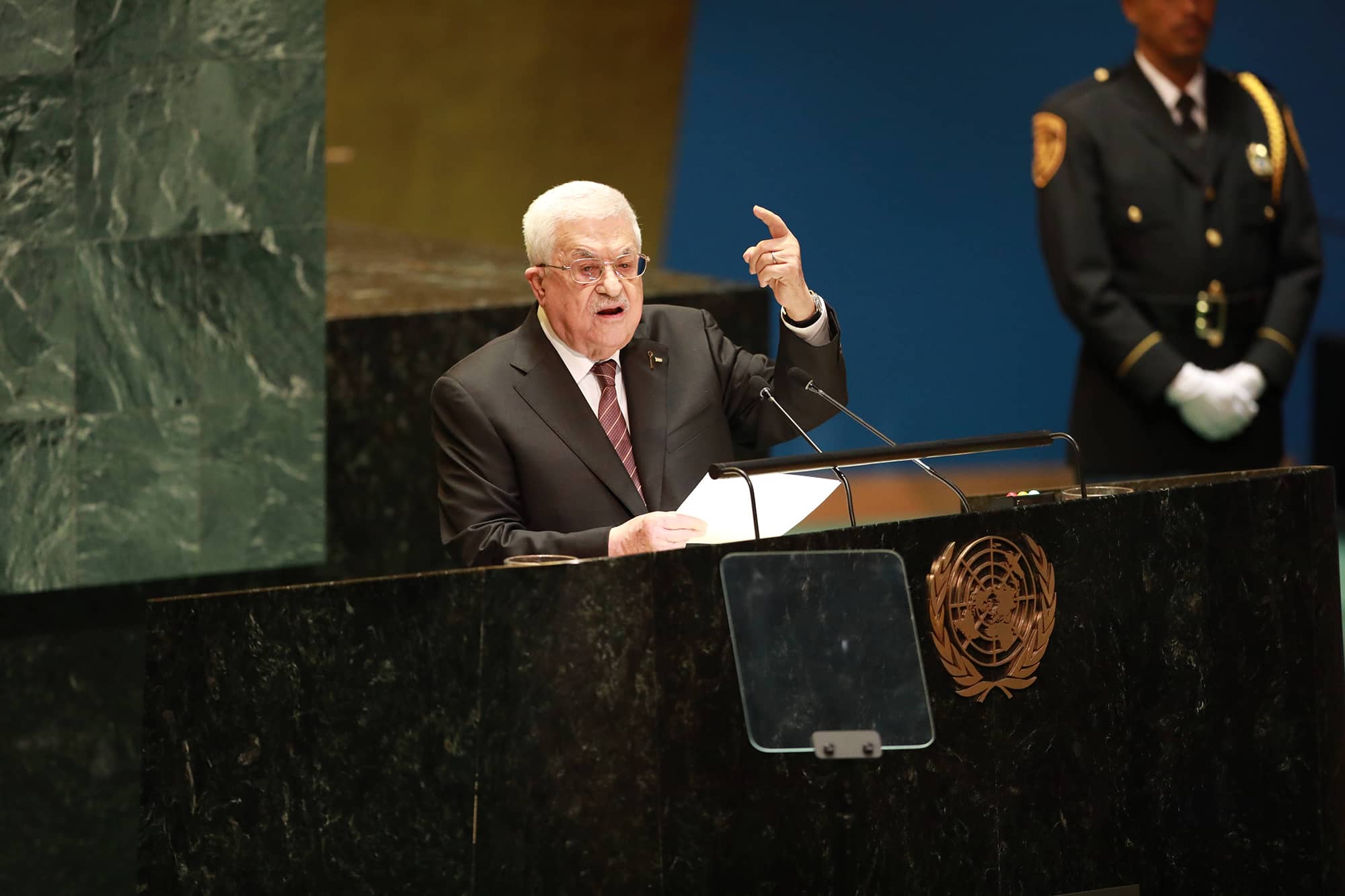
Since the publication of the Trump plan for Gaza—which conditions any future role for the Palestinian Authority in governing the Strip, as well as the renewal of a pathway toward Palestinian self-determination, on the implementation of reforms—Mahmoud Abbas has worked persistently to persuade foreign interlocutors that reforms within PA institutions are already underway.
He raises the issue almost routinely in meetings and discussions with international counterparts. As evidence of his commitment to advancing reform, Abbas points to a series of steps presented in these contacts, including the appointment of Hussein al-Sheikh as his temporary successor in the event of incapacitation; instructions to the chairman of the Palestinian Central Elections Commission, Dr. Rami Hamdallah, to prepare for general elections; the merger of the Palestinian Ministry of Finance with the Ministry of Planning and International Cooperation; the launch of a new mechanism for paying salaries to prisoners and the families of “martyrs” through the Tamkeen Foundation; and the dispatch of a senior Palestinian delegation to New York for consultations with UNESCO regarding Palestinian educational curricula.
Palestinian Prime Minister Dr. Mohammad Mustafa likewise continues to assert that the Authority is making progress in implementing reforms across its institutions. At a press conference held during the meeting of donor countries to the Palestinian Authority (AHLC) in Brussels on November 20, he stated that following the formation of the Palestinian government in March 2024, a reform plan had been prepared, with implementation of the bulk of the program expected to be completed by the end of 2026.
By contrast, Palestinian commentators express deep skepticism regarding both the seriousness of the Authority’s reform efforts and their likelihood of success. In their assessment, the steps taken by the PA are merely cosmetic, driven primarily by international and Arab pressure. Some commentators argue that the most entrenched centers of corruption lie within the Palestinian security services and institutions directly subordinate to Abbas’s office, which have yet to be subjected to scrutiny. Others contend that Abbas’s recent measures are intended to obscure the
Monitoring of trends in Palestinian social media discourse and Palestinian public opinion surveys indicates a high level of distrust among the Palestinian public regarding the implementation of reforms within the Authority. Alongside this skepticism, there is broad public demand for fundamental reform across all PA institutions, including the strengthening of the independence of the Palestinian judicial system. The discourse also features sharp criticism of Mahmoud Abbas and senior PA officials over corruption described as spreading like a “cancer” throughout the Authority’s institutions.
The reform measures pursued by the PA appear aimed not only at demonstrating compliance with expectations set out in the “Trump plan,” but also at justifying continued international assistance to help address its budget deficit and sustain the Authority’s ongoing viability.

The Palestinian Authority
Since the signing of the Gaza ceasefire agreement on October 9, 2025, Mahmoud Abbas has sought to convey that the Palestinian Authority is implementing reform measures within its institutions. He raises this issue almost routinely in meetings with international counterparts, emphasizing the PA’s commitment to the provisions set out in the Trump plan and stating that, under this framework, the Authority’s security services would have the exclusive right to bear arms.
The following are examples of steps Abbas has taken in recent months:
- On October 26, 2025, Abbas issued a presidential decree stipulating that Hussein al-Sheikh, vice chairman of the PLO Executive Committee and deputy chairman of the PA, would serve as interim chairman of the Authority for a period of 90 days should the position become vacant in the absence of a functioning Legislative Council. During this period, direct elections for a new chairman are to be held. If elections do not take place, the PLO Central Council will extend the interim chairman’s term once only, until elections are conducted. In the decree, Abbas stated that the measure was intended to preserve institutional continuity and the functioning of the Authority during this sensitive period.[2] The decree followed al-Sheikh’s appointment in April 2025 as Abbas’s deputy as chairman of the PA.
- On December 15, 2025, Abbas issued a presidential decree ordering the merger of the Ministry of Planning and International Cooperation with the Palestinian Ministry of Finance, and appointing Minister Estephan Salameh to serve concurrently as Palestinian minister of finance. On December 16, Salameh was sworn in upon assuming his new post at Abbas’s office.[3]

- On November 19, 2025, Abbas issued a new law governing local authority elections. The law replaced the previous system with proportional representation in municipalities, while establishing a majority system in villages. It also lowered the minimum age for candidates to 23 and increased women’s representation in local authorities. The law stipulates that candidates for local office must have been residents of the locality for at least six months, and assigns oversight of the entire electoral process to the Central Elections Commission.[4]
- On November 16, 2025, Abbas issued an official statement announcing the full implementation of the February 2025 presidential decree canceling the law governing payments to prisoners and the families of “martyrs,” and transferring full authority over salary payments to the Tamkeen Foundation.[5] The statement prohibited any government body or other institution from handling the matter. Those seeking to receive payments were instructed to submit an online form through official channels. This followed reports that militants imprisoned in Israel had continued to receive salaries from the PA, allegedly due to the Palestinian finance minister’s failure to implement Abbas’s directives.
- On November 15, 2025, Abbas instructed the Palestinian government to send a senior-level delegation, headed by the Palestinian minister of education, to meet with UNESCO in order to reexamine Palestinian educational curricula.[6] The move was intended to assess the alignment of curricula with international standards, while preserving what was described as a “Palestinian national consciousness.” This step forms part of the PA’s reform commitments, including the revision of content deemed inciting against Israel.
Nevertheless, a new report (November 2025) by IMPACT-se, an international research and policy institute that examines school textbooks worldwide, found that Palestinian textbooks for the 2025–2026 academic year remain rife with incitement and are nearly identical to those of recent years. This was the case notwithstanding explicit assurances given by Abbas to the United States, the European Union, and French President Emmanuel Macron to remove all incitement, in accordance with the Trump peace plan, UN Security Council resolutions, and the reform agreements signed by the PA with the European Union in July 2024.[7]
Palestinian Prime Minister Moh`ammad Mustafastated at a press conference held during the donor countries’ meeting of the Ad Hoc Liaison Committee (AHLC) in Brussels on November 20 that following the formation of the Palestinian government in March 2024, a reform plan had been prepared, with implementation of the majority of the program expected to be completed by the end of 2026. According to Mustafa, the reform process is intended to meet the expectations of the Palestinian public, which seeks to see its country prosper and provide advanced public services, and not to satisfy international actors in exchange for financial assistance. He stressed that implementation of the reforms within the PA is ongoing.[8] In another statement at the Brussels meeting, Mustafa said the PA had already prepared a 35-point reform plan some time ago and that 32 of its points had already been implemented. He accused Israel of deliberately obstructing both the overall and economic reform processes within the PA, arguing that Israel is not interested in the existence of a single, unified Palestinian Authority.[9]
Mahmoud al-Habbash, Abbas’s religious affairs adviser, said in an interview on October 28 with the Egyptian channel Al Qahera News that the PA is continuing to implement reforms, which are an ongoing effort. He added that a Palestinian committee had been established to examine a temporary constitution for the Authority, in order to enable institutional changes.[10]
Palestinian Commentators
Senior Fatah figure Nabil Amr published an opinion article on reforms in the Palestinian Authority titled “The Story of Reforming the Authority as a Condition for a Settlement.” He argues that the PA leadership’s central mistake lies in linking reform to external demands rather than emphasizing the basic needs of the Palestinian public, which, in his view, seeks national reform rather than compliance with outside actors. According to Amr, the PA is not in fact implementing substantive reforms that benefit the public, but is instead taking steps aimed at satisfying international actors. He maintains that the Authority must demonstrate genuine seriousness in reforming a political system that is currently incapable of meeting the challenges of the period—an implicit reference to the Palestinian Legislative Council, which is not functioning at present. In his view, what is required at this stage is to replace what he describes as closed and ineffective reforms with general elections for the Legislative Council and for the position of PA chairman, to be held under international supervision.[12]
Political analyst Nabhan Khreisha published an opinion article on November 25 on the Ramallah-based Watan News. In the article, he criticizes the recently enacted local elections law, arguing that it constitutes a formal reform designed to obscure the underlying question of the source of authority within the PA. Khreisha notes that the law was approved with unusual speed in three readings, and argues that the Palestinian government headed by Mohammad Mustafa has used it to highlight its achievements and reform-related actions, while generating what he describes as “media noise” aimed at satisfying donor countries. He further argued that the law itself is disconnected from the current socioeconomic conditions in PA-controlled areas and reflects a lack of genuine willingness on the part of the Palestinian leadership to carry out deep, internal reform.[13]
Daoud Kuttab, a Palestinian commentator, published an opinion article on November 17 on the Palestine Forum website titled “Is Reform in the Palestinian Authority Serious?” Kuttab noted that during a conference in support of the establishment of a Palestinian state held at United Nations headquarters in New York in September 2025, Mahmoud Abbas presented a broad set of commitments. These included holding elections for the position of PA chairman and for the Legislative Council within one year of the Gaza ceasefire. Abbas also stated that candidates would be required to adhere to the PLO’s political program. Abbas also committed to establishing a new mechanism for paying salaries to the families of prisoners and “martyrs,” to reexamine the content of Palestinian textbooks, and to implement legal and organizational reforms within the PA.
Kuttab writes however that despite these commitments, many question the seriousness of the reforms, particularly given that more than twenty years have passed since Abbas was elected president without new elections for the position of PA chairman. He adds that the dissolution of the Legislative Council has left no body in place to oversee Abbas’s decrees and decisions. He adds that combating corruption and implementing reform within PA institutions are national demands, and that Palestinians hope reforms will be serious and substantive rather than merely a response to external dictates. In his view, reform within the PA is urgently needed but requires prior intra-Palestinian unity so that the Authority can genuinely represent the entire Palestinian public; otherwise, such reform would remain incomplete.[14]
U.S.-based channel Alhurra interviewed Palestinian commentators who said that combating corruption is not a top priority for the Palestinian Authority, and that it has taken largely symbolic steps intended to create an appearance of action in order to satisfy President Trump and international and Arab actors. According to these commentators, corruption within the PA is a deeply entrenched and complex problem, and the steps taken by the Authority in recent months are aimed at signaling that it is meeting external expectations and is therefore fit to assume responsibility for governing Gaza in the “day after.”[15]
Dr. Ali Jarbawi, a lecturer in political science at Birzeit University, said in an interview on October 6 with Radio Ajyal in Ramallah that reform is, at its core, a Palestinian demand.
He noted that the Palestinian Authority has existed for more than thirty years, yet sustained engagement with reform has begun only in the past five years, with efforts repeatedly restarted rather than carried through. According to Jarbawi, the PA is currently in a position of weakness, as it is compelled to yield to international dictates. In his view, it would have been preferable for the Authority to develop its own reform program independently. He added that Palestinians nevertheless require Arab and international support on the issue of reform.[16]
Issam Haj Hussein, director of AMAN[17] Transparency Palestine, a Ramallah-based organization that monitors corruption within the Palestinian Authority, said in an interview on July 30 with Radio Rakib that his organization had published its seventeenth report. He summarized the current situation as one of “progress in the government reform program alongside a decline in public confidence in the integrity of governance.” According to Haj Hussein, the current government has inherited a wide range of challenges, foremost among them the Palestinian government’s debt, estimated at approximately $11 billion. He argued that no reforms have been implemented within the security institutions or within bodies under Abbas’s office, such as Palestinian Television, despite the need for oversight and accountability precisely in those areas. The appointment of former ministers to other positions within the Authority has raised public concern and further eroded trust in the PA, he added. Haj Hussein stressed the need to establish a national committee to oversee the implementation of reform within the PA, comprising academics, local authority heads, PA officials, business figures, and others. He also noted that AMAN is examining the independence of oversight and auditing bodies within the PA, as well as the Palestinian judicial system, in order to prevent external interference in their work—particularly given that the Legislative Council is not currently functioning.[18]
Palestinian Public Discourse

Palestinian public discourse on social media and in opinion surveys points to a near-total collapse of trust in the Palestinian Authority’s ability or willingness to implement meaningful reform. Public frustration is directed first and foremost at systemic corruption, with widespread demands for deep, institutional change across the PA, including the strengthening of the Palestinian judicial system. Mahmoud Abbas and the senior PA leadership are singled out for responsibility for the pervasive corruption in the Authority’s institutions. Reforms touching on so-called “national issues”—including the payment of salaries to security prisoners held in Israel and changes to school curricula—encounter resistance. The main trends are outlined below:
- Lack of trust among most of the Palestinian public – Skepticism over the Palestinian Authority’s seriousness in implementing reforms is widespread in Palestinian social media discourse. Many users openly dismiss the reform agenda altogether. “What reform? Can you even say which one?” one commenter asked. Others wrote: “What reform? Start with Hani al-Hassan Hospital”; “Fix yourself first (meaning Abbas), and only then those around you”; “You made me laugh, you failure—your whole life you’ve been a failure. What reform are you talking about, maybe reforming your bank accounts?”[20] Another comment summed it up bluntly: “Reforming the Authority means more corruption.”[21] One Palestinian user wrote on his X account: “(Mahmoud) Abbas is a dictator over the Authority. He does not accept anyone challenging him or criticizing his decisions—even on the issue of fighting corruption within the Authority. This is a gang that exists to protect its rule and its interests, nothing more. Palestine does not matter to them, and neither does the people.”[22]
- Demand for fundamental reform of the Palestinian Authority – Most Palestinians support far-reaching change and a fundamental overhaul of the Palestinian Authority’s institutions. In public discourse, reform is widely understood to begin with the holding of general elections—for both the presidency of the Authority and the Palestinian Legislative Council. Moreover, there is a strong demand for a serious campaign against corruption, including criminal prosecutions and full transparency. Palestinians are calling for greater judicial independence and for an end to political interference in the courts’ work. These positions are reflected in a public opinion survey conducted on October 28, 2025, by the PCPSR institute in Ramallah, headed by Dr. Khalil Shikaki. According to the survey, 92 percent of residents believe the Authority is corrupt, while 52 percent say recent anti-corruption measures are insufficient.[23] Earlier PCPSR surveys point in the same direction. They show that 73 percent of the public supports either fundamental reform or the complete dismantling of the Authority, and that 58 percent are calling for immediate general elections. From the public’s perspective, the Authority is not pursuing reform in earnest—both because it lacks the will to do so under current conditions and because effective oversight and supervisory institutions are absent. Top of Form
- Corruption in the Palestinian Authority as a “cancer spreading through the body” — Palestinian social media users describe corruption within the Palestinian Authority as a “cancer,” arguing that it can only be confronted by uprooting it at its source. In their view, corruption poses a direct threat to the future of the Palestinian public.[24] Some users wrote that four years ago approximately $650 million was stolen from the Palestinian treasury and transferred to overseas accounts. Since then, they note, the Authority has complained of a financial deficit, paid only partial salaries to its employees, and called on the public to show patience. One user wrote that any serious effort to address corruption must begin at the top of the pyramid—Mahmoud Abbas, his family members, and those close to him. Another wrote: “In the current situation, the minister steals, and the one who ends up in prison is the clerk.”[25]
- Widespread condemnation of changes to the payment system for salaries of imprisoned militants and families of “martyrs” — Following Mahmoud Abbas’s decision to alter the salary payment mechanism and transfer full responsibility to the Tamkeen Foundation, he was subjected to broad criticism, including accusations of “betrayal” of the Palestinian public. One Palestinian user posted a harsh response on his X account, attaching an older video in which Abbas is heard saying that even if he were left with a single coin, he would give it to the families of martyrs and prisoners. The user captioned the video: “Mahmoud Kadhab” (literally, “Mahmoud the liar,” in place of Mahmoud Abbas). “…the Authority’s decision to cut the salaries of Palestinian prisoners’ families, after two years of destruction, constitutes a stab in the back and an abandonment of national rights,” he wrote. “These salaries are not a gift from Abbas’s government; they are a right. Any cuts to them are a direct blow to the dignity of the families and to their steadfastness.”[26]
It should be noted that in response to the criticism, Abbas reiterated his commitment to imprisoned militants, raising doubts as to whether a real reduction was implemented. Given that the criticism did not translate into sustained protests by prisoners’ families—aside from a single isolated incident—and that released prisoners continue to receive salaries as if they were PA employees, there is considerable doubt as to whether this reform was in fact carried out.
[1] https://www.facebook.com/President.Mahmoud.Abbas/posts/pfbid0xG8NHnypGRSDEfmGQvuHJZQUZrp1Grj51CeuhbAraqsfR4qBvcC4gorpNMH9MjxGl[2]
https://www.facebook.com/President.Mahmoud.Abbas/posts/pfbid02Vj8Mtw1C6eW34669xQEBo75H7pr9tkfV3XtVHTYi1iaNvGs7knwjpgkFuNCTYV4kl
[3] https://www.wafa.ps/news/2025/12/16/سلامة-يؤدي-اليمين-القانونية-أمام-الرئيس-وزيرا-للمالية-والتخطيط-137864
[4] https://www.elections.ps/tabid/821/language/ar-PS/Default.aspx
[5] The Tamkeen Foundation—formally named the Palestinian National Institution for Economic Empowerment—was established in 2019 pursuant to a presidential decree issued by Mahmoud Abbas. Its stated primary objective is to promote economic and social empowerment among needy families. The institution’s headquarters are located in Ramallah, near the Dutch Representative Office, and it operates additional branches throughout areas under Palestinian Authority control. Tamkeen is formally defined as an independent institution; however, in 2024 Abbas placed it under the authority of the PLO by presidential decree. The chair of its board of trustees is former minister Dr. Ahmed Majdalani, who currently also serves as a member of the PLO Executive Committee. The institution is funded through donations, grants, and Islamic endowment (waqf) funds. On November 18, 2025, Ahmed Majdalani signed an agreement with the Palestinian Authority’s minister of telecommunications providing for the payment of salaries via Palestinian postal branches and through a digital wallet (E-WALLET) system.
[6] https://www.wafa.ps/news/2025/11/15/الرئيس-خلال-اتصال-هاتفي-مع-مدير-عام-اليونسكو-يوجه-الحكومة-بإرسال-وفد-رفيع-لبحث-135916
[7] https://www.impact-se.org/wp-content/uploads/Review-of-the-2025-2026-Palestinian-Authority-School-Curriculum.pdf
[8] https://www.facebook.com/watch/?v=1121815520032504
[9] https://www.youtube.com/shorts/H9tRwJQZSB0
[10] https://alqaheranews.net/news/146142/الهباش-الإصلاح-في-السلطة-الفلسطينية-مستمر-رغم-معيقات-الاحتلال
[11] https://www.youtube.com/shorts/p5hGdghrrOQ
[12] https://shahed.cc/news/90235/حكاية-إصلاح-السلطة-الفلسطينية-كشرطٍ-للتسوية
[13] https://www.wattan.net/ar/news/474926.html?fbclid=IwY2xjawO2QeZleHRuA2FlbQIxMQBzcnRjBmFwcF9pZBAyMjIwMzkxNzg4MjAwODkyAAEebZTMt_TnAKe0NHmpmXxYhdJfMxia253GFzn0U9fEmBjV6oXelQWAU74iaMI_aem_tqdB-ueo9DjHgv_oGry-4Q
[14] https://www.palestineforum.net/هل-إصلاح-السلطة-الفلسطينية-جادٌّ؟
[15] https://alhurra.com/5976
[16] https://www.youtube.com/watch?v=Gmi2XOphPXA
[17] A Palestinian institution founded in 2000 in Ramallah that works to combat corruption within the Palestinian Authority. Its Arabic name is an acronym for the Coalition for Transparency and Accountability.
[18] https://www.youtube.com/watch?v=ffr0ORUDwuY
[19] https://x.com/majdywahab/status/1983900065073618965
[20] https://www.facebook.com/SadaNewsPalestine/posts/خلال-اتصال-مع-المستشار-الألماني-الرئيس-عباس-ملتزمون-ببرنامج-الإصلاح-الشامل-للسلط/1180923957502174/
[21] https://x.com/RafikAbdessalem/status/1774144794744254624
[22] https://x.com/tamerqdh/status/1891822674613010869
[23] https://www.pcpsr.org/ar/node/1001
[24] https://shahed.cc/news/94917/ينتشر-كالسرطان-لماذا-الفساد-في-السلطة-الفلسطينية-وجه-آخر-للاحتلال؟
[25] https://www.facebook.com/employees.MoH.Palestine/posts/حين-يسرق-الوزير-ويُسجن-الموظففي-الوقت-الذي-تُعلن-فيه-السلطة-الفلسطينية-عجزها-الم/1131396525802529
[26] https://www.facebook.com/employees.MoH.Palestine/posts/حين-يسرق-الوزير-ويُسجن-الموظففي-الوقت-الذي-تُعلن-فيه-السلطة-الفلسطينية-عجزها-الم/1131396525802529
JISS Policy Papers are published through the generosity of the Greg Rosshandler Family.