

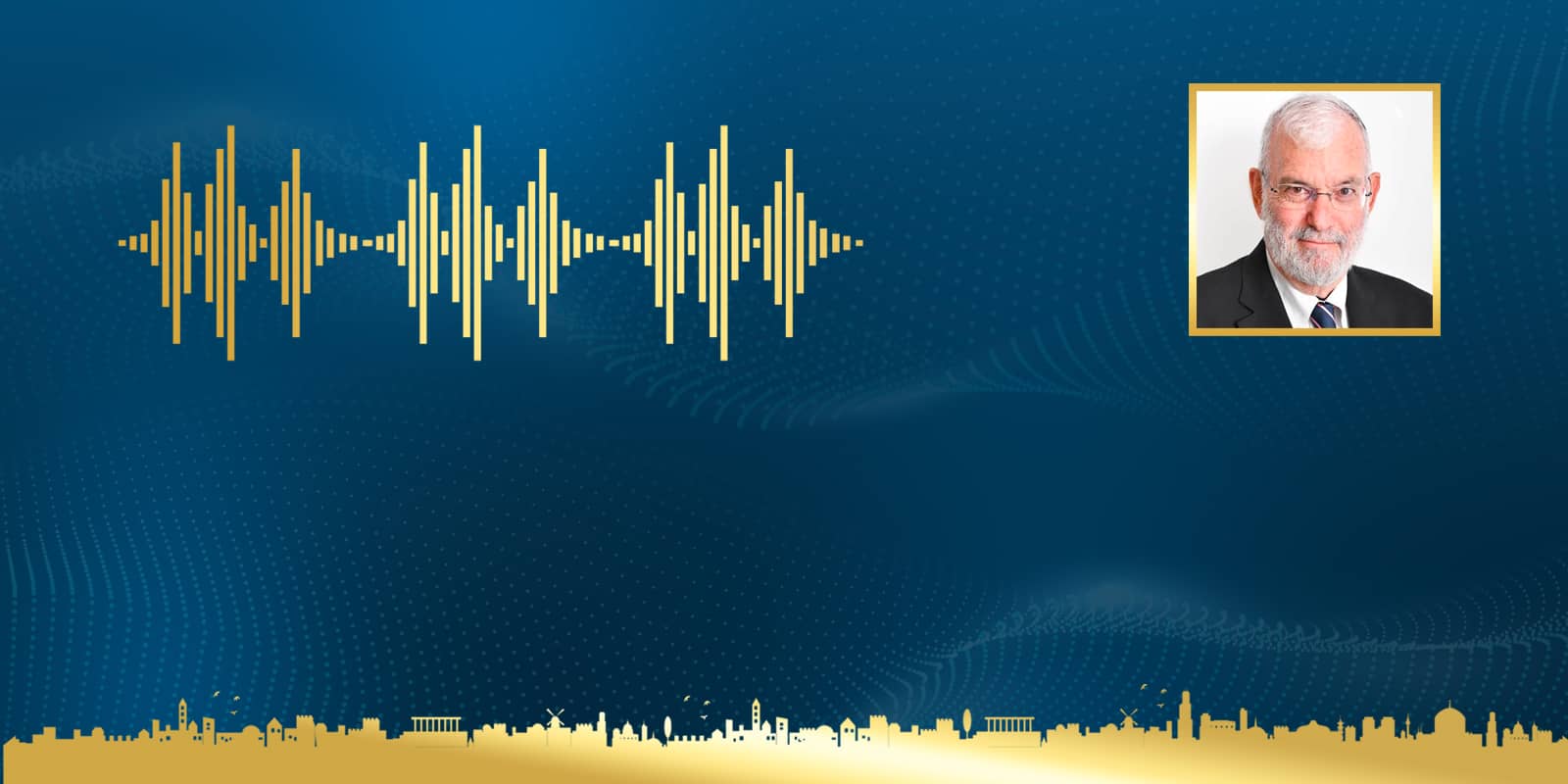
In the latest episode the JISS podcast, we were joined by Professor Eitan Gilboa, a lecturer and expert on United States and Israeli – American relations at Bar Ilan University and Reichman University, and a researcher at the Jerusalem Institute for Strategy and Security.
Professor Gilboa identifies an ongoing battle between camps within the Trump administration regarding American foreign policy in the Middle East. The isolationist camp, represented by Vice President J.D. Vance, opposed the war on Iran and negotiated the Islamabad Memorandum of Understanding. Conversely, figures like Secretary of State Marco Rubio are highly suspect of the agreement, viewing it as general principles that are subject to varying interpretations.
The negotiations were poorly managed, said Prof. Gilboa; while the MoU aimed to open the Straits of Hormuz, Iran has continued attacking ships there. Gilboa stated, “Trump deprived of himself one of the major weapons he could use against Iran.” Furthermore, Article 1 of the MoU links Iran and Lebanon in a way that strengthens Hezbollah, which directly contradicts the subsequent Israeli-Lebanese agreement aimed at allowing the Lebanese government to restore sovereignty and dismantle Hezbollah’s military capability.
The foundational elements of the US-Israel alliance – hard power strategic interests and soft power shared values – are currently under severe attack, Gilboa warned.
Trump prioritizes economics over strategy, favoring relations with Qatar over nations that signed the Abraham Accords. On the soft power front, American public opinion is at a historically negative point for Israel, accompanied by a breakdown of traditional bipartisan support. The Democratic Party is increasingly influenced by progressives, while the Republican Party is impacted by rising isolationism. Gilboa highlights the rise of figures like Mamdani in New York, noting that such progressives “made Zionism a bad and negative term.” The heavily invested anti-Israel propaganda campaign by Qatar, the Muslim Brotherhood, Iran, and others have caused severe damage as well.
To address this crisis, Israel must recognize the severity of the situation and fight for its standing in America, he argued, as the recent three-year war demonstrated the critical dependency on the United States.

What the Failed Oslo Accords Can Teach Us About Prospects for Middle East Peace