

The establishment of the State of Israel transformed Jewish history. By any measure, the Jewish State has been an exceptional success. In an intensely hostile environment, it has repeatedly faced severe tests, built formidable military capabilities, served as the center of Jewish ingathering, and created prosperity for its citizens. Its Jewish population has grown from 600,000 at independence to nearly 8 million out of a total of 10 million. Yet Israel remains small in both territory and population compared to most of its Middle Eastern rivals, and despite its economic prosperity, its resources remain limited. Its long-term survival cannot be taken for granted. Israel must therefore maintain constant readiness for armed conflict and for the battle over its legitimacy. Despite its military superiority, the goal of peace with all its neighbors has remained elusive.
Many of the states that have signed formal peace agreements with Israel still maintain a “cold peace,” with little meaningful interaction between their societies, whether individuals or institutions. Since October 7, 2023, Israel has been engaged in an unusually prolonged war across multiple fronts. Its military operations have significantly weakened its adversaries and appear to have shifted the regional balance of power to some degree. Yet the fog of war persists, and the outcome remains uncertain. The June 2026 Memorandum of Understanding signed by Iran and the United States to end the war, the implementation of which is by no means assured, has emboldened the regime in Tehran. In contrast, Washington, having succumbed to domestic political considerations—particularly the imperative of keeping the Strait of Hormuz open—appears to have emerged as the weaker party. Whether the Americans will tolerate further Iranian violations of the MOU remains unclear.
What is clear, however, is how difficult it is to achieve quick and decisive victories across multiple arenas, even with the U.S. as an active partner. Israel must therefore continually reassess the validity of its national strategy—particularly as the long war seems to move toward its conclusion.
This article first sets out a conceptual framework for shaping Israel’s national strategy, then analyzes the main trends in the strategic environment in which it operates. The third and final section presents the core elements of the proposed national strategy.
The Conceptual Lens
The most useful prism for designing Israel’s national strategy is that of the “small state,” a well-established category in the study of international relations.[1] Countries of this kind have always faced a precarious existence. Their security depends on the regional balance of power and on the dynamics of world politics. A small state faces structural constraints rooted in its size and limited resources. Israel, despite its impressive achievements in many fields that enhance its power, cannot fully escape those constraints. Small-state reality also rules out autarky. Like other small states, Israel’s economy and prosperity depend on international trade and economic globalization. Its military strength also depends on imports from countries that can produce advanced weapons on a large scale. Unlike most goods, the arms market does not operate solely according to supply and demand; political considerations are present in most transactions. Jerusalem benefits from strong ties with Washington, its principal arms supplier, and to some extent, Israel’s might is derived from its close ties with that superpower.
Any state designing a national strategy must align its goals with the resources at its disposal and avoid overreach, especially in a region marked by rival states and violent conflicts. A measure of restraint, together with a sober reading of reality, is therefore advisable, particularly for small states with narrow security margins. Moreover, unlike a great power, a small state cannot set the rules of the international system or significantly shape its regional environment. It therefore tends, more often than not, to respond to regional developments and shifts in the international arena.
David Ben-Gurion, Israel’s first prime minister, understood early in the state’s history that military power alone could not compel Israel’s neighbors to make peace. Israel could build an “iron wall” (a concept coined by his political rival Ze’ev Vladimir Jabotinsky) that would thwart its neighbors’ plans to destroy it, in the hope that over time, the states of the region would come to accept it as an established fact. Policymakers should accordingly give considerable weight to what Hans Morgenthau, the modern father of political realism, regarded as the supreme virtue in international politics: prudence.[2] The late Yehezkel Dror, who wrote extensively on Israel’s grand strategy from the same realist perspective, warned against the “hubris of success” and against religious atavism rooted in the presumptuous assumption that God’s will is known and his backing assured.[3]
Israel should be wary of declarations of the kind heard after military operations, that “the land had rest forty years” (Judges 3:11) and should avoid setting unattainable goals such as the 1982 attempt to establish a friendly, pro-Israel Maronite Christian government in Lebanon in 1982 or “total victory” over Hamas. Claims made in the wake of the current war—which has not yet ended—such as “we have changed the Middle East” should be treated with skepticism.
The military achievements against Hamas in Gaza and Hezbollah in Lebanon, the establishment of security zones in Syria and in Lebanon, and the attacks on Iran’s nuclear and missile infrastructure in Operation Rising Lion (June 2025) and Operation Roaring Lion (2026) have undoubtedly improved Israel’s security situation and regional standing. Israel demonstrated exceptional military and intelligence capabilities and exacted a heavy price from its enemies. During the war, the Israel Defense Forces (IDF) severely degraded the capabilities of the state’s enemies within the radical Shiite axis led by Iran. Israel also scored a major diplomatic achievement when the U.S. entered the military confrontation with Iran—a state that had vowed to destroy Israel and acquired the means to threaten its existence. For the first time, the Americans fought shoulder to shoulder with the Israelis. None of this, however, justifies the conclusion that the Middle East has undergone a fundamental transformation. The prudence advocated here does not preclude the use of military force; it requires that force be tied to attainable objectives. By that measure, the implied objective of regime change in Iran in Operation Roaring Lion was too ambitious.
The main assumption behind Israel’s national strategy should remain, regrettably, that the Middle East does not change quickly. In fact, the region is highly resistant to change. Neither twentieth-century colonial rule nor sustained engagement with the major Western powers produced significant changes in the political conduct of local actors. Political entities across the Middle East continue to operate with acute threat perceptions, incessantly build up military power, and regard force as a legitimate tool. The region remains a source of religious extremism, terrorism, and nuclear proliferation. Changing the characteristics that make the Middle East so prone to conflict and violence will take a long time, and there is no evidence that such a historical process has even begun. Regrettably, the Middle East still operates in a different “time zone” from the West, where until only a few years ago the use of force was seen as an anachronistic form of conduct outside the bounds of international law.
Since its establishment, Israel has had to fight for its survival and it continues to lack legitimacy in much of the Arab and Muslim worlds. This remains the case despite the Jewish State’s improved regional standing, reflected in its peace treaties with Egypt and Jordan, in the Abraham Accords, and in the recent agreement with Lebanon. These arrangements resulted from recognition of Israeli military power and from utilitarian strategic calculations by Arab political leaders rather than from a fundamental shift in public attitudes toward the Jewish State. Israel’s existential imperative to live by the sword therefore persists. Its ultimate insurance policy remains a strong IDF.
Trends in the International Arena
Four international trends are especially important for Israel’s strategic position and for the formulation of its national strategy:
Contrary to the expectations of many experts who predicted American decline in the international arena,[4] the U.S. remains a superpower and has not withdrawn from the Middle East.
Radical Islam continues to wield significant political power in the Middle East.
Despite broad international opposition to Iran’s pursuit of nuclear weapons, the bomb remains an attractive option for states in the Middle East and beyond.
Since October 7, 2023, international criticism of Israel has grown, while an unprecedented wave of antisemitism in the West has further strengthened anti-Israel attitudes.
The first trend is continued American engagement in the Middle East. The failures of its attempts at nation-building in Afghanistan and Iraq, growing domestic opposition to overseas military interventions, the strategic need to focus on Asia and China, and America’s reduced dependence on Middle Eastern oil have not produced a U.S. retreat from the region. Washington has instead maintained a significant and sustained military presence there.
The fact that the Americans have weaned themselves off Middle Eastern oil—a shift that occurred mainly between 2015 and 2020, when the shale revolution dramatically expanded domestic oil and gas production (the U.S. is now the world’s largest oil producer and a net exporter rather than a net importer)—has not reduced its interest in the region. Despite this change in Washington’s energy position, the Americans remain exposed to global oil prices, which are themselves affected by developments in the Middle East.
Recent events have underscored the depth of American involvement in the Middle East. Since the war that began on October 7, 2023, the U.S. has supported Israel, played an active role in mediating ceasefire agreements in Gaza and Lebanon, led efforts to rebuild Gaza, worked to secure Israeli–Syrian understandings, and used military force alongside Israel to target conventional and nonconventional military infrastructure in Iran. This continuing American engagement in the Middle East is unlikely to disappear suddenly, even under a Democratic administration, although such an administration would probably be less inclined to use military force.
The second trend, which extends beyond the Middle East, is the continuing vitality of radical Islam. Secular Western societies do not always fully grasp the role religion plays in international affairs, and they tend to underestimate the consequences of political actors driven by fervent (and even fanatical) religious convictions. In protracted conflicts, such beliefs can serve as an extraordinary source of motivation. The conviction that an omnipotent God is “on our side” strengthens the willingness to endure suffering for religious principles and sustains the belief that military defeats are only temporary setbacks that will ultimately be corrected by a higher power.
Since October 2023, Israel has succeeded in significantly weakening the radical Shiite axis led by Iran, but religious zealotry remains a powerful political force. Hezbollah, Hamas, and the Houthis have not disappeared as armed organizations committed to Israel’s destruction. Iran—a large state with hegemonic ambitions, a solid scientific base, and impressive industrial capabilities—survived the June 2025 war and has reverted to its previous conduct. The war against Iran that began on February 28, 2026, has not yet brought down the regime. Once again, hopes for such a change in Tehran have not been realized. This underscores, unsurprisingly, the limits of economic sanctions and external military pressure as instruments of regime change.
The defeats suffered by Shiite Iran and its regional proxies in the war against Israel have created a political vacuum that is now being filled by a dangerous radical Sunni axis led by Turkey, with support from wealthy Qatar and from Al Jazeera, Doha’s media powerhouse. Turkey’s leader, President Recep Tayyip Erdoğan, and many members of his Justice and Development Party (AKP), represent a Turkish version of the radical Muslim Brotherhood, combined with a desire to restore the greatness of the Ottoman Empire. This emerging axis is hostile both to Israel and the West, although its antagonism toward the latter is somewhat less overt.
Washington has traditionally seen Turkey as an important ally, and President Donald Trump regards Erdoğan as both a strong leader and a friend. That view tends to overlook conduct by Turkey and Qatar that sits uneasily with the status of a Western ally: Ankara’s purchase, in violation of NATO norms, of Russia’s S-400 air defense system, and Qatar’s financing of Muslim Brotherhood activities around the world.
While Turkey’s diplomatic efforts did not succeed in dissuading the Americans from attacking Iran, and Ankara’s offer to mediate between Washington and Tehran received only a lukewarm response, Erdoğan’s position found a more receptive audience among Sunni Arabs who fear that the war against Iran could produce a new leadership in Tehran, which, as in the past, might view Israel as a partner and thereby strengthen Israeli power. This balance-of-power logic together with disappointment with the U.S., which failed to provide sufficient protection against Iranian aggression, is already leading some Arab states to explore closer ties with Ankara, one of the strongest powers in the region. They are doing so despite their historical enmity toward Turkey as heir to the Ottoman Empire that ruled the Arabs for centuries and despite their unease over the rise of a radical Sunni axis driven by Muslim Brotherhood ideology.
Islamic extremism is a central driver of the Arab–Israeli conflict and an important reason for the failure of repeated efforts to resolve it. In the worldview of radical Islam, the existence of a Jewish state is a religious sacrilege that can be corrected only by eliminating it. This extreme religious hostility toward Israel defines the positions of the Iranian regime and its proxies—Hezbollah, the Shiite militias in Iraq, Hamas, and the Houthis. The Muslim Brotherhood that also adheres to this doctrine exerts influence in many Muslim communities.
Religious extremism also undermines the authority of the state. As a result, many Arab polities fail to maintain a monopoly on the use of force within their own territories. Armed militias—most of which are religiously motivated—therefore operate in these spaces, using force against Israel and other countries while disregarding the nominal sovereignty of the state. In such failed or weakened polities, there is no clear strategic address that can be pressured to achieve deterrence or engaged in negotiations to reduce tensions.[5] This applies to Lebanon, Syria, the Palestinian Authority, Iraq, Yemen, Libya, and Sudan. Contemporary Arab political culture appears to have great difficulty sustaining functioning state structures that are not based on tribal loyalty.
The third troubling trend is the erosion of the nuclear taboo in the international arena and the potential renewal of nuclear proliferation. North Korea’s successful dash to the bomb, especially when contrasted with the hesitation demonstrated by Libya and Iran, appears to have reinforced a dangerous lesson for many states: Even a small number of nuclear warheads may help deter military action by global or regional powers.
Russian President Vladimir Putin issued explicit nuclear threats on several occasions during his war against Ukraine, which began in February 2022, and his increasingly belligerent nuclear rhetoric has reverberated across many parts of the world, strengthening latent nuclear ambitions. Trump’s election as president has similarly increased doubts about the reliability of the American security umbrella and the credibility of nuclear deterrence provided by Washington. In East Asia, growing concern over China has led Japan and South Korea to debate whether they should pursue nuclear weapons.[6] After many years in which the nuclear issue was absent from its public debate, Australia is again discussing whether it needs to adopt a nuclear posture in response to the Chinese threat and the uncertainty over Washington’s extended nuclear deterrence.[7] In Europe, transatlantic tensions and widening cracks within NATO are making it more likely that some states will examine the possibility of developing nuclear weapons. Germany, which seeks to become Europe’s leading military power in the face of the Russian threat,[8] may reconsider its reliance on nuclear guarantees from NATO allies.[9]
In the Middle East, Iran took significant steps toward attaining a nuclear bomb based on enriched uranium and has not abandoned its nuclear ambitions. Saudi Crown Prince Mohammed bin Salman, the kingdom’s de facto ruler, stated in March 2018 and again in September 2023 that if Iran develops nuclear weapons, Saudi Arabia will follow. While emphasizing his preference for diplomacy, bin Salman has confirmed that Riyadh would seek comparable capabilities to ensure its national security. The September 2025 defense pact between nuclear-armed Pakistan and Saudi Arabia could provide an initial nuclear umbrella, but it also raises the possibility of technology transfer enabling Saudi Arabia to develop its own weapon. Erdoğan declared in September 2019 that it was unacceptable for others to possess nuclear weapons while Turkey does not. His global ambitions are consistent with nuclear acquisition. Egypt, which sees itself as the leader of the Arab world, may plausibly follow the same path and join the nuclear trend.[10] In the wake of the Iranian missile and drone attacks on its territory in 2026, the UAE may also pursue the bomb. A new regional order that includes multiple nuclear-armed states could emerge in the near future. This is an issue of the highest strategic importance.
At the same time, American and Israeli moves to prevent Iran, and other states in the region, from acquiring nuclear weapons—including through military action—demonstrates the price that states seeking such weapons may have to pay. That deterrent effect would grow if Iran were to agree, at the end of the war, to give up its enriched uranium and its nuclear project. The June 2026 MOU does not herald this option.
The fourth problematic trend—one that has intensified since October 7—is the deteriorating international climate toward Israel and the spread of antisemitism, which in turn reinforces anti-Israel sentiment. During the war in Gaza, Hamas damaged Israel’s international standing through sustained public relations campaigns that falsely accused it of starving Palestinians and committing genocide in Gaza.
The powerful Al Jazeera network and the “red-green alliance” of Islamist elements and left-wing circles amplified antisemitic messages, which gradually found greater and even widespread acceptance. A Tel Aviv University report found that antisemitic violence surged in Western countries in 2025. That year, twenty Jews were murdered on three continents, the highest figure in more than thirty years.[11] In many Western countries, public opinion has turned against Israel. The moral legitimacy of its war against fanatical Islamist terrorists is far from self-evident in the West, where prevailing norms of just war and the conduct of armed conflict generate persistent misunderstanding of, and criticism of, Israel.
The practical effects of this negative climate have so far been limited. Fears of Israel’s isolation may be overstated, especially when compared with the period after 1973.[12] Bilateral relations between states are generally driven by interests, and Israel now has much to offer in military technology, cyber, medicine and pharmaceuticals, communications, water-resource management, and agriculture. The political weight of Israel’s Arab enemies has also declined sharply. The Arab world carries far less influence in the international system than it did during the energy crisis of the 1970s, and that influence is likely to decline further as the slow transition to alternatives to oil and gas continues. Still, growing international isolation could develop into a serious problem with troubling consequences. Israel has always been at a disadvantage in multilateral forums—even though these are of secondary importance in international relations and tend to be dominated by political correctness and international hypocrisy. Nevertheless, over time, decisions by multilateral organizations can corrode attitudes toward Israel, particularly in the normative sphere.
The Principal Components of Israel’s National Strategy
Israel’s strategic environment points to one overriding imperative: maintaining the highest possible level of strategic coordination with the U.S. Seeking the support of a great power is a longstanding tradition in Jewish and Israeli statecraft.[13] Israel is a small state facing immense security and policy challenges and meeting them requires the active support of a great power.
Under current conditions in the international system and the Middle East, Israel must not forget that it is a small state and that only a great power can provide the diplomatic umbrella it needs. Its military power, international standing, and, to a large extent, freedom of action all rest on its close relationship with Washington. A small state’s power is often largely borrowed.
Israel’s current strategy must therefore assume that for the foreseeable future, there is no substitute for the Americans. As noted, several waves of academic literature predicted the decline of American power and the end of its hegemonic role in the world, and all were proved wrong. The U.S. remains the world’s strongest country, and it would take a long time for any country to build military, economic, and diplomatic power on a comparable scale. There is no alternative to American military dominance, and the dollar remains central to the global economy. China and Russia, both considered Iranian allies, did not challenge the American war against Iran. The American military campaign demonstrated the ability to project power over great distances without opposition and showed that the international system remains largely unipolar,[14] although the U.S. is not omnipotent.
The relationship with Washington has served the Jewish State well. Patron–client relations are a constant constraint for a small state, but Israel has managed, under certain restrictions, to preserve freedom of action. Despite the limits Israel has accepted under American pressure since October 7, it must continue to pursue maximum freedom of action and independence.
Israel’s interests and those of the U.S. do not fully coincide, though Jerusalem remains broadly aligned with the wider framework of Washington’s strategic priorities. No alliance, however, is permanent. International criticism of Israel places a burden on Washington, and political developments within the U.S. are a growing source of concern. Deepening polarization in American society along with demographic shifts pose serious challenges for Israel that require sustained, serious, and creative attention. Israel must, of course, resist the temptation to identify exclusively with one side of American politics. In any event, it should prepare for a rainy day.
Washington does not always share Jerusalem’s strategic assessments, and U.S. interests do not consistently align with those of Israel. At times, Washington appears to underappreciate both the complexities of the Palestinian issue—which can contribute to a widening gap between US public opinion and Israel—and the broader threat posed by anti-American forces in the region. It took many years, and considerable strategic miscalculation, before the U.S. under President Trump ultimately resorted to military action against Iran’s increasingly advanced nuclear program.
A similar challenge may be emerging in relation to the radical Sunni axis. Unlike the response to the rise of al-Qaida and ISIS, the nature of this threat to Western interests has not yet been fully internalized. The 2026 designation of branches of the Muslim Brotherhood in the Middle East as terrorist organizations may be interpreted as an early indication of a shift in threat perception.
As a small state, Israel must pursue realistic objectives. It cannot fundamentally transform its regional environment or alter the underlying rules of the Middle East subsystem, nor is it plausible to expect sustained popular affinity for Zionism among Arab and Muslim societies. Nor, despite its military superiority, can Israel impose peace upon its neighbors.
Historical experience underscores these limits. Almost immediately after Israel’s decisive victory in the 1967 Six-Day War, Egypt launched the War of Attrition; in 1973, Egypt and Syria conducted a large-scale surprise attack against Israel. These episodes suggest that military victories are time-bound in their political effects, and that the motivation to challenge Israel’s existence has remained persistently high. Military capabilities can be regenerated, and there is limited basis for assuming that even severe military defeat necessarily erodes an adversary’s willingness to pursue long-term strategic objectives.
At most, Jerusalem can hope that the logic of the “iron wall” will gradually generate recognition of Israel as a durable and effectively irreversible reality. The peace with Egypt emerged not only from successive military defeats in 1956, 1967, and 1973, but also from internal political and economic developments within Egypt, including concerns over economic weakness, leadership change, and a strategic reorientation toward Washington, all of which contributed to a reassessment of the conflict with Israel.
The same logic applies to Iran. Israel cannot subdue a nation of 90 million people led by an Islamic clerical elite that is relatively insensitive to the costs of sustained confrontation as the recent war indicates. Political-engineering projects likewise require caution, as illustrated both by Israel’s failed 1982 attempt to install a friendly president in Lebanon and by periodic discussions of regime change in Iran. Israel can, however, significantly degrade Iran’s capacity to inflict harm upon it.
A similar logic applies to Turkey, a state of comparable size and a NATO member, which has recently issued unprecedented threats, including calls for Israel’s eradication. Sunni Turkey could, under certain conditions, emerge as a principal regional adversary in place of Shiite Iran.
Hamas and Hezbollah—organizations explicitly committed to Israel’s destruction—also cannot be decisively defeated so long as they retain substantial popular support and continue to receive state backing for military development and funding. At present, both conditions remain in place. Moreover, both actors benefit from sympathetic attitudes among segments of the international left. Accordingly, terms such as “dismantling Hamas” or “dismantling Hezbollah” should be understood as normative aspirations rather than currently attainable objectives.
Israel should also recall that it has not succeeded in disarming Hamas, even in Judea and Samaria, where it has maintained full and continuous military control since 1967. These organizations can be weakened, and their operational capabilities significantly reduced, but they cannot be fully eliminated as long as they retain mass domestic support and receive substantial external assistance.
Israel’s tendency toward activism and initiative is not always an advantage. An alternative posture of restraint may appear less impressive, but it can at times help avert strategic errors. The Oslo process, which sought to advance peace with the Palestinian national movement, illustrates the limits of excessive activism grounded in overly optimistic assumptions. Similarly, Israel’s unilateral withdrawals from South Lebanon (2000) and the Gaza Strip (2005) arguably warranted more cautious reassessment.
When no attainable political solution is in sight, the most realistic goal becomes the denial of enemy capabilities and objectives. The common criticism that Israeli military operations lack political purpose is therefore misplaced when such operations are designed precisely to prevent the other side from achieving its strategic aims. From a military perspective, the logic of “mowing the grass” represents a recurring approach to persistent adversaries, whether hostile states, terrorist organizations, or hybrid militant formations.[15] This concept offers no expected endpoint and no decisive victory. It requires Israel to use military force periodically to degrade enemy capabilities, seek temporary deterrence, and lengthen the periods of relative calm between one violent round and the next, while recognizing that the threat may reemerge. The objective is attrition, and that requires patience. Israel must cultivate the understanding that military power is highly important, but that military achievements are temporary: They are a necessary condition for ending the conflict, but not a sufficient one.
October 7 occurred not only because of an intelligence failure, but also because Israel did not effectively “mow the grass” in Gaza, thereby giving Hamas time to consolidate and expand its capabilities. A similar dynamic is evident on the Lebanese front, where Israel refrained from acting decisively enough to prevent Hezbollah’s military buildup. Measures such as the establishment of security zones in Lebanon and Syria, as well as operations such as Rising Lion and Roaring Lion, fall within this broader framework of “mowing the grass.” The underlying expectation is that the imposition of costs may, over time, shape adversaries’ learning processes and eventually contribute to an acceptance of Israel as an established fact in the Middle East.
In the near term, the objective is to maintain credible deterrence by convincing any actor contemplating an attack that the costs will outweigh any potential gains. Fear remains a central political currency in the Middle East. Deterrence, however, can never be fully reliable, as Israel’s adversaries may be highly motivated to inflict damage on the Jewish State and willing to absorb substantial costs in doing so. Israel must therefore remain prepared for deterrence failures.
Alongside a strategy grounded in deterrence, Israel can in certain cases demonstrate that engagement with Jerusalem—whether overt or covert—yields tangible benefits. Interest-based calculations of this kind, combined with fatigue from prolonged conflict, have at times led regional actors to maintain informal “under-the-table” relations with Israel and even to conclude formal peace agreements. Peace with Jordan, for example, followed years of interaction shaped by shared interests and pragmatic cooperation. The Abraham Accords likewise grew out of years of informal relations and the presence of a common enemy—Iran. Peace with Egypt largely demonstrated the paradigm of “peace through strength” as well as the limits of peaceful coexistence with an Arab state.
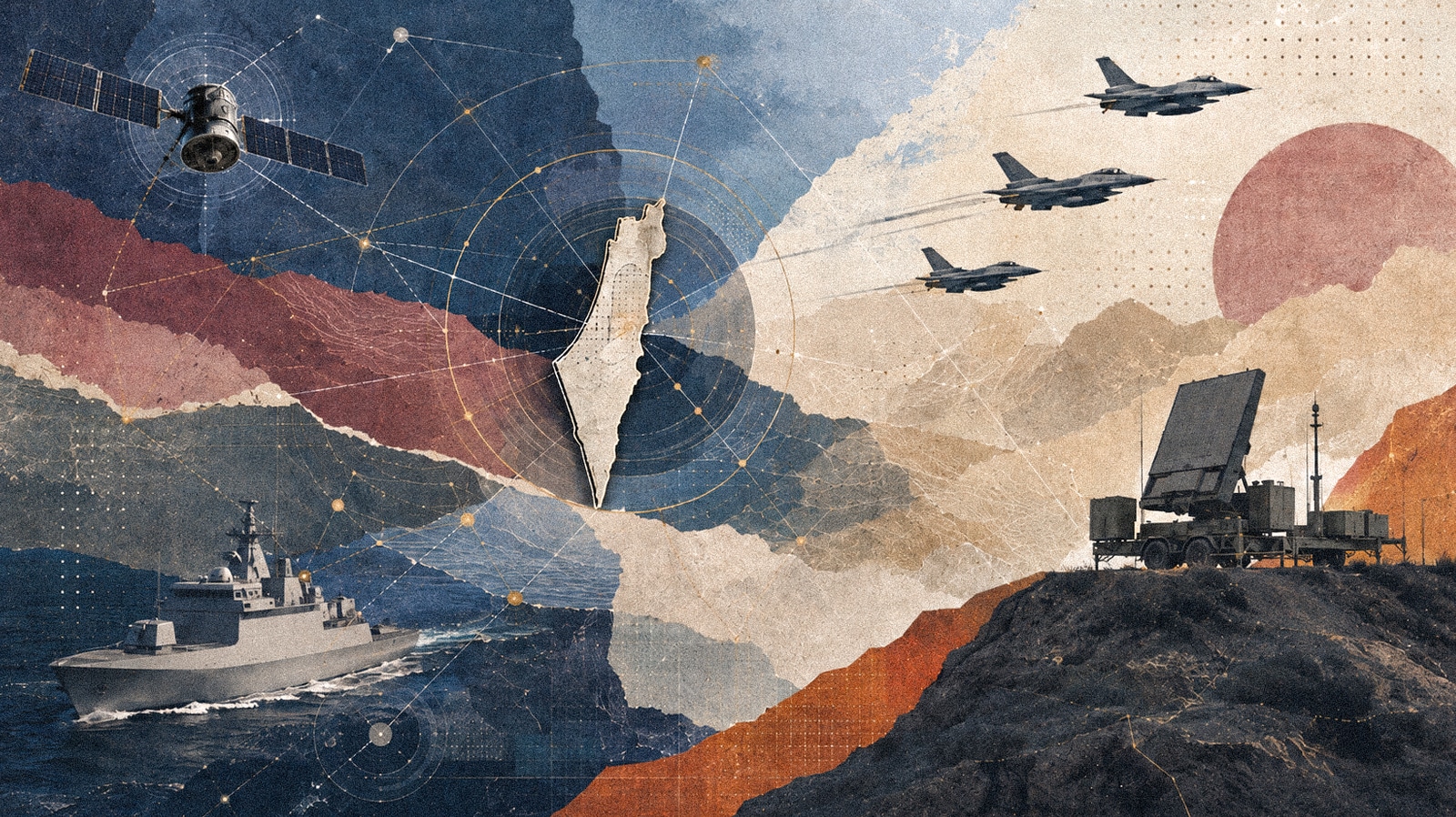
Israel succeeded in projecting power and deterring large-scale invasions of its territory for much of its existence. That record, however, has not spared it from recurrent wars, sustained terrorist activity, or repeated missile attacks against its civilian population. In response to the growing threat posed by missiles, mortars, and drones, Israel developed the world’s densest multilayered air defense system. This capability has further reinforced its projection of strength by reducing vulnerability to attempts to inflict damage and impose costs on the state.
Technology is one of the components of Israeli military power that helps offset its numerical inferiority and its small and dense territory. Israel is among the world leaders in research and development (R&D) spending as a share of gross domestic product (GDP), far ahead of most OECD countries. As of 2025, Israel invests more than 6 percent of GDP in R&D, placing it first in the world.[16] These investments, together with other factors, have enabled Israel to maintain clear technological superiority over its neighbors, although the capabilities of Iran and Turkey should not be underestimated. Israel must continue directing resources to selected fields of science and technology—those that promise a large security return—and cultivate scientific and technological excellence to continue to develop the game-changing military capabilities that make the IDF a lethal force.
The Middle East is not about to become a “zone of peace” in which states are unlikely to use force against one another.[17] Since October 7, 2023, Israel has moved from low-intensity conflict to a scenario of multifront full-scale war. It has come to understand that it exists in a state of “dormant war,” as Yitzhak Rabin put it, which can erupt at any moment.[18]
Israel thus requires a powerful military machine capable of responding to a range of high-risk scenarios. The IDF must be sufficiently expanded to enable the deployment of additional forces along the borders to protect adjacent communities. It must also retain the capacity to conduct simultaneous operations on multiple fronts and to achieve rapid battlefield outcomes. Short wars remain a clear Israeli interest, although it must also be prepared to sustain prolonged wars of attrition.
October 7 made clear that Israel must reassess its reliance on early warning, one of the foundations of its national security concept. Israeli intelligence has demonstrated its ability to provide operational and targeting intelligence, but its capacity for early warning remains vulnerable to error. Israel experienced strategic surprise several times in its history, and human nature is such that even the most capable intelligence professionals can misread enemy intentions.[19]
Until October 7, Israeli governments largely accepted a policy of “containment”: absorbing violence against Israeli targets and various provocations without responding.[20] The Winograd Commission, which investigated the 2006 Second Lebanon War, criticized this approach,[21] yet both the IDF and the political echelon continued to adhere to it. Israel has never adopted automatic retaliation as a principle, but for many years it did use military force in response to violence against it, with the timing determined by political circumstances. After the events of October 7, the policy of containment was abandoned, and rightly so. In the Middle East, restraint is read as weakness and inevitably invites aggression. The return to a security doctrine that emphasizes preemptive strikes and preventive war, while taking political timing into account, was fully justified. The cyclical use of military force also reinforces deterrence—an inherently elusive concept grounded in the adversary’s psychology. Nevertheless, its central insight remains valid: As noted, fear continues to function as the most useful currency in relations among states in the Middle East.
Israel’s conflict with the Palestinians remains difficult to resolve. A compromise between the Palestinian national movement and the Zionist movement is not achievable at the present time, in particular because both sides are not exhausted enough to end the conflict; they still have the energy and willingness to fight and sacrifice to realize their vision. Palestinian hostility toward Israel also remains too intense to permit compromise. Public opinion polls have shown high Palestinian support for the October 7 Hamas massacre, with some surveys finding more than 70 percent support, especially in the West Bank. Nor is the problem limited to Hamas. The Palestinian Authority (PA) itself pays salaries to terrorists and their kin and encourages terrorism in its textbooks and media. At the same time, maximalist Palestinian demands on Jerusalem and the “right of return” remain unacceptable to the overwhelming majority of Israelis.
Moreover, the Palestinians lack the capacity to build a state capable of maintaining a monopoly on the use of force. The opportunity they received in 1993 resulted in a fragmented political entity with competing armed militias, one of which—Hamas—ultimately took control of Gaza, part of the Palestinian territories. A defining feature of such a failed entity is the inability to serve as a reliable strategic interlocutor. In this respect, the PA resembles other Arab states in which armed militias operate alongside or within state structures, including Lebanon, Syria, Iraq, Yemen, Libya, and Sudan. Hamas, despite the tragedy it has brought upon the population of Gaza, remains popular among Palestinians, most of whom oppose its dismantling.
Under these conditions, diplomatic efforts to end the conflict should be approached with caution, as they may generate false expectations and at times prove counterproductive. The practical alternative is conflict management. This approach seeks to reduce the costs of ongoing hostilities, preserve Israel’s political freedom of action, and buy time in the expectation that Palestinian actors will develop a better learning curve. Its main components include the reduction of Palestinian terrorism, the maintenance of strategic coordination with Washington, and careful attention to Israel’s domestic front.
The opposite extreme also requires caution. Influential political sectors in Israel, though they do not represent most of the population, are driven by the ideology of Greater Israel and seek the annexation of the entire West Bank (Judea and Samaria). They also aim to establish settlements in Areas A and B of the territory, which under the Oslo Accords are under the full civilian jurisdiction of the PA and, especially in Area A, are densely populated by Palestinians. Since October 7, political circles represented in the current government have also sought to establish Jewish settlements in Gaza and southern Lebanon, areas that are seen as part of the Land of Israel. Israeli governments have avoided annexing Judea and Samaria in order to preserve a Jewish majority within the borders of the Jewish state and spare Israel international criticism. Annexation would also damage relations with the U.S., which are highly important for Israel, and make it harder to improve ties with Arab states. In an age in which demographic considerations carry great weight and the right to self-determination forms part of the Zeitgeist, such an objective is a clear case of overreach. Establishing additional settlements on strategically insignificant hills in Judea and Samaria instead of channeling more Jews to solidify the Jewish majority on the most important hill, Jerusalem, undermines Israel’s sovereignty in its capital. A small state risks losing important assets when it pursues goals beyond its reach, or goals that have too high a cost. Even a successful campaign could become a Pyrrhic victory.
Israel must continue to approach nonconventional threats with determination. A multipolar nuclear Middle East would be a strategic nightmare for Israel, because the prospects for stable nuclear deterrence given the conditions in the region are very low.[22] Israel’s small size is a disadvantage for establishing nuclear deterrence. Middle Eastern leaders are not necessarily versed in the intricacies of nuclear strategy, and they may act out of recklessness or religious fervor. Early-stage nuclear arsenals are also small, not necessarily well protected, and lack second-strike capability. These features invite destabilizing preemptive strikes. Israel should therefore give preference to the application of the Begin Doctrine: eliminating nuclear capabilities in their infancy. Avoiding a nuclear race requires intelligence, vigilance, and preventive action in the early stages of nuclear development. In Iran’s case, Israel waited too long.
A posture built on military power, however, does not relieve Israel of the obligation to reduce hostility in the Arab and Muslim worlds. Dror advocated a “Dr. Jekyll and Mr. Hyde” approach—a sophisticated strategy that necessarily leads to inherent internal tensions and real complexity.[23] Israel’s survival depends in part on its enemies’ fear of Israeli military power and its destructive consequences, as demonstrated by the Gaza war and the campaign in Southern Lebanon. Yet a policy aimed at reducing the anxieties of its rivals and cultivating goodwill rests on contrary elements. Israel has nevertheless managed to engage some of its adversaries, several of which have even signed peace agreements with it. Its regional position today is immeasurably stronger than it was in 1948 or after 1973, and Israel has overcome a substantial share of regional hostility.
Israel’s willingness to pursue good neighborly relations matters for its image abroad, but it is also essential for mobilizing all sectors of Israeli society when the next war comes. National unity and the willingness to fight depend heavily on the public’s recognition that war was forced on Israel despite its outstretched hand for peace. The age of wars has not ended, and circumstances may arise in which the sense of a war of “no choice,” so evident on October 7, is less powerful. Moreover, Israel’s enemies read polarization and social unrest as vulnerabilities that weaken deterrence and invite aggression. Hamas’s invasion on October 7 was partly the product of such an image. Policymakers should therefore avoid steps that depart from the broad Israeli consensus. Preserving social cohesion is a supreme objective of Israel’s national strategy. Those who oppose a particular policy should also demonstrate restraint and refrain from threatening to harm national security to force policy changes.
Israel must convey both parts of its position clearly: It seeks peace and is prepared, under certain conditions, to relinquish territories populated by Arabs, but it will also need to live by the sword for the foreseeable future. Communicating this message clearly is one of the key responsibilities of the country’s leadership. The Israeli public understands that existential threats have not disappeared. It is sagacious and resilient enough to absorb complex and sometimes uncomfortable truths.
A prolonged conflict requires the preservation of social resilience. Israeli society has so far demonstrated an abundance of that in successive wars and crises. Even in wartime, Israel ranks among the happiest countries in the world. It placed eighth in the 2026 World Happiness Report, reflecting the resilience of Israeli society.[24] In April 2026, after two and a half years of war, 52 percent of Israelis said they were very proud to be Israeli, and another 27 percent said they were proud of their national identity—a total of 79 percent.[25] This figure points to a strong sense of national identity. Identification with the nation and the state, interpersonal ties, and commitment to family values all contribute to the tenacity and patriotism of the Israeli people. Israeli governments must not squander this precious asset.
The war that began on October 7, 2023, underscores the essential need to continue cultivating social resilience. The government must prepare the public for the possibility of prolonged conflict and strengthen the mechanisms designed to mitigate the impact of war on civilians. Israel has invested in the development of some of the most advanced active defense systems in the world, yet it can no longer ignore the needs of large segments of the population that lack adequate protection from high-trajectory fire. At the same time, the most toxic challenge to social resilience remains the unequal distribution of military service. The growing scope of exemptions of Haredi men from conscription has become one of the country’s most explosive political issues. The war has significantly increased the burden on those who serve, especially reservists, making the current imbalance increasingly unsustainable. Exemptions from service have created an intolerable situation that demands immediate attention. Expanding conscription within the Haredi sector must be seriously pursued.
Israeli society must recognize that it faces a period of increased defense spending that will require economic sacrifice. Israel’s economy has demonstrated notable robustness since October 7, but the war has driven a sharp rise in defense expenditures, increased the national debt, and necessitated cuts in certain public services. Israel’s leadership must therefore make clear to the public that a small state operates with narrow security margins and that managing the risks it faces requires substantial resources. In this context, it may be necessary to accept a temporary freeze in living standards in order to meet immediate security needs.
Conclusion
The longevity of small states cannot be taken for granted. Twice, the Jewish people lost their state, in part to a failure to adapt to changing international circumstances. The war waged by the Jewish community in the Land of Israel against the Roman Empire demonstrated considerable courage and creativity, but it also rested on a series of misjudgments, false expectations, and overambitious objectives. It ultimately ended in tragedy: the loss of independence and exile.
Israel must therefore remain conscious of its small-state status, act prudently in the international arena, and set attainable goals. Stable relations with a great power are essential to offset its structural constraints. Intoxication with military power is inherently dangerous. Equally important is the need to resist policies grounded in overly optimistic assumptions about the intentions and trajectories of its neighbors. Israel must look reality in the eye and recognize that the Middle East is unlikely to undergo rapid or fundamental transformation in the foreseeable future. Above all, wise leadership must preserve the cohesion and social resilience of Israeli society.
Despite common perceptions and the toxic wave of hostility toward the Jewish State, Israel is not isolated and has many friends in the international system. Much of the international community, unfortunately, does not fully grasp the complexity of Israel’s situation. Ignorance, naïveté, and hypocrisy are widespread, and Jerusalem can do little about that. Antisemitism is an ancient plague for which no cure has ever been found. Yet even some antisemites are prepared to cooperate with Israel when interests align. In any event, the state’s survival requires military power and the willingness to fight when necessary. Fortunately, Israelis understand that.
National strategy also requires sustained attention to the future, a domain inherently marked by uncertainty. The conservative view tends to assume largely linear development in the short term, that is, that the future will not differ substantially from the present. At this stage, we still lack sufficient historical perspective to assess whether or not October 7 constituted a turning point in the history of the Middle East and in Israel’s regional standing. This is particularly true insofar as the war has not yet concluded and its full consequences remain unclear. Nor can the longer-term unintended consequences be readily anticipated.
In any event, Israel appears well positioned to preserve its qualitative advantage in human capital and technology. Its economy is strong and rests on relatively solid foundations, while its society has exhibited notable social robustness. At the same time, the continuity of Israel’s relationship with a global superpower appears less assured than in the past, and this issue warrants immediate attention. In the short term, however, Israel retains the capacity to preserve a favorable power differential vis-à-vis its adversaries.
In conclusion, the formulation of national strategy should begin with humility and a willingness to invest sustained intellectual effort: to learn from the past and to understand contemporary trends. However, not everything is knowable, and even when it is, not everything can be effectively addressed by Israel. At times, there is no alternative but to undertake what Dror termed “historical gambles.” Our sages likewise recognized the role of chance in human affairs, observing that “everything depends on luck, even a Torah scroll in the ark.” The hope, ultimately, is that Fortuna will favor Israel.
* I would like to express my thanks to Steven David, Hillel Frisch, Joseph Kuperwaser, Arie Kacowicz, and Shmuel Sandler for their helpful comments. The catalyst for this article was the invitation to deliver a lecture at a conference held on January 20, 2026, in honor of the late Prof. Yehezkel Dror at the Jewish People Policy Institute.
This article was originally published by The Israel Journal of Foreign Affairs
[1] David Vital, The Inequality of States: A Study of the Small in International Relations (Oxford, 1967).
[2] Hans J. Morgenthau, Politics Among Nations: The Struggle for Power and Peace, 4th ed. (New York, 1967), p. 10.
[3] Yehezkel Dror, Tomorrow: Grand Strategy for Israel [Hebrew] (Rishon Lezion, 2024), pp. 37–39.
[4] Paul Kennedy, The Rise and Fall of the Great Powers: Economic Change and Military Conflict from 1500 to 2000 (New York, 1987); Emmanuel Todd, After the Empire: The Breakdown of the American Order (New York, 2002); Chalmers Johnson, The Sorrows of Empire: Militarism, Secrecy, and the End of the Republic (New York, 2004); Fareed Zakaria, The Post-American World (New York, 2008). For a refutation, see Robert Kagan, The World America Made (New York, 2012); Robert J. Lieber, Power and Willpower in the American Future: Why the United States Is Not Destined to Decline (Cambridge, 2012).
[5] For such states, see Robert Rotberg, When States Fail: Causes and Consequences (Princeton, 2004).
[6] Tongfi Kim and Do Young Lee, “Continuity and Changes: The Effects of Russia’s War against Ukraine on Japanese and South Korean Nuclear-weapons Discourse,” The Nonproliferation Review, XXX: 4–6 (2023), 265–84, https://doi.org/10.1080/10736700.2024.2435143
[7] The catalyst for the renewed debate was Peter Hartcher, “If Trump Returns to the White House, Australia May Need its Own Nukes,” The Sydney Morning Herald, August 3, 2024.
[8] Linus Höller, “Germany Unveils Strategy for Becoming Europe’s Strongest Military by 2039,” Defense News, April 22, 2026, https://www.defensenews.com/global/europe/2026/04/22/germany-unveils-strategy-for-becoming-europes-strongest-military-by-2039/?utm_source=sailthru&utm_medium=email&utm_campaign=dfn-dnr.
[9] Ulrich Kühn, “Tracking the German Nuclear Debate,” Carnegie Endowment for International Peace, August 15, 2018m https://carnegieendowment.org/posts/2018/08/tracking-the-german-nuclear-debate?lang=en.
[10] “Israeli military official warns of possible nuclear ambitions in Egypt, Turkey,” Middle East Monitor, February 16, 2026, https://www.middleeastmonitor.com/20260216-israeli-military-official-warns-of-possible-nuclear-ambitions-in-egypt-turkey/?amp.
[11] Aaron Bandler, “ADL Report Says 2025 One of Most Violent Years for American Jews,” JNS, May 6, 2026, https://www.jns.org/news/antisemitism/adl-report-says-2025-one-of-most-violent-years-for-american-jews; “TAU: Record deadly antisemitic violence in 2025,” JNS, April 13, 2026, https://www.jns.org/news/antisemitism/tau-record-deadly-antisemitic-violence-in-2025.
[12] Efraim Inbar, Outcast Countries in the World Community (Denver, 1985); For Israel’s improved international status after the end of the Cold War, see Efraim Inbar, “Jerusalem’s Decreasing Isolation,” Middle East Quarterly XX: 2 (Spring 2013), 27–38.
[13] Aharon Klieman, “Shtadlanut as Statecraft by the Stateless,” Israel Journal of Foreign Affairs, XI: 3 (2008), 99–113.
[14] C. Raja Mohan, “The Multipolar Delusion and the Unilateral Temptation,” Foreign Affairs, CV: 2 (March/April 2026), 54–63.
[15] Efraim Inbar and Eitan Shamir, “‘Mowing the Grass’: Israel’s Strategy for Protracted Intractable Conflict,” Journal of Strategic Studies, XXXVII: 1 (2014), 65–90.
[16] “What Country Spends the Most on Research and Development?” Investopedia, January 14, 2026, https://www.investopedia.com/ask/answers/021715/what-country-spends-most-research-and-development.asp.
[17] For the distinction between regions, see Max Singer and Aaron Wildavsky, The Real World Order: Zones of Peace/Zones of Turmoil (London, 1993).
[18] Efraim Inbar, Rabin and Israel’s National Security (Baltimore, 1999), p. 14.
[19] Roberta Wohlstetter, Pearl Harbor: Warning and Decision (Stanford, 1962).
[20] For the policy and its faults, see Efraim Inbar and Menachem Bacharach, “The Perils of Containment/Restraint in Israel’s National Security Behavior,” Israel Journal of Foreign Affairs, XVIII:1 (2024), https://doi.org/10.1080/23739770.2024.2321546.
[21] The Winograd Commission Report [Hebrew], Vol. 1, pp. 42–60.
[22] For a pioneering work pointing out the fragility of nuclear deterrence, see Albert Wohlstetter, “The Delicate Balance of Terror,” Foreign Affairs, XXXVII: 2 (January 1959), 211–34.
[23] Yehezkel Dror, Israeli Statecraft: National Security Challenges and Responses (London, 2011), pp. 176–87.
[24] The World Happiness Report (2026) Dashboard, https://data.worldhappiness.report/table?_gl=1*1pwcp7*_gcl_au*OTE3MzgyNTczLjE3NzQ5NDcxOTc.
[25] “The Weekly Poll,” Israel Hayom Magazine [Hebrew], April 17, 2026, p. 3.
JISS Policy Papers are published through the generosity of the Greg Rosshandler Family.