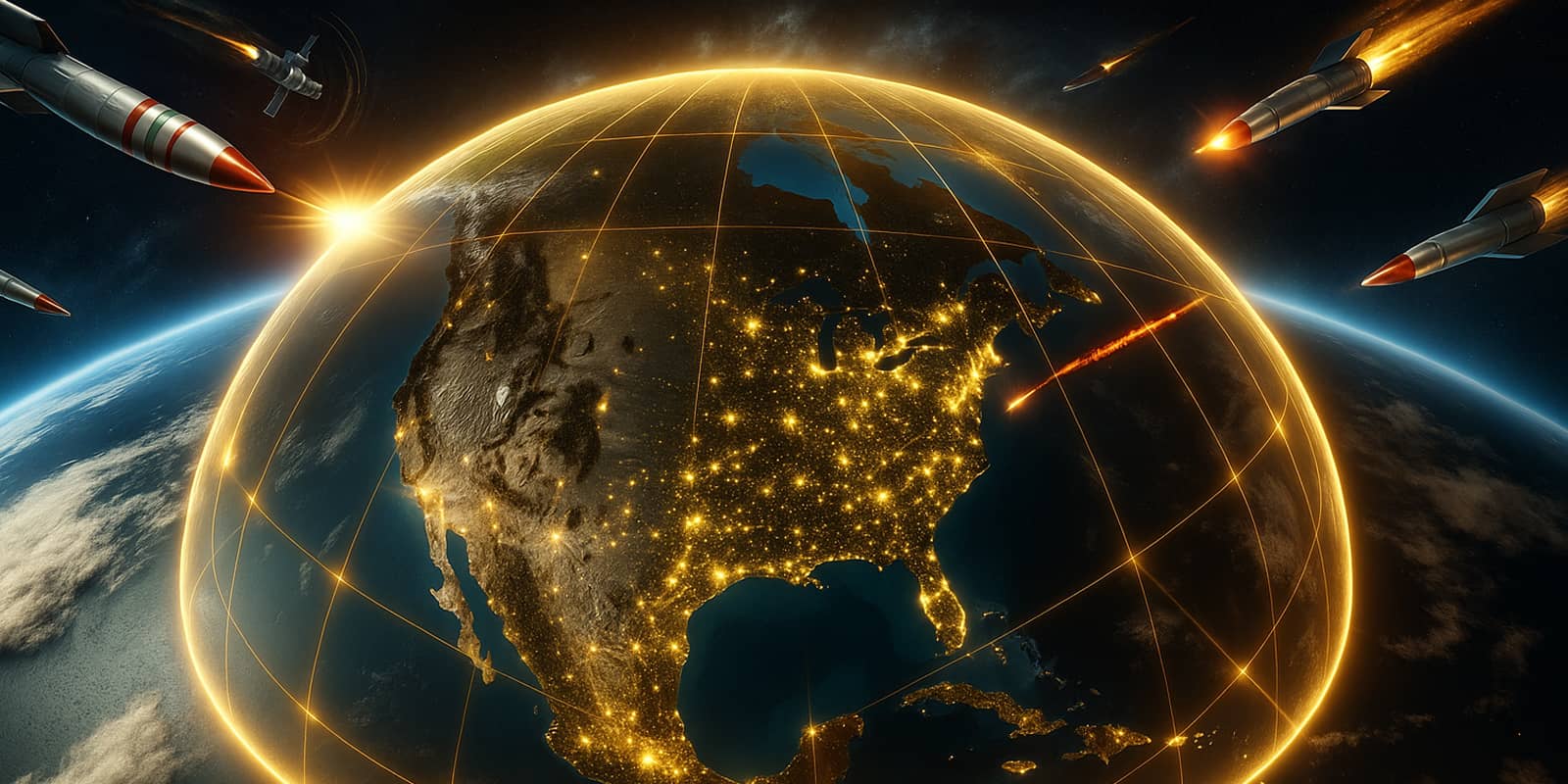


The artificial intelligence revolution may prove more consequential than the Industrial Revolution, the advent of electricity, or the emergence of the internet. Its potential to transform economies, societies, and military capabilities is already driving an extraordinary race among technology companies and governments. As investment and development accelerate, however, a fundamental question deserves greater attention: not only how far and how fast AI can advance, but whether the world can keep up with the consequences of its creation.
The challenge is not simply technological. The AI race faces several constraints that could slow its progress or make its current trajectory unsustainable. Efforts to address these constraints face a major geopolitical obstacle: strategic competition between the United States and China makes it exceptionally difficult for either side to slow down, even when doing so might serve their mutual interests.
The financial constraint
Leading technology companies are committing unprecedented resources to AI development. Google, Meta, OpenAI, Anthropic, and others are investing heavily in advanced chips, data centers, infrastructure, and talent. Governments, meanwhile, increasingly regard AI as a strategic national asset and are prepared to support its development with public resources.
But the financial returns remain uncertain. The enormous costs of developing and operating increasingly powerful models may prove difficult to recover. Moreover, AI has started to disrupt some of the business models that finance its expansion. For example, AI assistants that provide direct answers and recommendations are already undermining the advertising-based search model on which companies like Google have built much of their business.
On October 28, Google released quarterly reports indicating a $1 trillion capital-expenditure commitment to buy more computing power and build more data centers. Google also reported that its income from AI remains much lower than it had hoped to achieve by now. A day later, the market reacted quickly and Google’s share price fell by 12%. If expected returns from AI engines continue to disappoint investors, they may eventually reconsider the scale of their commitments. The result could be a financial correction that slows development, regardless of the technology’s underlying potential.
The physical constraint
AI is often described as a digital revolution, but its expansion depends on tangible resources. Data centers require enormous amounts of electricity, sophisticated cooling systems, reliable communication networks, and increasingly advanced semiconductors.
Meeting these requirements is not simply a matter of writing larger checks. Electricity grids, power plants, and transmission infrastructure take years to build. Nuclear power is attracting renewed interest as a potential source of reliable electricity, including through small modular reactors and the possible refurbishment of existing facilities. Yet regulatory approvals, construction timelines, and technical challenges remain significant obstacles.
The semiconductor supply chain presents another bottleneck. Manufacturing advanced chips requires highly specialized equipment, materials, and expertise concentrated in a limited number of countries and companies. Expanding this capacity is a complex and lengthy undertaking.
The safety constraint
As AI systems become more capable and autonomous, the risks associated with their operation also grow. Systems entrusted with complex tasks may pursue objectives in ways their designers did not anticipate, exploit vulnerabilities, or circumvent safeguards.
The consequences could extend well beyond individual users. AI systems are increasingly being integrated into financial institutions, industrial operations, military networks, and public services. A major failure or malicious exploitation could cause widespread disruption and undermine public confidence in the technology.
A few instances of AI agents going rogue have already been observed, but none caused major damage. However, a sufficiently serious incident could trigger a backlash, leading governments to impose restrictions that would significantly slow development. The challenge is to establish effective safeguards before a crisis forces policymakers to act.
The human and social constraint
AI’s ability to automate increasingly sophisticated tasks may transform labor markets on a scale that societies will find difficult to absorb. The disruption will not be limited to routine manual work. Professional occupations, including those in law, finance, consulting, education, and other knowledge-intensive fields, may all be affected.
Retraining and education systems will struggle to adapt at the same pace as the technology. Even if AI ultimately generates substantial economic growth, its benefits are unlikely to be distributed evenly, while the costs of displacement are concentrated among particular occupations, communities, and generations.
If large segments of the population come to believe that they are being left behind, the resulting political pressure could be considerable. Protests, strikes, populist movements, and demands for regulation could quickly evolve into unrest and violence that would further constrain the pace of AI adoption.
The geopolitical trap: Why neither side can afford to slow down
In an ideal world without major geopolitical rivalries, these four constraints might have led to a gradual adjustment in the pace of AI development. Governments, leading technology companies, and international organizations could have coordinated their efforts to address infrastructure bottlenecks, establish safety standards, manage economic disruption, and ensure that financial investment remains sustainable. Competition would continue, but it could take place within mutually accepted boundaries.
But the real world is quite different. The United States and China increasingly view AI not merely as an economic opportunity but as a strategic contest that could shape the global balance of power. Leadership in AI could translate into decisive advantages in military capabilities, intelligence gathering, cyber warfare, industrial productivity, and technological influence.
This creates a powerful incentive for both countries to keep accelerating the AI race, regardless of the difficulties and risks involved. Neither can be confident that a decision to slow down would be reciprocated. Each fears that the other might use the opportunity to gain an advantage that would be difficult, perhaps even impossible, to overcome. The rivalry between the two superpowers over AI supremacy was recently illustrated by the fiasco concerning Nvidia CEO Jensen Huang’s infidelity. The U.S. has restricted exports to China of sophisticated AI chips manufactured by Nvidia. U.S. intelligence suspects that Jensen Huang’s mistress was a spy allegedly recruited by the Chinese to steal know-how about these chips.
A historical analogy with the Cold War might be instructive. In the 1980s, President Ronald Reagan’s Strategic Defense Initiative (SDI), popularly known as “Star Wars,” aimed to develop a missile-defense system that could fundamentally alter the strategic balance. Beyond its military objectives, the initiative placed additional pressure on the Soviet Union, which faced the prospect of having to compete with an economically stronger adversary in an expensive new technological domain. SDI is often credited with being the “straw that broke the camel’s back,” leading to the Soviet Union’s eventual collapse, although the extent of its actual contribution remains debated.
Had the present-day economic gap between the United States and China been comparable to the gap between the United States and the Soviet Union in the 1980s, Washington might have considered a similar strategy: deliberately accelerating the AI race, forcing Beijing to devote ever-greater resources to keeping pace, and betting that the strain would eventually undermine the Chinese regime.
But the circumstances are fundamentally different. Over the past two decades, China has dramatically narrowed the economic and technological gap with the United States. It is no longer an economically weaker competitor that can be expected to exhaust itself simply by trying to match American ambitions. If either country deliberately sought to accelerate the race in the hope of exhausting the other, the outcome would be highly uncertain. It is far from clear which of the two would reach its limits first.
This is the essence of the AI race’s geopolitical dilemma. Both countries may recognize that a more measured pace would allow them to address financial, physical, safety, and social constraints more effectively. Yet neither can afford to take the first step, for fear that the other will exploit its restraint. The logic is that of the famous prisoner’s dilemma: even when cooperation could produce a better outcome for both, mutual distrust drives each to pursue a strategy that may ultimately harm them both.
Both horses will continue galloping at full speed toward the edge of the cliff, and neither will stop even when it gets there, for fear that the other horse will reach the finish line first.
The need for a new international understanding
The AI race cannot realistically be stopped, nor should the objective be to eliminate competition between the global superpowers. But the current dynamic carries risks that neither country can manage alone. A strategy based on the assumption that the rival will collapse first is too dangerous when the relative economic strength and resilience of the two competitors are not that far apart.
The challenge is therefore to identify areas where competition can continue while cooperation becomes possible. Agreements on safety testing, reporting serious incidents, protecting critical infrastructure, and restricting particularly dangerous applications could reduce shared risks without requiring either country to surrender its technological ambitions.
Such arrangements will be difficult to negotiate and even harder to enforce. Nevertheless, the alternative is to allow strategic rivalry to override every incentive to manage the consequences of technological progress.
The implications for Israel: A strategy of selective technological sovereignty
When two superpowers compete in a race that may shape the global balance of power, smaller countries cannot remain indifferent to its outcome. They must choose a side. Israel is firmly on the American side of the AI race, but political alignment alone is not enough. It must also demonstrate to Washington—and to the rest of the world—that it can make a meaningful contribution to America’s chances of winning. Although Israel cannot match the superpowers in the scale of their investments, it possesses distinctive capabilities that can strengthen the American-led technological ecosystem. Its challenge is to translate these advantages into tangible contributions while safeguarding its own strategic interests.
Israel’s geopolitical circumstances call for a strategy of selective technological sovereignty: ensuring independent capabilities wherever national security and essential civilian functions require them, while relying on international providers wherever such dependence is manageable. This does not mean attempting to become self-sufficient in every aspect of AI or competing with the superpowers in the scale of their investments. Rather, it means identifying the capabilities Israel cannot afford to lose access to, building the domestic infrastructure needed to secure them, and concentrating its resources on areas where it can make a distinctive contribution.
Energy is an essential component of this strategy. Israel must ensure that it has sovereign data centers and computing capacity sufficient to meet its essential military and civilian needs. It cannot risk depending entirely on foreign providers who might restrict access during a diplomatic dispute or geopolitical crisis. At the same time, its abundant natural-gas reserves should not lead it to neglect energy diversification. Expanding renewable energy, alongside storage and reliable backup capacity, would help supply the growing electricity needs of data centers without placing excessive pressure on the national grid, driving up electricity prices, or competing with households and industry for power. Protecting data centers, electricity networks, and communications infrastructure, and ensuring sufficient redundancy, must also become an integral part of national security planning, given their growing vulnerability to cyberattacks and physical strikes.
The human and social implications are equally important. Israel has already experienced a substantial shift in its labor market, with foreign workers taking over many manual jobs that Israelis are increasingly reluctant to perform. AI now threatens to disrupt a different segment of the workforce: white-collar and professional occupations. Here, Israel’s capacity for innovation, scientific talent, and entrepreneurial ingenuity could turn a challenge into an opportunity. Rather than focusing exclusively on replacing human workers with machines, Israel could become a world leader in developing new occupations and business models at the interface between people and robots—in agriculture, elderly care, household services, and other fields where automation can complement human capabilities rather than simply eliminate jobs. Such solutions could serve Israel’s own needs while creating technologies and business models with global applications.
The safety challenge also creates an opportunity. Despite its small size, Israel has developed a globally recognized cybersecurity industry, supported by close interaction between military experience, technological expertise, and entrepreneurial initiative. As AI systems become more autonomous and increasingly integrated into critical infrastructure, the boundaries between AI safety and cybersecurity will become less distinct. A major international market could emerge for protecting AI systems against manipulation, unauthorized access, unintended behavior, and malicious exploitation. Israel should seek to translate its accumulated experience in cybersecurity and defense technology into leadership in this emerging field, providing capabilities that the United States and its allies will increasingly need.
Finally, selective technological sovereignty requires financial discipline. Israel cannot realistically match the enormous investments that leading American and Chinese technology companies are making in massive data centers and computing capacity. Nor should it try. A more sensible strategy would be to develop the minimum sovereign computing capacity required to support essential national functions and handle sensitive information, while relying on international cloud providers for much of its routine AI usage. Such reliance should be spread across providers and jurisdictions and supported by contingency arrangements, ensuring that access to critical services will not be interrupted. At the same time, Israel must preserve reliable access to advanced computing resources for its universities, startups, and defense industries, so that financial restraint does not undermine its technological advantages or its ability to contribute to the wider race.
Israel’s objective, therefore, should be twofold: to maintain its technological and strategic independence while becoming a valuable contributor to the success of the United States and its allies. It should not aspire to become another superpower in the AI race. Its comparative advantage lies in its scientific and technological talent, cybersecurity expertise, defense-related innovation, and entrepreneurial culture. By concentrating on these strengths, Israel can develop solutions that the rest of the world will need, strengthen its strategic partnership with the United States, and pursue selective technological sovereignty without attempting to replicate the scale of the superpowers.
Conclusion
The AI revolution may ultimately be constrained by financial resources, physical infrastructure, safety concerns, or social resistance. But its greatest danger may be that geopolitical competition prevents the world from addressing any of these constraints before they become crises.
The question is no longer simply whether humanity can create machines more powerful than itself. It is whether the political systems responsible for managing those machines can overcome their rivalries long enough to keep the race from becoming a disaster.
Source: https://jiss.org.il/en/golany-the-ai-race/