


BY CHARLES BYBELEZER and DIMA ABUMARIA
A day after Colombia’s foreign minister announced the country’s recognition of a Palestinian state, the government backtracked and vowed to review the move. The original decision was taken by former president Juan Manuel Santos right before he was replaced by Ivan Duque, who was sworn in on Tuesday.
The new leader—who has since promised to re-evaluate the position—reportedly was informed earlier this week of his predecessor’s behind-the-scene dealings, which were made official in an August 3 letter to the Palestinian representative in Bogota.
Colombia is the last country in South America to formally recognize the “State of Palestine,” a declaration made by some 130 nations worldwide.
“There may be excesses regarding the way this decision was taken by the outgoing president,” current Colombian Foreign Minister Carlos Holmes stated, adding that “the [Duque] government will carefully examine its consequences and act in accordance with international law.”
Hanan Jarrar, head of the Palestinian Government Directorate of the Americas & the Caribbean, contended to The Media Line that “the recognition is completely legal as the former president made the decision during his mandate.” She attributed the development to two years of hard campaigning by the Palestinian Ministry of Foreign Affairs.
Jarrar stressed that there is enormous pressure being placed on Duque to reverse the move, but “I doubt that the new government would cancel the recognition, a sovereign decision that no one can interfere with.”
Palestinian political analyst Hanna Issa believes that while the decision accords with international norms, it constitutes a diplomatic faux pas. “[Santos] should have given the new president some time and space, especially at the beginning of his tenure,” he explained to The Media Line, going so far as to compare the situation to then-U.S. president Barack Obama’s abstention from a vote on United Nations Security Council Resolution 2334 only days before left office.
That resolution, adopted on December 23, 2016, described the construction of Jewish communities in “Palestinian territories occupied since 1967, including East Jerusalem” as a “flagrant violation” of international law with “no legal validity.”
Colombia’s recognition of a Palestinian state came to light during United States Ambassador to the United Nations Nikki Haley’s trip to attend Duque’s inauguration, with Washington confirming that it is gathering more information on the matter from its close South American ally. Israeli Prime Minister Benjamin Netanyahu cancelled his own planned visit to the confirmation—which would have been his second to Bogota over the past year—citing ongoing tensions with Hamas.
When contacted by The Media Line, a spokesperson for the Israeli premier reiterated that the cancellation was made due to “security” reasons, and not over political disagreements.
The Israeli government has made South America—and, more broadly, Latin America—the focus of a major diplomatic push, with Netanyahu having become the first sitting premier to visit the region last September, making stops in Argentina, Paraguay, Colombia and Mexico.
Notably, all of these countries two months later abstained from a vote in the UN General Assembly on a resolution calling for the U.S. to reverse its recognition of Jerusalem as Israel’s capital.
Israel’s ties to countries such as Honduras, which voted against the UNGA resolution, and Guatemala, which followed the U.S.’ lead in May by moving its embassy to Jerusalem, also appear to be at all-time high levels.
Due to Israeli inroads, the Palestinian Authority may be facing another setback, as Brazil’s leading presidential candidate, Jair Bolsonaro, promised this week to close the Palestinian mission in Brasilia and move his country’s embassy to Jerusalem if he wins the elections slated for October.
“Is Palestine a country? Palestine is not a country, so there should be no embassy here,” Bolsonaro—nicknamed “Brazil’s Trump”—asserted.
By contrast, former Brazilian president Luis Inacio Lula da Silva recognized a Palestinian state in 2010 and at the time donated $10 million to Hamas, which rules the Gaza Strip and has pledged to destroy Israel. Lula’s political disciple, Dilma Rousseff, maintained pro-Palestinian policies until her impeachment two years ago.
Evidencing past tensions, Brazil’s former top diplomat, Maria Anguilla Holguin, was in 2014 denied permission from Israel to visit Ramallah. Instead of first traveling to Jerusalem as the Israeli government demanded, Holguin met with Riad al-Malki in Jordan. A year later, Rousseff torpedoed Dani Dayan’s appointment as Israel’s ambassador to Brasilia over his past advocacy for Jewish settlement in the West Bank.
According to Professor Emmanuel Navon, a lecturer in International Relations at Tel Aviv University and a Fellow at the Jerusalem Institute for Strategic Studies, the approach of countries to the Israeli-Palestinian conflict “very much depends on who is in power. The Right in Latin America seems to be more like the evangelical community in the United States, whereas the Left seems to be getting more radical.
“So depending on who wins elections Israel must take a targeted approach,” he told The Media Line. “Also, the countries in question don’t have much of a democratic culture, so it is the leaders who make decisions without necessarily needing to sway public opinion. It is not something that voters care about anyway.
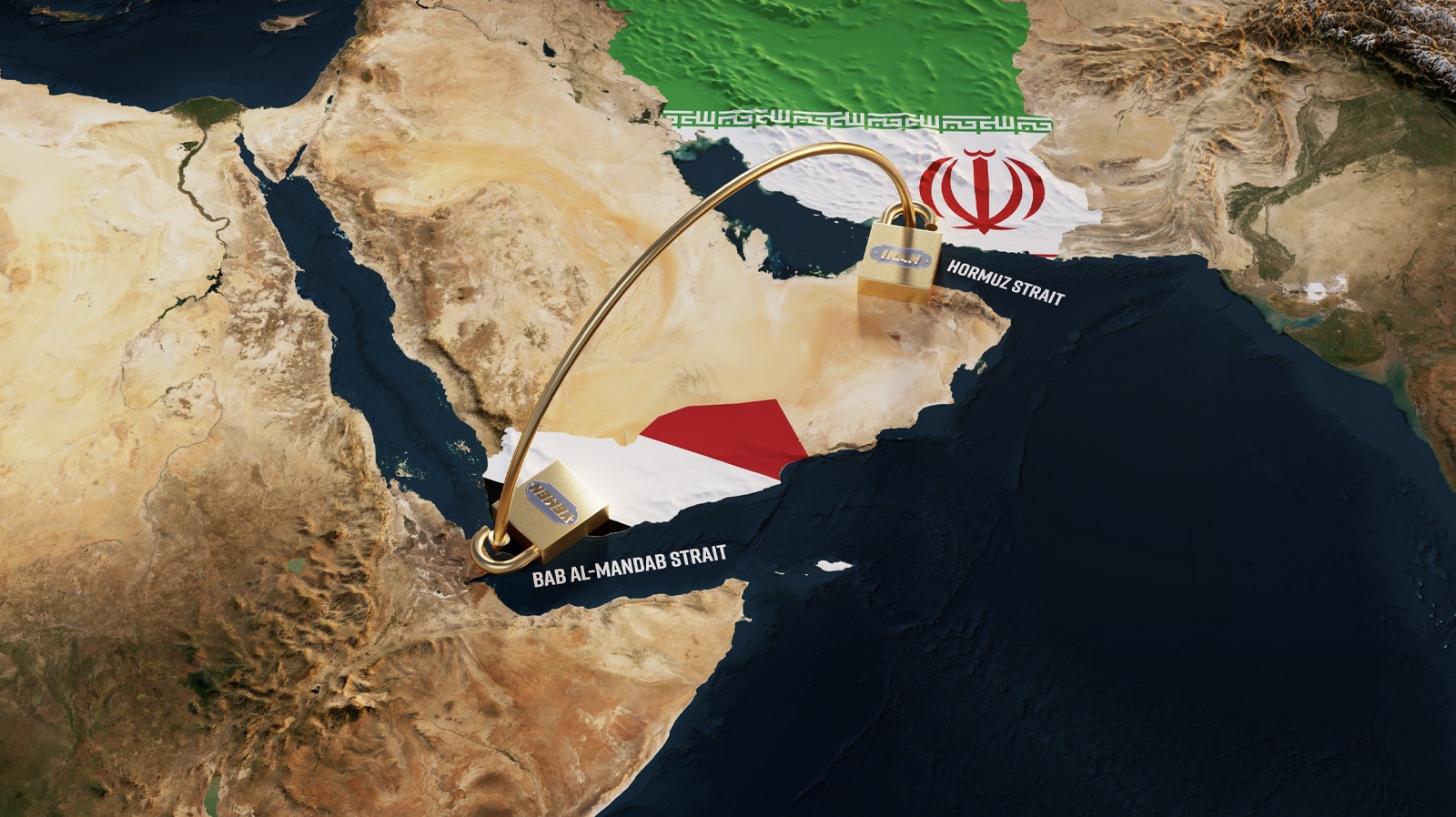
Dr. Navon emphasized that one of the main reasons for Israel’s diplomatic foray into the Americas is to thwart Iranian expansionism. “Hezbollah and Iran have a big presence in that region. Argentina is a good example, with the cover-up of by former leader Cristina Fernandez de Kirchner of Tehran’s role in the 1994 bombing of a Jewish community center in Buenos Aires.”
Today, President Mauricio Macri is trying to hold those responsible to account.
While many South American countries remain firmly in the anti-Israel camp, foremost Venezuela, a close Iranian ally, as well as Bolivia under Evo Morales, things seem to be trending in the other direction.
As such, the southern hemisphere could very well become the next major diplomatic battleground in the Israeli-Palestinian conflict.
Published in The Jerusalem Post, 12.08.2018
Source: https://jiss.org.il/en/navon-south-america-turning-pro-israel/