
Key Points
Armed conflicts between Iran and the United States and between the Houthis and Saudi Arabia continue to unsettle Gulf exports of goods, particularly energy.
Gulf energy producers, particularly Saudi Arabia and the UAE, however, appear to be adapting their export operations by using alternative routes, such as the port of Yanbu on the Red Sea and Fujairah on the Gulf of Oman. At the same time, U.S. Navy escorts are allowing large volumes of oil and gas, comparable to prewar levels, to pass through the Strait of Hormuz despite Iranian attacks. Exports from the region are consequently recovering because Gulf states have adapted their logistics to the security risk, rather than because that risk has disappeared. Nevertheless, Regional instability, particularly Iranian attacks on seeking to cross the strait, along with Houthi activity, clearly continues to keep oil prices far above their prewar levels. Higher prices have political consequences, including the potential to affect the outcome of the U.S. congressional midterm elections.
The crisis shows that disruption of the region’s energy supply routes has consequences beyond the oil market, affecting the geopolitical balance of power and the regional security order. It strengthens oil producers outside the Gulf, particularly the United States, both as an alternative source of energy and as a major military actor ensuring freedom of navigation in the region. It also exposes China’s vulnerability: Beijing depends on oil from the region but has limited ability to secure its trade routes.
The crisis also emphasizes that energy resilience requires more than diverse supply and strategic reserves. It requires dispersed infrastructure, protection for trade routes, and reduced exposure to strategic chokepoints. As the disruptions persist, energy security is expected to have a growing influence on U.S.-China relations, the standing of oil producers, and the shape of the security order in the Persian Gulf.
Gulf Oil Exports: The Current Situation
Threats to shipping routes and energy infrastructure continue to make Persian Gulf oil exports highly volatile. Regional tensions have resurfaced since July, when the ceasefire collapsed on July 7 and fighting resumed between the United States and Iran. The Houthis meanwhile resumed attacks on Saudi Arabia for the first time since 2022. Iranian attacks on tankers in the Persian Gulf are disrupting the region’s energy exports—oil, gas, and their products—and increasing the risk to shipping through the Strait of Hormuz. Houthi attacks on Saudi Arabia threaten shipping near the Bab el-Mandeb Strait and disrupt Saudi oil exports through Yanbu on the Red Sea, the alternative route to Hormuz. Accordingly, oil exports from the Gulf fell to about 15 million barrels per day in July and 13 million in August, compared with about 20 million before the Gulf crisis, according to data from the International Energy Agency (IEA) and Kpler. Part of the decline reflects the U.S. naval blockade, which constrains Iranian oil exports.
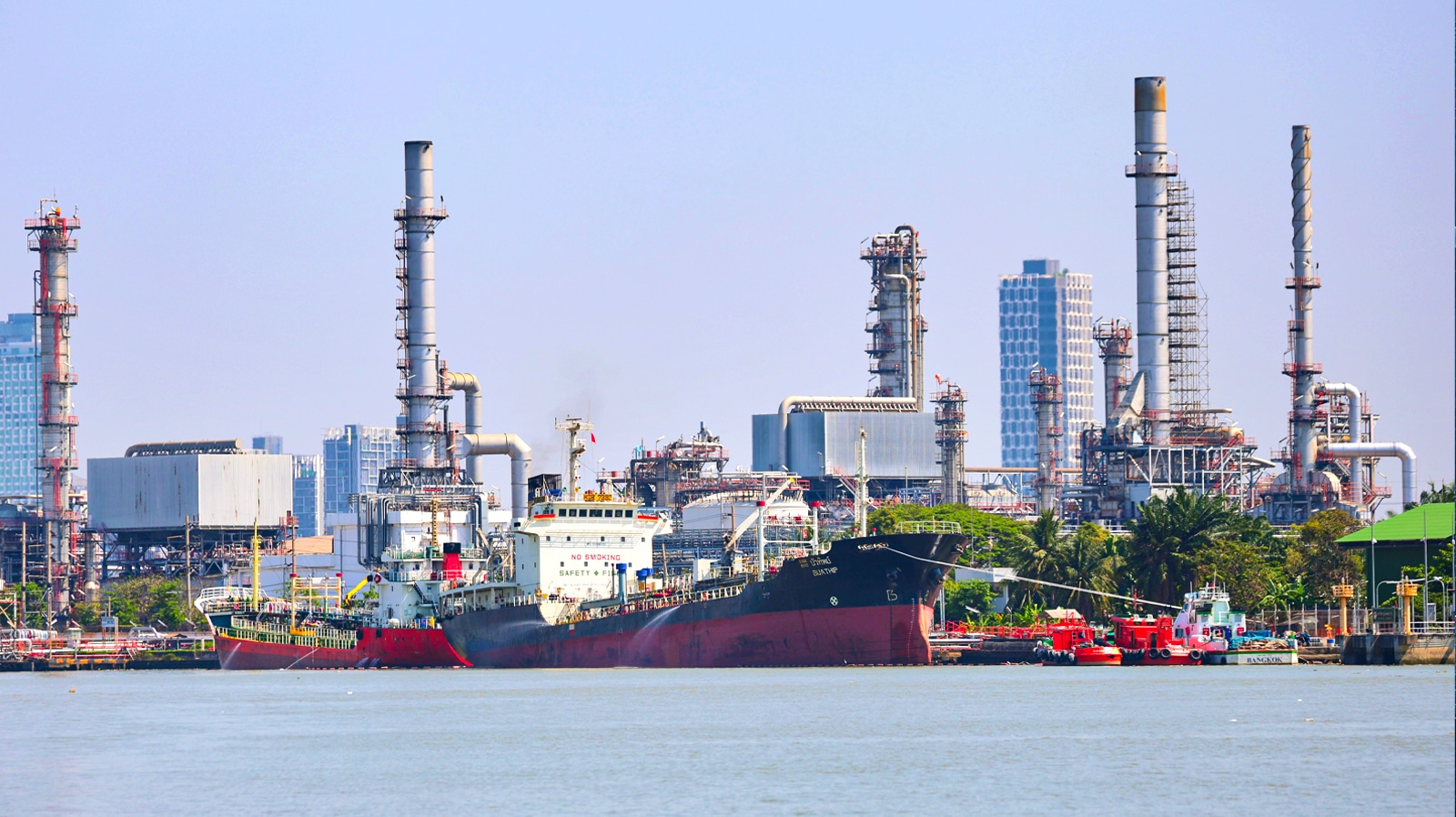
The Strait of Hormuz is a major route for oil from Gulf states to international markets. Restrictions on freedom of navigation through the strait have led regional exporters to seek alternatives that bypass it, although these routes have less export capacity. Saudi Arabia increased oil flows through its East-West pipeline to Yanbu on the Red Sea. The UAE relied on the ADCOP pipeline, which carries oil to Fujairah on the Gulf of Oman. Iraq used overland export routes through Turkey and routes through Syria (see our article on the subject for more). By contrast, Kuwait, Bahrain, and Qatar have no independent route that bypasses Hormuz and remain largely dependent on passage through the strait.
The major Gulf energy producers’ efforts appear to have paid off with oil exports from the region recovering since September. That month, Gulf states’ oil exports rose to 19.2 million barrels per day, about 81 percent of their prewar level. Alternative export routes are only part of the explanation. The recovery also reflects the gradual return of tanker traffic through the Strait of Hormuz and exports through the Gulf of Oman using ship-to-ship (STS) oil transfers. U.S. security assistance enables these movements, including military escorts for tankers passing through the Strait of Hormuz.
This recovery is not, however, a full, stable return to pre-crisis export patterns. Gulf oil exports are recovering because the Gulf states have adapted their logistics to the security risk, rather than because it has disappeared. Tanker traffic around Hormuz remains vulnerable to security incidents and disruption, as Iranian attacks in the area continue to pose a serious threat to shipping through the strait. In recent weeks, increased Houthi attacks on vessels near the Bab el-Mandeb Strait and on energy infrastructure inside Saudi Arabia have also raised the risk of renewed supply disruptions from the Middle East’s largest oil exporter. Indeed, reports in early October indicated that oil flows through the Strait of Hormuz had fallen by 27 percent to only about 10 million barrels per day, underscoring the continuing volatility of the region’s oil exports.
Oil prices remain high despite the increase in Gulf oil exports in recent weeks because security risks persist in the region. Exports of refined petroleum products also remain low due to damaged refining capacity both in the Middle East and Russia, in the latter case as a result of the war with Ukraine. Global oil stocks have dwindled, and insurance and shipping costs remain high. The export recovery too comes at a high cost due to longer and more complex routes, ship-to-ship transfers, high insurance and transport costs, and dependence on military protection. This is an operational recovery amid continuing risks, which comes with rising prices and inflation. It does not mark a return to normal pre-crisis shipping in the energy market. Lasting stability depends both on restoring refining and transport infrastructure and on reducing security risks in the Gulf.

Analysis of Strategic Implications
The scale and significance of the crisis derives from the concentration of energy flows in the region. Before it began, about 20 million barrels of oil per day passed through the Strait of Hormuz, accounting for roughly a quarter of global seaborne oil trade. About 80 percent of the oil passing through the strait was bound for Asian markets. The strait also carried about 19 percent of global trade in liquefied natural gas (LNG). Prolonged disruption in the region therefore sends a shock through the global energy system, rather than simply harming the exports of the Gulf state.
1. The vulnerability of the Gulf states and Saudi Arabia and the UAE’s adaptation to a changed region
Developments since July have highlighted the strategic vulnerability of Gulf oil exporters, particularly Saudi Arabia and the UAE, which depend on energy infrastructure and shipping routes that are exposed to military threats. Although routes bypassing the Strait of Hormuz allow Saudi Arabia and the UAE to export oil, they do not eliminate risk as they accommodate only a small share of the required export volume and are themselves vulnerable to attacks that could disrupt the supply chain. The vulnerability of the Gulf States thus stems both from their dependence on the Strait of Hormuz and from threats to alternative infrastructure elsewhere in the region.
The Houthi attack on Saudi Arabia’s East-West pipeline on September 10 forced the country to shut it down temporarily and halt oil loading at Yanbu. At the same time, Riyadh worked to increase shipments through the Strait of Hormuz, using its existing infrastructure on the Persian Gulf coast, chiefly Ras Tanura, and by conducting STS transfers in the Gulf of Oman. Oil flows through the East-West pipeline and loading at Yanbu subsequently resumed gradually, with activity now almost fully recovered. Threats to Saudi Arabia’s only two export routes—the Strait of Hormuz and Yanbu—have in effect forced it to spread the risk and adapt by rerouting exports and reorganizing oil shipments.
To keep exports moving as consistently as possible, the UAE has taken an approach similar to Saudi Arabia’s. It uses the ADCOP pipeline to export oil from Fujairah on the Gulf of Oman, bypassing Hormuz, while making limited use of the strait and conducting STS transfers in the Gulf of Oman. The UAE also aims to eliminate its dependence on the Strait of Hormuz as a trade route, reducing its exposure to disruption along a single sea route. It plans to build a new port on its eastern coast, expand the existing ports of Dibba, Fujairah, and Khor Fakkan, and develop pipelines, roads, and rail lines connecting these ports to energy facilities. It also plans to lay another oil pipeline to double export capacity to Fujairah.

The Gulf states have shown that they can keep oil flowing to markets through alternative infrastructure. Their experience, however, also shows that bypass routes remain vulnerable to security threats and that adaptation has been only partially successful and does not guarantee that export volumes can be maintained.
In its October 6 forecast, the World Bank projected that Gulf economies could contract by about 4.3 percent in 2026 but rebound sharply in 2027, growing by about 10.3 percent, provided the conflict with Iran ends and oil production and shipping return to normal in early 2027. The recovery is expected to be driven mainly by the resumption of oil production and energy exports, alongside a recovery in trade, tourism, and domestic activity. Saudi Arabia is expected to grow by 7.9 percent in 2027, Qatar by 26.7 percent, and the UAE by 9.5 percent.
2. The growing importance of oil producers outside the Gulf
The decline in Gulf oil exports has given energy producers elsewhere an opportunity to expand their operations and strengthen their strategic position in the global market. According to the IEA, oil supply from producers outside the Gulf, such as the United States, Brazil, Kazakhstan, Venezuela, and Nigeria, increased output by about 420 million barrels between February and August. Although this increase offset only about 15 percent of the total decline in Gulf exports, it gave oil consumers more sources of supply and increased the strategic importance of producers outside the region. The trend may continue, given the IEA’s forecast of increased output in Canada and Argentina during 2026. Geopolitically, the crisis strengthens countries that can supply oil from outside the areas at risk, particularly the United States. It reinforces the U.S. role as a major contributor to its European and Asian allies’ energy security by giving them more ways to diversify their supply and reduce their relative dependence on Gulf oil. Indeed, data from the U.S. Energy Information Administration (EIA) show that U.S. crude oil exports rose by about 21 percent in January–June 2026 compared with the same period a year earlier. The United States has also lifted restrictions on fuel exports from Russia, which may likewise help contain fuel price increases in the West.
3. Freedom of navigation strengthens the US Security Role in the Gulf and exposes China’s Limits
Disruptions to oil supplies from the Middle East in 2026 have effects beyond energy prices. They are making energy security a central factor in relations among the great powers and in the Gulf states’ relations with the United States and China at a time when security of shipping routes is becoming increasingly central to the Middle East’s balance of power. Recent months have made clear that the Strait of Hormuz is not the region’s only chokepoint: bypass routes through the Red Sea and Saudi Arabia’s port of Yanbu have also been hit, while the Bab el-Mandeb Strait has once again come under threat. The result is effectively a set of interconnected chokepoints, demonstrating that ensuring freedom of navigation is no longer a tactical matter of protecting a single route but a vital component of the regional security order.
These developments have deepened the Gulf states’ dependence on outside military capabilities, chiefly those of the United States. When export routes are unsafe, oil exporters’ ability to maintain their position in the global market depends largely on protection for tankers, ports, and pipeline infrastructure. The partial recovery of traffic through Hormuz in recent months, with U.S. military support, demonstrates the link between energy security and the American military presence in the region.
This creates a strategic tension. The Gulf states aspire to greater economic and security independence, yet prolonged disruption of energy routes increases the value of an outside military presence that allows exports to continue.
The crisis may reshape Gulf states’ relations with the great powers by sharpening the distinction between economic ties and the ability to provide physical security. China and Russia have become important partners as Gulf states diversify their international ties, but the United States remains the only power with a significant military capacity to defend shipping routes. The crisis thus reinforces Washington’s importance to regional security in the short term, even as ties with other powers continue to deepen. It shows that diverse economic partnerships cannot fully replace security guarantees.
The crisis also highlights China’s vulnerability to disruptions in oil supplies from the Gulf, given its dependence on regional shipping routes, particularly the Strait of Hormuz, through which roughly 45–50 percent of its oil imports passed in 2025. China is working to limit the impact of these disruptions by drawing on strategic reserves and diversifying its sources of supply (Russia, Brazil, and Kazakhstan), but its military capacity to ensure freedom of navigation in the Gulf is limited compared with that of the United States. The crisis thus highlights the gap between China’s standing as a major economic and diplomatic partner and its inability to serve as a security guarantor for the Gulf states, who continue with a “hedging” strategy in which they retain the United States as their security anchor while deepening economic ties with China to diversify their partnerships.
4. Energy resilience in times of crisis: protecting infrastructure, maintaining strategic reserves, and diversifying supply routes
Recent developments in the Persian Gulf have demonstrated the strategic risk that derives from concentrating more exports in a single piece of infrastructure: the more of its output a country channels through a particular exit point, the more strategically important it becomes to protect that point. For Saudi Arabia and the UAE, these points are, of course, Yanbu and Fujairah. Iran and its proxies have attacked these ports numerous times in recent months because of their growing strategic importance to the two countries. Energy resilience thus appears to depend not only on having alternative routes but also on dispersing export infrastructure and being able to defend it.
The Gulf crisis has also underscored the importance of strategic oil reserves as a buffer against prolonged disruption. According to the IEA, the cumulative drawdown of global oil stocks since the conflict began had reached about 410 million barrels by July. The United States and Japan stood out for their ability to cope with the oil supply crisis by releasing strategic reserves; the United States also benefited from increased domestic oil production. Despite its dependence on Gulf imports, China likewise managed to cushion the crisis by drawing on its enormous strategic reserves, while reducing refinery operations and fuel exports. The IEA warned, however, that prolonged reliance on reserves and additional production outside the Middle East could erode the market’s ability to absorb shocks. As the crisis continues, reserves are less able to cushion its effects, making it increasingly important to restore stable oil flows from the region.
Energy infrastructure is increasingly becoming a geopolitical asset, a trend the crisis has clearly reinforced. Pipelines, ports, tankers, storage facilities, and shipping routes are no longer merely neutral economic infrastructure; in a conflict, they become instruments of political power and strategically significant targets. Developments affecting Saudi Arabia’s East-West pipeline and Red Sea routes show that even infrastructure originally built to reduce dependence on the Strait of Hormuz can itself become a source of risk. This points to a change in how energy security is understood. Reserves, production capacity, or even an alternative route are not enough. Energy security requires infrastructure redundancy, military protection, stocks, geographic diversification, and the diplomatic ability to stabilize trade routes.
Conclusion
The continuing supply disruptions in the Persian Gulf are producing several parallel geopolitical effects. First, they reinforce the importance of maritime security and the need to defend the region’s chokepoints. Second, they underscore the U.S. role in regional security, even as Gulf states try to diversify their international ties. Third, they highlight the gap between China’s growing dependence, as a major customer, on stable regional energy routes and its limited ability compared with the United States to provide military protection for those routes. Fourth, they increase the geopolitical value of energy producers outside the Gulf and encourage energy consumers to broaden their sources of supply.
The continuing disruption is therefore a crisis of strategic geography as well as energy. With the Strait of Hormuz, the Red Sea, and their bypass routes affected simultaneously, the geography of the Gulf states cuts both ways. Concentrated energy resources give these states exceptional international importance, but that same concentration makes their export infrastructure a focus of competition, deterrence, and pressure. The latest IEA data show that the international system is currently absorbing part of the shock through stocks, increased production outside the region, and lower demand. They also show, however, that stocks are being depleted and a full recovery of Persian Gulf oil exports is being delayed. As the disruptions continue, energy security is therefore expected to remain closely tied to alliances, military presence, U.S.-China relations, Russia’s standing, the balance of power between political camps in the United States, and the future security order in the Gulf.
Source: https://jiss.org.il/en/avrahamov-oil-exports/