
Introduction
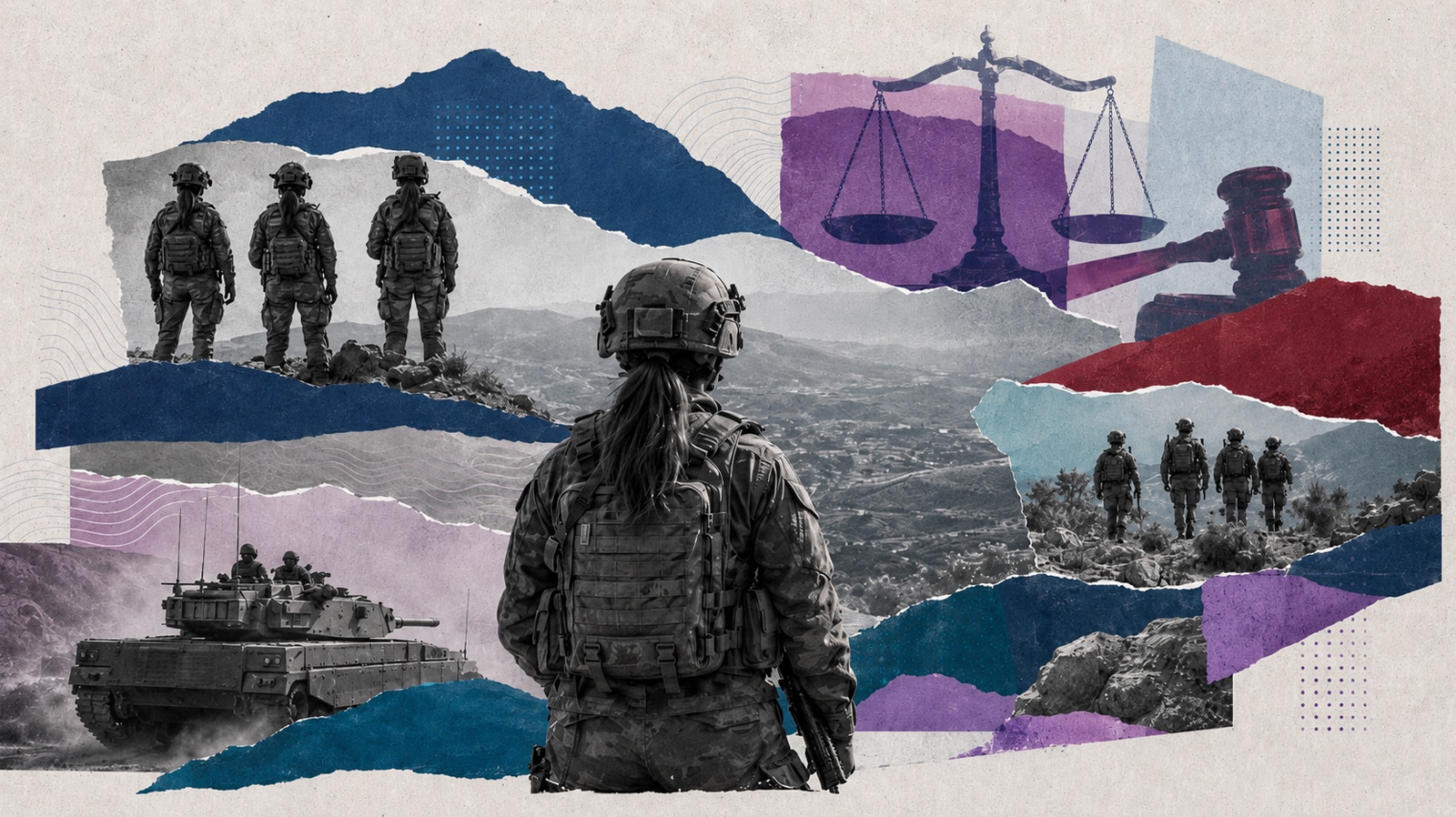
The debate over integrating women into combat roles in the IDF’s maneuvering forces has continued for decades. The issue came to the fore with the High Court of Justice’s 1995 Alice Miller ruling, which ordered the IDF to open the Air Force flight course to women and laid the foundation for broader changes in women’s military service. That decision marked the beginning of a gradual expansion of women’s participation across a growing range of IDF roles. The question of women serving in the ground maneuver forces, however, continues to present a complex challenge. It recently returned to center stage with the Kellner case, in which the High Court ordered the IDF to begin a trial integrating women into tank crews beginning with the November 2026 induction cycle. The ruling requires the military to provide equal opportunity in combat assignments and places the burden on the IDF to justify excluding women from any specific role.
The debate centers on three separate questions:
The first is whether equality of opportunity should override all other considerations. Women’s organizations and much of the progressive camp argue that it should, and that every role and unit should therefore be opened without restriction.
The second question is physiological and operational. Research, internal military data, and field experience point to significant physical differences between men and women in strength, susceptibility to injury, and the capacity to withstand sustained physical demands. This evidence should provide an objective and consistent basis for decisions about opening military roles to women and making the fullest possible use of Israel’s human resources. In practice, however, it is often kept out of public view and given insufficient weight in the decision-making process.
The third question concerns the religious and social dimension. Rabbis, heads of Yeshivot and Religious Zionist pre-military academies view the issue through a halachic and values-based lens and see mixed-gender service in maneuvering units as problematic. They warn that it can make religious observance more difficult, create problems of modesty, and generate tensions that may eventually harm cohesion.
Victory is the IDF’s overriding value.[1] That is the central principle that must govern this debate. Israel’s national potential should be mobilized to serve this purpose, and every other consideration must be subordinate to the military’s ability to prevail in war. The IDF is not a vehicle for social experimentation. Women should be integrated into the maneuvering forces only when this strengthens operational effectiveness, combat readiness, and the prospects for victory. Friction occurs when the Court requires equality “to the greatest extent possible” without giving sufficient weight to operational considerations.
This article will review the historical and legal background of women’s service, examine the physiological, religious, social, and operational dimensions of the issue, and offer practical recommendations.
Historical and Legal Background
Women took part in military activity long before the establishment of the state, serving in the underground organizations and the Palmach in combat, logistics, and intelligence roles. After the IDF was established in 1948, women became subject to compulsory service, although most were assigned to combat-support positions. Some women did continue to serve in combat units during the 1950s and 1960s, but in the wake of several wars and social changes their role gradually narrowed. By the 1990s, most combat positions were closed to women, primarily for operational, physiological, and religious reasons.
The turning point came in 1995 when Alice Miller petitioned the High Court after the IDF refused to allow her to undergo selection for the Air Force flight course. The Court ruled that women could not be excluded on the basis of established assumptions and that any restriction had to rest on clear operational grounds and ordered the IDF to open the course to women. The ruling laid the groundwork for a far-reaching expansion of women’s integration into the IDF and shaped subsequent legislation, most notably the 2000 amendment to the Defense Service Law. Section 16 of the Law established equal opportunity between the sexes as a basic principle of military service—unless the nature of a particular role requires otherwise. This qualification is significant; it permits differential treatment when justified by the inherent demands of the position, including operational, physiological, or other relevant considerations.[2]
The IDF subsequently opened many additional positions to women. They became pilots and navigators, served in naval roles and combat intelligence, and entered a wide range of military professions. Nevertheless, the maneuvering forces remained largely closed to women because service in them imposes exceptional physical demands, requires operations in harsh field conditions, and exposes soldiers to sustained heavy loads. As mixed-gender service expanded, tensions also grew among religious soldiers. In 2002, the IDF appointed a committee headed by the commander of the Ground Forces Command to address the issue. The resulting “Appropriate Integration Directive” sought to reconcile two goals: allowing religious soldiers to serve without compromising their beliefs and way of life and permitting women to enter any military track for which no specific justification for exclusion existed. The directorate responsible for implementing the framework was initially headed by the late Brig. Gen. Avi Ronsky, who would go on to become the IDF’s chief rabbi.
That framework did not end the controversy, and continued pressure from women’s organizations and the Court led the IDF to replace the directive in 2016 with the “Joint Service Order.” The new directive likewise sought to balance operational requirements with the goal of advancing gender equality, while also setting out safeguards for religious observance.
In practice, however, these provisions are not always enforced, leading to recurring friction. At a memorial race for fallen Combat Engineering Corps soldiers, for example, organizers promised separate participation for men and women, but the event was ultimately mixed. There have also been reports of male and female soldiers entering one another’s living quarters, taking part in joint fitness training, and attending unit events in which religious soldiers are required to participate despite concerns about physical contact and seclusion (the prohibition in Jewish law against a man and a woman who are not married to each other being alone together).[3]
Nevertheless, the IDF further expanded women’s roles to include combat service in light infantry battalions, service as tank operators in border-defense units, and technical positions in the Armored Corps. Full integration into the maneuvering forces, including mixed-gender tank crews, remained outside the accepted framework, largely because many commanders opposed it on professional grounds.
The military’s own position was not always consistent. Senior field commanders, including former heads of the Armored Corps, raised serious concerns about the readiness of integrated units. In September 2023, shortly before the War of Redemption, tensions over the issue peaked when Chief of Staff Lt. Gen. Herzi Halevi presented the High Court with a detailed professional position in response to a petition on the matter. Drawing on military data and his own extensive operational experience, Halevi argued that full integration of women into maneuvering armored units would not be feasible in the foreseeable future. He opposed launching an immediate pilot program, although he stopped short of rejecting the idea permanently and instead asked for a postponement.[4] The Court continued its deliberations and, in its April 2026 ruling in the Kellner case, ordered the IDF to begin a trial in November of that year. The decision reflected a broader pattern of expanding judicial involvement in military affairs.
A relatively successful experiment was carried out when an all-female tank company deployed along the Egyptian frontier. It showed that women can operate tanks effectively in border-defense missions, contribute meaningfully to security, and reduce the burden on regular armored units. The unit also demonstrated its combat capability on October 7. Nevertheless, border-defense missions do not generally require rapid movement across difficult terrain, carrying heavy equipment for prolonged periods, or high-intensity combat. They also allow soldiers to serve under adequate living conditions.
The trials conducted within the Armored Corps itself have exposed the limits of broader integration. Training female tank crews requires considerable time and resources. Injury rates have been relatively high, and attrition from combat tracks has been substantial. Field commanders have also reported difficulty maintaining fully functional tank crews during intensive operations, when every soldier, male or female, must be capable of performing every task, from loading heavy shells to evacuating casualties under fire. These concerns bring the physiological dimensions of women’s service in combat roles into sharper focus.
Physiological Considerations
Women serving in combat roles must meet the necessary physical and physiological standards. The physiological differences between men and women are not matters of opinion or cultural bias, but established scientific findings supported by decades of research in biology, exercise physiology, and military medicine. These differences begin at the genetic and hormonal levels and affect every physical parameter relevant to combat service, particularly in maneuvering units.
On average, women are approximately 12–15 centimeters shorter than men,[5] weigh 15–20 percent less, have body-fat levels roughly 10–15 percent higher—primarily around the pelvis and hips—and have 30–40 percent less muscle mass.[6] The most significant difference lies in testosterone levels. Men generally have testosterone levels ten to twenty times those of women. This difference directly affects muscle development, strength, recovery, and the ability to withstand sustained physical exertion.[7]
Studies by the IDF’s Institute for Research in Military Medicine and other military bodies have repeatedly found that women, even at comparable levels of overall fitness, have 50–60 percent less upper-body strength and 25–35 percent less lower-body strength than men. The same pattern appears in endurance. Maximum oxygen uptake, or VO2 max, is a key measure of the body’s capacity to sustain prolonged exertion. Women’s average levels are 15–25 percent lower than men’s, including after intensive training. These gaps cannot be eliminated easily because they also reflect differences in cardiac structure, blood volume, muscle density, and skeletal anatomy.[8]
The physical demands of maneuver warfare are extreme. Tank crews must load shells weighing 20–30 kilograms each, carry 30–50 kilograms of personal equipment, maintain armored vehicles under field conditions, evacuate wounded soldiers who may weigh twice as much as the female soldier carrying them, and continue operating for hours under heat, dust, and pressure. These demands bring physiological disparities into sharp relief. One study of women serving in light infantry battalions found a stress-fracture rate of 21 percent, compared with 2.3 percent among men.[9] Later studies, including internal IDF reports, indicate that overall injury rates among women in mixed-gender units are 2.5 to four times higher, even when lower fitness thresholds are applied.[10]
The U.S. military has by far the world’s most extensive experience integrating women into combat roles, and its findings are even more clear-cut. A Marine Corps assessment found that mixed-gender units took 20–30 percent longer to complete tactical missions, recorded lower shooting accuracy, and suffered more than double the rate of musculoskeletal injuries. The injury rate among women was 40.5 percent, compared with 18.8 percent among men. Attrition among women in armored and other heavy maneuvering formations reached 60–70 percent.[11] Further studies found that training and adaptation did not remove underlying biological differences, which continued to affect personnel availability, unit cohesion, and operational effectiveness.[12]
Competitive sport offers an obvious comparison. Men and women compete in separate categories in almost every discipline, from athletics and swimming to weightlifting and soccer, because the biological differences are too substantial to disregard. No one argues that such unequal treatment violates women’s rights. It is accepted as recognition of biological reality. The same logic should apply even more rigorously in the military, where failure costs lives rather than medals.
The evidence therefore points to a clear conclusion: full and unrestricted integration of women into maneuvering units carries significant risks to combat readiness and the long-term health of female soldiers, as well as risks of increased injury and attrition rates. Marginalizing these findings in the name of equality serves neither the military, the women involved, nor national security. Any serious assessment of the issue must begin with science, not ideology.
At the same time, making full use of the country’s human potential requires drawing on all segments of the population, provided that their service strengthens rather than undermines the IDF’s operational effectiveness. Women seeking to serve in combat roles should therefore be admitted only if they meet uniform physical standards—not reduced standards tailored specifically to women.
The Religious and Social Dimension
The debate is not only about physical performance. It also affects one of the IDF’s most important sources of combat manpower: the Religious Zionist community.
Religious Zionist soldiers and officers serve throughout the maneuvering forces, particularly in the reserves. They are a mainstay of the Armored Corps, Infantry Corps, Combat Engineering Corps, and Artillery Corps. Unlike the ultra-Orthodox, who generally serve in separate designated frameworks under special arrangements, Religious Zionists are integrated across the military. While that integration is a major social achievement, it also creates tensions when gender-integration policies conflict with Religious Zionist soldiers’ standards of modesty and religious observance, potentially undermining unit cohesion.
As discussed above, the Appropriate Integration Directive of 2002 was designed to manage precisely this problem. It established limits on mixed living quarters, bathing facilities, certain forms of joint training, and social activities. The Joint Service Order that replaced it in 2016 placed greater emphasis on equality, but implementation in the field has often failed to preserve the intended balance. In practice, it has often been breached in the field, whether because of enforcement difficulties, internal pressures, or differing interpretations by commanders. This has led to recurring friction between religious soldiers, rabbis, and commanders on the one hand, and the military establishment on the other.
The heads of hesder yeshivot (a track that combines religious study and military service) and pre-military academies, who send thousands of recruits to combat units every year, have maintained a long-running dialogue with the IDF, trying to ensure that their students can serve fully without compromising their values. Within the Religious Zionist community, however, a growing number of leaders believe that their concerns are no longer receiving sufficient weight. They see external pressure for gender integration as increasingly overriding both operational judgment and religious concerns. That perception became especially clear in June 2026, when the heads of the hesder yeshivot announced in an open letter that they would stop directing students to the Armored Corps in the wake of the High Court’s ruling.[13]
The Artillery Corps provides a warning of what may follow. Religious leaders were initially assured that the trial testing the integration of women into combat roles in the Corps would remain confined to designated units. It soon spread more broadly, including into operational positions. Many rabbis and pre-military academies responded by sending fewer yeshiva students to the corps or even halting their service altogether. The result was a serious gap in the corps’ reserve force, just as the War of Redemption demonstrated the critical importance of artillery fire. The number of women serving in the Artillery Corps remains comparatively small. Many serve in technical or command positions that impose lower physical demands, and their reserve service is often of shorter duration and more limited than that of their male counterparts. The same dynamic could now repeat itself in the Armored Corps’ maneuvering formations if the heads of yeshivot and hesder yeshivas call to stop directing recruits toward units that adopt full integration.
During the war, Religious Zionist rabbis and leaders largely remained silent on the issue because of the severity of the fighting and the need for national unity. That restraint, however, is temporary. Continued pressure for full integration, without regard for religious and social realities, could eventually lead soldiers from the Religious Zionist community to demand separate units similar to the Hashmonaim battalions or other dedicated religious frameworks. Such units would be preferable to a broad withdrawal from combat service, but they would seriously damage military cohesion, impede the transfer of experience between units, and weaken the IDF’s role as a unifying people’s army.
The religious and social dimensions cannot be treated as an administrative problem to be solved through orders alone. They touch on the identity of a large share of the IDF’s combat force, the motivation of thousands of soldiers and officers, and the military’s long-term recruitment capacity, particularly in the reserves. Ignoring those concerns, or overriding them through judicial pressure, could weaken the military precisely at a time when it needs every committed and capable soldier it can recruit. The only responsible path is sustained dialogue with Religious Zionist leaders and practical arrangements that protect religious observance without compromising readiness.
Recommendations
The implications outlined above bring us back to the principle that must govern all IDF activity: victory. As a people’s army operating in today’s security environment and as a military required to defeat multiple enemies, the IDF cannot afford social experiments that compromise preparedness or combat readiness. Integrating women into the maneuvering forces is an important objective. However, pursuing full and unrestricted integration without due regard for other considerations, could weaken unit cohesion, increase injury rates, reduce the recruitment of high-quality personnel from the Religious Zionist community, and impede the IDF’s ability to achieve a rapid and decisive battlefield victory. By contrast, targeted and carefully controlled initiatives, such as expanding border-defense units or developing combat roles suitable for women, could broaden their contribution without creating unnecessary risks to overall readiness.
An honest, data-driven assessment of previous trials indicates that a cautious approach, in which victory remains the IDF’s top priority, is the most responsible and effective course. In light of the Kellner ruling and the threats voiced by rabbis and the broader Religious Zionist community, the IDF’s senior command must take immediate, responsible, and balanced action:
- The chief of staff should publish a clear, detailed, data-driven position stating unequivocally that victory must guide every operational decision. Any proposed expansion of integration should undergo transparent, long-term assessment based on military research and field evidence. The principal findings should be made available both to the Court and to the public. The IDF must stop compromising in response to legal pressure and speak with a unified professional voice—one shaped by its commanders, rather than one left solely to its legal advisers. The statement issued after the IDF’s meeting with the heads of the yeshivot was vague and failed to address this point.[14]
- The 2000 Defense Service Law should be amended, particularly Section 16, which addresses equality. The amendment should strike a clear balance between the principle of equality and operational requirements, combat readiness, soldiers’ health, and the distinctive demands of modern warfare. Such legislation would strengthen the IDF’s ability to resist excessive judicial intervention in professional military matters and provide a firmer legal foundation for its operational judgments.
- The IDF should develop targeted and creative solutions that allow women to pursue their aspirations and use their abilities in combat roles without compromising the readiness of the maneuvering forces. This should be done in a manner that makes fuller use of their potential while enhancing the IDF’s operational effectiveness. The military has already done this successfully with its female tank company stationed on border-defense missions. Similar frameworks should be expanded to other borders and additional defensive roles. The IDF could also establish all-female units or introduce limited integration in roles that draw on women’s strengths in areas such as observation, systems operation, precision, and patience, with physical standards tailored to the demands of each role. At the same time, more positions should be opened to women, including the operation of advanced weapons systems, combat intelligence, cyber operations, electronic warfare, unmanned systems, and technical command roles. These solutions would enable women to make a substantial contribution without incurring the physiological and operational risks associated with full integration into the Armored Corps’ maneuvering forces.
- Religious concerns must be addressed through direct and respectful engagement. The IDF should maintain an ongoing dialogue with the heads of yeshivot, pre-military academies, military rabbis, and Religious Zionist leaders. The objective should be to preserve military resilience while finding practical arrangements that respect halachic requirements and standards of modesty wherever possible. Better command mechanisms would also help. The IDF could strengthen the Appropriate Integration Directorate or establish a joint professional and religious committee capable of resolving disputes as they arise.
- The IDF should establish a permanent research and monitoring mechanism. Every aspect of women’s integration into combat roles should be assessed over time, including injury rates, attrition rates, unit cohesion, cost, personnel availability, and wartime readiness. The findings should be available to both the military command and the public. Responsible policy can be formulated only on the basis of scientific data.
All these measures should serve the same objective: victory. The IDF is not an instrument for social experimentation. It is the institution responsible for defending Israel and its citizens. Implemented firmly and in a balanced manner these recommendations would allow the IDF to integrate women effectively, preserve social and religious cohesion, and strengthen the army’s combat capabilities.
Conclusion
The integration of women into the IDF has contributed to the IDF in many fields, enriching the army with unique skills. Women serve in the Air Force, Navy, intelligence community, and advanced technological units, and many have demonstrated exceptional professionalism, courage, and commitment. The maneuvering forces, however, present a different challenge. The Armored Corps, Infantry Corps, Combat Engineering Corps, and Artillery Corps operate under extreme physical conditions, and their soldiers must engage in close combat, move rapidly across difficult terrain, carry heavy loads, and remain in the field for prolonged periods. Under those conditions, the physiological differences between men and women cannot be ignored. Even if some women do meet physiological standards, service in mixed-gender platforms that require prolonged deployment in the field cannot be accepted.
Any debate on the issue of women’s service in the maneuvering forces must recognize that the IDF exists, first and foremost, to defeat Israel’s enemies. It is neither a vehicle for ideological change nor a testing ground for social policy. It must remain a first-rate security institution capable at all times of achieving a decisive victory against ruthless and determined enemies.
October 7, 2023, demonstrated the tragic cost of failures in readiness and preparedness, even as it also highlighted the courage and contribution of women in combat. Yet extensive physiological research, experience in Israel and in foreign militaries, and the operational record all indicate that full and unrestricted integration into ground maneuvering forces entails unacceptable risks. These include high injury and attrition rates, damage to unit cohesion, increased training costs, and a potential decline in recruitment from the Religious Zionist community, which accounts for a substantial share of Israel’s military reserves.
Religious and social considerations add a further layer of complexity. Continued pressure for compulsory integration could push Religious Zionist soldiers toward separate frameworks or even reduce the motivation of this sector which accounts for a significant share of the IDF’s quality manpower. Either outcome would damage the resilience of the military.
Rulings such as Kellner, which require equality “to the greatest extent possible” without giving adequate weight to operational evidence, underscore the need for the military to take a firmer position and for legislative changes.
This is not an argument against women’s service. On the contrary, the IDF can and should expand their contribution through balanced, innovative, and evidence-based measures. These should include enlarging border-defense formations, establishing all-female units for suitable roles, and maintaining a substantive and respectful dialogue with the Religious Zionist community. Such a policy would allow women to fulfill their potential while protecting their health and dignity, and it would preserve the IDF’s ability to achieve victory.
Israel can preserve a strong, cohesive, and combat-ready military only by treating victory as the supreme objective and subjecting policy to responsible and professional examination. This is not merely a military question; it is a matter of national survival. The IDF must remain focused solely on defeating the enemy and securing victory. Only then can it fulfill its responsibility to protect Israel’s citizens and safeguard the future of the State of Israel as a strong Jewish and democratic state.
[1] In this article, “victory” refers to the IDF’s need to focus on its ability to defeat the enemy in every battlefield encounter. This differs from the term’s meaning in the context of Israel’s national security doctrine, where victory denotes a national security outcome derived from the defeat of the enemy.
[2] Security Service Law (Amendment No. 11), 5760–2000.
[3] Shilo Fried, “Religious Soldiers Report Blatant Violations of the IDF’s Joint Service Order,” Ynet, November 25, 2024.
[4] Tzofnat Nordman, “Women in the Armored Corps: A Futile Initiative with a Heavy Price,” Makor Rishon, June 13, 2026.
[5] “Average Height Difference between Males and Females Visualized,” Reddit, 2022.
[6] Ian Janssen, Steven B. Heymsfield, ZiMian Wang, and Robert Ross, “Skeletal Muscle Mass and Distribution in 468 Men and Women Aged 18–88 Years,” Journal of Applied Physiology 89, no. 1 (July 1, 2000).
[7] D. Libster, Y. Heled, Y. Shapiro, and Y. Epstein, “Physiological Aspects of Women in Combat,” PubMed, National Library of Medicine, December 1, 1999.
[8] Ran Yanovich, Rachel Evans, Eran Israeli, Naama Constantini, Nurit Sharvit, Drorit Merkel, Yoram Epstein, and Daniel S. Moran, “Differences in Physical Fitness of Male and Female Recruits in Gender-Integrated Army Basic Training,” Medicine & Science in Sports & Exercise, November 2008.
[9] Renee Ghert-Zand, “Female IDF Soldiers Suffer More Stress Fractures,” Forward, August 10, 2011.
[10] ren Schwartz, Itzik Malka, Cara H. Olsen, Israel Dudkiewicz, Tarif Bader, “Overuse Injuries among Female Combat Warriors in the Israeli Defense Forces,” Military Medicine, November–December 2018.
[11] U.S. Marine Corps, Marine Corps Ground Combat Element Integrated Task Force Assessment Report, 2015.
[12] RAND Corporation, Integrating Women into the Marine Corps Infantry, 2015–2016.
[13] Shilo Fried and Israel Moskovitz, “Thirteen Hesder Yeshiva Heads Join Refusal to Serve in the Armored Corps: The Full List,” Ynet, June 11, 2026.
[14] Srugim News, “Chief of Staff Meets with Yeshiva Heads: ‘The IDF Is Still Short Thousands of Combat Soldiers,’” June 24, 2026.
JISS Policy Papers are published through the generosity of the Greg Rosshandler Family.
Source: https://jiss.org.il/en/siboni-winner-women-in-the-idf-maneuvering-forces/