



International Oil Daily, 14.08.2020
By Simon Martelli, London
The agreement between Israel and the United Arab Emirates to normalize relations is just the third of its kind that the Jewish state has struck with an Arab country.
It could yield important benefits for Israel, which currently has no official ties to the oil-rich Gulf states, and for which energy supplies have traditionally been seen as its Achilles’ heel.
The proposed accord — announced by US President Donald Trump — would formalize bilateral cooperation, particularly on intelligence and security, which has strengthened in recent years.
It appears designed specifically to counter the growing influence of Iran — the regional nemesis of the US, Israel, the UAE and Saudi Arabia.
But an agreement on energy is also included in the list of documents due to be signed in the coming weeks.
That could result in the UAE becoming the first Arab oil producer to officially supply crude to Israel, whose 200,000 barrel per day Bazan refinery in Haifa and the 90,000 b/d Ashdod refinery in southern Israel have had to procure oil from outside the region — mainly from Russia and West Africa.
“Israel doesn’t really have an oil problem. We have enough suppliers today, although it’s really hard to know who they are and how much they sell to Israel. … Having the UAE on board wouldn’t hurt. Oil from the Gulf is closer, which lowers the cost of imports,” says Emmanuel Navon, at the Jerusalem Institute for Strategy and Security.
“But I don’t think this is a priority. I think the priority is really to have them on board in this geopolitical struggle with the Iranians and the Turks,” Navon adds.
The rivalry between Israel, the Gulf states and Iran is hardly something new, although it has repeatedly threatened to spiral out of control over the past year. And access to Israel’s sophisticated cyber technology has become increasingly important on that front.
But tensions with Turkey are also reverberating across the East Mediterranean, as an assertive Ankara seeks to thwart the efforts of Israel, Cyprus, and Greece to develop the region’s substantial offshore gas resources.
The UAE, like Saudi Arabia and Egypt, strongly opposes the aggressively expansionist policies of Turkish President Recep Tayyip Erdogan.
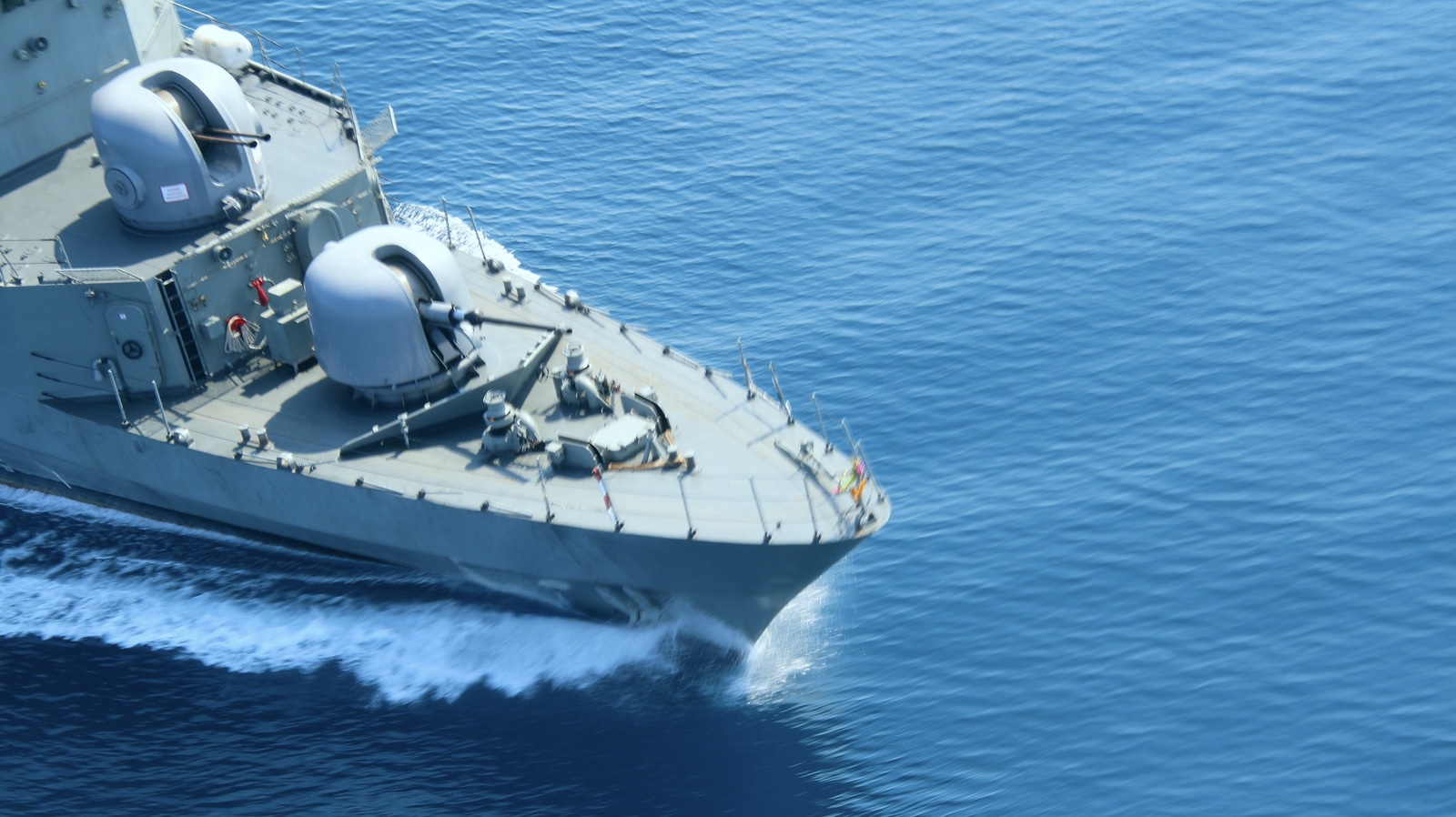
Earlier this week, Greek and Turkish warships were reportedly involved in a minor collision, as the Turkish surveillance vessel Oruc Reis was being escorted by the Turkish navy between Cyprus and the Greek island of Crete to explore for oil and gas drilling prospects.
The historic accord between Israel and the UAE could also be seen as validating Chevron’s entry into Israel’s gas sector with its acquisition last month of Noble Energy, which challenged the perceived taboo that Western majors cannot hold assets in both Gulf Arab states and in Israel (IOD Jul.20’20).
Previously, Israel had only managed to attract independent producers. So Chevron’s decision to acquire Noble’s Israeli assets, followed by the UAE’s decision to normalize ties with Israel, could mark a turning point in the Western majors’ appetite for Israel’s offshore, and a coming of age for Israel’s oil and gas sector.
Chevron will take over operatorship of the 22 trillion cubic foot Leviathan and 11 Tcf Tamar gas fields. It also inherits a production system that exports 200 MMcf/d of Leviathan gas to Egypt — volumes that could rise sharply if development plans are successfully implemented (EIF Aug.12’20).
Israeli companies have also pioneered green energy technology, while the UAE has led the way among Gulf oil producers in harnessing this technology to diversify its economy. Analysts see this as a fruitful area of cooperation as the energy transition gathers pace.
But the agreement between the two countries is not yet a done deal, and many details have yet to be finalized. Indeed, the UAE’s Crown Prince Mohammed bin Zayed appeared to downplay expectations by tweeting that the two countries had merely agreed on “setting a roadmap towards establishing a bilateral relationship.”
The accord is also not without risks. Hundreds of protesters took to the streets of Jordan’s capital, Amman, in January soon after Israeli gas — now operated by Chevron — began flowing to the kingdom under a 15-year deal (LNGI Jan.22’20).
Meanwhile, Chevron’s assets in the neutral zone between Saudi Arabia and Kuwait may now look more secure, but the company could find itself shut out of the massive LNG expansion in Qatar, which is an ally of Iran and Turkey and with whom the UAE severed ties in 2017.
The LNG expansion represents a rare upstream opening in the Middle East, and Chevron — short-listed as an equity partner along with five other Western oil majors — has been very interested in it for some time (IOD Apr.22’19).