
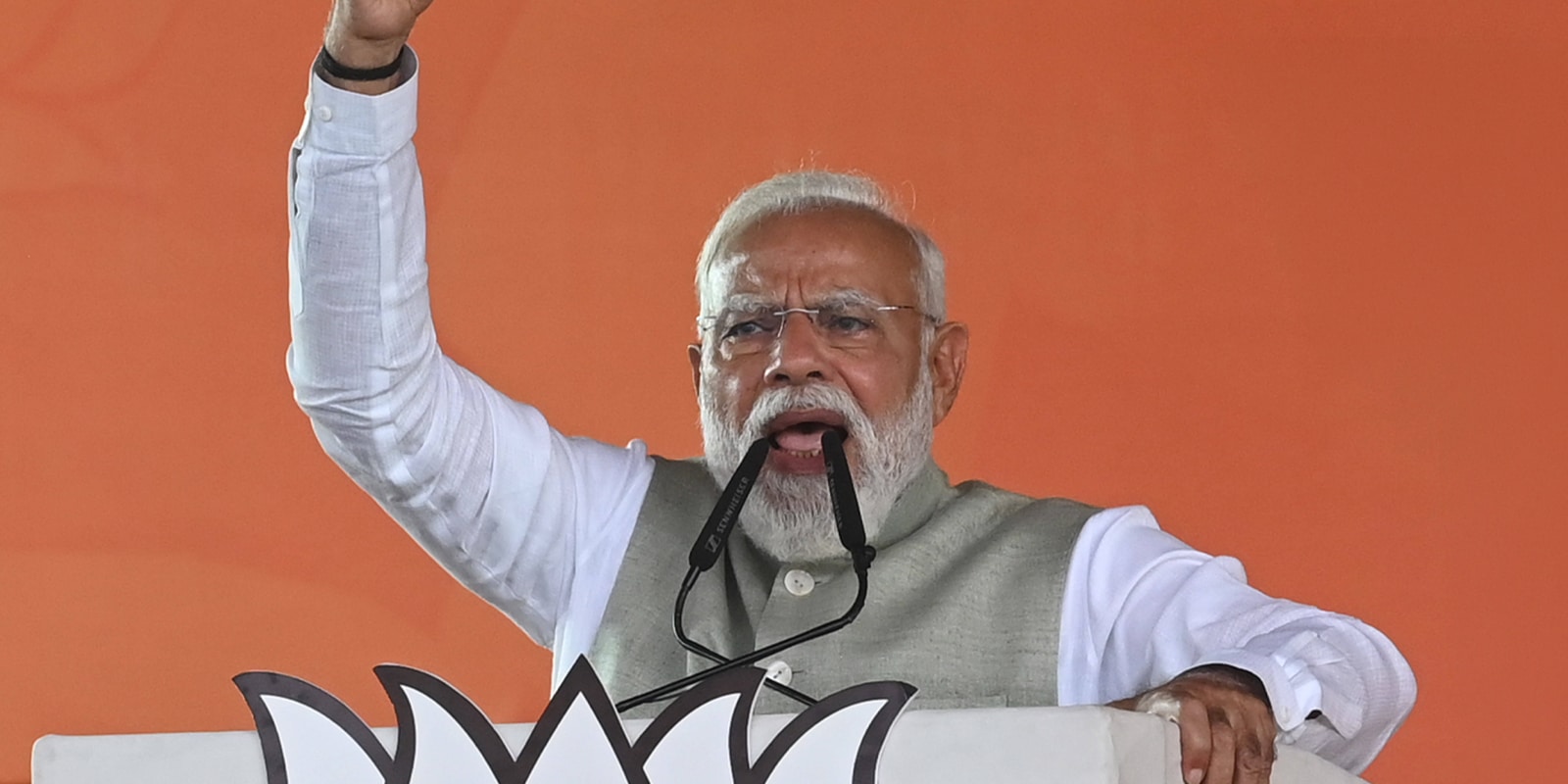

Had Narendra Modi anticipated that the US–Israeli campaign against Iran would begin just days after his return from Israel, he might have reconsidered his historic visit. The unfortunate timing transformed what was meant to be a diplomatic triumph into a breeding ground for conspiracy theories, exposing the Asian giant to harsh criticism at home and abroad. The closure of the Strait of Hormuz only intensified the backlash, sending global markets into a tailspin. Yet New Delhi, having made diplomatic caution its hallmark, is once again navigating strictly according to its national interests. Now, as geopolitical tremors collide with India’s deep integration into the global economy, the decision-making process has become more complex and sensitive than ever before.
Despite the heavy price India has paid as a result of the sanctions on Iran—from scaling back funding for the strategic Chabahar port, to halting oil purchases, to the freezing of billions of dollars of Indian funds in Iranian banks—India has always prided itself on its ability to maintain close ties with all parties. New Delhi’s silence during the initial days of the war created a vacuum that commentators and opposition figures were quick to fill with criticism of Modi’s foreign policy. Local headlines echoed a single, piercing question: “Why Has India Not Condemned Khamenei’s Death Yet?”
Sonia Gandhi, one of the leading voices in the Congress Party, argued in an op-ed that the refusal to offer condolences does not reflect neutrality, but rather a betrayal of India’s longstanding foreign policy principles. Her son, Rahul Gandhi, asked: “does PM Modi support assassination of a head of state?” Sanjay Singh, a leader of the Aam Aadmi Party (AAP), also criticized the government’s silence regarding U.S.-Israeli strikes: “Say something about the tyranny of America and Israel, Modi ji … Global dictator America’s tyranny will spread all over the world”. Meanwhile, analysts were quick to declare that India was shifting its strategy and seeking refuge under the wings of the West.
Yet reality is far more nuanced than the black-and-white dichotomy so revered by this new era. While in the public arena silence is often perceived as weakness, in the realm of diplomacy, it can serve as a calculated strategy. The critical timing of the attack, coming only days after Modi declared from the Knesset that “India stands with Israel, firmly, with full conviction, in this moment, and beyond”. left no room for loud condemnations, particularly when regional states themselves refrained from doing so.
Beyond the immediate optics, Ali Khamenei was one of the most prominent voices against India regarding the Kashmir issue. According to Indian government sources, between 2017 and 2024 Khamenei intervened four times in India’s internal affairs, adopting the Pakistani narrative, which led to Iranian representatives being summoned to Delhi for official reprimands. Nevertheless, facing a wave of protests by both Shias and Sunnis on Indian streets and fearing intra-communal volatility, the government ultimately chose to send a low-level official to offer condolences at the Iranian embassy, effectively putting the matter to rest.
Beyond the grave concern for the nine million Indian citizens in the conflict-ridden Gulf states—placing $50 billion in vital remittances at risk (in addition, Indian journalists were stranded in Israel following Modi’s visit and ended up as some of the few foreign correspondents covering the war from the ground)—India has been forced to confront another crisis with profound implications for its economic growth: the closure of the Strait of Hormuz. Still addicted to Middle Eastern oil and gas, and having yet to wean itself off despite grandiose plans for energy diversification, India finds itself bearing the burden of a war in which it has no part. As the world’s third-largest oil importer and second-largest consumer of liquefied petroleum gas (LPG), with half of these supplies sourced from the region—India is uniquely vulnerable. A surge in oil prices beyond the $100-per-barrel mark would stifle growth, ignite inflation, weaken the rupee, and significantly expand the fiscal deficit.
New Delhi’s international standing today rests on its economic growth. Yet, for this very reason, an economy and a nation of this scale cannot afford to put all its eggs in one basket. India is currently the world’s fastest-growing major economy and an emerging destination for global investment, India is on track to become the third-largest economy in the world. Its success lies in its ability to generate strategic stability, achieved through a calculated policy of risk diversification and bolstered by a government recently elected to a third term.
This very mindset is what drove New Delhi to purchase discounted Russian oil at the height of the war in Ukraine, despite international pressure. The same logic applies to the Indian giant Reliance’s investment in a refinery in Texas. Added to this is Trump’s surprising decision to grant India a 30-day waiver for Russian oil purchases in light of the ongoing conflict with Iran. This follows six months of friction with the Modi administration, which included a 25% punitive tariff. Yet, Trump’s move is born not of ‘altruism’ or empathy for Indian complexities, but rather a pragmatic impulse to curb rising oil prices and a sober recognition that India will, in any case, continue to act according to its national interest, likely returning to Russian oil with or without his blessing.
New Delhi now appears to be leveraging the strategic asset it has painstakingly built—a broad network of relations that maintains deliberate carful distance from all sides. This doctrine is precisely what allowed India to secure the passage of two oil tankers through the Strait of Hormuz, coordinated with and consented to by Iran. External Affairs Minister S. Jaishankar clarified that this is no a “blanket arrangment” with Iran, but rather a meticulous, case-by-case assessment. Various reports even point to a barter deal taking shape behind the scenes—India supplying medical equipment in exchange for the release of three Iranian vessels, which Delhi had allowed to dock at its shores when the campaign broke out in late February.
President Donald Trump’s call for other countries to help secure the strait and relieve the burden on the United States would be a strategic misstep if aimed at India. Pushing New Delhi into an active military role risks turning it into a direct participant in the conflict, an outcome that serves none of the parties involved, as India may be the only “wildcard” remaining for mediation in extreme cases. In the meantime, India continues to carefully hedge its bets, securing its immediate interests while quietly positioning itself for the opportunities that may arise should Iran be reintegrated into the global economy under a new political order.
This article was originally published in Hebrew in Haaretz.
JISS Policy Papers are published through the generosity of the Greg Rosshandler Family.