

The current government deserves credit for moving ahead with its decision to build in E1, after American and broader international opposition prevented successive Israeli governments from doing so. Yitzhak Rabin was the first prime minister to advance the plan, but he too was unable to carry it through. The tenders for the first 1,234 housing units now send a clear signal to the world: Israel is committed to preserving Jerusalem as its eternal capital and is determined to maintain a secure eastern border along the Jordan Valley.
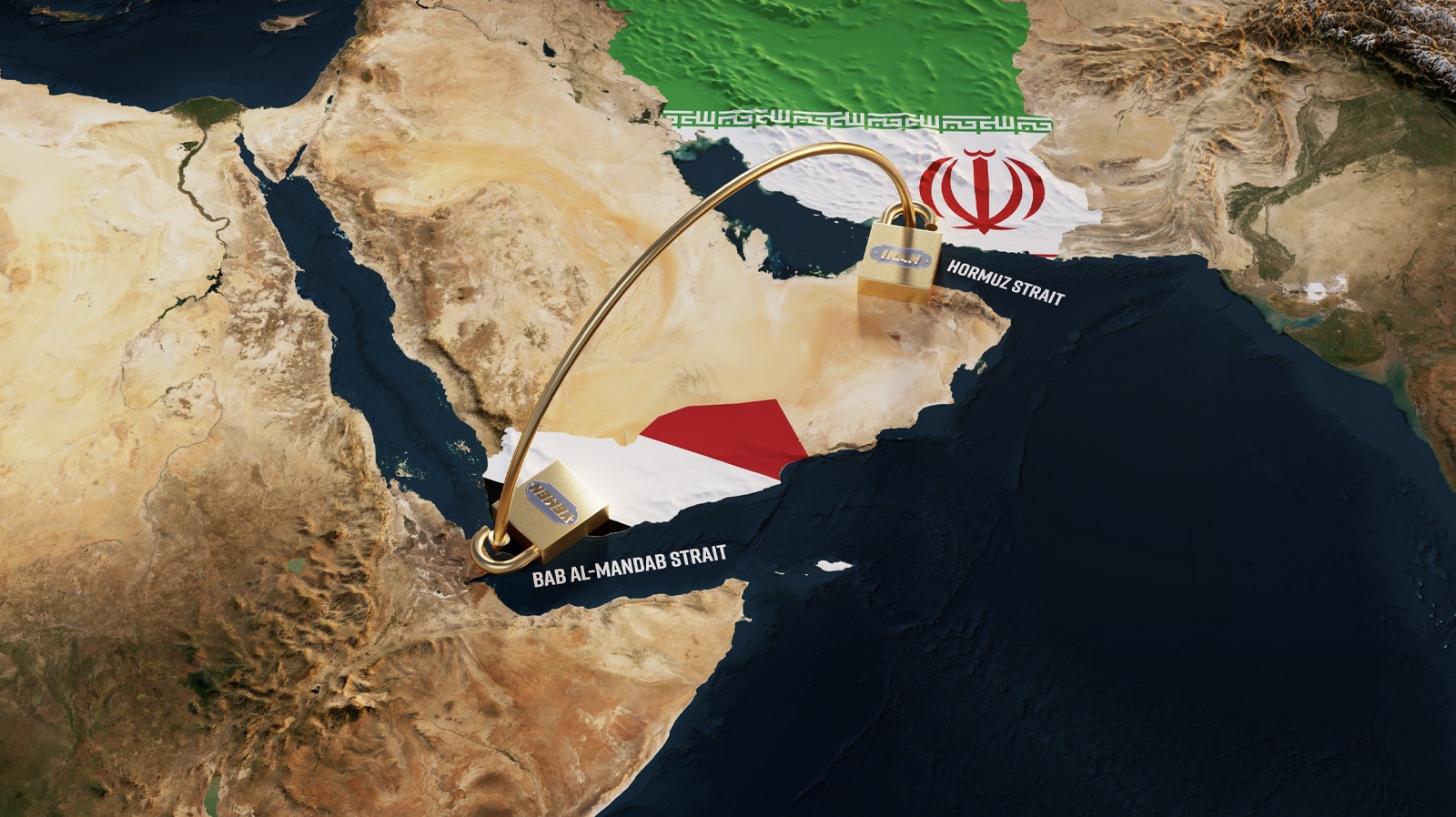
The timing of the announcement was optimal from Israel’s perspective. The Trump administration has refrained from criticizing the move, apparently because Israel informed it in advance. Most European governments have already followed through on what was widely regarded as their principal threat by recognizing a Palestinian state, without obtaining anything in return from the Palestinians. Since construction in E1 does not involve extending Israeli sovereignty to the area, the Arab states that have peace agreements with Israel are also unlikely to respond in ways that would rupture or seriously disrupt relations. Meanwhile, the Strait of Hormuz crisis has overshadowed other developments in the Middle East.
The government must therefore act quickly and settle the area linking Jerusalem with the town of Ma’ale Adumim, built in the 1970s under the Allon Plan. The plan placed importance both on the Jordan Valley as a security border and on securing access to it. Jerusalem’s importance to the Jewish people is not only historical and religious; the city also has considerable strategic value.
Ma’ale Adumim, east of Jerusalem and now home to some 40,000 Jewish residents, occupies a pivotal position on the route to the Jordan Valley, which serves as a security border against attack from the east. A four-to-five-kilometer corridor of Jewish settlement between Jerusalem and Maale Adumim would secure the only safe route along which Israel could, if necessary, move military forces from the coastal plain—where most of the country’s Jewish population lives and most military bases are located—through Jerusalem and onward to the Jordan Valley. Jerusalem, Ma’ale Adumim, and E1 also command Route 1, the only highway linking the Mediterranean coastal plain with the Jordan Valley and a route along which Jews can travel with little interference from major Arab population centers.
Jerusalem’s strategic value also derives from its location at a major junction of north-south and east-west routes. Its position allows military forces to move north or south without having to climb the slopes of the Judean Hills, which are populated by Arabs.

Opponents of Jewish settlement in E1 argue that construction would disrupt the territorial contiguity of the Palestinian state that the international community envisages as the solution to the protracted Israeli-Palestinian conflict, particularly along the Ramallah-Bethlehem axis. This is a hollow argument. Free passage between Samaria and Judea can readily be provided through overpasses or tunnels. Indeed, alongside construction in E1, Israel plans to build Highway 80 as a north-south route allowing Palestinians to travel between Ramallah and Bethlehem. Another road is planned between a-Za’im, north of Route 1, and al-Eizariya to its south.
An equally important aim from the perspective of those opposing construction is to prevent Israel from breaking the continuity of the Arab neighborhoods in eastern Jerusalem that are intended to form the capital of a Palestinian state. The Palestinians seek control of E1 in order to establish territorial and demographic continuity between their communities east and north of Jerusalem and the Arab neighborhoods in the eastern part of the city. That would preserve their ability to block Highway 1 and thwart the Allon Plan. More important still, linking these areas to the Arab neighborhoods of Jerusalem would advance the prospect of the city’s division in a future agreement. Connecting Ma’ale Adumim to Jerusalem, by contrast, would prevent this.
Israel should firmly reject the Palestinian demand for control over eastern Jerusalem, particularly the Holy Basin, which includes the Temple Mount and the Western Wall. The Palestinians are constructing a narrative that denies the Jewish people’s historical connection to Jerusalem and, in particular, denies the existence of the Jewish Temples on the Temple Mount.
Jews have constituted a majority in Jerusalem since the mid-nineteenth century, and the city has never served as the capital of a Muslim political entity. Moreover, surveys indicate that most Arab residents of Jerusalem prefer the status quo. Rule by either the Palestinian Authority or Hamas holds little appeal for them—with good reason.
Although Ehud Barak broke the Israeli taboo on dividing Jerusalem at Camp David in 2000. a large majority of Israeli Jews—nearly 70 percent, depending on how the question is phrased—still support keeping Jerusalem united. Asked whether Israel could relinquish the Temple Mount as part of a peace agreement, roughly 80 percent of Israeli Jews say no.
Palestinian control of E1 would pave the way for the division of Jerusalem, isolate Ma’ale Adumim, and undermine Israel’s claim to control the Jordan Valley. The only way to prevent the Palestinians from implementing their plan is to establish Jewish settlement in E1. Leaving the area empty signals Israeli hesitation and weakness, which can encourage further Palestinian efforts to gain control over strategically important parts of Area C. The continued existence of the illegal Khan al-Ahmar, a small Bedouin encampment that sits east of the E1 corridor on Route 1, illustrates the danger.
Some argue that Israel no longer needs the Jordan Valley as a defensive barrier against attacks from the east. In their view, the peace treaty with Jordan has consigned to the history books the danger posed by the eastern front’s proximity to Israel’s population centers and economic infrastructure. They also discount the valley’s topographical importance on the grounds that modern military technology enables precise long-range strikes. The ability to conduct such defensive strikes from the coastal plain, they contend, eliminates the need to hold the Jordan Valley.
Such arguments are politically and militarily shortsighted. They ignore the extraordinary potential for rapid political change in the region. Scenarios such as instability in Jordan or Saudi Arabia, or an Islamist radicalization of the regime in Syria, can no longer simply be dismissed as far-fetched. Any of them could revive the threat of a ground offensive from the eastern front.
These experts also overlook the history of military technology, which teaches us that over the centuries, the advantage has repeatedly shifted between offense and defense. It would be a dangerous error to conclude that today’s balance—in which technology temporarily reduces the importance of topography—will remain unchanged. Defensible borders cannot safely rest on fleeting technological superiority or political circumstances that may change. Assuming otherwise would be a critical strategic error. Israel’s vital need for defensible borders along the Jordan Valley therefore also requires it to secure the road linking the valley to the coastal plain through a united Jerusalem and Ma’ale Adumim.
At the same time, Israel could improve its international standing and soften opposition to construction in E1 by also presenting the world with a long-term vision based on the principle of territorial compromise for a distant future in which the Palestinians may be ready to become good neighbors.
For demographic reasons, settling all of Judea and Samaria and Gaza makes little strategic sense. It is also worth remembering that Jerusalem is the most important hill in the Land of Israel, yet Zionists do not constitute a majority there. Rushing to settle hills whose strategic value is questionable wastes Zionist energy and resources that could be put to better use. Israel can instead pursue a selective settlement policy focused on areas at the heart of the Israeli consensus, including Jerusalem and its environs, Ma’ale Adumim, and the Jordan Valley, without provoking excessive external disruption. At the same time, Israel should evacuate illegal outposts outside consensus areas, particularly in Areas A and B. This approach reflects the preferences of most Israelis. Israel must also act firmly to stop rampages by Jewish rioters in Judea and Samaria, which are a moral stain on the country and cause immense damage abroad. E1 is essential to Jerusalem’s future as Israel’s united capital and equally critical to Israel’s ability to maintain a defensible eastern border. The next government should continue implementing the construction plans for the area. Building Jewish neighborhoods in E1 is both a strategic and a political imperative.
JISS Policy Papers are published through the generosity of the Greg Rosshandler Family.
Source: https://jiss.org.il/en/inbar-e1-a-strategic-imperative/