

India’s foreign relations have changed dramatically and surprisingly in recent years. Once considered one of the most prominent defenders of the Palestinian narrative on the international stage, India has become a key strategic ally of Israel in fields ranging from technology and critical infrastructure through to extensive defense cooperation. Under Narendra Modi, India is no longer content with traditional diplomacy. It pursues a pragmatic, nationalist policy that treats Israel as a natural partner. Defense ties have reached new heights through massive arms deals and the joint development of military technologies. Major Indian corporations are also taking part in national projects, reinforcing the perception that Jerusalem and New Delhi are bound together along global trade corridors such as IMEC. The warmth between the two countries was evident again recently when Israeli Prime Minister Benjamin Netanyahu was quick to salute the Indian captain of a flydubai flight to Tel Aviv, who helped save the Israeli passengers after being attacked by his co-pilot.
Palestinian diplomats and propagandists are increasingly frustrated by this geopolitical reality. Recognizing their inability to directly derail arms agreements or economic corridors, they have shifted their focus toward undermining the alliance’s moral legitimacy and strategic narrative. This time, the struggle centers on Haifa Day. Every September 23, the Indian Army commemorates the 1918 Battle of Haifa, where Indian cavalrymen from the Jodhpur, Mysore, and Hyderabad Lancers liberated the city from Ottoman control. The war may have been fought between the British and the Turks, but the confrontation in Haifa pitted Indian cavalrymen armed with swords and lances directly against a fortified German unit equipped with artillery and machine guns. Against all odds, the cavalrymen achieved an unprecedented military success. Their victory went down in history as the last successful major cavalry charge.
In 2010, following an unexpected historical discovery, the Society for the Heritage of World War I in Israel, the Haifa Historical Society, and the Haifa Municipality initiated the formal commemoration of ‘Haifa Day’ to honor the Indian soldiers. Since then, the event has been regularly observed each year by the diplomatic missions of both countries. A prominent milestone in this shared commemoration occurred in January 2018, during Prime Minister Benjamin Netanyahu’s historic visit to India, with the official inauguration of the central ‘Teen Murti Haifa Chowk’ in New Delhi, dedicated to the memory of the 44 soldiers who fell in the battle.
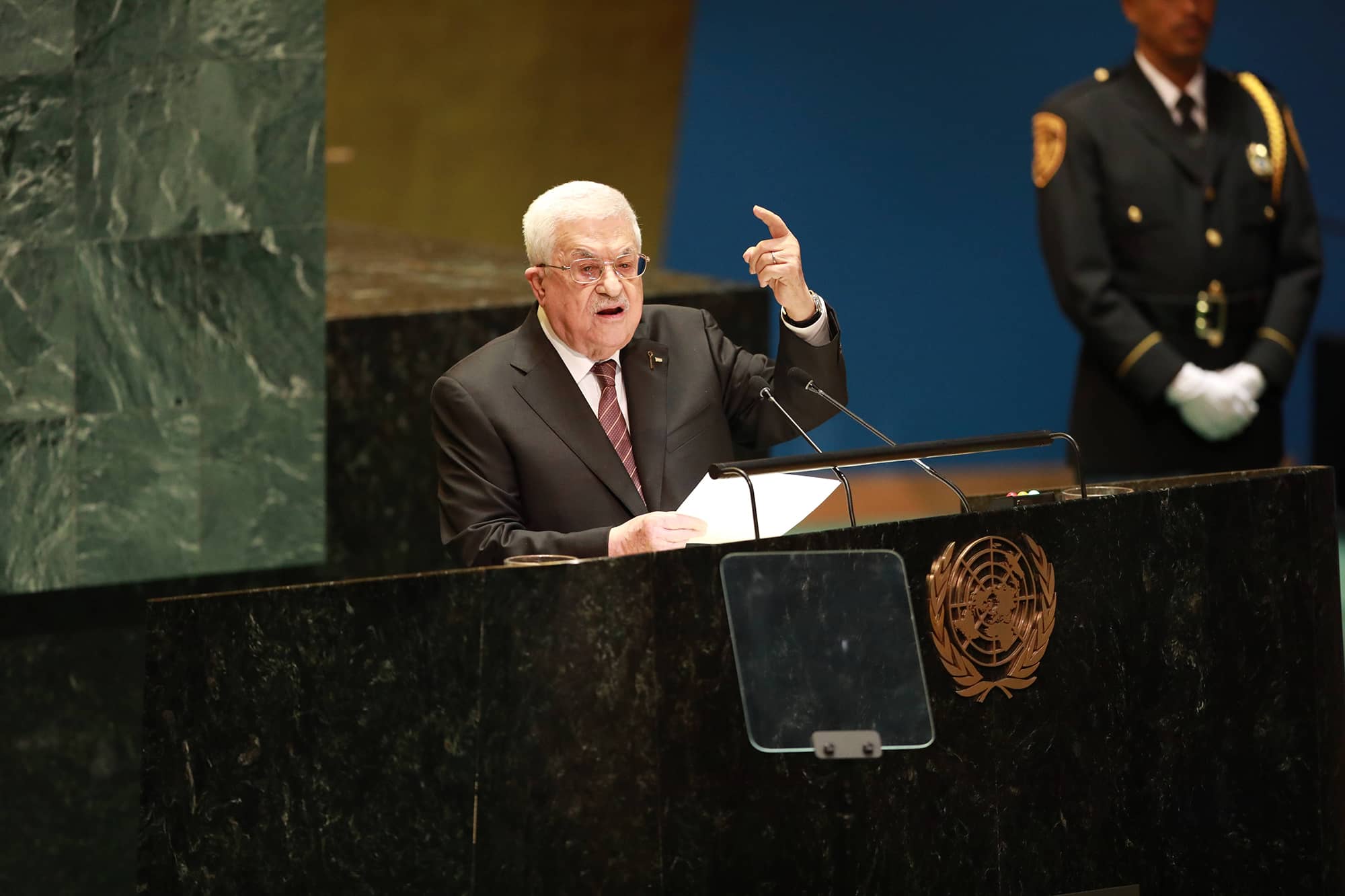
For years, Haifa Day commemorations proceeded without significant public controversy. However, the rising profile of India–Israel relations—which stands in stark contrast to Israel’s growing diplomatic isolation in other international arenas—has become a major point of contention for the Palestinian Authority. Over the past year, the Palestinian Ambassador to New Delhi, Abdullah Mohammad Abu Shawesh, launched a deliberate and targeted narrative campaign to counter this alignment.
Grounded in rigorous legal and historical research, the Palestinian diplomatic mission dispatched a five-page official letter to the Indian government in June. In the document, the ambassador expressed deep “concern by Israel’s attempts to reshape, distort, and politicize the historical record of Palestine.” This diplomatic action was reinforced by a parallel advocacy campaign targeting local media and members of parliament.
Abu Shawesh’s core objection centers on the deployment of the term ‘liberation’ and the subsequent attempt to weave a battle fought nearly three decades prior to Israel’s establishment into a narrative of shared Israeli-Indian history. The ambassador rejects this very framing, emphasizing that the operation was not an independent Indian undertaking, but was executed under the command of the British Empire, which deployed Indian troops to the front line.
One might questionwhy modern India embraces soldiers who fell in the service of the British Empire, the very power against which it waged a prolonged struggle for independence. Yet, behind this commemoration lies a nuanced perspective that often diverges from Middle Eastern political discourse: an ability to conceptually decouple the systemic injustices of the colonial regime from the valor, sacrifice, and martial legacy of individual soldiers on the battlefield.

Under the Modi administration, a profound transformation has occurred in India’s engagement with its military history, integrating it directly into the state’s evolving national narrative. A defining moment in this trajectory was the 2019 inauguration of the National War Memorial in New Delhi, addressing a nearly seven-decade void during which India lacked a unified monument dedicated to all its fallen soldiers. Simultaneously, this shift brought about a comprehensive rehabilitation of the legacy of Indian soldiers who served under British command, a heritage largely marginalized by previous administrations. By reframing military commemoration as both a source of national pride and a vital component of India’s soft power, Modi has positioned the sacrifices of Indian troops as a historical contribution to the shaping of the modern global order.
Building on this reasoning, the ambassador contends that if one follows the Indian government’s logic, India’s historical affinity lies with Palestine rather than the State of Israel. To substantiate this claim, the ambassador cites official statistics detailing Indian casualties across Mandatory Palestine during World War I: 491 fallen soldiers buried in the Ramleh War Cemetery, 109 in Gaza and Deir al-Balah, 47 in Haifa, alongside numerous others commemorated at additional sites throughout the region. From his perspective, highlighting the Battle of Haifa and reframing it as evidence of an Indian–Israeli historical bond represents a “desperate attempt by the Israeli side to court India through an artificial, exaggerated and historically unjustified narrative, while diminishing the broader sacrifice of the Indian soldiers across the region”.
Even if certain elements of his argument hold logical merit, the “New India” has long abandoned its apologetic posture and no longer offers reflexive support to the Palestinian narrative or automatic alignment against Israel in United Nations votes. Given the ambassador’s claims, the presence of Indian military graves across the Palestinian territories, and decades of diplomatic ties, the Palestinian Authority could reasonably have been expected to institute an official memorial day. Its failure to pursue such an initiative suggests that symbolic opposition has been prioritized over the cultivation of a meaningful, long-term partnership.
The manipulation of the victimhood narrative constitutes one of the most prominent and effective instruments in Palestinian public diplomacy. Over decades, this approach has refined the art of discursive inversion and reframing, wherein violent attacks, terrorism, and rocket fire are routinely cast as ‘justified responses’ or ‘legitimate resistance.’ This rhetorical strategy systematically shifts the discourse toward the consequences of Israeli military responses while obscuring the initial catalysts. When coupled with the strategic leveraging of Western moral and empathetic frameworks, it has fueled a deeply alarming global consequence in the 21st century: a renewed wave of antisemitism. The Palestinian ambassador’s litany of complaints in New Delhi is above all evidence of deep frustration that, on at least one front, Israel is prevailing both on the battlefield and in the battle over narrative.
Source: https://jiss.org.il/en/birvadker-indias-haifa-day/