

Introduction
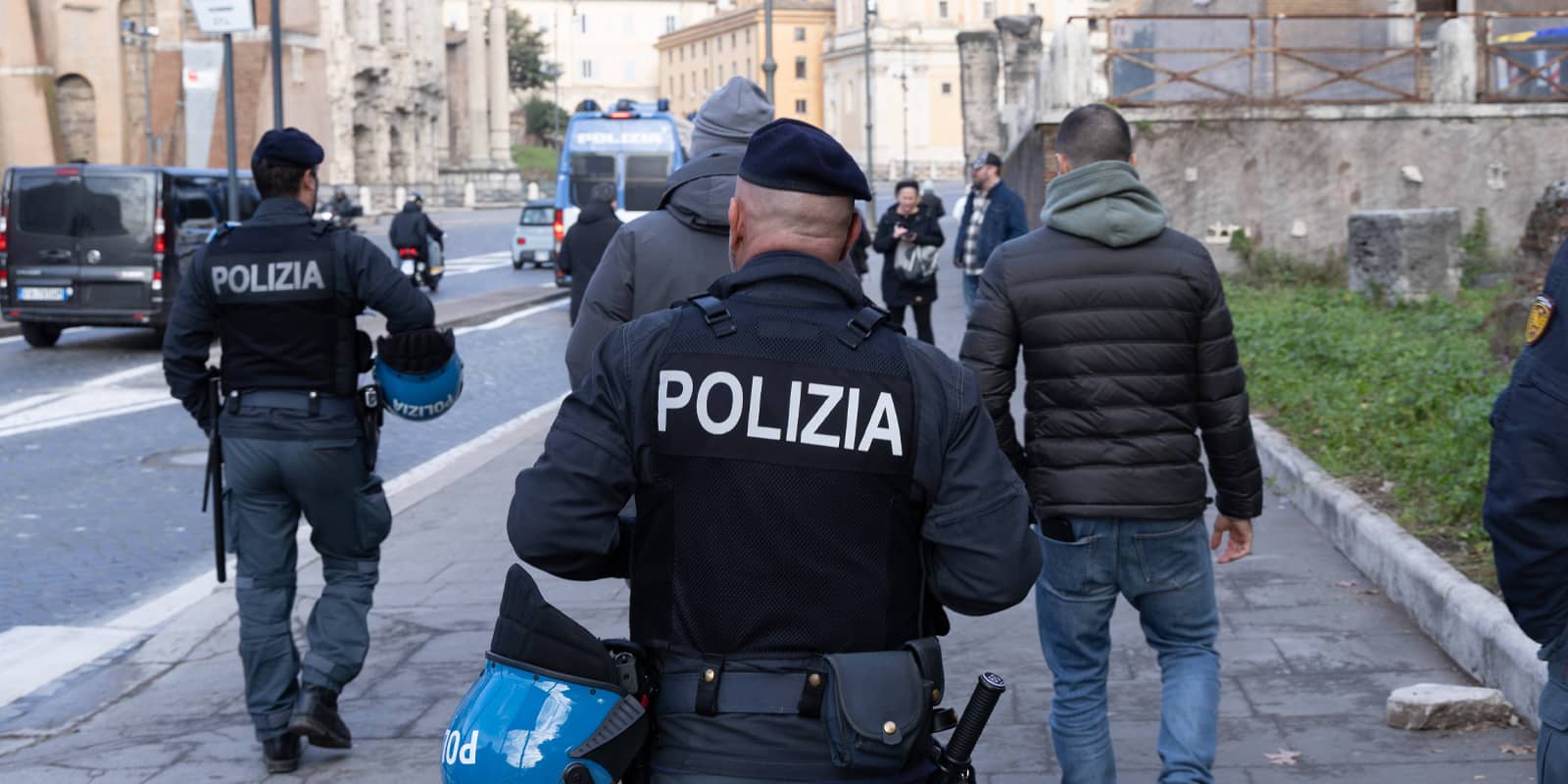
Italian authorities recently dealt a substantial blow to Hamas’ financial network in the country. In late December 2025, Italian police arrested seven individuals and issued international arrest orders for two others suspected of funneling millions to Hamas and its affiliated associations. One of the arrested individuals was Mohammad Hannoun, a U.S.-sanctioned Ramallah native, who has operated in Italy and has been on the radar of authorities since the early 1990s. The investigation expanded through cooperation with Dutch and other European authorities and was supported by Israeli intelligence.
The arrest of Hannoun and his Italian-based cell represent just one node within a broader, interconnected network of Hamas-affiliated financiers and advocacy organizations spanning Europe. Hannoun has been described as having contacts in the Netherlands, Austria, France, and England.
Security experts and law enforcement have long been aware of the risk posed by Hamas’ exploitation of European financial and legal environments. Beyond financing, Hamas has largely refrained from conducting terrorist attacks in Europe prior to October 7, 2023. This has been a key element of Hamas’ strategic narrative in the West, aimed at presenting itself as merely a “Palestinian Islamic liberation and resistance movement,” as described by Hamas leader Mousa Abu Marzouk. Hamas’ concerted efforts to portray itself as a benign political movement are evident in its recent legal attempts to get itself delisted as an official terrorist organization by the United Kingdom and Australia.
However, since October 7, 2023, Hamas appears to have moved beyond its prior strategic narrative, as European authorities have disrupted multiple alleged terrorist plots across the continent. As the threat of Hamas terrorist attacks in Europe has increased, the need for formal security and intelligence cooperation between Israel and the EU has become more pressing than ever.
Hamas’ Broader Financing Network in Europe
Under the guise of raising funds for Palestinian civilians, Hannoun operates several organizations in Italy, including the Palestinian Association in Italy (API), Associazione Benefica di Solidarietà con il Popolo Palestinese (ABSPP), and La Cupola d’Oro (Golden Dome). These entities serve as front organizations that divert funds to Hamas’ military wing.
Before his arrest, Hannoun reportedly had plans to leave Italy for Turkey. Italian court papers noted the involvement of Turkey-based intermediaries facilitating transfers for Hannoun’s network, demonstrating the international scope of Hamas’ terror-financing activities.
In 2024, the European Leadership Network (ELNET) published a series of reports revealing an extensive Hamas-affiliated network operating in various countries including the United Kingdom, Germany, Italy, France, Belgium, and the Netherlands.
This ecosystem also encompasses a network of NGOs and advocacy organizations, including the European Palestinians Conference (EPC), which has functioned as a recurring convening platform for Hamas-affiliated actors across multiple European countries. The EPC was originally founded by the Palestinian Return Centre, which was declared an illegal organization by Israel in 2010 for ties to Hamas.
An EPC-organized conference held in Malmö, Sweden, in 2023 brought together Hamas representatives from different countries, including Majed al-Zeer, a leader of Hamas in Europe and specifically in Germany and in Britain, Adel Doghman, the leader of Hamas in Austria, and Amin Abou Rashed, the leader of Hamas in Netherland. In October 2024, the U.S. Department of the Treasury designated al-Zeer and Doghman, alongside Hannoun, for their roles in external fundraising for Hamas.
Amin Abou Rashed, a Netherlands-based Hamas financier, was separately designated in June 2025 for similar activities carried out under the guise of charitable and civil society work. Prior to his arrest in 2023, Abou Rashed led the Palestinian Community in the Netherlands (PGNL), an umbrella organization for various pro-Palestinian groups.
The coordination among these figures dates back over a substantial period. As early as 2012, Hannoun and Abou Rashed were observed participating in a trip to Gaza organized by the European Al Wafaa Campaign. Photographs from the visit show Abou Rashed, Hannoun, Doghman, and former Hamas leader Ismail Haniyeh together, highlighting longstanding personal and operational ties within the network.
Earlier still, in 2009, the EPC was active in Italy, holding a conference in Milan. For that event, al-Zeer and Doghman listed themselves as EPC contacts, while Hannoun appeared in his capacity as chairman of the Palestinian Assembly in Italy. The conference brought together representatives from multiple Hamas-aligned organizations, alongside members of the European Parliament and Sheikh Raed Salah, an Israeli-based Muslim Brotherhood leader previously convicted for Hamas financing and incitement to violence.
The repeated convergence of senior Hamas-affiliated figures from different organizations at shared European forums illustrates how these entities interact through common platforms, reinforcing a broader, pan-European fundraising ecosystem. Individuals within this network, such as Hannoun, have spent decades embedding themselves within European civil society structures to advance Hamas’ foreign interests.
Some European countries in addition to Italy have taken decisive action in response to the threat. In May 2025, Switzerland initiated a five-year ban of Hamas and its front organizations in the country, a move intended to curb the terror group’s financing and enhance information sharing with international partners. That said, many European nations have been slow to catch up in confronting Hamas’ financing infrastructure in a substantive manner.
Hamas’ Growing Terror Threat on European Soil
Over the past two years, European authorities have thwarted numerous terrorist plots and uncovered weapons caches linked to Hamas, largely with the help of Israeli intelligence. In November 2025, the Mossad announced that it had assisted European security services in preventing Hamas terrorist attacks across the continent, including in Germany and Austria. Notably, a weapons cache seized in Vienna was found to be connected to Muhammad Naim, son of senior Hamas leader Bassem Naim.
Operatives involved in these terrorist plots have reportedly traveled abroad to meet with, or receive instructions from Hamas members in Turkey, Lebanon, and Qatar. Hamas has also allegedly coordinated with European street gangs such as “LTF – Loyal to Familia,” mirroring Iran’s tactic of using criminal networks as proxies for terror activity. The involvement of both domestic and foreign actors in Hamas’ terrorist attacks planned for Europe underscores the importance of international cooperation to adequately counter the threat.
Europe’s Security Cooperation with Israel: A Constrained Model
Israel and Europe have a history of intelligence cooperation that has largely remained informal and limited in scope, often due to political and institutional constraints.
In 1969, an informal intelligence sharing agreement dubbed the “Club de Berne” was formed as a grouping of intelligence services from eight Western European countries. Club de Berne led to the creation of a communication channel known as “Kilowatt”, which became crucial for sharing intelligence on Palestinian terrorist attacks planned in Europe. In 1971, Israel and the U.S. were added to Kilowatt as participants, followed by eight additional Western nations that joined over the course of the decade.
More recent partnerships include a working arrangement signed in 2018 between Europol and Israel, intended to expand cooperation in combatting fraud, cybercrime, and terrorism. While this arrangement allows Israel to maintain a liaison officer at Europol, access to core information-exchange systems and specialist forums remained limited.
Israeli law enforcement and Europol advanced their cooperation to a new level in 2022 with an agreement allowing both parties to exchange intelligence in real-time. However, the 2022 agreement was ultimately blocked by EU member states who refused to approve it.
The Case for an EU-Israel Counter-Terrorism Coordination Mechanism
The Italian investigation demonstrates how a nationally initiated case, supported by intelligence sharing and cross-border coordination, can shed light on Hamas’ intertwined financing and external operational activity in Europe. Rather than treating such activity as isolated national phenomena, the Italian case shows the value of following financial and organizational linkages across borders. Replicating this approach at the European level is essential for effectively countering Hamas’ pan-European financing infrastructure.
With reports of foiled Hamas operations in Germany, the Netherlands, Denmark, Bulgaria, and Poland since October 7, 2023, Europe can no longer afford to address the threat in a piecemeal manner. For these reasons, Europe could greatly benefit from a continent-wide counter-terrorism coordination mechanism with Israel, building on the lessons of the Italian investigation.
Ideally, this framework would allow both Israeli and European authorities to integrate capabilities and personnel to proactively identify and thwart Hamas’ financial and attack planning networks operating in Europe. Recent security agreements established between Israel and Europol, such as the 2018 working agreement, can potentially serve as building blocks for enhanced cooperation. Once established, this mechanism would close a critical gap in Europe’s counter-terrorism architecture by institutionalizing sustained cooperation with one of its most capable security partners.
JISS Policy Papers are published through the generosity of the Greg Rosshandler Family.