
The armed conflict between Pakistan and Afghanistan under Taliban rule has been ongoing since late February, with both sides exchanging threats; official casualty reports remain questionable and difficult to verify. The most recent escalation, marked by Pakistani airstrikes inside Afghan territory, effectively ended the fragile ceasefire reached through regional mediation in October 2025. This deterioration is seen as almost inevitable against the backdrop of the complex history of relations between the two Muslim neighbors, which has rapidly worsened over the last five years. The present round of fighting is the most significant escalation between the two countries since the Taliban returned to power in 2021, and it represents the culmination of persistent tensions that reignited after weeks of border friction. The collapse of mediation efforts, and the shift toward “open warfare” attest to the depth of the rift and the failure of diplomatic mechanisms to stabilize the shared border.
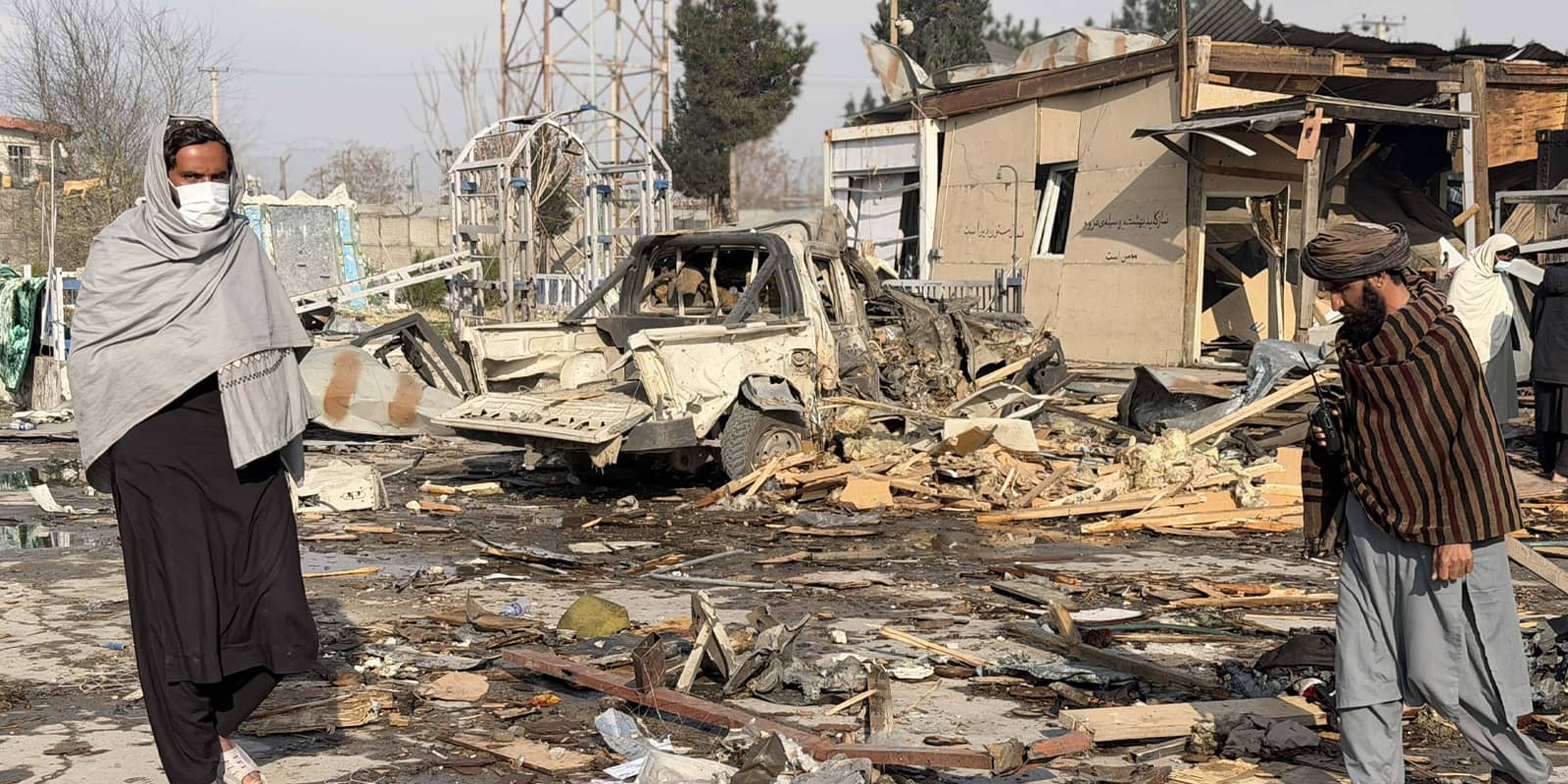
Senior Taliban officials announced the launch of a series of coordinated attacks against military bases along the border, with a particular focus on the provinces of Nangarhar, Nuristan, Kunar, Khost, and Paktika. In response, Pakistani security forces launched a large-scale retaliatory operation dubbed Ghazab lil-Haq (“Righteous Fury”). By the following day, Pakistan escalated its response, bombing strategic targets in major Afghan cities, including the capital, Kabul, and the Taliban stronghold of Kandahar. As the confrontation escalated, Pakistani defense minister, Khawaja Muhammad Asif, stated: “Our cup of patience has overflowed. Now it is open war.”
The Taliban government claimed that the strikes are not isolated incident but a direct response to Pakistani military operations on Afghan soil. They argue that Pakistan has violated Afghan sovereignty and caused civilian casualties, including women and children. In contrast, Islamabad rejects these allegations, clarifying that the airstrikes targeted only terrorist infrastructure linked to Tehrik-e-Taliban Pakistan (TTP). Pakistan refers to this organization by the derogatory term “Fitna al-Khawarij,” portraying them as outlaws and sowers of religious strife, and accuses Kabul of providing safe haven to its members.[1]
The conflict reached a boiling point on March 16, when Afghanistan reported what it described as a “crime against humanity” following a lethal Pakistani airstrike. The strike targeted a rehabilitation center, killing approximately 400 people and leaving 265 others injured. Despite discrepancies in casualty reports, even the most conservative estimates indicate that this was one of the deadliest mass-casualty events in Afghanistan’s history. In the shadow of this sharp escalation, both sides agreed to a temporary truce for the Eid holiday (March 18–23). Shortly thereafter, on March 24, the United Nations called on both parties to forge a sustainable ceasefire, fearing a wider regional collapse.
The powers mediated the conflict in the past now find themselves preoccupied with the war in Iran; some even face direct threats to their own sovereignty and territory, significantly limiting the attention directed toward this front. As global focus shifts toward the confrontation with Iran and supply chain disruption in the Strait of Hormuz, issues that strike the raw nerves of the global economy, a strategic vacuum has emerged. Into this void enters China, emerging as the only external power with the access, patience, and strategic weight necessary for mediation. Recent reports suggest that Beijing’s efforts have already borne fruit, leading to a temporary reduction in the intensity of the fighting. In contrast, India maintains its silence. New Delhi fears that any active involvement would be interpreted by Pakistan as a provocation, potentially reigniting military friction along their shared border. Meanwhile, the United States, focused on the campaign against Tehran, is turning to Islamabad specifically as a diplomatic bridge to Iran. It appears that Pakistan is exploiting the distraction of the Western and Arab worlds to intensify military pressure on the Taliban, aiming to force compliance with its strategic demands.
Much like previous rounds, it is highly likely that the current conflict will conclude with a temporary ceasefire. However, the comprehensive war against Iran—which is consuming the bulk of diplomatic attention in the Middle East and placing the mediators themselves under threat—raises genuine concerns regarding the risk of an uncontrolled escalation. It is worth noting that, prior to the campaign against her, Tehran had expressed alarm over the growing tensions and even offered its services as a mediator; an offer that is now being sidelined as Iran itself has become a theater of active combatץ
The deep financial crisis and rising unemployment in Pakistan have become effective recruitment tools for the TTP in peripheral regions. While UN reports estimate the group’s strength at approximately 6,500 fighters, evidence from the field suggests significantly higher numbers, potentially reaching up to 20,000 operatives. Alongside this growth in manpower, the organization has benefited from an unprecedented military upgrade: a substantial portion of the American equipment and weaponry—valued at an estimated $7 billion and left behind during the U.S. withdrawal from Afghanistan in 2021—has leaked into the hands of the TTP.
The group’s resurgence was further bolstered by former Prime Minister Imran Khan’s controversial decision to release TTP militants from prison during his term—a move now viewed as a key catalyst in the group’s revival. The consequences are evident on the ground: the past year recorded the highest number of militant attacks in Pakistan in a decade, most of which were orchestrated by the TTP and its affiliates. Since the Taliban’s takeover of Afghanistan, the organization has deepened its grip on the Khyber Pakhtunkhwa province, where local residents are trapped between a rock and a hard place, forced to bear the brunt of both jihadist violence and the harsh repercussions of state security operations
The TTP seeks to replicate the Afghan Taliban’s model of Sharia rule within Pakistan, and the lethal suicide bombing last February, which claimed the lives of 12 people, serves as further evidence of this escalation. In its aftermath, Pakistan’s Foreign Ministry accused the organization of operating under the diplomatic sanctuary provided by Afghanistan. This represents an ironic strategic rift: Pakistan—one of only three countries to recognize Taliban rule in 1996 and a nation that welcomed their return in 2021—now finds itself in an open war against its former ally, while innocent civilians, including women and children, pay the ultimate price in the line of fire.
The Taliban’s return to power in 2021 initially raised expectations in Islamabad for a ‘strategic dividend.’ Pakistan assumed that Kabul would act to restrain the TTP, whose ideological affinity with the Afghan Taliban is both deep and well-documented. However, reality proved otherwise; TTP attacks only intensified, and 2025 marked a deadly decade-high record, with over 2,400 fatalities among Pakistani security forces. The growing frustration in Islamabad stems not only from the mounting death toll but from the bitter realization that its traditional influence over the Taliban has been almost completely eroded.
Today, both nations are trapped in a cycle of mutual recrimination. Pakistan argues that the Pakistani Taliban—an organization formed two decades ago to support the Afghan struggle against the U.S. and now operating against Pakistan—enjoys a safe haven in Afghanistan, alongside Baluch separatists seeking independence in the country’s southwest. Conversely, Kabul rejects these accusations, contending that it is actually Pakistan providing shelter to ISIS operatives, who carry out lethal attacks within Afghan territory and undermine the Taliban’s promise of stability.
The conflict also centers on the unresolved issue of the “Durand Line,” a 2,600-kilometer border drawn in 1893 by British India that has never received official recognition from any Afghan government. The line, which bisects the Pashtun tribal lands, cements a historical wound in the geography of the modern state system, turning every attempt at border stabilization into a flashpoint of nationalist and religious friction. Upon ascending to power, the new Taliban government refused to formally recognize the border with Pakistan, arguing that the line was a colonial imposition that unfairly partitioned Pashtun regions between the two nations.
The last significant flare-up between the two neighbors occurred in October 2025, when cross-border skirmishes escalated into a series of Pakistani airstrikes within Afghan territory. Qatar and Turkey engaged in intensive mediation efforts, including rounds of talks in Doha and Istanbul. However, while a fragile ceasefire was reached, the political negotiations failed to establish a permanent mechanism for the cessation of hostilities, leaving the door open for the current round of fighting.
Along the Durand Line border between Pakistan and Afghanistan, two military forces with polar opposite combat doctrines and resources have stood face-to-face in recent weeks. Conventionally, Pakistan possesses a clear strategic advantage. As a nuclear power with impressive regional military capabilities, it maintains an active-duty force of approximately 600,000 troops, an armored corps consisting of over 6,000 vehicles, and an advanced aerial inventory. In contrast, the Taliban regime relies on a force of fewer than 200,000 fighters and suffers from a near-total lack of air power and limited logistical depth
However, the nature of the current conflict is inherently asymmetrical. While Afghanistan lacks the capability to deliver strategic airstrikes deep within Pakistani territory, the Taliban increasingly integrates the use of unmanned aerial vehicles (UAVs) and attack drones into its operations. These assets, characterized by low production costs and technological accessibility, are shifting the battlefield dynamics, enabling the Afghans and the TTP to challenge Pakistan’s technological superiority. Furthermore, the Taliban’s historical reputation for guerrilla and attrition warfare serves as a significant deterrent against a large-scale Pakistani ground maneuver.
The Taliban’s reluctance to confront the TTP reflects a combination of ethnic-nationalist Pashtun solidarity and a pragmatic fear of internal fragmentation. After all, a move against the TTP could lead to the defection of fighters to the ranks of “Islamic State-Khorasan Province” (ISIS-K), the Central Asian branch of the Islamic State, which poses an existential threat to Taliban rule. While the potential for escalation between Pakistan and Afghanistan is significantly lower than that between Pakistan and nuclear-armed India, the structural instability on this front grants transnational terrorist groups a vital operational space, thereby exacerbating the global terror threat.
For India, the tensions present both opportunities and risks. A distracted Pakistan might alleviate immediate pressure along India’s western border and dilute Islamabad’s regional maneuvering capacity. However, instability in Afghanistan carries inherent risks, such as the radicalization of militants, threats to Indian development projects in the region, and disruptions to connectivity aspirations between India and Central Asia. To a large extent, Pakistan’s hardline stance against the Afghan Taliban can be interpreted as a deterrent aimed at curbing the deepening strategic axis emerging between Kabul and New Delhi, as hinted by the Pakistani Defense Minister, who claimed that the Taliban has turned Afghanistan into an “Indian colony”
In conclusion, despite the bellicose rhetoric, the probability of a descent into a full-scale conventional war remains low, due to broad structural constraints. Foremost among these is the fact that Afghanistan lacks the economic infrastructure and logistical depth to sustain a prolonged campaign, while Pakistan, mired in a severe internal crisis, is deterred by the strategic risk of managing two active fronts, especially following the events of the military operation against India in May 2025. Consequently, the logic guiding both sides remains the tactical management of the border and the use of “controlled escalation” as a tool for political leverage, while avoiding a total collapse of an already fragile regional status quo.
[1] Pakistan officially adopted this term in 2024 to deny the TTP (the Pakistani Taliban) the right to be called ‘Muslims’ or ‘Taliban,’ labeling them instead as a terrorist organization that spreads chaos (Fitna) and distorts religion.
Source: https://jiss.org.il/en/birvadker-islamabads-taliban-strategy/