
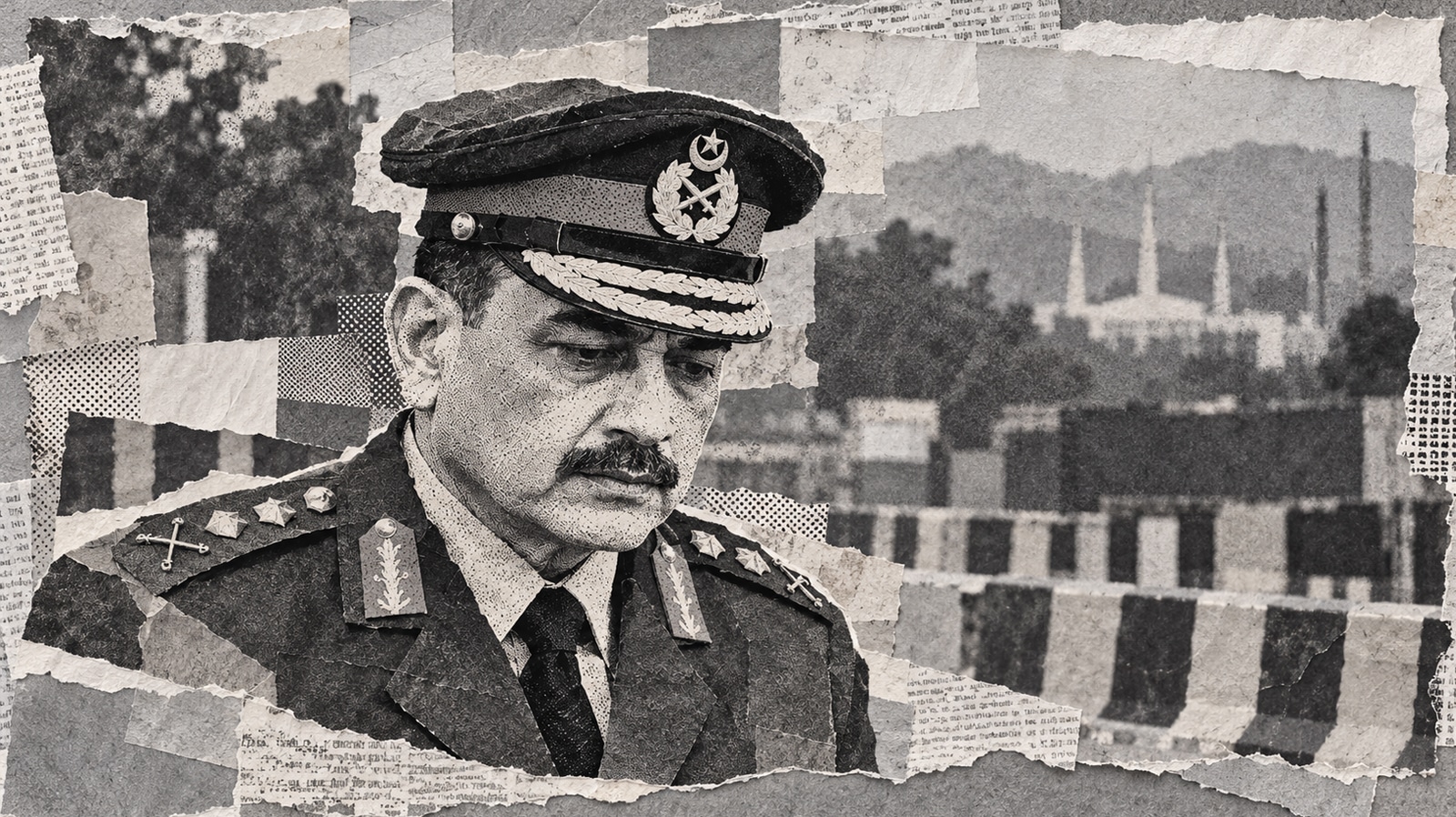
Pakistani President Asif Ali Zardari declared a state of emergency in the northwestern province of Khyber Pakhtunkhwa on October 11, suspending the provincial government controlled by PTI, the party of former Prime Minister Imran Khan, a 74-year-old former cricket star who was ousted from office in 2022 and imprisoned a year later. The official pretext for the declaration is the local administration’s failure to address terrorism, but in practice, a state of emergency is a euphemism well-suited to the atmosphere of military rule. This move escalates the entrenchment of Field Marshal Asim Munir’s military dictatorship, revealing just how fragile the internal front is upon which the Pakistani regime must operate. All of this is happening precisely as Islamabad has returned to international prominence thanks to its mediation efforts between Iran and the West. However, Pakistan’s deteriorating situation on various fronts once again raises questions about its ability to mediate in the Middle Eastern conflict.
The timing of the move is not accidental, as it comes as part of an attempt to thwart the wave of protests and marches planned by PTI party supporters toward the capital, Islamabad a campaign that security forces have worked to curb in recent days by blocking main roads with thousands of shipping containers and deploying massive police forces. Prime Minister Shehbaz Sharif attempted to legitimize this takeover by pointing to budget and security failures on the part of the local leadership. In his remarks, Sharif emphasized that “under the national resource-sharing arrangement, the other provinces agreed to allocate increased resources to Khyber Pakhtunkhwa in historical recognition of its position as the front line in the fight against terrorism.” Sharif went on to add accusations of breach of trust, noting that the funds intended to strengthen counter-terrorism and intelligence units had disappeared while terrorist activities escalated, particularly in the region. “Instead of standing like a complete wall against terrorists, they are not only silent, but the situation is getting worse every day… When we say this aids terrorism, instead of standing with the federation to jointly neutralize these terrorists, you don’t say a single word against them.”
However, even if there is substance to the security claims, the federal government is using the incident as a political weapon intended to portray the opposition as collaborating with terrorism. The Khyber Pakhtunkhwa government’s preference to promote dialogue with the TTP, commonly known as the “Pakistani Taliban,” in line with the spirit of party founder Khan, who advocated for this approach as prime minister between 2018 and 2022, directly contradicts the central government’s preference for military action. The TTP threat has indeed escalated in recent months, despite extensive past military operations such as Zarb-e-Azb (“Sharp Strike”) and Radd-ul-Fasaad (“Elimination of Discord”), operations that failed to eradicate terrorism or reduce its footprint. Now, the Pakistani military is seeking to shift the blame for its own failure onto a single province.
Beyond the immediate political struggle and its status as a direct arena of confrontation with the Taliban, control over Khyber Pakhtunkhwa carries heavy geopolitical and strategic implications for the central government. The province serves as a critical link in the China-Pakistan Economic Corridor (CPEC), while simultaneously functioning as a major recruiting ground for the armed forces. Hence, any potential for civil unrest or opposition resistance in this region poses a direct threat to the cohesion and standing of the military establishment itself.
Despite the volatile security situation along the border with Afghanistan since the Taliban’s return to power, the main Pakistani effort was invested in restoring trust with the Americans while maximizing opportunities to rid itself of the stain of terrorism. The goal was to rebrand Pakistan as a responsible, rational, and leading state in the Muslim world and the international arena. However, while Islamabad attempted to advance international negotiations, the situation on the Afghan border continued to escalate. The Pakistanis demanded a firm stance and allocated funds, but these were actually transferred to the provincial government that remains loyal to Khan and demands his release.
Khan’s deteriorating health and worsening prison conditions prompted his supporters to call for his release in a massive march aimed at reaching Islamabad. According to his family, his medical condition continues to deteriorate, while Pakistani authorities violate an August Supreme Court ruling ordering his transfer to a private medical facility for examinations. Instead, he was briefly evacuated to a public hospital. Family members report that they are being denied visitation rights, and the authorities refuse to issue entry visas to his two sons living in the UK.
The intensive preventive measures taken in recent weeks to prevent Khan’s supporters from reaching the capital rest on a key political and image-related consideration. Pakistan, which has invested substantial effort in positioning itself as a responsible player and mediator in the international arena, is acutely aware of the severe damage to its image that would result from visuals of civil suppression on the streets of Islamabad. This combination of fear of international reputational damage, a worsening economic crisis, and a threat to regime stability drives the central government to suppress the march preemptively, leveraging the issue of terrorism troubling the nation to tighten the military’s grip on the country.
Khan, who maintains immense popularity even from behind bars, poses a direct threat to Munir’s shadow rule. His refusal to go into exile like his predecessors, Benazir Bhutto and Nawaz Sharif, alongside his insistence on portraying himself as an unyielding patriot, “forces” the government and the military to respond differently.
However, Pakistan’s problem runs far deeper than Khan or Munir, taking root in the system itself. The country’s political structure, built upon the dynastic leadership of oligarchic families rather than independent civil leadership, alongside the military’s unchallenged control in the background, has historically prevented the growth of strong democratic institutions. Khan, therefore, is not the source of the crisis; he is merely its symptom.
Source: https://jiss.org.il/en/birvadker-pakistan-munirs-military-dictatorship-enters-a-new-phase/