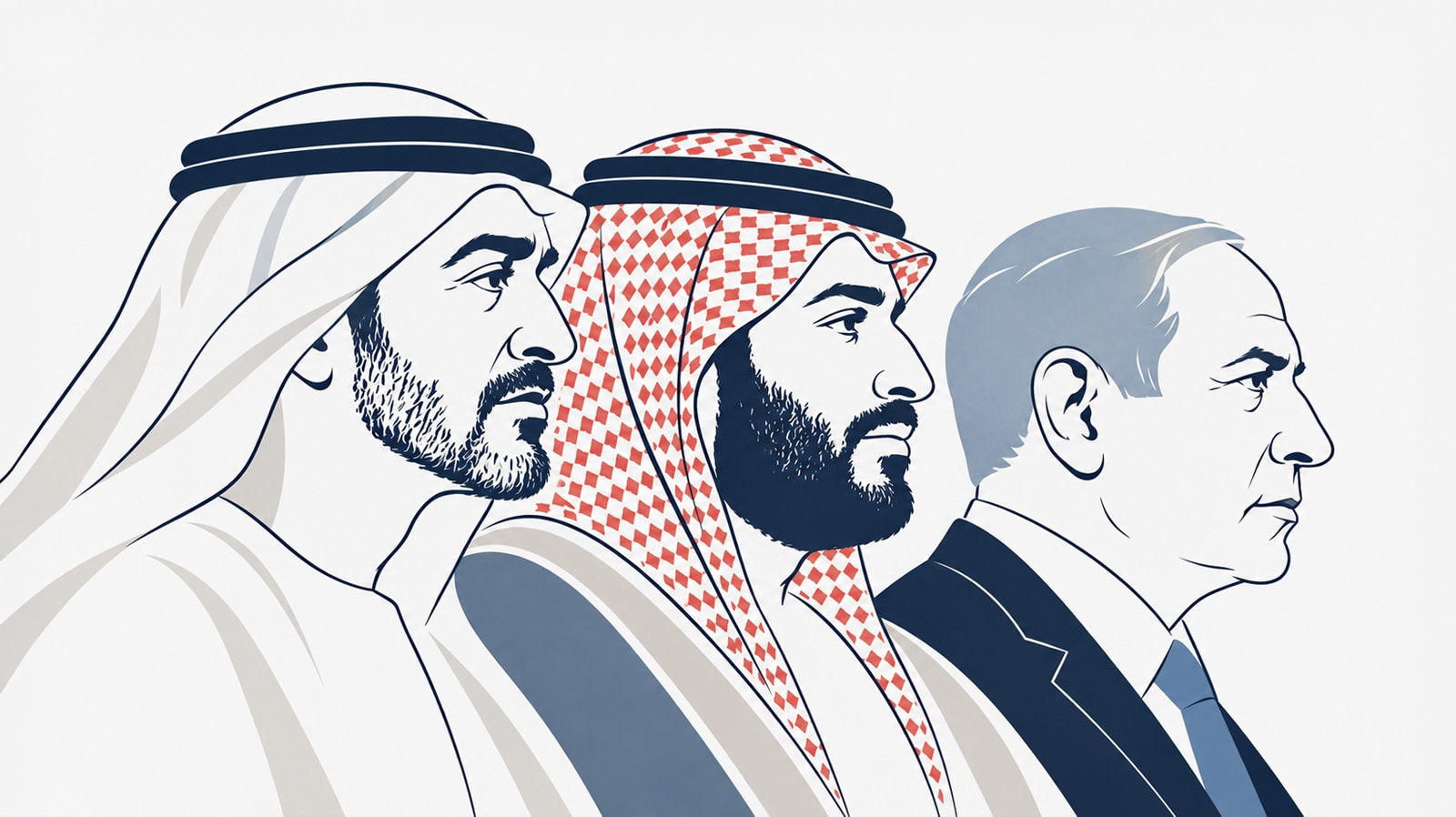

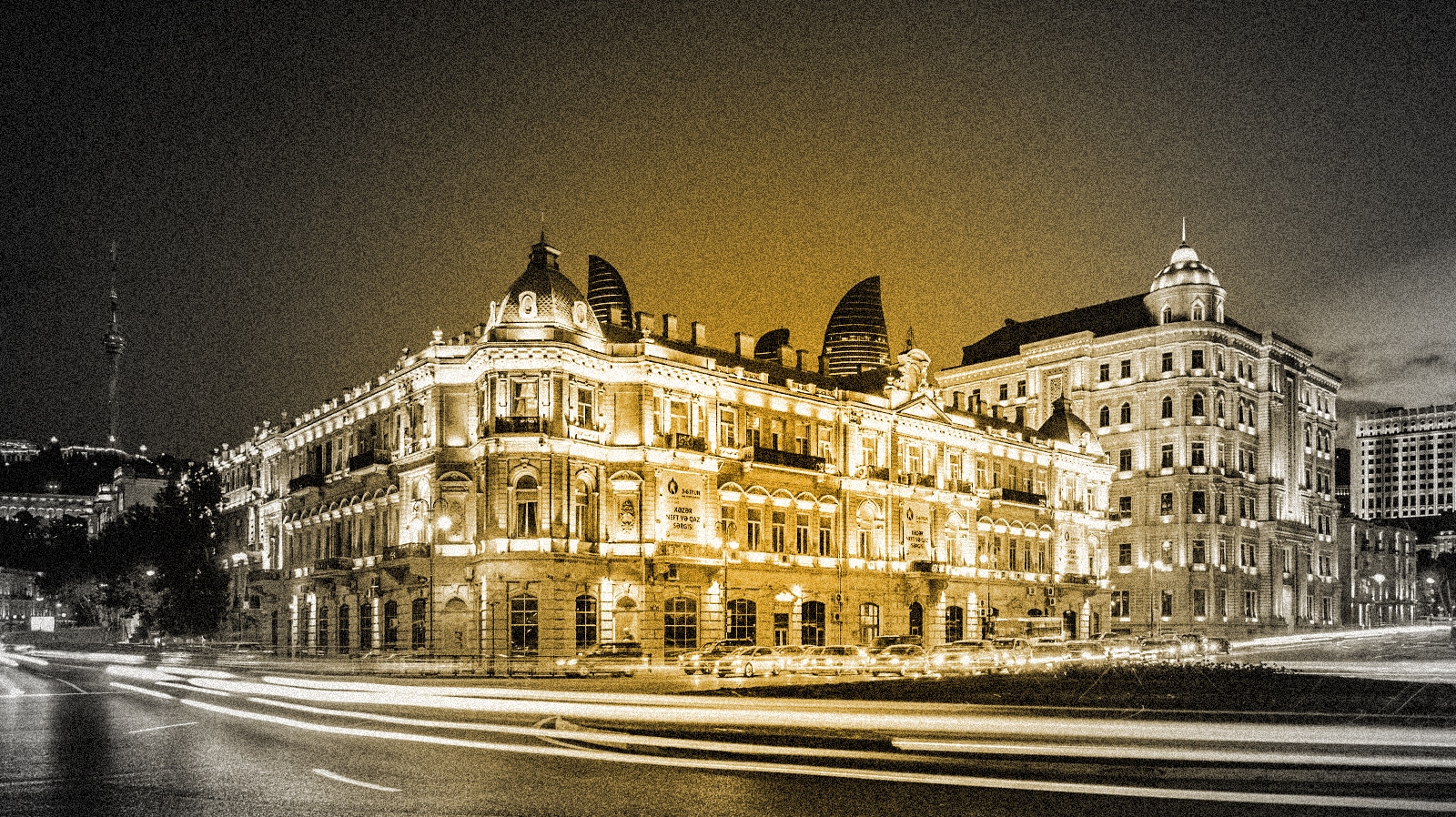
A clandestine meeting in a Baku hotel between former senior German officials and a Kremlin-linked delegation has done more to expose the fault lines in Europe’s Russia policy than any communiqué from Brussels this year. The story is not really about Azerbaijan. It is about Germany and the gap between what European governments say in public and what they quietly do when their own economic interests are at stake.
Who Leaked What, and to Whom
According to the Ukrainian news outlet Liga. Net, former high-ranking officials from Germany and Russia met in Baku in July 2026 to discuss ways to end Russia’s war against Ukraine. The Ukrainian media cited a July 21 Bloomberg report, which said that Azerbaijan’s President Ilham Aliyev announced this at a briefing in Berlin.
However, contrary to the impression that President Aliyev leaked this meeting, it was German investigative journalists who first broke the story: rbb’s Kontraste and Die Zeit filmed and reported on the Baku gatherings as early as autumn 2024 and again in July 2026. The Times of London then added details about the history of German officials’ contacts with the Russians and Western intelligence assessments of these meetings.
President Ilham Aliyev spoke publicly about the meeting on July 22 at a joint press conference in Berlin, after Chancellor Friedrich Merz professed ignorance of any such meeting. Tellingly, the four names Aliyev cited exactly match the narrower list already published by The Times, not the fuller list of seven participants that German television and print reporting had independently established on the ground. That is a strong signal that Aliyev was reacting to published reports, rather than orchestrating an original leak of his own.
This matters for another reason: it suggests Baku itself may not have had full visibility into what happened inside that hotel room. Azerbaijan confirmed a story that already existed rather than controlling it from the start, and its leadership used the opportunity that fell into its lap to remind Europe of something it wanted said out loud anyway—namely, that Baku matters.
Why Baku Matters More Each Year
That reminder is not empty bravado. Azerbaijan has become an increasingly important part of Europe’s post-2022 energy architecture as the European Union pushes to diversify away from Russian gas and looks to the Southern Gas Corridor and Caspian supplies as an alternative. Germany and Austria have both drawn on Azerbaijani gas flows in recent years, and Baku has leveraged that position skillfully, even as its parliament suspended cooperation with the European Parliament in 2026 over disputes tied to Armenia. Brussels keeps creating problems for Azerbaijan. As with any other policy aimed at amorphous “human rights,” it becomes absurd because it remains unspecified, selective, and prone to abuse.
Why Baku, and Not Somewhere Else
Once the story is understood as German rather than Azerbaijani, the more interesting question becomes practical: why did the Germans and Russians choose Baku as their venue, and why does that choice make sense?
The honest answer has less to do with legal neutrality than with discretion. This was not a meeting either side wanted publicized, and Baku offered the rare combination of a controlled environment, easy entry for both German and Russian travelers, and, crucially, a low profile compared with the alternatives. Abu Dhabi, which the Russians had reportedly used once before for their rendezvous, draws far more international press and diplomatic attention than Baku; it is simply too visible a hub for a meeting meant to stay invisible. Ankara would have been worse for a different reason: German-Turkish relations are tense enough that Berlin would not want Ankara as a witness to this kind of contact, and Erdoğan does not host anything for free. Any Turkish involvement would have come with a political price tag neither side wanted to pay. Baku offered privacy and no strings attached, which is precisely what such a meeting required.
Neutral Enough, Not an Ally
Some of the reporting on this affair has bent over backward to argue that Baku cannot be considered neutral because it has signed agreements and held meetings with Moscow. That argument goes too far. Hosting Russian officials, or even holding cordial diplomatic exchanges with the Kremlin, does not make a country Russia’s ally, any more than Germany’s history of dialogue with Moscow made Berlin one before 2022.
Azerbaijan’s relationship with Russia is, in fact, considerably more strained than that framing suggests. Baku and Moscow have endured a genuinely difficult period since the December 2024 downing of an Azerbaijan Airlines plane, widely attributed to Russian air defenses, and since reports of violence against ethnic Azeris inside Russia — grievances that took months of diplomacy and a Russian compensation settlement to partially ease. Azerbaijan is not Moscow’s trusted partner. It is a state that maintains working relations with Russia out of necessity and geography, while nursing real grievances of its own, which is exactly what makes it a workable, relatively neutral meeting ground for a conversation that both Berlin and Moscow wanted kept quiet. Neutral here does not mean legally or ideologically neutral in some abstract sense; it means, practically, neutral enough for the purpose at hand.
Who Was in the Room
The Russian delegation was not a random assortment of diplomats. Viktor Zubkov is chairman of Gazprom’s supervisory board, a former Russian prime minister, and one of Vladimir Putin’s oldest political associates, dating back to their years together in the St. Petersburg city administration in the early 1990s. Valery Fadeyev chairs Putin’s Human Rights Council. She is under EU sanctions for war propaganda and banned from entering Europe — a fact that alone explains why this meeting could never have occurred on EU soil. Alexey Gromyko runs the Russian Academy of Sciences’ Institute of Europe, which has reportedly advised the Kremlin on how to use existing channels to stoke German anxiety about a NATO-Russia conflict.
On the German side, Ronald Pofalla served as Angela Merkel’s chief of staff from 2009 to 2013 and later co-chaired the now-dissolved Petersburger Dialog with Zubkov, and the two men know each other well. After leaving government, Pofalla moved directly into a senior post at the German national railway, Deutsche Bahn, a textbook example of Germany’s political-to-corporate revolving door. Matthias Platzeck, a former SPD leader and long-serving premier of Brandenburg, headed the German Russian Forum until resigning after the 2022 invasion. He governed a region whose industrial base relied on cheap Russian energy. Neither man holds office today, but both remain deeply networked within their parties, which, not coincidentally, are the two parties currently governing Germany.
Berlin Almost Certainly Knew
It is hard to believe Berlin’s government and security services were entirely blind to a network that had been meeting regularly since 2024, especially after German media had already reported on earlier rounds. Reports indicate that politically responsible figures, including the former chancellor Olaf Scholz, had been informed of the contacts at some point, and the participants themselves have said as much. Merz’s statement that he personally knew nothing of this specific July meeting may well be true and is not necessarily inconsistent with the government or its intelligence services having some awareness of the broader network’s existence. Knowing that something exists and personally approving a specific encounter are two quite different things and conflating them is where much of the confusion in this story stems from.
The Contradiction Europe Built for Itself
The deeper reason this kind of backchannel exists at all lies in a trap that Germany and the EU largely built for themselves. Officially, European governments refuse to talk to Putin and insist that Russia must be isolated. In practice, virtually every European government needs some form of contact with Moscow — whether over prisoner exchanges, grain corridors, nuclear safety, or simply managing the risk of a wider war. Multiple European channels toward Moscow were operating quietly in 2025 and 2026, from European Council staff-level calls to French and joint E3 diplomatic contacts, all conducted with little coordination and little success. Ukrainian President Volodymyr Zelensky himself has signaled openness to direct talks with Putin, further loosening the taboo around any contact, even though the Baku format has nothing to do with Kyiv’s own diplomatic track.
Layered on top of that is Germany’s energy problem. German chemical and industrial firms have spent years pleading for relief from high energy costs, with plant closures and job losses tied directly to the loss of cheap Russian gas. Given who was in that Baku conference room—a Gazprom chairman across the table from men who once ran Germany’s main channel to the Russian energy establishment—it would be naïve to assume gas was not on the agenda, even if nobody can say precisely when or how such a resumption might occur. The professional backgrounds of everyone involved point in that direction, even without a signed memo to prove it.
What German Coverage Leaves Out
German reporting on this affair has been largely honest. Still, it has largely avoided the most uncomfortable question: what if this was not simply greedy former politicians trading on old contacts, but a deliberate, if deniable, probe by people connected to the state into whether a backchannel to Moscow could be revived? German coverage asks whether the government approved the meetings; it asks far less often whether the government might have wanted this kind of exploratory contact precisely because it cannot admit publicly that it needs one. Finally, the most likely explanation is that German officials met with the Russians not on personal business but to resolve very pressing energy-supply issues for German industry that have profound socio-economic repercussions, such as unemployment.
That points to a dilemma Berlin created for itself. It would clearly prefer to have nothing to do with Putin’s circle. But it cannot fully afford that preference, given the state of its industrial base and the political cost of watching factories close because of energy prices. In that light, using people already “tainted” by prior contact with the Kremlin to test the waters again is not an obviously irrational choice. It is a way of outsourcing risk the government itself is unwilling to bear directly.
Hypocrisy as a Result of Incoherence
It is tempting to call all this hypocrisy, and in a narrow sense it is.: European governments say one thing about isolating Russia and do another when their interests require it. But it would be a mistake to read this as a cynical, coordinated deception. It looks far more like the product of incoherent decision-making by a European and German political class that making maximalist, values-based declarations about Ukraine without fully accounting for the cost of adhering to them absolutely and is now improvising ways to soften that cost without admitting it out loud.
No functioning democratic government can indefinitely ignore the material well-being of its population in the name of an abstract principle, no matter how important that principle may be. What the Baku meetings reveal is not a secret plot against Ukraine but the ordinary, uncomfortable friction that arises whenever declared values collide with concrete economic and security costs. Germany’s political class did not resolve that friction. It simply pushed it into a hotel conference room in Baku, hoping no one would notice it.
Iranian Reactions
Although the secret meeting in Baku drew little attention from Iranian media, it didn’t go unnoticed. Most reactions stuck to the facts. Nevertheless, some Iranian sources viewed the revelations through a distinct ideological lens. State-aligned media adopted a neutral, factual stance to preserve diplomatic flexibility in the South Caucasus. Hardline outlets emphasized Western diplomatic hypocrisy and institutional fragmentation. Meanwhile, reformist publications highlighted Western intelligence warnings about Russian influence operations. Across Eurasian research centers and informal Telegram channels, analysts interpreted the event as a calculated effort by Baku to enhance its leverage as an indispensable diplomatic hub between Europe and Russia.
State-Aligned and Official Media
State-aligned outlets, led by the official Islamic Republic News Agency (IRNA), framed the disclosures neutrally, situating Aliyev’s statements within the broader narrative of his official visit to Berlin focused on European Azerbaijani energy expansion. IRNA quoted Aliyev confirming flight data and stating that Azerbaijan would welcome any initiative that contributes to ending the war in Ukraine, even if its territory were used without explicit prior notification. By avoiding aggressive commentary or unilateral conclusions, state-aligned media sought to preserve diplomatic flexibility. This approach aligned with Tehran’s official posture of non-involvement in European backchannel diplomacy, ensuring that Iran’s delicate relations with both Moscow and Baku were not compromised.
Hardline and IRGC-affiliated Outlets
Hardline outlets, most prominently the Tasnim News Agency and Araz News, provided extensive coverage of the meeting’s logistics, listing participants’ names, flight dates, and historical backgrounds. Tasnim emphasized the institutional clout of figures such as Zubkov and Pofalla, highlighting their ties to Russian President Vladimir Putin and former chancellor Angela Merkel.
While hardline outlets refrained from launching direct attacks on Russia, their reporting carried two main strategic subtexts. First, by publicizing European backchannel attempts to engage Moscow, hardline media sought to show that covert negotiations contradict Western claims of unyielding unity behind Ukraine. Second, separate analyses by security-adjacent outlets interpreted the broader Aliyev-Merz summit as a Western effort to open a geopolitical front against Russia in the South Caucasus and to replace Russian gas with Azerbaijani energy exports. This perspective viewed the secret meeting as evidence of competing Western and Russian strategies in Iran’s immediate neighborhood.
Reformist and Semi-Official Outlets
Semi-official and reformist-leaning news agencies, such as Borna, Arman Emrooz, and Tose’e Irani, provided detailed coverage with headlines highlighting Aliyev’s revelations about the secret meeting. These outlets drew on investigative findings from European sources, including Die Zeit, ARD, and Bloomberg.
Borna and Irani focused on German security assessments that characterized these meetings as covert Russian influence operations aimed at affecting Berlin’s policymaking. These outlets also highlighted regional friction points, such as periodic tensions between Baku and Moscow. They portrayed Aliyev’s public exposure of the meeting as a tactical move to distance himself from clandestine Russian operations on Azerbaijani soil. Notably, in this case, reformist news outlets, wary of Russia, uncritically embraced any European anti-Russian narrative, even if it was not valid: no influence operation can compel German officials to travel to Baku to meet their Russian counterparts if the former are not interested.
Baku as an Emerging Gray-Zone Diplomatic Hub
Iranian experts note that Baku has positioned itself as a key venue for nontraditional, gray-zone diplomacy. By facilitating Track-1.5 channels between Western European actors and Kremlin insiders, Azerbaijan demonstrates its value to both sides. However, Iranian analysts argue that Aliyev’s public disclosure in Berlin served a dual purpose.
First, the public exposure served as a form of diplomatic reassurance to the West. Publicly claiming ignorance of the meeting allowed Aliyev to insulate Azerbaijan from allegations of complicity in secret Russian operations targeting European policy. Second, the move exerted leverage against Moscow. Revealing flight data and participant names signaled to Moscow that Azerbaijan’s territory cannot be used for strategic maneuvers without reciprocal diplomatic benefits for Baku. Defapress (an Iranian IRGC-affiliated news outlet dedicated to military issues) argues that Azerbaijan’s goal is to open a “Caucasus front against Russia.”
Implications for the South Caucasus Balance of Power
Eurasia analysts in Tehran contextualized the Baku talks within broader regional developments, including the Zangezur Corridor issue, the “3+3” regional consultative platform (comprising Iran, Russia, Turkey, Azerbaijan, Armenia, and Georgia), and shifting transit routes. They argue that any independent rapprochement between Western European powers and Moscow—mediated in the Caucasus—could reshape the regional security architecture. If European states negotiate energy and territorial trade-offs directly with Moscow in Caucasian venues, smaller regional actors and neighboring powers, such as Iran, risk being sidelined from long-term security arrangements.
Informal Media, Telegram Channels, and Social Media Discourse
Informal commentary across Persian-language social media and political writings offered a more cynical interpretation of the events than the one presented in official state media. However, the secret meeting in Baku did not attract much attention.
A dominant narrative across Persian-Language geopolitical Telegram channels questioned Aliyev’s claim that Azerbaijani authorities were unaware of the arrivals. Commentators argued that, given Azerbaijan’s tightly managed border security and intelligence apparatus, the arrival of figures such as Zubkov and Pofalla on private or commercial flights could not have escaped state monitoring. Informal analysts concluded that Aliyev’s disclosure was a calculated diplomatic performance intended to project transparency before European leadership while maintaining his role as a regional broker.
Informal channels also frequently highlighted the gap between public European foreign policy and private diplomacy. Posts across Iranian political discussion groups portrayed the presence of former German officials in Baku as evidence that European elites are actively seeking exit ramps from the Ukraine war. This informal perspective aligned with a widespread domestic narrative: despite official Western rhetoric supporting Kyiv, economic realities drive European actors to preserve covert channels with Moscow.
Finally, informal security commentators expressed concern about unmonitored extra-regional intelligence operations near Iran’s northern borders. Online discussions emphasized that if Baku regularly hosts secret meetings involving foreign intelligence services, energy oligarchs, and political brokers, it reinforces Tehran’s perception of Azerbaijan as a venue for covert foreign activities that require vigilant intelligence monitoring.
Overall, most Iranian media outlets referring to the event identify it as a marker of Baku’s growing importance to Europe. Ehsan Movahedian, a Eurasia and Caucasus expert, noted the possibility that the meeting in Baku took place unbeknownst to Azerbaijan’s leadership and concluded:
“Whether Aliyev’s account reflects weak governance or political calculation, one point is clear for Iran: national security cannot assume neighboring states fully control developments on their territory. Any sign of oversight gaps, third-party influence, or potential misuse of neighboring territory should be treated [by Iran] as a warning. Azerbaijan’s recent statements therefore underscore the need for Iran to continually reassess South Caucasus security dynamics with realism, caution, and strategic preparedness.”
JISS Policy Papers are published through the generosity of the Greg Rosshandler Family.
Source: https://jiss.org.il/en/grinberg-a-secret-german-russian-meeting-in-bakuand-why-iran-is-watching/