
The Fall Nobody Announced
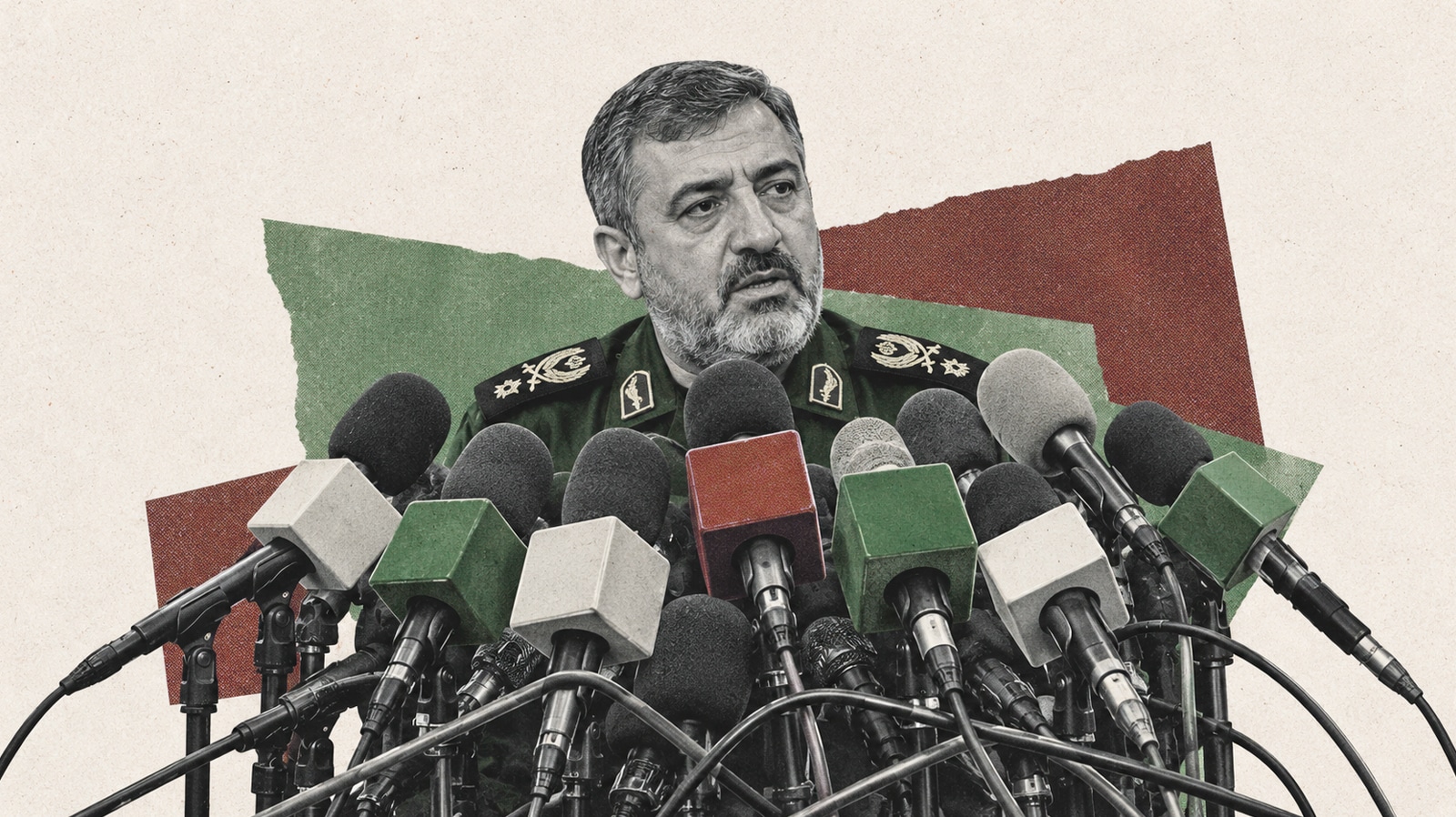
On the evening of September 4, 2026, Hossein Pak, a correspondent for Iran’s state broadcaster IRIB, filmed himself from high ground overlooking the Ali al-Taher ridge near the southern Lebanese town of Nabatieh and said what no official in Tehran was prepared to say: “Obviously we cannot accept the narrative of the enemy, and we are waiting for the narrative of the resistance,” he told his viewers, before adding, “however, developments on the ground indicate that Ali al-Taher has collapsed militarily.” A regime-sympathetic account posted the clip with a weeping emoji and the line “what is certain is that on the ground it has fallen militarily,” and the post has since drawn some 234,000 views. It was the first report by an Iranian journalist based in Lebanon to state directly that Ali al-Taher had collapsed. Warning lights switched on in Tehran, and IRGC-aligned propaganda accounts openly speculated about whether the hill had actually fallen. Less than a day earlier, the Israel Defense Forces had announced that it had completed clearing Hezbollah’s underground infrastructure and tunnels below the Ali al-Taher ridge and was working to neutralize it.
The timing was cruel for the Islamic Republic. Ordinary Iranians were living through what Washington branded an “Economic D-Day,” the sanctions campaign launched on August 24 that combined secondary sanctions with the United States naval blockade of Iranian ports. The rial fell below 2,200,000 to the dollar and kept sliding to 2.5 million rial on September 29 and 2.7 million on October 5. Fuel shortages and long queues at gas stations followed government spokesperson Fatemeh Mohajerani’s signaling of higher gasoline prices, including a cabinet decree allowing price hikes in the coming quarter. Yet pro-regime media and IRGC-aligned influencers were preoccupied with a different, and, for them, more urgent concern: the collapse of yet another front of the Axis of Resistance, this time in southern Lebanon.
The storm over Ali al-Taher was not, in all likelihood, a coordinated psychological operation aimed at shaping Iranian opinion. The fate of the Axis is no longer the main concern for many Iranians inside Iran. Instead, the storm revealed chaos, with competing accounts of the fate of the ridge told by outlets that answer to the same state and, in several cases, to the same Islamic Revolutionary Guard Corps (IRGC). The episode sparked a disagreement over the war’s narrative that cuts across the regime’s factions and deepens their fragmentation.
Ali al-Taher is not an exception. The same pattern is evident in Tehran’s approach to the Houthi conflict with Saudi Arabia, the situation in the Strait of Hormuz, negotiations with Washington, and domestic economic management. In each instance, various regime organs advance mutually incompatible narratives. The underlying cause is straightforward: the Islamic Republic produces narratives in place of strategy, lacking a leader capable of arbitrating between factions. A regime that prioritizes internal argument over strategic victory has already conceded the initiative.
Ali al-Taher in Tehran’s Words
Iranian media themselves made Ali al-Taher too important to lose. The IRGC-affiliated Tasnim News Agency described the ridge as the position from which Hezbollah and the IRGC Quds Force could launch ballistic missiles and drones toward northern Israel. Several reports said it housed the “Emad-4” fortress, an underground missile facility at the heart of the Axis’s deterrence architecture in the south. Iranian media themselves described the elevated position, which overlooks parts of Nabatieh, as key to surveillance and battlefield control.
As the siege tightened, the IRGC-aligned Telegram channel Mohallell called the hill “the most closely watched point, politically, militarily and in intelligence terms, at the regional level.” The same post claimed that between 30 and 40 people, including Hezbollah commanders and “some advisers of the Islamic Republic of Iran,” were sheltering in its underground facilities, and warned that Tehran might face “the option of intervening to support Hezbollah.” On August 30, Tasnim relayed a report in the Israeli daily Maariv arguing that fear of Iran was preventing a large Israeli assault on the ridge. Hezbollah, for its part, proclaimed that it held “full control” of Ali al-Taher. According to Lebanon’s Al-Akhbar, relayed by Tasnim, Hezbollah rejected an Israeli demand to hand the heights over to the Lebanese army.
The IDF then supplied the details Tehran lacked. Division 36 cleared two underground networks and established operational control above and below ground; it found weapons stores, command centers, generator rooms, living quarters, showers, and kitchens, in infrastructure “built over two decades, funded and planned by the Iranian terror regime.” The IDF also reported a Badr unit command complex, Iranian drones, and tunnels covering a length of more than two kilometers (the demolition required more than 1,100 tons of explosives and was recorded as a magnitude 4.4 earthquake on the Richter scale, according to Tasnim). Hardline commentators then turned the blast’s size into proof of Israeli desperation, arguing that a politically vulnerable Israeli leadership needed to manufacture a victory.
Iranian media elevated the ridge to the status of a strategic keystone, both as a symbol of deterrence and as a haven for Iranian advisers. Its loss, therefore, could not be dismissed or explained away with a simple statement.
One Hill, Four Stories
The first official response came from Mehr News Agency, which operates under the Islamic Development Organization, the regime’s propaganda (tablighat) apparatus. Mehr immediately published a list of ten points intended to explain the situation to the Iranian public. The first point accepted the IDF’s basic description, referring to the “operational seizure” of part of the hill, but argued that it was nothing more than an electoral stunt by Prime Minister Benjamin Netanyahu ahead of Israel’s elections. In this way, Mehr indirectly acknowledged the loss while dressing it up in different terminology. The ten points were not the work of a single desk: republications attribute them to the Islamic Propagation Coordination Council, the body that orchestrates the regime’s official messaging. In other words, the propaganda machine issued a centrally drafted script. That message did not survive the next twenty-four hours.
Tasnim went further than Mehr, outright denying the loss. It distinguished between “operational control,” the ability to strike a location with air and artillery fire, and genuine “field control,” the physical occupation of the underground facilities. Tasnim explained that Hezbollah’s silence was a deliberate “constructive ambiguity” intended to deny the enemy actionable intelligence. It amplified Al-Akhbar’s claim that the tunnels formed a vast interconnected network and that access to one entrance did not amount to control of the whole complex. Its field report from Nabatieh quoted residents praising the young fighters still “stationed” on the heights, boasting that they had deprived Israeli soldiers of sleep for weeks and insisting that Israel would not be able to stay. The same report found a scapegoat in advance: its title shifted “from resistance in Ali al-Taher to betrayal in Zawtar,” (the villages of Zawtar al-Sharqiya and Zawtar al-Sharqiya near Nabatieh) accusing the Lebanese army of collaborating with the IDF.
By September 5, Mehr had moved the goalposts. Its political desk now declared that the uproar over the “fall or occupation of Ali al-Taher” was inaccurate, while conceding that “even in the event of the occupation of Ali al-Taher,” it would not mark the end of the resistance or a complete change in the equation. The real test, Mehr now argued, was whether Israel could maintain a permanent presence. The Friday prayer leader of the northern Iranian town of Amol, quoted by Mehr, insisted that “operational dominance does not mean occupation” and that Hezbollah’s main equipment had been moved out before the attacks. Mehr then reprinted the daily commentary under the headline “Ali al-Taher: The Impregnable Fortress,” claiming the heights remained “in the mighty hands of the martyrdom-seeking forces of Hezbollah.” The same agency that had conceded “operational seizure” on September 4 was publishing the “impregnable fortress” within days.
The hardline daily Kayhan flatly denied the fall of Ali al-Taher, stating that the hill “has neither fallen nor been occupied; the fighting continues.” An IRIB report carried by the reformist Shargh dailylikewise asserted that “Ali al-Taher has not been occupied.” Seyed Mohammad Hosseini, IRIB’s correspondent in Beirut, reported that there was no sign of the ridge’s collapse. IRIB thus contradicted its own man on the spot. The conservative daily Tabnak, meanwhile, ran Hossein Pak’s video under the headline “confirmation of the fall of Ali al-Taher hill by the IRIB correspondent Pak’s report in fact went further, stating that “given the five-month battle, this place had fallen militarily long ago.” Pak added that in earlier reports he had warned that “silence or passivity about this area could have unfortunate consequences.” The silence and passivity he had in mind were not Hezbollah’s, but Tehran’s. Hamshahri, the Tehran municipality daily, ran his field narration on video. Pak himself told two stories: after praising “Iran’s zeal” for including Lebanon in the memorandum of understanding with Washington, he later blamed the same memorandum for the fall.
Between these poles the reports ranged from the cautious to the skeptical. The pragmatist Asr-e Iran described reports of Israeli control as “contradictory” but concluded that Israel was seeking to consolidate its military presence on the heights. The official news agency IRNA questioned Israeli control, citing ongoing Hezbollah drone attacks around Ali al-Taher and the IDF’s difficulty in containing them. The IRGC-affiliated daily Javan report a fiber-optic FPV drone strike on an IDF vehicle climbing toward the ridge. Javan also relayed Israeli media claims of an IDF “tactical withdrawal” to the Shqif heights, as if that reversed the outcome.
The result is a hierarchy of shifting narratives. Over ten days, regime-aligned messaging moved from outright denial to semantic distinctions, to conditional concessions, and ultimately to claims of irrelevance. Different institutions advanced these positions simultaneously, with some, like Mehr and IRIB, adopting multiple stances at once.
Ashura in the Tunnels: Who Was Trapped?
On September 4, Pak spoke from Lebanon to IRIB’s Channel Three (Shabakeh Seh) and described the fighters trapped in the tunnels as “Ashura-like.” The account of the interview circulated widely and was explicit about who was inside: “members of the Islamic Revolutionary Guard Corps on the heights of Ali al-Taher are, because of the Israeli siege, in Ashura conditions.” Ashura commemorates the Battle of Karbala in 680 CE, in which Imam Hussein, the third Imam of Shia Islam, and his companions were massacred by the forces of the Umayyad Caliphate. In the Shia political vocabulary, invoking Karbala acknowledges a military defeat while ennobling it as martyrdom. Pak was preparing the audience for the men’s deaths in the tunnels, not for their rescue.
The question of who was inside quickly became the most sensitive. The Mohallell (analyst) digital channel had already counted Iranian advisers among the 30 to 40 people sheltering underground. Asr-e Iran reported claims that Hezbollah fighters were besieged “alongside a number of Iranian forces” in the tunnel network. The economic daily Eghtesadnews posed the question bluntly in a headline asking whether IRGC forces had also been present.
Mehr responded with a categorical denial: the claim that IRGC personnel were trapped in the Ali al-Taher tunnels was “unreal;” there had been only 48 Hezbollah fighters, eight of whom were “martyred”. Nour News, an outlet affiliated with the Supreme National Security Council (SNSC), went a step further, citing a senior Israeli official who said no Iranian officer or adviser had been found in the tunnels; it then called Ali al-Taher “a hill that is supposed to conceal the defeat of Iran’s war.” The SNSC’s own outlet cited an Israeli official as its witness in its defense.
The dilemma is clear. Acknowledging the presence of Iranians in the tunnels would mean admitting that Tehran allowed them to be besieged without intervention, despite prior warnings. Denying their presence would require disavowing the Quds Force advisers previously acknowledged by Iranian sources. In either case, the episode demonstrates Tehran’s reluctance to escalate while facing internal and external pressures. The regime sacrificed Hezbollah fighters and Quds Force personnel in Lebanon to avoid a wider conflict, then disputed how to present its actions.
Waiting for the IDF Spokesman
On the IRGC-affiliated television program “Iran Time,” Vahid Khazab, an expert on resistance groups, made a revealing admission: “we should wait for the Israelis’ details about the importance of this facility, since we don’t know anything about how strategic this location was.” The remark is more revealing than it sounds. Iranian commentators traditionally rely on IDF statements to establish the basic facts of the battlefield. They wait for Israeli information, build their own analysis on it, and at the same time insist that the Israeli narrative cannot be trusted.
The Ali al-Taher coverage is a catalog of this dependence. Tasnim argued that fear of Iran deterred Israel, citing Maariv. Mehr and Javan built the story of an Israeli “withdrawal” by distorting items from Israeli outlets Kan and Walla!. Javan enlisted Israeli journalist Raviv Drucker to argue that Hezbollah would respond to the attack on Ali al-Taher. Shargh carried the IDF’s own claims about the hill as video news. Jam-e Jam, an IRIB-owned daily, borrowed the Israeli political calendar to explain the operation as an “electoral tool in Netanyahu’s hands” ahead of the Israeli elections. Even Nour News, linked to the Supreme National Security Council issued a denial that rested on an Israeli official.
With Hezbollah maintaining what Tasnim described as ‘constructive ambiguity,’ Iranian media lacked independent sources. The IDF spokesman effectively dictated the terms of the Iranian debate. This dependence highlights the regime’s inability to generate its own reliable account of a battlefield where it has invested significant resources over two decades.
Downplaying Ali al-Taher’s Importance
Given the importance Iranian sources had attributed to Ali al-Taher and the potentially grave consequences of its loss for Quds Force commanders and Hezbollah fighters, regime-aligned influencers and experts in Tehran simultaneously sought to minimize the loss. Some spread misinformation and disinformation about the materials and capabilities stored in the tunnels, including the claim that Hezbollah’s main equipment had been removed before the attacks.
“Iran Time” airs on IRIB’s news channel (Shabakeh Khabar) and is produced by Owj, an IRGC-affiliated media organization. Its host, Ruhollah Razavi, a Kashmiri known as “Sarbaz Ruhollah,” convened a panel on “the impact of the collapse of Ali al-Taher.” Khazab said: “About the matter of to what extent this fortress is important, there are various reports… but there is no credible report from the resistance about it… the reality is we don’t know everything; perhaps it was very, very important, perhaps it was just important.” Razavi concluded that “this collapse cannot change the broader dynamic of the war.” The panel’s title acknowledged the collapse; its content denied that it mattered.
The growing disagreement prompted other outlets to send their own reporters to southern Lebanon. The YouTube channel of Sazandegi, the newspaper of the reformist camp, dispatched journalist Mohammad Amin Imanjani, who spoke as smoke rose behind him from an Israeli drone strike. Imanjani said that, according to people commuting through the area, Ali al-Taher had not completely collapsed. Tellingly, he dropped the regime’s obligatory vocabulary of “the Zionist regime” and “Zionist entity” and called Israel “Israel.” He argued that “more strategic than the Ali al-Taher hill is the al-Rihan hill, which has an altitude of 1,300 meters, while Ali al-Taher has an altitude of just 750 meters; the al-Rihan hill is under the control of the resistance.”
Tasnim, even as it published heroic dispatches from Ali al-Taher, began to downplay its importance. On September 8, it quoted foreign policy analyst Sadr al-Hosseini as saying the hill was “not the main criterion” for judging the resistance. A day later, it quoted security researcher Saeed Pirmohammadi warning against “maximalist” readings of Ali al-Taher as “the key to southern Lebanon” and describing such magnification as part of Netanyahu’s electoral campaign. Mojtaba Amani, Iran’s former ambassador to Lebanon, called it “a completely ordinary point on the lines of engagement,” noted that neither Hezbollah nor its Secretary General Naim Qassem had even named it, and claimed that its magnification had “a specific design and direction.”
Other regime voices said the opposite. An analyst interviewed by Tabnak insisted that “we, the resistance front, must never allow the Ali al-Taher hill to fall,” because it “has become a symbol.” Tasnim highlighted Lebanese nationalist parties proclaiming that “the epic of resistance at Ali al-Taher will remain eternal in history.” Hezbollah’s line shifted from “full control” to the claim that its equipment had been moved out beforehand, and then to the Lebanese Hezbollah MP Ihab Hamadeh’s remark that “there are still ambiguities about the reality of Israeli control.”
A location cannot simultaneously be an ‘eternal epic’ and ‘a completely ordinary point,’ or both an ‘impregnable fortress’ and a site of no strategic value. These conflicting narratives expose the lack of a unified position. Some sources recognize a significant military defeat, others attempt to minimize its importance, and still others question whether the site was ever relevant.
“In Principle” versus Ali al-Taher: The Blame War
The controversy also became an opportunity for open infighting among factions in Tehran. Its point of departure was the Islamabad Memorandum of Understanding (MoU) between the United States and Iran, finalized in June 2026 with the support of President Masoud Pezeshkian’s government and the camp of Parliament Speaker Mohammad-Bagher Ghalibaf. The first point reportedly called for a ceasefire on all fronts, particularly in southern Lebanon. For its backers, the MoU was a way to stabilize a collapsing economy without a full-scale regional war; for the hardline camp around Mojtaba Khamenei, it was a capitulation that would paralyze the Axis.
Mojtaba Khamenei’s position was deliberately ambiguous. In a written message dated 28 Khordad 1405 (June 18, 2026), he declared that “in principle [ali al-osul] I had a different view,” but permitted the MoU on the strength of the President and the SNSC members’ commitment to “the rights of the Iranian nation and the resistance front.” He concluded by saying that “from this moment, the proud nation of Iran and this humble servant will wait for the realization of the stated conditions.” The Khamenei camp subsequently leaned on the “in principle” formula to hollow out the agreement; Kayhan called for implementing a “strategy of in principle.”
The ceasefire was fragile from the outset. On June 14, three drones launched by Hezbollah, the senior proxy in the Iranian Axis, struck near the northern Israeli communities of Shlomi and Shomera in northern Israel after the U.S.-Iran ceasefire was announced. Israel responded by striking a Hezbollah command center in Beirut’s Dahiyeh neighborhood. According to the MoU’s defenders, this defiance allowed Israel to continue its operations in southern Lebanon. According to its opponents, the MoU itself disarmed Iran.
Ali Abdi, an expert on the Axis of Resistance and a vocal critic of the government’s acceptance of the MoU, had made that case three weeks before news broke about Ali al-Taher. In an interview with Khat-e Energy, a news and analysis website tracking the energy sector, he argued that the agreement had rendered Iran an inactive actor in the war and that the Ghalibaf team’s acceptance of it had failed to stop the “Zionist regime” from advancing toward Ali al-Taher, where many resistance fighters were trapped in the tunnels. Referring sarcastically to the Ghalibaf and Pezeshkian camps as “friends,” he added: “our friends intentionally don’t want to see or hear the news from Lebanon.” The hardline Iranian MP Mahmoud Nabavian, who belongs to the ultraconservative Paydari (Steadfastness) Front and is a member of parliament’s National Security and Foreign Policy Committee, had already asked the President on X whether “sending a signal of weakness” would not make the enemy bolder, while another MP, Seyed Morteza Mohammadi, complained that the attacks in southern Lebanon had “become very intense.”
The fall gave the other side its moment. On September 4, Alireza Mostofi, a prominent critic of the fundamentalist camp close to former President Hassan Rouhani, posted a pun that went viral: “One ‘in principle’ [ali al-osul] was enough for ‘Ali al-Taher’ to fall.” The post has drawn more than half a million views. Pro-Ghalibaf accounts followed with a chain of acrostic jibes, such as “in principle, when you hallucinate power, #Ali_al_Taher falls,” aimed not at Israel but at the Leader’s caution. The news site Fararu chronicled the counterattack “with the code ‘ali al-osul and Ali al-Taher,’” in which hardliners charged that “the ruling internal current centered on Pezeshkian and Ghalibaf” had caused the fall by ignoring the Leader’s reservation. A Ghalibaf adviser replied that Israel had reached the brink of taking Ali al-Taher before the MoU, that signing the MoU and diplomatic pressure had prevented the fall, and that the MoU’s opponents had launched a domestic polarization “contrary to the Leader’s order.”
Even the Leader’s words became disputed evidence. The reformist Mohammad-Reza Jalaeipour noted that the Leader’s official media had inserted the bracketed words “[about the MoU]” into a poster quoting the message and then issued a correction, implying that the “in principle” objection was not to the MoU itself. He accused Paydari-aligned IRIB figures, including Nabavian, of claiming the opposite. Asr-e Iran read the phrase as a general rule with a permitted exception. ABNA read it as conditional approval: “not a negation of negotiation.” Nour News wrote of “the victory of ‘in principle’ and an unstable MoU.” A Mehr op-ed described the MoU, which the Leader “opposed in principle,” as part of a “normalization puzzle.” When Mohsen Rezaei replaced Mohammad-Bagher Zolghadr as SNSC secretary, hardliners presented the change as a rebuke to the MoU, while Ghalibaf’s aide Mohammad-Saeed Ahadian retorted that the new secretary pursued the same conditions “that some have named the ‘in principle’ message.” Hamshahri asked directly: “Did the Islamabad MoU cause the fall of Ali al-Taher?”
Asr-e Iran captured the result: when foreign policy becomes hostage to domestic rivalry, the media’s attack shifts from Israel to Iran’s internal politics. This appears to be one of the first instances in which Iran’s internal political actors have openly turned their criticism against one another over developments on an external battlefield. Historically, from the Iran-Iraq War to the war of June 2025, the presence of a foreign “aggressor” united the regime’s factions against a common enemy,. Ali al-Taher has had the opposite effect. The dispute concerns not only whether the ridge fell, but also who is to blame, how important it was, and whether Iran should have supported Hezbollah and the Quds Force more directly. Each faction reads the defeat as proof of its own line.
A Leader Who Cannot Arbitrate
The deeper problem lies at the top. Mojtaba Khamenei rules by written message, and his messages have become texts to be fought over rather than verdicts to be obeyed. When the IRGC spokesman, Brigadier General Hossein Mohebbi, appeared on IRIB’s Channel Two on September 30, he declared that decisions are made in the SNSC and that “none of these decisions can be implemented without the permission of the Supreme Leader.” In the same breath, he insisted that there was “no difference” between the diplomatic apparatus and the IRGC. President Pezeshkian has used almost the same formula, saying that no decision would be taken outside the SNSC framework or without the Leader’s permission, and that “all organs, tribunes and currents must support it.”
This formula is used by both sides for opposing purposes. The President cites the Leader’s authority to suppress criticism of the MoU, while the IRGC uses the same reference to signal that SNSC decisions are not binding without explicit approval, warning that the military will not be constrained by diplomatic initiatives. The insistence on unity between diplomats and the Guards itself reveals the underlying division.
During Ali Khamenei’s tenure, the Islamic Republic permitted and even encouraged internal debate and factional rivalry, provided loyalty to the system was maintained. This pluralism contributed to the regime’s resilience and its ability to absorb shocks, channel dissent through elections, and enable shifts in power between pragmatists and hardliners without altering the system’s core. The arrangement functioned because a final arbiter could impose decisions when necessary. In 1988, Ruhollah Khomeini accepted the ceasefire with Iraq and acknowledged defeat in a single statement. Khamenei, though less charismatic, maintained this role. Today, with Mojtaba Khamenei’s status uncertain, no leader stands above the factions. The factionalism that once sustained the regime now impedes its ability to function.
Yemen: Credit Without Command
The Houthi war on Saudi Arabia offers the clearest example of a regime pursuing two incompatible policies at once. On September 15–16, Iranian state television and IRGC-linked outlets highlighted the Houthis’ reported advances and attacks on Saudi Arabia, and the alleged targeting of a Saudi warplane. It also noted Houthi military spokesman Yahya Sarea’s accusation that Riyadh was intensifying attacks on Yemen, including on civilian targets, and the Houthi chief negotiator’s boast that Saudi military action would fail, as it had in the past. Tasnim and Fars, the two hardline agencies linked to the IRGC, echoed Houthi claims of “heavy casualties” and further advances against Saudi-backed Yemeni forces.
The hardline press treated Saudi Crown Prince Mohammed bin Salman’s September 15 visit to Cairo as a humiliation. The Paydari aligned Vatan-e Emrooz daily headlined its coverage “Saudi Loneliness,” arguing that Israel, the United Kingdom, Pakistan, and Turkey had rejected Riyadh’s requests for military assistance and that Egyptian President Abdel Fattah al-Sisi had offered only a “political solution.” The IRGC-affiliated Javan, under the headline “Bin Panic!,” wrote that if bin Salman were “brave and wise,” he would have gone to Sanaa, and called the Cairo trip “an implicit admission of the failure of Saudi Arabia’s military strategy in Yemen.” Javan also reported that Sisi had urged bin Salman to open talks with Sanaa and Tehran. The hardline Quds daily called Egypt “bin Salman’s new station for fleeing the Yemen siege.” The reformist Shargh described a “crisis from Hormuz to Suez,” in which the Hormuz and Bab al-Mandeb crises were “no longer two separate files” and were pushing Riyadh and Cairo toward security coordination over Red Sea shipping. The more pragmatic Khabaronline, relaying Bloomberg, wrote that pressure on bin Salman was tightening as “Cairo, Washington and London said no to Riyadh.”
Other Iranian outlets linked the Cairo trip to the defense pact Saudi Arabia had concluded with Turkey and Pakistan, noting it came a day after bin Salman met US Central Command commander Admiral Brad Cooper in Jeddah. They speculated that Riyadh wanted to bring Egypt into the “Mecca” coalition established with Turkey and Pakistan on August 17 and argued that the Houthi attacks, the coalition’s first test, showed it was “only worth something on paper.” Javan agreed that the “Mecca pact” would remain on paper (the Isfahan municipality’s IMNA wrote that the agreement had “shone only on paper,” and Mehr declared the coalition “stillborn,” presenting bin Salman’s meeting with CENTCOM as a plea for help). Kayhan, quoted by Shargh, mocked Erdoğan and Pakistan’s Prime Minister Shehbaz Sharif as a “tomcat” and a “cunning fox” milking bin Salman. Yet the moderate Aftab News website reported that the coalition’s members had agreed to deploy Turkish and Pakistani forces to Saudi Arabia (the “paper” pact was acquiring soldiers while Iranian commentators mocked it).
Energy was the second theme. On September 15, some outlets reported that Saudi Arabia had informed several European refineries that crude cargoes scheduled for loading that month were canceled due to Yemeni attacks. The argument was that both Saudi export routes were under pressure: in the east, the Strait of Hormuz was “almost closed” because of the U.S.-Iran war; in the west, the Red Sea and Bab al-Mandeb were under Houthi attack, while the East-West pipeline had been taken out of service by a drone strike. Tasnim and Fars both highlighted pressure on global energy markets, including in the United States, and Tasnim called it “Trump’s defeat” in his pressure campaign against Iran. On IRINN, one analyst said the United States had lost its “operational capability” in Hormuz and Bab al-Mandeb, and that the reported Houthi targeting of F-15s had challenged American hegemony; another argued that U.S. and Israeli “cognitive warfare” had tried to create the impression that the Resistance was weakening, and that Yemen had become an established “extra-regional power.”
Meanwhile, Iran’s Foreign Ministry told the world that none of this had anything to do with Iran. Spokesman Esmaeil Baghaei declared on September 10 that “Ansarullah is an independent actor that makes its own decisions; it neither takes orders from anyone nor is anyone’s proxy.” He was responding to United States Secretary of State Marco Rubio’s accusation that Tehran was directing the Houthi campaign, and he dismissed it as “lies” that “cannot replace reality.” He said peace in Yemen would not come through bombs and external pressure, but through honest negotiations on an agreed roadmap. When Saudi Arabia claimed that a drone had targeted Mecca, Baghaei dismissed it as a “baseless claim,” echoing Ansarullah’s insistence that it was Mecca’s defender, not its aggressor. Hamshahri even translated an American analysis titled “Why Yemen’s Ansarullah Is Not Iran’s Proxy.”
The region did not buy the distinction. According to the financial website Eghtesadnews, Pakistan sent a message to Tehran asking it to stop Ansarullah’s attacks on Saudi Arabia. Vatan-e Emrooz itself relayed U.S. Vice President JD Vance’s statement that Washington had held direct talks with the Houthis, undercutting the image of a Yemen run from Tehran. More cautious Iranian outlets expressed open concern. Fararu warned that the fighting in Yemen might “open a new front in the Iran-U.S. war” as the Houthis buried the Saudi-Iranian détente. It quoted the former Iranian ambassador to Russia and later Yemen, Nematollah Izadi, as worrying whether Yemen might be the prelude to another imposed war on Tehran (Jamaran wondered whether Riyadh was moving beyond de-escalation toward a new doctrine against Iran and its allies).
This is not a conventional ‘good cop, bad cop’ approach. A coherent strategy would either claim the Houthis as proxies to gain leverage or disavow them to preserve détente with Riyadh. Tehran attempts both. Diplomats deny involvement to avoid retaliation, while IRGC media assert ideological leadership to reassure the domestic audience. Meanwhile, regional and international actors continue to hold Tehran responsible. Iran bears the risks of a patron without exercising effective control.
Hormuz: Seven Days or Seven Conditions
The most significant contradiction centers on the Strait of Hormuz. Since March 2026, the IRGC has maintained an effective closure, warning ships and forcing commercial vessels to reroute. Intended as asymmetric deterrence, the closure has backfired: the U.S. naval blockade has reduced Iran’s crude exports to almost nothing, and the aviation blockade has shown that regional states prioritize access to the American financial system over the threat of Iranian retaliation. The tool meant to pressure the world economy is now undermining Iran itself.
At the UN General Assembly in late September, Foreign Minister Abbas Araghchi, acting under President Pezeshkian, offered Washington a “seven-day plan.” If the United States fulfilled its commitments, largely those of the Islamabad MoU, the Strait of Hormuz would reopen within seven days, with the countdown starting the moment Washington accepted the proposal. The diplomacy included back channels involving Jared Kushner and Omani mediators and prompted Iranian outlets to ask whether Tehran had dropped its preconditions altogether.
Washington was unmoved, not least because the global economy was adapting; Saudi Arabia resumed exports through its East-West pipeline after repairs, even though the pipeline was hit again on October 5. The American answer came through Qatar, in the form of a proposal based on the Islamabad framework but requiring a roadmap for nuclear talks up front. Back in Tehran, Araghchi presented his trip as a show of “Iran’s strong presence in New York,” insisted that Iran’s conditions for reopening the strait aligned with commitments Washington had to accept, and brushed off talk of the delegation’s “expulsion” from New York, saying “we returned according to schedule.” On October 4, he told foreign ambassadors in Tehran that the strait would reopen if the plan were accepted (the same day, Speaker Ghalibaf announced: “we both fight and negotiate; until our seven conditions, based on the Islamabad MoU, are realized, the Strait of Hormuz will not open”). The Foreign Minister offers seven days; the Speaker demands seven conditions.
The IRGC, meanwhile, opened its own front in the “war of narratives.” As diplomats sought an off-ramp, it published an open letter addressed to “the American people, scientists, students and media,” deliberately bypassing the White House and distinguishing the American people from their government’s “oppressive policies.” The letter invited Americans to come and “even visit the Strait of Hormuz,” and IRGC spokesman Mohebbi offered to sponsor their travel so they could witness the “reality” for themselves. It boasted that U.S. forces were suffering from extreme exhaustion, that their regional command centers had been neutralized, and that Washington was incapable of repeating its past interventions. Mohebbi insisted that “this text is a letter; it is not propaganda work” (while describing the very strait he invited American tourists to visit as “not only not open, but the hunting ground of the IRGC Navy”). Hardline analysts compared the letter to Ruhollah Khomeini’s letters to Western leaders, hailing it as the IRGC’s “hybrid response in the war of narratives.”
The contrast between Araghchi’s search for a diplomatic solution and the IRGC’s oscillation between threats of large-scale conflict and outreach to American students illustrates the regime’s loss of internal cohesion. The notion that a public letter could sway American opinion while Iran disrupts global energy supplies reflects a leadership isolated within its own ideological framework. Khomeini’s 1989 letter to Soviet leader Mikhail Gorbachev was the act of a single, authoritative leader. The IRGC’s letter represents an institution pursuing its own foreign policy, sometimes in opposition to the Foreign Ministry.
Economic D-Day and the Arithmetic of Denial
The regime’s external disarray is mirrored by its domestic collapse. Washington’s ‘Economic D-Day’ combined secondary sanctions with a naval blockade, causing the free-market rial to fall to a record low of over 2.03 million to the dollar. By October 5, the dollar traded at approximately 2,72 million, while the official rate was 1.31 million rials. Maintaining such a disparity between official and market exchange rates institutionalizes conflicting economic realities. A rapidly depreciating currency undermines Iran’s capacity to fund its proxies or withstand the consequences of its own maritime policies.
The Statistical Center of Iran’s data for Shahrivar (August–September 2026) paint a picture of systemic failure. Point-to-point inflation reached 89.8 percent, and annual inflation 73.6 percent. Monthly inflation stood at 4.2 percent, and point-to-point food inflation at 121.8 percent. The burden falls disproportionately on the lower and lower-middle classes, the regime’s traditional base. Annual inflation for food and beverages reached 108.8 percent, for oils and fats 196.6 percent, and for red and white meat 115.2 percent. Point-to-point, cooking oil prices rose 257.5 percent, more than three and a half times, and inflation for the second income decile reached 99.3 percent. Rural households faced annual inflation of 88 percent, compared with 71.1 percent for urban households, suggesting the collapse is accelerating faster in the provinces than in the capital. Whatever growth exists is concentrated: the digital economy accounts for 7.1 percent of GDP, and nearly 60 percent of it is in Tehran.
Even official statistics are now disputed. Central Bank Governor Abdolnaser Hemmati claimed that point-to-point inflation had declined from 84.4 percent to 83.8 percent, marking the first decrease in fifteen months, but the Statistical Center rejected this assertion. Two state bodies published different inflation rates for the same period, each supporting a separate narrative—one of recovery, the other of crisis.
Fuel policy reflects the same paralysis. The government continues to subsidize gasoline, causing financial losses, smuggling, and shortages, yet fears a repeat of the 2019 protests triggered by sudden price increases. This has produced a series of contradictory statements from officials. Mohajerani initially said there would be no change to the 15,000 and 30,000 rial quota prices. In July, she reiterated that quota prices would remain unchanged and emphasized consumption management. Subsequently, a new tier was introduced, denying subsidized quotas to vehicles registered in the latter half of the year, effectively imposing market rates. Fars described this as a gradual price correction, while other outlets reported her denial of rumors about a 100,000 rial price. Later, she promised no change to quota prices, even as the second-tier quota was reduced and the price set at100,000 rials. She also announced a cabinet decree allowing future changes and acknowledged that enemy attacks had reduced production capacity. The promise of ‘no change’ has resulted in three different prices.
Fuel policy mirrors foreign policy. In both areas, the leadership is trapped between maintaining an unsustainable status quo—spending heavily on subsidies domestically and restricting its own economic lifeline at Hormuz—and the risks associated with change. In both cases, official statements substitute for substantive decisions.
When Pluralism Becomes Paralysis
The sharpest diagnosis of the problem came from within the IRGC’s own media ecosystem. After the fall, the same Mohallell channel that had once called Ali al-Taher the most-watched point in the region acknowledged that “the fall of the strategic heights of Ali al-Taher is also part of this story,” namely the dismantling of the Axis’s strategic leverage in Palestine, Lebanon, Syria, Iraq, and Yemen. It conceded that media policy might present the fall as “a defeat of the Zionist regime,” but warned that narratives designed to sway public opinion must not become the strategy on the battlefield. Without accepting these realities and devising a new regional strategy, it argued, no progress was possible. The anonymous author of this channel is a high-ranking officer of the IRGC Quds Force; thus, his statements reflect a partially sincere voice within the IRGC.
This is the core of the problem. Iran now conducts multiple, conflicting foreign policies. The Foreign Ministry denies links to the Houthis, while IRGC media claim credit for their actions. The Foreign Minister proposes reopening Hormuz within seven days, the Speaker insists on seven conditions, and the IRGC invites Americans to witness its control of the strait. Both the President and the IRGC cite the Leader’s authority to justify opposing positions. Hardliners and pragmatists debate the meaning of ‘in principle.’ Even economic data are contested, with the Statistical Center and Central Bank issuing competing inflation figures. Each institution advances its own narrative; the state lacks a unified strategy.
Winning the Argument, Losing the War
The most revealing aspect of the Ali al-Taher episode is not the conflicting narratives themselves, but the effort devoted to shaping them. A regime confident in its position does not require elaborate memoranda, televised debates over the significance of a hill, open letters to foreign audiences, or competing inflation statistics. Iran’s leadership is more focused on controlling the narrative than on achieving tangible results against Israel and the United States. This preoccupation signals that the strategic contest has already been lost. The IRGC now contests the narrative because it can no longer influence the outcome.
The Islamic Republic has historically tolerated internal debate and factionalism within defined boundaries. This adaptability has underpinned its survival, enabling it to absorb setbacks, rotate elites, and present varied images to different audiences. However, pluralism without a decisive arbiter leads to paralysis. In the absence of a leader above the factions, every external defeat becomes a tool for internal conflict, and every decision is subject to endless interpretation. The regime is unable to choose between confrontation and compromise. It hesitates to intervene to support its allies yet cannot finalize an agreement to end its isolation. It leaves Hezbollah and the Quds Force exposed while declaring victory and seeks peace abroad while issuing threats from Hormuz.
For Israel and the United States, the consequences are concrete. Iranian media rely on Israeli statements to shape their own narratives, allowing Israeli military communications to influence the Iranian debate as much as domestic propaganda. Each Israeli gain on the battlefield now provokes internal crises in Tehran, as seen with Ali al-Taher. Economic pressure intensifies this paralysis: a regime unable to set fuel prices will struggle even more to negotiate peace. The Islamic Republic has not collapsed and may persist, but it has lost the capacity to function as a unified strategic actor. In the context of conflict, this loss is a defeat in itself.
Source: https://jiss.org.il/en/grinberg-ehsani-conflicting-narratives-highlight-strategic-disarray-within-the-irgc-leadership/