
Executive Summary
Operation Epic Fury/Roaring Lion launched on February 28, 2026, has placed the Islamic Republic of Iran Army (Artesh) under wartime stress more severe than at any time since the Iran-Iraq War. The Artesh fought in an expanded but secondary role, and its Air Force, Navy, and Air Defense components suffered severe — possibly irreparable — losses. At the same time, its Ground Forces remained structurally intact because there was no ground invasion. A Pakistan-brokered ceasefire took effect on April 8, 2026. By late May 2026, Iran’s parliament speaker, Mohammad Bagher Ghalibaf, publicly claimed that Iran had ‘rebuilt its armed forces’ during the ceasefire.
This report critically assesses five key questions: (1) the reality of IRGC-Artesh tensions; (2) the limits of Iranian military doctrine as a predictive tool; (3) the Artesh’s ideological alignment with the regime and the implausibility of large-scale defection; (4) the Artesh’s warfighting capacity and what Iran’s doctrine of ‘mosaic defense’ promises; and (5) what to expect if hostilities resume. An additional section examines Persian-language Telegram channels and what they reveal about the situation on the ground.
1. IRGC–Artesh Tensions: Real, Structural, and Deeper Than Before
1.1 The Nature of the Rivalry
The tension between the Artesh and the IRGC is one of the most persistently misunderstood features of Iranian civil-military relations. Western analyses often frame it as a proto-political rivalry — as if the Artesh secretly represents a liberal alternative to the IRGC’s theocratic agenda. Persian-language discourse tells a different story: the dominant framing is تبعیض (tab’iz, discrimination) rather than ideological opposition. The rivalry is primarily economic and institutional, not ideological.
The budget gap is the most quantifiable measure of this resentment. In In the Iranian Fiscal Year 1404 (2025–2026), the IRGC’s core budget was 199 trillion tomans ($3.86 billion), compared with 80 trillion tomans ($1.56 billion) allocated to the Artesh — a ratio of about 2.5:1. When oil quotas and special project allocations are included, the IRGC received about 311 trillion tomans, versus 177 trillion for the Artesh. The proposed FY 1405 budget further widened the gap, with the Artesh receiving only a 7.1% increase—the smallest among all military branches—while the IRGC received a 15% increase. Including the IRGC’s extra-budgetary revenues through the Khatam al-Anbiya’s more than eight hundred front companies, the effective resource disparity may exceed 5:1.
The American Enterprise Institute has described this as a structurally permanent feature: the Artesh has “access to fairly sophisticated military hardware,” whereas the IRGC enjoys superior political access and prestige, yet this balance has historically benefited the IRGC overwhelmingly. The rivalry is partly rooted in early conflicts between the Army and the IRGC, overlapping constitutional responsibilities, doctrinal differences, and the civilian leadership’s apparent desire to keep the two organizations in a permanent state of competition.
1.2 Wartime Manifestations (2026)
The ceasefire period revealed how acute the institutional friction had become under combat conditions. In March 2026, Iran International, citing informed sources, reported that IRGC personnel refused to transport injured Artesh soldiers to hospitals, rejected requests for medical staff and blood supplies, and withheld food and water from Artesh frontline units. In one documented case, some units received only 10 rounds of ammunition per soldier, severely limiting their combat capability.
A more consequential rupture surfaced at the top of the chain of command. Iran International reported that on April 4, 2026, President Masoud Pezeshkian confronted senior IRGC commander Hossein Taeb in what sources described as a ‘tense and highly charged’ exchange. Pezeshkian accused IRGC commander Ahmad Vahidi and the commander of Khatam al-Anbiya Central Headquarters of “acting unilaterally’ and pushing Iran toward a ‘huge catastrophe.’” The report further stated that Vahidi rejected all Pezeshkian’s proposed appointments for key wartime positions and forced through the appointment of Mohammad Bagher Zolghadr as National Security Council secretary despite the president’s objections.
A caveat: These reports come from Iran International, an opposition-aligned outlet. The dynamics described—IRGC overriding civilian authority—are structurally consistent with Iran’s constitutional framework and historical precedents in which the IRGC’s authority under velayat-e faqih (guardianship of the jurist) supersedes that of the civilian government in security matters. The specific details of private confrontations cannot be independently verified. The intelligence journal GIS Reports corroborates the structural point: since Khamenei’s death, “Ahmad Vahidi and his inner circle… are the main decision-makers in Iran.”
1.3 The Artesh’s Improved Institutional Standing
Paradoxically, the conflict has elevated the Artesh’s public standing relative to the IRGC for the first time in decades. The Artesh’s command structure remained intact, while much of the IRGC’s original leadership was killed — IRGC commander Mohammad Pakpour died on February 28, 2026, and Vahidi was appointed as his successor on March 1. The appointment of Major General Amir Hatami as Army Chief in June 2025 was notable: Hatami is the first regular army officer in decades to hold the position, and he has an Air Force background; previously, the position had long been held by retired officers. Hatami threatened preemptive military action in January 2026 and, on May 21, 2026, met with President Pezeshkian, who praised the Artesh’s ‘decisive, intelligent, and deterrent responses’ and pledged full government support for its modernization.
Newsweek reported in April 2026 that ‘the scope of the Artesh’s participation in this war has greatly expanded,’ with all four branches—Ground Forces, Air Force, Navy, and Air Defense Force—playing active roles. However, Shahryar Pasandieh, a U.S.-based defense analyst of Iranian origin, cautioned that despite this expansion, the Artesh’s capabilities remain fundamentally limited compared with those of the IRGC.
The analytical bottom line: The IRGC-Artesh tension is real and structural, and it has intensified under wartime conditions. However, it operates within the regime’s deliberately maintained framework of inter-service competition—a coup-proofing mechanism—rather than posing any latent anti-regime threat.
2. Iranian Military Doctrine: What It Promises and What It Cannot Guarantee
2.1 The Mosaic Defense (Defa-e moza’iki) in Theory
Iran’s land warfare doctrine centers on decentralized mosaic defense (Defa-ye Moza’iki; defa-ye pixeli), formally introduced in 2005 under General Mohammad Ali Jafari and restructured into 31 semi-independent provincial commands. The core assumption is that any adversary—primarily the United States—will have overwhelming conventional superiority, and that Iran’s response must ensure that the destruction of any single node, including national command authority, cannot collapse the entire defensive structure.
Al-Jazeera described the doctrine’s logic concisely: “Iran’s military was not built for a short war. It was built over a long time. The goal is to prevent a rapid, decisive outcome — to impose a ‘psychological defeat that inhibits an enemy’s willingness to fight’ rather than to achieve conventional battlefield superiority. Ballistic missiles and drone systems—controlled by the IRGC Aerospace Force, not the Artesh—are the principal strike arm of this doctrine.”
2.2 Three Critical Limitations of the Doctrine
- First: Decentralization creates escalatory risks. Multiple regional commands operating independently make it structurally difficult for political leaders to de-escalate. Several analysts attributed Iran’s continued attacks on Gulf Arab states in March–April 2026, even during ceasefire negotiations, to local IRGC commanders acting on pre-assigned operational plans regardless of political signals from Tehran. These claims have not been verified.
- Second: The Artesh was not built for mosaic operations. The mosaic defense is IRGC-centric. The Artesh is assigned the role of conventional territorial defender—the ‘initial line’—rather than a distributed, resilient guerrilla network. Its aging equipment, inadequate budget, and conscript-heavy composition (approximately 220,000 of its 350,000 Ground Force personnel are conscripts) make it the least suitable component for extended mosaic-style operations.
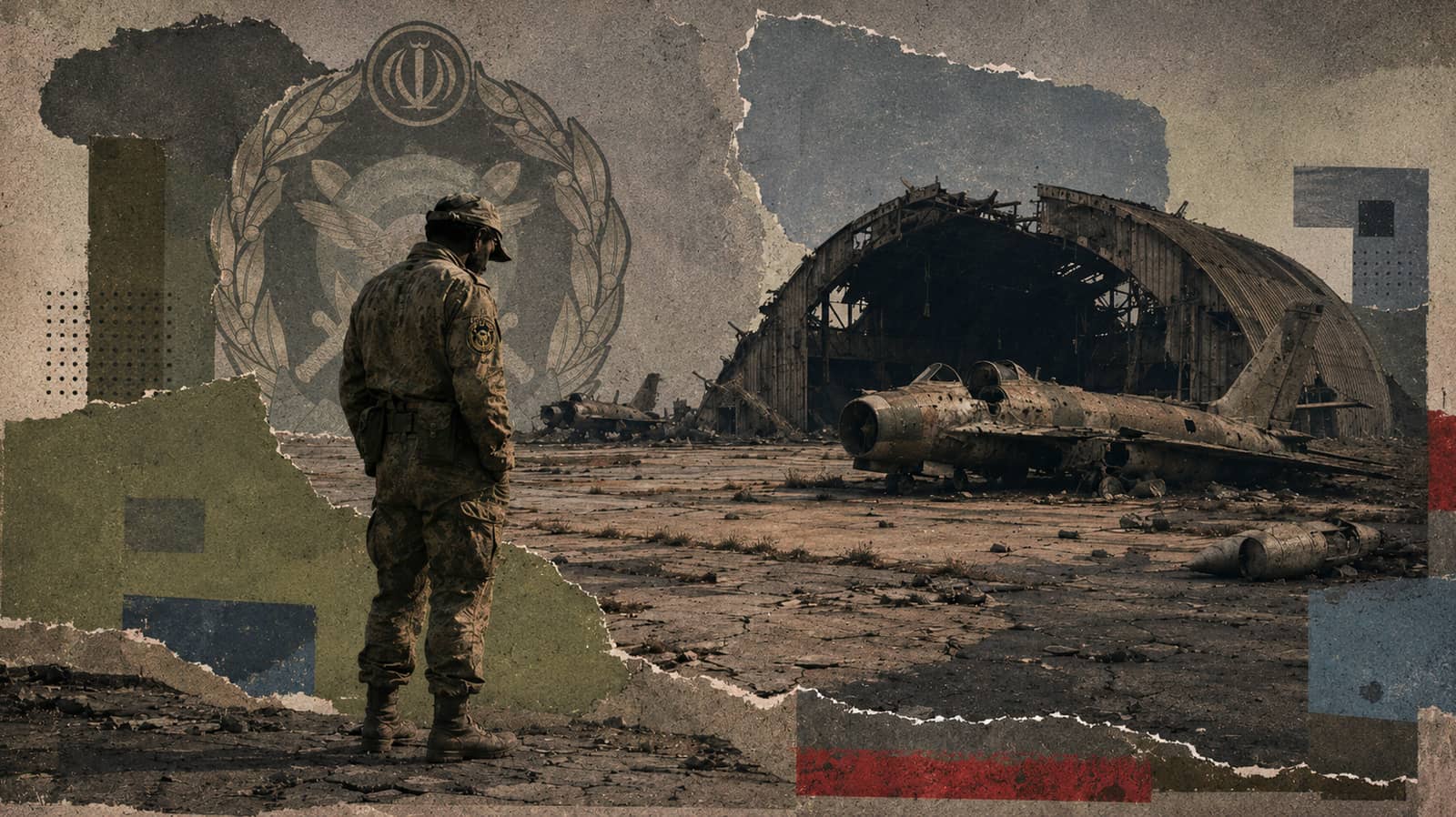
- Third: The doctrine cannot substitute for air superiority or integrated air defense. By mid-March 2026, Israeli estimates put the destruction at 80–85% of Iran’s air defense systems. The destruction of 10 of 17 tactical airbases has reportedly left Artesh pilots reluctant to fly combat sorties.
The Iran Primer explicitly identifies lack of coordination between the IRGC and the Artesh as “likely to remain a key weak point in Iranian military planning, due to underlying structural issues and institutional rivalries.” The Carnegie Endowment for International Peace noted in March 2026 that Iran’s current strategy should be understood as a response to the “failure of its prewar deterrence model,” which relied on deterrence by denial (proxy networks) and deterrence by punishment (missile strikes), but whose credibility gap became apparent once conflict began.
Critical assessment: The mosaic defense doctrine promises endurance, not victory in the classic sense. For the Iranian Islamic regime, however, endurance is victory. It turns a conventional military disadvantage into attrition and a diplomatic challenge for the attacker. It does not guarantee that military units will fulfill their assigned roles amid combat stress, supply shortages, leadership vacuums, and collapsing morale — conditions all present in the Artesh in 2026.
3. Ideological Loyalty and the Implausibility of Large-Scale Defection
3.1 The Post-1979 Artesh Is Not the Shah’s Army
A persistent analytical error treats the Artesh’s institutional grievances against the IRGC as evidence of latent anti-regime sentiment that could trigger large-scale defection or revolt. This extrapolation from the Shah’s era is not historically supported. The current Artesh officer corps has no institutional continuity with the pre-revolutionary military.
Between February and September 1979, approximately 7,500 to 12,000 officers were purged through execution, imprisonment, dismissal, or desertion. The failed Nojeh military coup of July 1980 triggered a second wave, resulting in 144 executions and 2,000–4,000 additional dismissals. The Shah’s officer corps was replaced with a comprehensive structure of ideological control. The Sazman-e Aghidati-ye Siyasi (Ideological-Political Organization, IPO), led by a cleric appointed by the Supreme Leader, places political commissars at every unit level down to the platoon. Approximately 40% of military training focuses on ideological topics. Every promotion from the brigade level and above requires approval from the Supreme Leader’s Military Bureau after vetting an officer’s ideological and security profile.
The ‘General Merits of Guardianship’ system, instituted in 2010, assesses personnel on 12 indicators, including belief in the Supreme Leader’s authority, family religiosity, and the spouse’s observance of the veil. Artesh recruitment advertisements in 2025 require candidates to be “believers, faithful… loyal to velayat… and committed to the values of the revolutionary system.” Every general, colonel, and battalion commander in service today is shaped by the Islamic Republic’s training, vetting, and promotion system.
3.2 The 2009 Barracks Incident: Individual Dissent, Institutional Compliance
The most often-cited evidence of Artesh’s sympathy with the reform movement is the 2009 incident in which Artesh commander Major General Salehi found photos of opposition leaders Mir-Hossein Mousavi and Mehdi Karroubi in soldiers’ barracks during garrison visits. Instead of punishing soldiers, he reportedly asked the IPO to ‘educate’ them. This incident reveals individual soldiers’ political sympathies—hardly surprising, given that conscripts are drawn from the general population—but it also shows the regime’s preference for soft correction over confrontation within Artesh ranks and the complete absence of any organized officer-level response to the Green Movement.
Kenneth Katzman’s formulation is precise: Artesh leaders often say their loyalty is to “whatever regime is in power” — a conditional statement, but one that has never been tested against the Islamic Republic, because the conditions for a regime-threatening test have never materialized. During the 2022 Mahsa Amini protests, Artesh Ground Forces Commander Brigadier General Kiomars Heydari publicly warned protesters that they “would no longer have a place” if Khamenei ordered a harsher crackdown.
3.3 Wartime Behavior in 2026: Desertions vs. Defection
During Operation Epic Fury, Iran International documented desertions from Artesh bases, particularly among conscripts, and failed reserve mobilization — with summoned personnel fleeing toward border regions rather than reporting for duty. However, these were localized, individual desertions rather than an organized defection by officers or entire units. No Artesh general or colonel-level officer publicly defected or joined any anti-regime movement during or after the conflict.
According to some assessments, some 350,000 Artesh soldiers and their families, who are economically dependent on the regime, face enormous structural barriers to collective action. Large-scale defection would require the emergence of an organized underground resistance and the collapse of the regime’s coercive apparatus — neither of which is in evidence as of June 2026.
Critical bottom line: The extrapolation from 1979 is logically flawed. In 1979, the Shah had fled the country, and the security apparatus was fragmented. The current regime has redundant chains of command, overlapping security agencies, four decades of refined coup-proofing, and an officer corps without institutional memory of any alternative political order. Large-scale defection cannot be counted on.
4. The Artesh’s Warfighting Capacity: Endurance, Not Victory
4.1 Ground Forces: Structurally Intact, Functionally Limited
The Artesh Ground Forces’ order of battle—four regional corps-level headquarters, five infantry divisions, two mechanized divisions, one armored division, and the 55th Airborne Brigade—has remained structurally intact throughout the conflict, given the absence of a ground invasion. Pezeshkian’s May 21 meeting with Army Chief Hatami emphasized “enhanced coordination among forces” and “updated combat and logistical capacities” during the ceasefire. However, these are official claims from a government with obvious reasons to project strength.
The ground forces’ practical warfighting capacity is severely constrained. The conscript component (approximately 220,000 of 350,000 Ground Force personnel) comprises young men from the general population, many from urban and educated backgrounds, who have expressed the strongest opposition to the regime. Shortages of ammunition, food, and water, reported during the active fighting phase indicate inadequate logistical preparation and inter-service cooperation. In FY 1404, only 0.7% of the Artesh’s budget was allocated to capital asset purchases — an extraordinarily low figure that confirms the long-term inability to recapitalize.
4.2 Air, Naval, and Combined-Arms Capacity
The Artesh Navy’s largest surface combatants are Alvand-class frigates based on a 1970s-era British design. The IRIS Dena was sunk by a U.S. submarine, and more than 30 Iranian naval vessels have been destroyed in the conflict. The Air Force is, for practical purposes, neutralized — the destruction of 10 of 17 tactical airbases and the first known stealth-versus-manned fighter kill (an Israeli F-35I shooting down a Yak-130 over Tehran) have reportedly left Artesh pilots reluctant to fly combat sorties.
4.3 Mosaic Endurance vs. Mosaic Victory
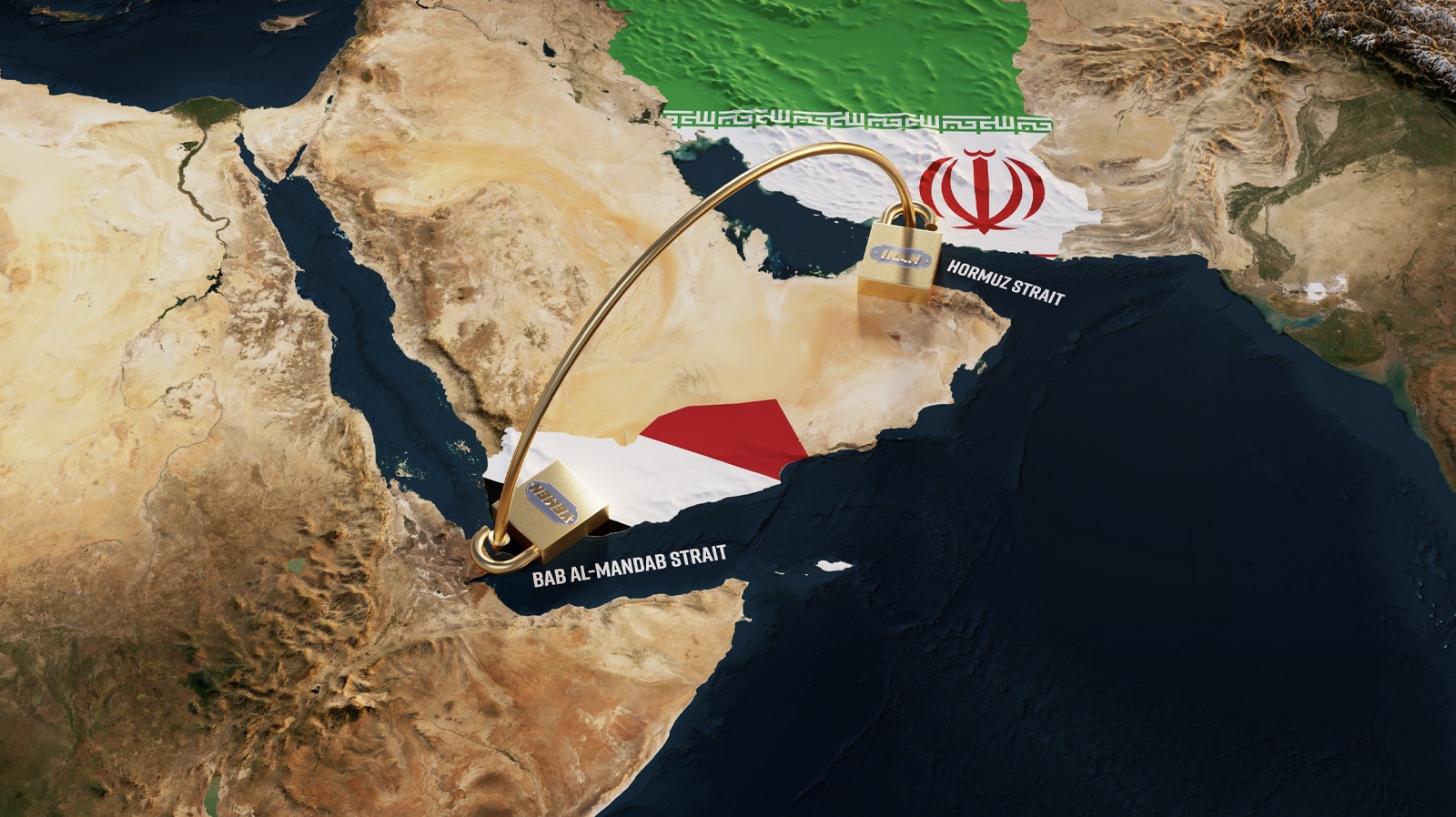
The mosaic defense has enabled Iran to keep fighting and launching missile strikes. This is accurate as far as it goes. Iran survived forty days of intensive strikes, achieved a ceasefire, and retained the Strait of Hormuz as a leverage point. However, an Iranian parliamentarian, Ebrahim Azizi, acknowledged on state television on April 25 that the ceasefire was accepted specifically because it was “necessary to rebuild capabilities and improve our forces” — an admission that the military situation was not sustainable at the pace of early March 2026.
Iran’s drone production has resumed, and the country is reconstituting faster than U.S. intelligence initially expected, according to assessments, aided by Russian and Chinese support, including Chinese missile components reaching the country despite U.S. naval restrictions. The Washington Institute assessed in May 2026 that U.S. and Israeli strikes appeared to have “sharply reduced Tehran’s ability to sustain large, long-range salvos at the tempo seen early in the war,” even as drone production resumed.
5. What to Expect If Hostilities Resume
5.1 The Strategic Landscape as of May 2026
By late May 2026, Newsweek described the ceasefire as “precariously close to failing,” while President Trump warned of “much harder” consequences unless Iran presented a more favorable nuclear proposal. Iran’s conditions remained maximalist: war reparations, complete sanctions relief, return of seized assets, and de facto recognition of sovereignty over the Strait of Hormuz. Speaker Ghalibaf’s May 23 warning that “if Trump commits another act of folly and restarts the war, it will certainly be more crushing and bitter for the United States than on the first day of the war” reflected both genuine efforts at reconstitution and a domestic audience’s need to project strength.
5.2 The Artesh’s Expected Role in a Second Round
- Ground Forces will serve as a defensive holding force. Their effectiveness in a protracted ground campaign remains untested, and their logistical fragility is a known vulnerability.
- Air Force and Air Defense are effectively neutralized. Additional strikes on the remaining seven operational airbases would complete the elimination of Iran’s fixed-wing combat capability.
- The Artesh Navy, as an independent conventional surface force, no longer exists as a credible combat entity—operationally, the IRGC Navy’s asymmetric forces will lead operations in the straits.
- Drone and missile strikes will be led by the IRGC Aerospace Force, with the Artesh potentially deploying Arash-model drones, as it did in the first phase — a secondary contribution.
5.3 The Escalation Scenarios
GIS Reports‘ scenario analysis is the most detailed and credible assessment available. If the U.S. attempts to force open the Strait of Hormuz, Iran’s likely response would be to attack UAE and Gulf Arab state infrastructure. The IRGC commanders—particularly Vahidi and the Khatam al-Anbiya Headquarters—are assessed as likely to authorize escalatory strikes regardless of diplomatic signaling from President Pezeshkian or Foreign Minister Araghchi. Supreme Leader Mojtaba Khamenei’s senior military advisor, Mohsen Rezaee, declared on March 14 that “the end of the war is in our hands” and, as of late May 2026, believed Iran could outlast the U.S. at the negotiating table.
From the regime’s perspective, the strategic calculation is coherent: disrupting the world economy through the Strait of Hormuz creates diplomatic pressure on the U.S. from allies that the regime cannot sustain politically. The IRGC’s doctrine explicitly is not to achieve military victory but to raise the cost of continuation above Washington’s political threshold. A “waiting game” scenario—in which Iran neither fires nor concedes, relying on U.S. domestic and allied pressure to force a compromise—remains the IRGC’s preferred mode as of late May 2026.
6. Persian-Language Telegram Channels: What They Reveal
6.1 Methodological Note
Persian-language Telegram channels offer a window into unofficial military discourse that neither Iranian state media nor Western intelligence assessments capture. A March 2026 academic study analyzing 47,567 posts from 29 channels found “a highly saturated coordination network” in which entertainment and non-political channels served as amplification layers for regime-aligned narratives. All channels should be read critically.
6.2 Key Channel Profiles
@Mohallell: The channel’s anonymous author may be a high-ranking IRGC officer, and the commentary, which includes detailed operational claims paired with nationalist exhortation aligns with that profile. Posts in March 2026 described new IRGC offensive tactics introduced “after monitoring, analyzing, and fully identifying the enemy’s vulnerable points,” a formulation consistent with IRGC institutional communication. However, claims of tactical mastery have a strong motivational dimension and should be read as reflecting institutional pride and/or deliberate information operations rather than a neutral operational assessment.
@Iranian_Militarism (https://t.me/Iranian_Militarism): This channel profiles military organizations, hardware, and personnel, including IRGC-affiliated paramilitary units. It functions as a military-enthusiast aggregator with pro-resistance framing, useful for tracking Iranian military claims and unit-level propaganda but not as a source of verified operational intelligence.
@IRIran_Military (IranMilitary.info): An independent media channel operating since 2009, described as offering the “latest military news and analysis on Iran and beyond from diverse sources. ”It appears editorially more neutral than state-affiliated channels and aggregates both Iranian and Western reporting. A March 26 post indicated Trump’s attempt to gauge Iran’s willingness to halt the war through Pakistan was “met with a coordinated and decisive response,” consistent with the IRGC’s public posture at that time.
6.3 Key Insights from Telegram Channel Analysis
- IRGC’s confidence in May 2026 is both positive and genuine. Claims of tactical evolution and rebuilt capabilities serve domestic morale as much as they reflect field reality.
- The Artesh is conspicuously absent from this informal military discourse. Persian-language military Telegram channels are IRGC-centric. The Artesh doctrine lacks a comparable informal communication ecosystem — itself an indicator of its diminished mobilizing significance within Iranian military culture.
- Logistical grievances reach even pro-regime channels. Reports of delayed salaries, food shortages, and personnel sleeping on the streets after infrastructure strikes surfaced in channels not hostile to the regime, corroborating Iran International’s March 12 exclusive.
- Regime-linked channels present a doctrinally consistent narrative. Mosaic defense, tactical learning narratives, and claims of enemy “miscalculation” dominate the narrative.
7. Conclusion: An Army of Endurance, Not of Revolution
The Islamic Republic of Iran Army in May 2026 is best understood as an institution that has been systematically marginalized, under-resourced, and ideologically transformed over 47 years — and as a force that emerged from Operation Epic Fury with its ground force structure intact, but with its air, naval, and combined-arms capacity severely degraded. It is neither the Shah’s army with suppressed anti-regime potential, nor the IRGC’s mirror ideological image.
Artesh is loyal to the regime, not out of revolutionary passion but out of institutional dependence, career incentives, and the absence of any alternative political structure to defect to. Large-scale defection requires both motivation and opportunity; motivation (individual and structural grievances) exists at the conscript and lower-officer levels, but the opportunity (an organized resistance, a fractured security apparatus, a discredited leadership) does not yet exist.
The mosaic defense doctrine has demonstrated its core promise: the regime survived decapitation strikes and kept fighting for forty days. But endurance is not victory, and the Artesh’s specific contribution to that endurance was primarily defensive and secondary. The doctrine’s real effectiveness in a renewed conflict depends on whether Iran can reconstitute its missile and drone inventories quickly enough to impose unacceptable costs on the attacker — a race that U.S. intelligence assesses Iran is running faster than expected, though the outcome remains uncertain.
If hostilities resume, the Artesh is expected to play an expanded but secondary role: conventional territorial defense, limited drone launches, and the use of IRGC Ground Force resources in joint defensive operations. However, it should be noted that all the above-mentioned capacities of the Iranian regular army are nominal only, remaining on paper. Judging by its behavior during the Epic Fury/Roaring Lion operation, the Artesh will likely remain passive.
JISS Policy Papers are published through the generosity of the Greg Rosshandler Family.
Source: https://jiss.org.il/en/grinberg-the-artesh-after-epic-fury-roaring-lion/