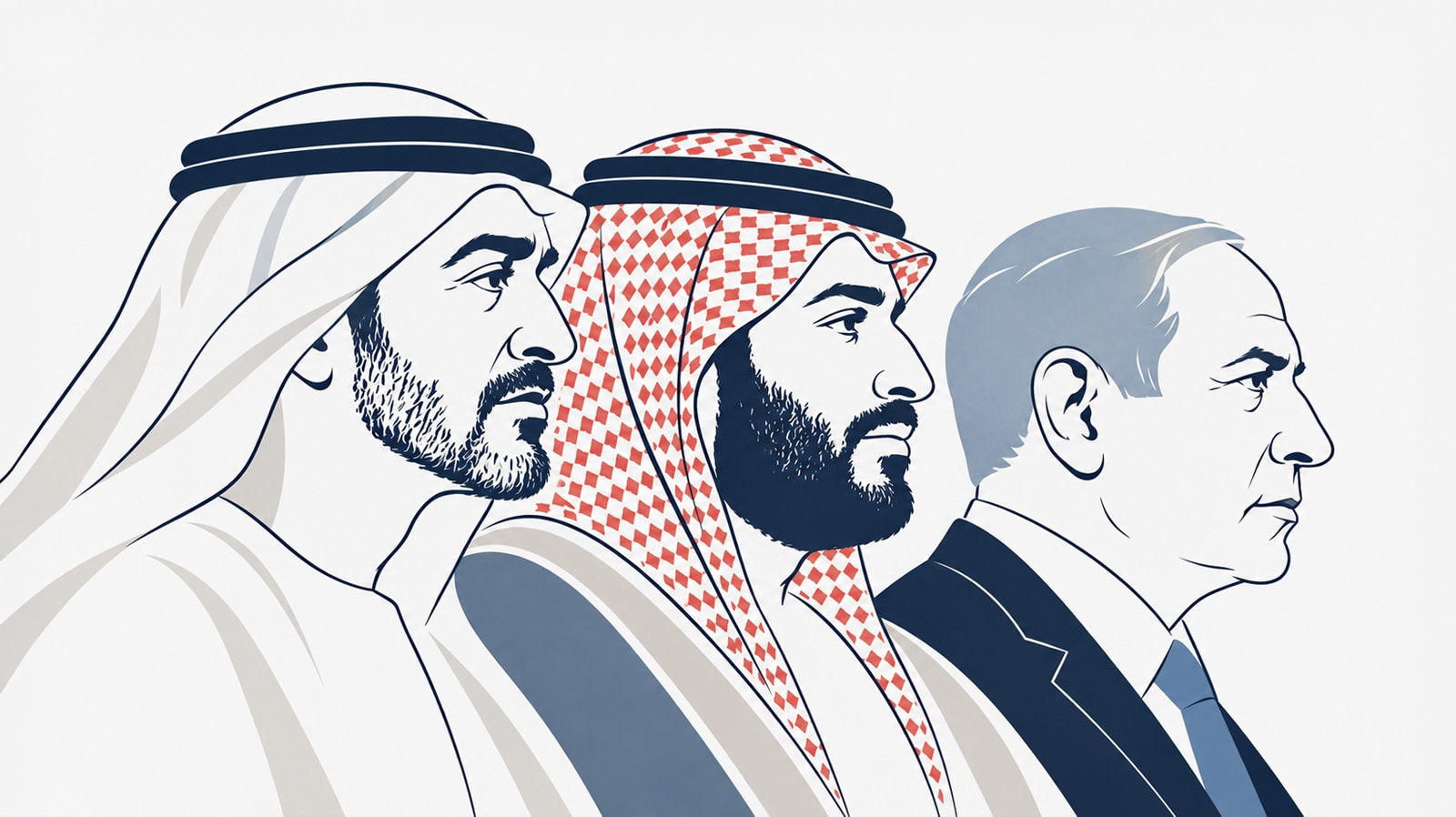


Two prominent figures stand out in Iran’s political landscape: Parliament Speaker Mohammad-Bagher Ghalibaf, and Islamic Revolutionary Guard Corps (IRGC) Commander-in-Chief Ahmad Vahidi. Despite his ostensibly civilian post, Ghalibaf is an integral part of the IRGC elite that rules Iran. He is the only member of the IRGC elite who combines proven military and political skills. He was among the top IRGC commanders during the Iran-Iraq War, served as national police chief, and was mayor of Tehran. He often issues official statements on the regime’s diplomatic moves.
Ahmad Vahidi, was the first commander of the Quds Force, the IRGC’s extraterritorial unit responsible for conducting terrorist attacks abroad. He is the primary suspect in the devastating 1994 attack on the Jewish community in Buenos Aires. He held posts at the Ministry of Defense and is one of the chief figures responsible for the bloody suppression of anti-regime protests in 2022 and 2026.
Vahidi and Ghalibaf can be described as the regime’s two most important figures. However, their importance should not be overestimated, because neither has the capacity to run the Iranian regime independently. The IRGC makes decisions collectively, like any other junta, rather than operating as a one-man dictatorship.
Iran has locked itself into a diplomatic stalemate after President Masoud Pezeshkian told his Pakistani counterpart that Iran “will not enter into forced negotiations under pressure, threats or a blockade.” At the same time, some reports claim Ghalibaf has resigned his position as Iran’s chief negotiator. Iranian media denied these reports.
Only Iran International and some Israeli media reported Ghalibaf’s resignation from the talks; his refusal to travel to Islamabad says little about his personal status but speaks volumes about the internal infighting within the Iranian elite.
Pezeshkian’s wording on Iran’s rejection of talks under pressure reveals much: agreeing to negotiate with the United States under American pressure amounts to surrender to American conditions, which the regime cannot afford. Neither Ghalibaf nor any other Iranian official can afford to be seen as the signatory to Iran’s capitulation.
Ghalibaf is anything but moderate: he justified the ruthless crackdown on student protesters in 1999, was among those responsible for the torture of detainees at the Kahrizak prison in 2022, called for the destruction of Israel, and eulogized Yahya Sinwar while glorifying the Hamas massacre and attack of October 7, 2023. Nothing supports the idea that Mohammad-Bagher Ghalibaf, who was also a high-ranking IRGCcommander, is a “moderate.” All his statements, without exception, suggest the opposite.
Unlike Ghalibaf, Ahmad Vahidi is media shy. His last known public appearance was on February 11 at a rally in Shiraz marking the 47th anniversary of the Islamic Revolution, where he warned Iran’s enemies “against any miscalculation.”
A statement in support of Ghalibaf was signed by 261 of the 290 MPs in the Majlis. The statement praised him for confronting the enemy and warned against speculation based on rumors, cautioning against amplifying Iran’s ‘cognitive warfare’ against its enemies. Iranian MPs claim that the U.S. and Israel aim to cause mistrust among the Iranian public following negotiations.
The statement follows recent American and Israeli remarks about internal Iranian infighting and Ghalibaf’s status. Likewise, it addresses Iranian politicians, including MPs, who reject any talks with the United States. Notable hardliners from the Steadfastness Front Party, such as Mahmoud Nabavian and Mohammad Taqi Naqdali, were absent from the statement. Nabavian has criticized the negotiations as “a strategic mistake that emboldened the U.S.” Naqdali stated that Khamenei opposed further U.S. talks and blocked efforts by officials favoring negotiations.
Additionally, MP Amirhossein Sabeti accused parliament and the government of obstructing a bill to withdraw Iran from the Treaty on the Non-Proliferation of Nuclear Weapons (NPT), which he believes would have majority support.
Iranian media inadvertently exposed the rift lawmakers sought to hide. Raja News, affiliated with the Steadfastness Front Party, accused Tasnim News Agency and Mashreq News—both close to the IRGC—of crossing the “red lines” set by the supreme leader. Raja News claimed the outlets called Iran’s 10-point conditions a “magical beanstalk,” suggesting they were unrealistic. Both outlets rejected these claims, calling the attacks a “psychological operation” by a small group aiming to hijack Iran’s resistance. Tasnim said it removed the disputed article to prevent misunderstanding.
Thus, there is no doubt that internal rifts exist among the IRGC elite that currently runs the regime, although it is noteworthy that similar political games date back many years. They certainly highlight conflicting opinions, yet it is difficult to draw substantial conclusions regarding the status of Ghalibaf or any other Iranian politician.
All high-ranking IRGC officers share the same radical worldview, but that does not mean they agree on everything. Since its inception, the Iranian regime has cultivated divergent opinions within certain limits. There have always been factional feuds and intrigues, so disagreements within the IRGC should come as a surprise.
The current situation, however, presents the IRGC with a new dilemma: despite all the divergences and feuds, Khomeini and, subsequently, Khamenei, have always remained above the fray and managed those internal rifts. Today, the situation has changed. As noted above, there is no evidence of ideological divergences within the IRGC; the most probable explanation is that these disagreements are technical in nature. Either way, neither Vahidi nor Ghalibaf can impose their authority on each other or other challengers.
To do so, one of the contenders needs to wield sufficient power to subduehis rivals, or the person in question must project significantly more charisma than the others. Under the current circumstances, none of the IRGC elite meets either criterion. Such a situation renders decision-making extremely ineffective. The divergences arise not only from ego-driven rivalries but also from the understanding that any option they may choose is unfavorable. It is the U.S. that sets the rules now.
As a result of these domestic political dynamics in Iran, pursuing serious negotiations with the Iranian regime is practically pointless for two reasons, even if the regime has no intention to resume active hostilities:
- It is impossible for the Iranian leadership to officially renounce the tenets of their ideology and agree to meaningful capitulation.
- Even if, in theory, they articulate something that may sound like an agreement, it will never be unequivocal. There is no guarantee that those who oppose that theoretical deal will comply with the terms agreed upon.
The IRGC controlled everything in Iran even before March 2026. It controls Iran’s shadowy economy; it engages in an array of “economic” activities, ranging from the Khatem al-Anbiya construction base to the Bonyads, secret funds totaling billions of dollars. The IRGC overshadows the role of the regular army (Artesh) in military matters; the former has always received bigger budgets. Iran’s foreign ministry has never had any say in Iran’s regional policies because dealing with neighboring countries primarily involves providing military support to the “Axis of Resistance” in Iraq, Syria, Lebanon, and Yemen.
All these IRGC officers share the same radical worldview. Anyone who does not share it could not have reached the top of the IRGC hierarchy. The founder of the Islamic Republic, Ayatollah Ruhollah Khomeini, established the IRGC in 1979 as the regime’s praetorian guard. It has been ideological since its inception. Disagreements among the IRGC leadership are natural and tactical. Nothing suggests they are ideological; thus, it is impossible to say that there are more moderate or more radical factions within the IRGC.
Likewise, the behavior of the IRGC leadership aligns with the officially proclaimed ideology of the Islamic Republic, so it is impossible to portray the current regime as “more radical” than the previous one. The only difference is the loss of the fig leaf of respectability that civilian representatives conferred on the regime. Iran’s successive presidents, including Masoud Pezeshkian, have always represented the elected bodies of the Islamic regime. Yet, it was always Khamenei, relying on his networks within the IRGC and non-elected bodies, who made strategic decisions.
Anyone intimately familiar with the intricacies of the regime’s functioning cannot accept the understated assertion that the war worsened conditions, empowering the IRGC and rendering it more radical.
Radicalism or determination alone cannot win a war. It is impossible to ignore the weight of objective reality; it should be analyzed not by what either of the belligerent parties says, but by examining facts on the ground.
The facts do not bode well for the regime, whether or not the U.S. resumes military action. Inconsistencies in the regime’s behavior and even in its official statements are easy to spot. Conflicting declarations follow one another, undermining clear messaging: Foreign Ministry spokesperson Esma’il Bagha’i announced that Iran accepted the ceasefire; however, some media outlets that published his statement later deleted it. The impression is that the regime does not know what to do, and for good reason: it has no good options. The Iranian blockade of the Strait of Hormuz is the regime’s last resort. The “mosaic defense” guarantees endurance but not victory, even though the regime presents its survival and endurance as victory. The regime cannot accept any of the American conditions because doing so would be interpreted as surrender. For the regime, surrender is tantamount to political suicide.
The bulk of Iran’s military might, along with its military-industrial complex, has been destroyed. Even if the regime decides to resume launching ballistic missiles at Israel or the Gulf countries, it will be an annoyance, not a game-changer. One possible reason for the regime’s hesitation about accepting the American-imposed ceasefire is its sober understanding that it might be destroyed.
Skeptics may cite the mere fact of the regime’s survival and its repressive grip as evidence of the futility of the war’. Yet one should not gauge the outcome of war by merely observing surface-level appearances without delving ibelow the surface. Yes, the regime survived and retains its capacity for suppression. This picture warrants a closer look, and it is noteworthy that the regime is eager to convey exactly this message. Is it the same regime with the same capacities that survived?
In the meantime, several ministers have reported to the government that the socio-economic situation is becoming unbearable due to the loss of millions of jobs as a result of the government-imposed internet blackout, in addition to the damage to the digital economy, estimated at $1.69 billion. Even if hostilities do not resume, it will be impossible to ignore the worsening economy or justify inaction on the grounds of war. At the same time, the regime has no other means to alleviate the economic crisis. Under such conditions, any decision to invest in rebuilding destroyed military capabilities will become unsustainable.
The regime has lost the remnants of its legitimacy after the massacre of its citizens. By contrast, any effort at reconstruction always requires a degree of national cohesion, which is impossible in today’s Iran. Secret executions, torture, and general suppression are ongoing, yet these inevitably come at the expense of all other aspects of governance. In other words, a period of stability and prosperity does not await the regime, even if the war does not resume.
As of April 2026, Iran is a much diminished strategic threat than it was before the war. Despite its victorious declarations, the regime is facing a sober future.
JISS Policy Papers are published through the generosity of the Greg Rosshandler Family.
Source: https://jiss.org.il/en/grinberg-the-irgc-holds-power-over-a-weakened-iran/