

Dear Subscribers,
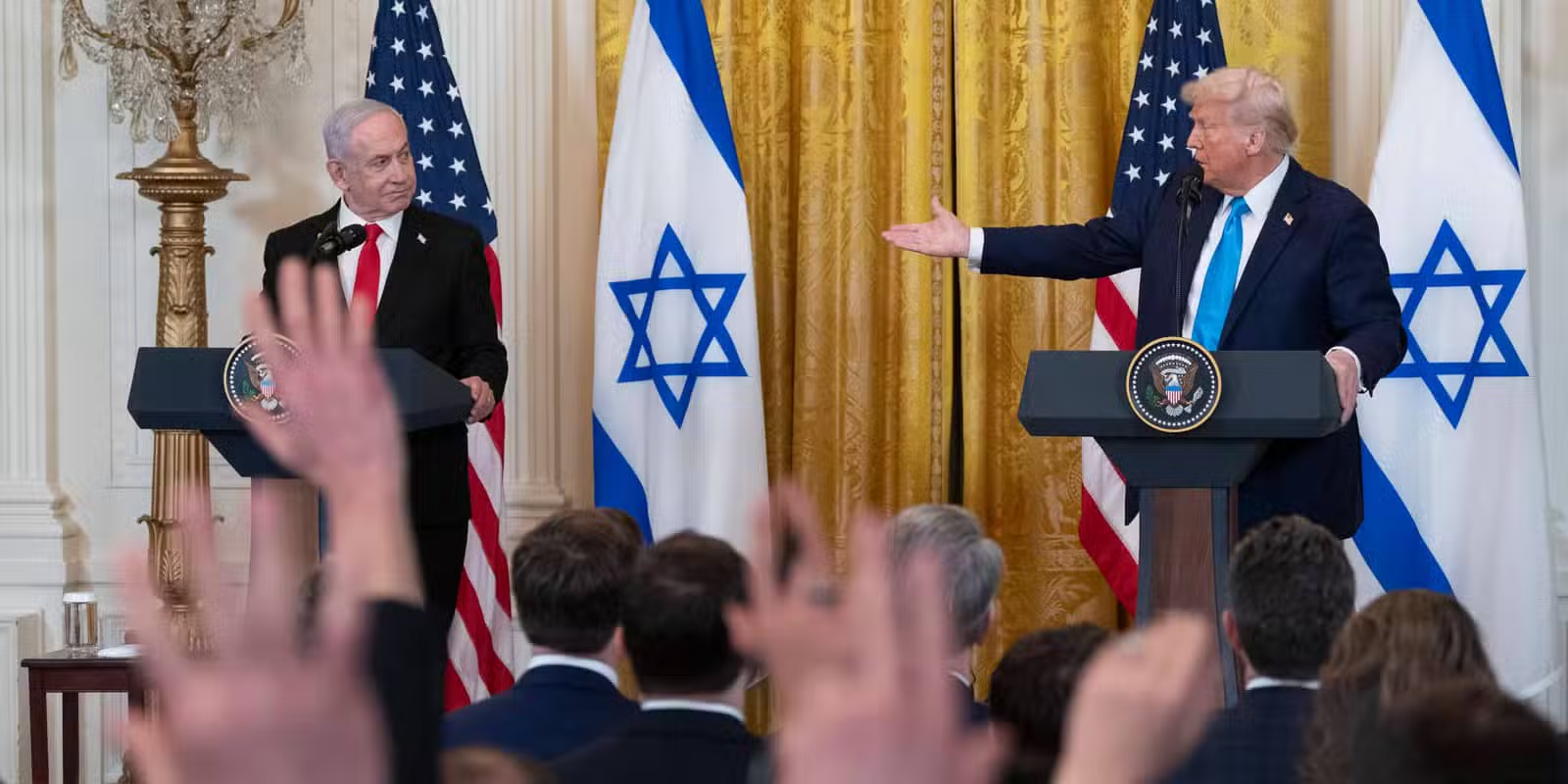
In the month since President Trump presented his peace plan at the White House, with Prime Minister Benjamin Netanyahu standing beside him, significant progress has been made toward calming the various fronts—with a focus on Gaza. At the same time, the challenges and obstacles to stabilizing the situation in all arenas have become equally clear.
The most notable achievement was, of course, the return of all twenty surviving hostages and the recovery of more than half the bodies of the slain. Yet Hamas continues to carry out occasional attacks, which have already claimed the lives of three IDF soldiers, drags its feet on returning the remaining bodies, and is consolidating its rule in Gaza while refusing to disarm.
American involvement in implementing the agreement is deep and ongoing. It is reflected in frequent visits by senior administration officials, including the president himself, and in the establishment of the Civil–Military Coordination Center (CMCC) in Kiryat Gat. In most areas, there is a clear consensus between Israel and the United States, but tensions remain—for example, over the question of Turkish and Qatari involvement in implementing the agreement.
In Lebanon, Israel must continue to enforce the ceasefire by force, in light of Hezbollah’s efforts to rebuild its capabilities with Iranian assistance and its refusal to disarm. This is despite U.S. efforts to push the Lebanese government to carry out its declared intention of dismantling the terrorist organization.
In Iran—still struggling to recover from the joint Israeli-U.S. strike it suffered in June—economic pressures on the regime are mounting as a result of the reinstatement of UN sanctions and the economy’s poor performance. Even so, the Iranian leadership remains adamant in refusing to soften its positions to ease its distress, focusing instead on rebuilding its capabilities while leveraging its close relations with China and Russia and issuing repeated threats.
The Jerusalem Institute for Strategy and Security (JISS) continues to follow these developments through a wide range of analyses and policy recommendations published in papers, webinars, briefings, and appearances in Israeli and international media. In recent months, activity on the Institute’s website has expanded markedly, and its visibility on social media has grown. More importantly, the core messages advanced by JISS have proven to have been prescient.
JISS advocated intensifying military pressure on Hamas—particularly the completion of Israel’s control over the Strip—as the primary means of compelling Hamas to release all the hostages. We have also emphasized the importance of disarming Hamas as the clearest expression of Israel’s victory in the war and as a step that will engrave in Palestinian memory the recognition that the October 7 attack was a catastrophic mistake that must never be repeated.
JISS fellows have conducted in-depth analyses of the Trump Plan, highlighting its many advantages as well as the challenges it presents going forward. They have also called for increased pressure on Iran and described the growing tensions within the regime over how to respond to the challenges it faces; this demands continued Israeli vigilance.
As part of its recent work, JISS has produced a range of papers and activities on the Palestinian and Iranian issues; devoted special attention to the Qatari and Turkish dimensions, warning against the Muslim Brotherhood axis those states promote as an alternative to the Iranian one; highlighted the need to focus on Egypt as both a present and future challenge; published several analyses on India and Pakistan and their relations with the Middle East; and hosted the annual Israel–Australia Strategic Dialogue together with AIJAC, the Australian think tank Strategic Analysis Australia, and the Abba Eban Institute.
Brig. Gen. (res.) Yossi Kuperwasser
Head of Jerusalem Institute for Strategy and Security
Source: https://jiss.org.il/en/jiss-newsletter-6-11-25/