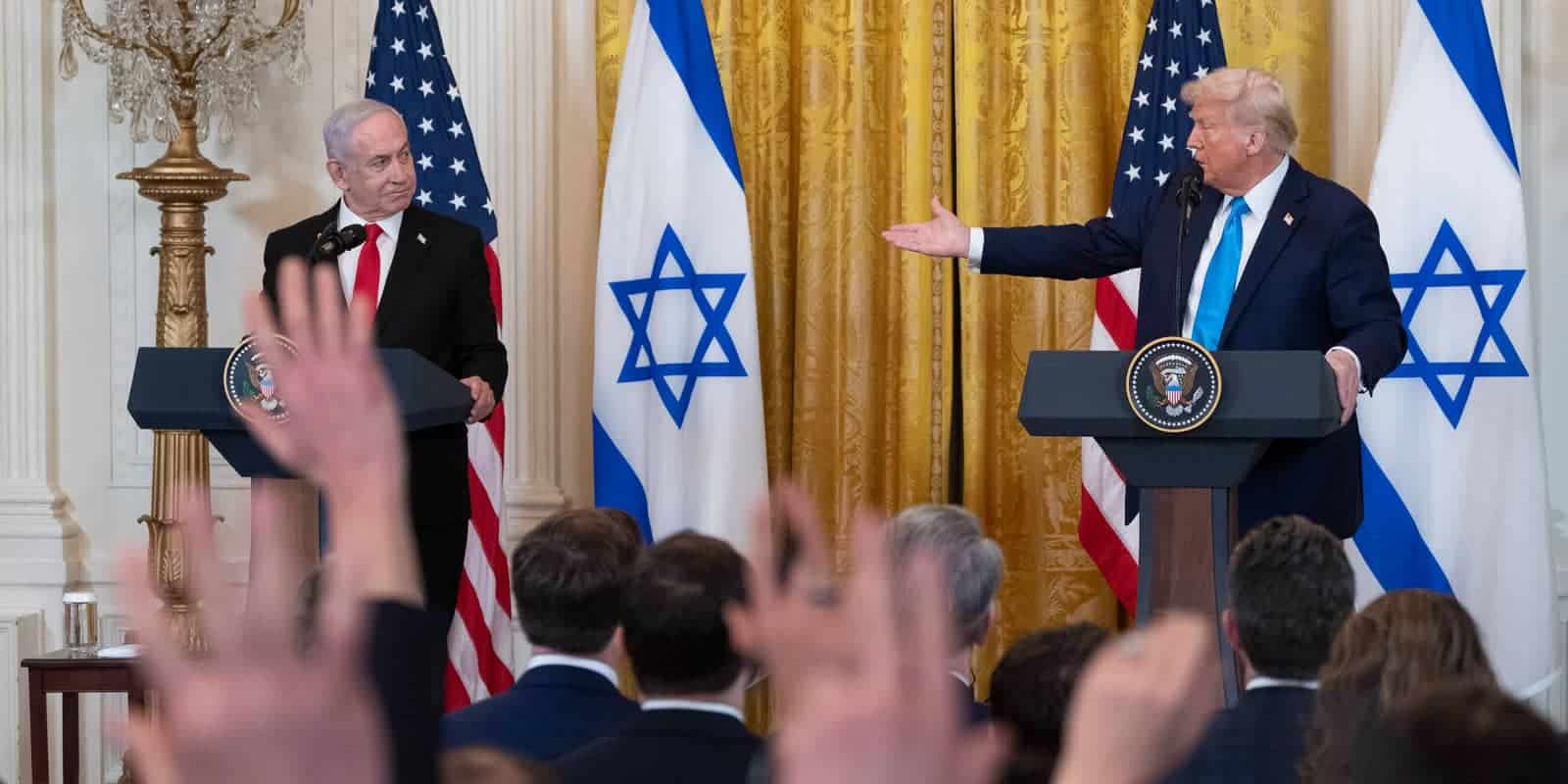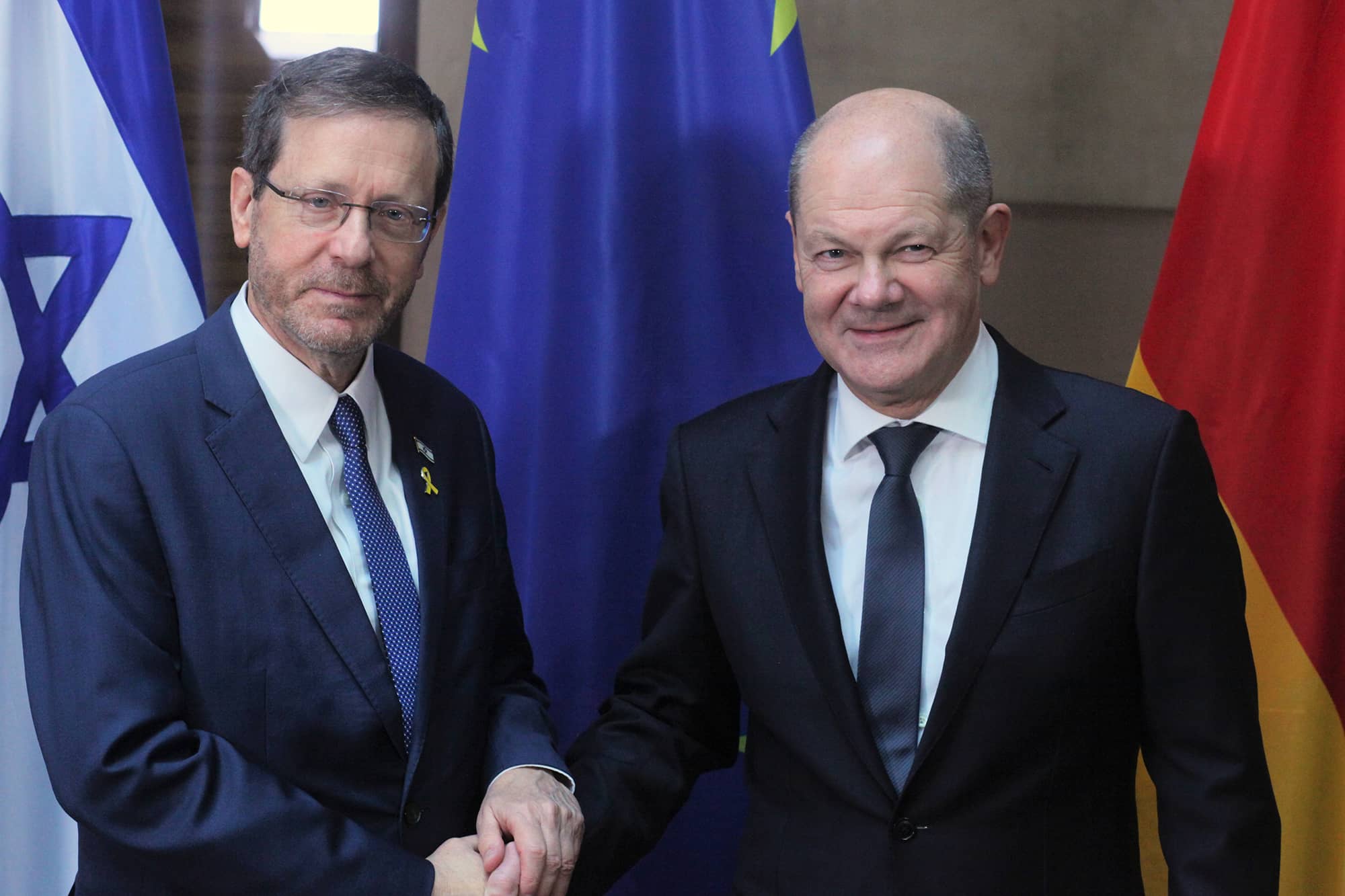


The 10th trilateral summit bringing together Prime Minister Kyriakos Mitsotakis of Greece, President Nikos Christodoulides of Cyprus, and Prime Minister Benjamin Netanyahu of Israel, held in Jerusalem (22 December 2025), marks, as its concluding statement asserts, a historic juncture. It puts back on track, despite the impact of the war, a transformative alignment in the Eastern Mediterranean that has been at work for a decade and has brought significant benefits to all three countries. Now—with an eye east to the Emirates and India, and a wary watch for Turkey’s neo-Ottoman ambitions—it may be more significant than ever. Backed by the United States (in a 3+1 format), it offers others in the region, such as Lebanon, a new and cooperative frame of reference.
In a troubled era, the joint declaration offers moral backing to Israel—as well as to Cyprus’ hope for an end to the island’s division and the Greek position on the Law of the Sea. While supportive of efforts to alleviate conditions in Gaza, as mandated in UNSCR 2720, and of President Trump’s plan and UNSCR 2803 (Greece and Cyprus have officers at the CMCC in Kiryat Gat), it also notably rejects the “unfounded allegations against Israel”; reaffirms its right to defend itself; recognizes the Jewish People’s historic link to the land; and commits to combatting antisemitism. In this context, an important tool may be the close cooperation suggested, in this as in previous joint statements, between the Jewish and Hellenic diasporic communities.
While there are many considerations driving Israel’s interest in the alignment (all beginning with the letter E—Egypt, Emirates, Exercises, Energy, Emergencies, Economics, Environment, European politics…), it is clearly Turkish President Recep Tayyip Erdoğan’s bid for hegemony that is increasingly central to the strategic calculus of all three—and of other like-minded players in the region.
The Trilateral Summits and their Strategic Context
Back in January 2016, the first trilateral summit brought together, in Nicosia, the leaders of Israel (then, as now, Prime Minister Netanyahu), Cyprus (President Nikos Anastasiades), and Greece (Prime Minister Alexis Tsipras, notably representing a left-wing party that had once been quite critical of Israel). It came about as a result of earlier preparatory work at the professional level, identifying mutual interests and common threats. Amidst political instability in the region, including the upheaval in Egypt between 2011 and 2013; the increasingly overt ambitions of Erdoğan’s government; and the more positive incentive of cooperation in the field of energy in the Eastern Mediterranean, Israel and its Hellenic partners saw eye to eye on a broad range of issues.
In parallel, Greece and Cyprus conducted similar summits with Egyptian President Abdel Fatah el-Sisi, later establishing in Nicosia twin secretariats that are meant to manage not only the summits at the highest level but also the work of trilateral ministerial meetings and working-level teams. Summits were held regularly in the three capitals of the region and beyond (and in the case of the 5th trilateral summit in December 2018, in Be’er Sheva, reflecting Netanyahu’s vision of turning the city into a global “cyber capital”). Later, the U.S. joined some of the working-level deliberations in a Three plus One format; and the UAE joined the three in a foreign ministers’ forum established at a meeting in Paphos, Cyprus, in April 2021.
In practical terms, this created an alignment of forces (albeit not a formal alliance) that significantly changed Israel’s military as well as economic posture. While the war made it more difficult for the summits to be held, and there were occasional expressions of dismay by Greece and Cyprus over Israeli actions, the Hellenic partners chose to cooperate in an effort – the “Amalthea Corridor” – to open a sea lane to deliver supplies to Gaza, in line with UNSCR 2720’s “mechanism” for the provision of such aid. Israel chose to welcome this pattern of involvement, and the joint declaration endorsed it, in the context of support for Trump’s plan and UNSCR 2803.
At the same time, the joint text includes a resounding rejection of “unfounded allegations” against Israel, apparently a reference to taunts of “genocide” and “starvation.” It lends support to the Jewish People’s right to its own homeland, and to Israel’s right to defend itself. It raises the prospect of cooperation between diasporic groups – Jewish and Greek – seeking to enhance mutual support in the U.S. and beyond. Indeed, organizations such as B’nai B’rith and its Hellenic partners, AHI and AHEPA, have established close cooperation and a tripartite academic forum (in which JISS scholars play an active role).
Looking further east, a significant added dimension in addition to the Emirates is the reference to the prospect of the “India – Middle East – Europe Economic Corridor” (IMEC), which may be seen as Indian Prime Minister Narendra Modi’s answer to the challenge posed (or imposed) by China’s “Belt and Road” initiative. The Eastern Mediterranean alignment thus becomes a player in its own right in the intensifying global competition.
Assessing Israel’s List of (“E”) Considerations
Since its early days, the alignment could be seen from an Israeli perspective as a response to multiple considerations and needs, which can be conveniently listed with the initial letter E marking each of them. While specific circumstances changed, particularly the role of Egypt, the essential aspects remained relevant:
- Egypt: A key and early point of commonality between Greece, Cyprus and Israel was their response to the fall of the Muslim Brotherhood from power in July 2013. While many in Europe deplored the overthrow of a duly elected government, it was welcomed in Athens (even under a left-wing government), Nicosia and Jerusalem because the rise of a radical Islamic regime in Cairo, closely aligned with the AKP government in Ankara, was viewed as a dangerously destabilizing shift in the balance of power in the Eastern Mediterranean. This assessment also led to the creation of the above-mentioned parallel trilateral structure with Sisi’s Egypt; and later the establishment of the Cairo-based Eastern Mediterranean Gas Forum (EMGF). In more recent years, however, Egypt’s role – as explored below – has become more complex, as Turkey actively courted a regime it had previously branded as a bloody usurper of power.
- Erdoğan: Ultimately, it is the ongoing challenge posed by Turkey’s neo-Ottoman aspirations for hegemony that cements the bond between Israel and its Hellenic partners: Prime Minister Netanyahu alluded to this following the 10th summit, when he spoke of the need to frustrate the ambitions of those seeking to dominate the region. Turkey continues its occupation of Northern Cyprus under the guise of the Turkish Republic of Northern Cyprus, which no other country recognizes. (Ironically, Ankara now attacks Israel for extending recognition to Somaliland…). Hence, the summits have repeatedly referred to the need to resolve this issue and re-unify the island. With Greece, Turkey remains in open dispute on several issues, including the delineation of exclusive economic zones between Turkey, Egypt, Greece, and Libya, as well as over control of islands in the Aegean. As for Israel, despite a short courtship before the war, it is subject to vicious verbal assaults and some economic pressure, and Erdoğan continues to host Hamas operatives. Not surprisingly, the summit itself (preceded by a visit in Athens from two trusted members of Netanyahu’s team, Acting National Security Adviser Gil Reich and the prime minister’s military secretary Roman Goffman) came to be seen as directed against Erdoğan and his policies. Indeed, references to closer security cooperation featured prominently in the joint declaration issued by the parties.
- Military Exercises: While not specifically mentioned —beyond general references to closer cooperation in security, military and defense affairs—joint military exercises became an important aspect of the trilateral alignment. Never before had such large Israeli military formations trained on foreign soil: but this became a regular practice for elite IDF infantry, which carried out exercises in the Troodos mountain range in Cyprus, overtly simulating combat conditions against Hezbollah in Lebanon. The IAF, meanwhile, has trained for long-range missions in Greece (replacing training flights in Turkey, back when relations with it were on track) and took part in the annual “Iniochos” exercises of the Greek Air Force, while Greece in turn takes part in Israel’s bi-annual “Blue Flag” exercises. This training framework has made a significant contribution to Israel’s military capability.
- Emirates: Openly at the Paphos meeting in 2021, and more discretely at other junctures, the UAE has been supportive of the alignment—including its envisioned role in the IMEC—largely due to its interest in containing Erdoğan and weakening the Muslim Brotherhood. Like Israel (in parallel with the announcement of the Abraham Accords in 2020), the UAE declared its support for the Greek and Egyptian delineation of the EEZ in the Mediterranean, as opposed to Erdoğan’s map.
- Energy: As noted earlier, the EMGF— a framework committed to mutually beneficial use of the region’s natural resources—was made possible by a perceived commonality of interests. with Egypt serving as host and key actor. Again, this is linked to the question of delineation and the Greek demand to uphold the Law of the Sea in this respect. Building on the work of the energy ministers of the 3+1 (with the United States) in November 2025, the three partners seek to advance gas-based electricity production and connectivity (via the Great Sea Interconnector) and link this to the IMEC concept. At the same time, the joint declaration also refers to the need to pursue the joint development of renewable energy projects.
- Emergencies: As early as December 2010, during the massive fire on Mount Carmel, Greek and Cypriot firefighting units and aircraft were the first to respond. Subsequently, a formal cooperation protocol was established —later joined by Croatia— to respond to natural emergencies such as forest fires, with a dedicated coordination center established in Cyprus. From an Israeli perspective, the alignment has also proved critical in responding to man-made disasters: Greek and Cypriot ports and airports functioned as backup logistical hubs for Israel when its facilities came under fire during the war.
- Economics: Israel’s economy is significantly larger—approximately twice the GDP of Greece and Cyprus combined—and markedly more advanced and innovative: hence the value of cooperation in science, technology and research. The 2025 summit decided to create a joint group on AI and on the need to sustain what the declaration terms as “mission-critical civilian verticals.” it also suggests that economic—and energy—cooperation may be broadened to include Lebanon, if and when it moves to disarm Hezbollah and advance toward normalization with Israel. Both Greece and Cyprus have seen a surge in private Israeli investment in real estate and other assets. This trend has persisted despite occasional anti-Israeli demonstrations in Greece and has been accompanied by shift of Israeli tourism away from Turkey’s coastal south to Greek and Cypriot destinations.
- Environment: Given the fragility of the Mediterranean ecosystem, in a region deeply affected by global warming, several summit conclusions—including the present one—have referred to the need for joint efforts on climate change, water, and oil-spills. The 2025 statement also envisions the establishment of a joint working group on health-related issues.
- Europe: For Israel, the ability and willingness of partners in the Mediterranean —alongside Germany—to block hostile initiatives in the EU, which operates by consensus, is of considerable importance. With Cyprus holding the rotating presidency of the EU Council, the declaration envisages opportunities for renewed momentum in EU-Israeli relations (as well as the joint use of EU Horizon programs investing in innovation). Given the renewed European interest in the region—reflected in the appointment of Dubravka Suica as a Commissioner for the Mediterranean and the adoption of the new Pact for the Mediterranean—Israel’s standing is clearly enhanced when it can present itself as a key partner of an already established sub-regional alignment.
The Egyptian Challenge
As noted earlier, reactions to the overthrow of the Muslim Brotherhood and the emergence of Egypt’s current were among the initial drivers bringing Israel, Greece and Cyprus together. The establishment of parallel secretariats, as well as the role of the EMGF, seemed to indicate that Egypt shares an interest in the stabilization of the Eastern Mediterranean and countering Turkish influence given Erdoğan’s open support for the Muslim Brotherhood and its affiliates across the region. (Egypt came close to an open confrontation with Turkey over support for their respective clients in the Libyan civil war).
More recently, however, questions have arisen as to Egypt’s position toward the Turkish-Hellenic divide, due to an intense effort by Erdoğan to woo some of his former Arab opponents —including Saudi Arabia, the UAE, and Egypt itself—driven at least in part by Turkey’s mounting economic difficulties. At the same time, tensions between Israel and Egypt over Gaza, and now over the question of Israel’s recognition of Somaliland, are a hindrance to closer Eastern Mediterranean cooperation.
Still, with a massive Israeli-Egyptian gas deal coming into effect and President Sisi looking for ways to assert a unique Egyptian identity—complete with Pharaonic symbolism and Mediterranean associations—it remains possible to build on past work with Egypt and utilize the Greek-Cypriot-Egyptian trilateral framework to revive Cairo’s commitment to regional cooperation. After all, despite friendly Turkish gestures and even some military cooperation, the current Egyptian leadership can be safely assumed to remain deeply suspicious of Erdoğan’s long-term intentions.
JISS Policy Papers are published through the generosity of the Greg Rosshandler Family.
Source: https://jiss.org.il/en/lerman-the-tenth-trilateral-greek-cypriot-israeli-summit/