

Introduction
Operation Roaring Lion is a further phase in the War of Redemption (Swords of Iron) that began on October 7, 2023. That date marked the beginning of a process now driving a profound transformation in the Middle East—and, increasingly, in the global balance of power. In remarks to local council heads from the Gaza border region on October 9, 2023, Prime Minister Benjamin Netanyahu stated: “We are going to change the Middle East. I know you have been through terrible things. What Hamas will experience will be difficult and terrible. We are already in the midst of the campaign, and we have only just begun.” From the outset, the objective extended beyond recovering the hostages or striking Hamas. It was to reshape Israel’s strategic reality: to remove existential threats to Israel and to lay the foundation for a new regional order.
More than two and a half years into a multi-front war, that transformation is now clearly underway. The current operation in Iran marks one of its decisive peaks. Operation Roaring Lion is the direct continuation of a sustained campaign against Iran’s proxy network: Hamas and Palestinian Islamic Jihad in Gaza, Hezbollah in Lebanon, the collapse of the Assad regime in Syria, and Operation Rising Lion (June 2025), which targeted Iran’s nuclear and ballistic missile programs.
After three weeks of fighting, a strategic interim assessment is warranted. This paper does not track daily metrics—missiles intercepted, facilities destroyed, senior figures eliminated, or the success rates of individual strike waves. Instead, it takes a wider view of the campaign: assessing progress toward the goals set by its two principal leaders, Netanyahu and President Donald Trump; identifying emerging trends and future challenges; and addressing the central question now dominating Israeli, American, and international discourse alike: What is the strategy?
The Campaign’s Objectives
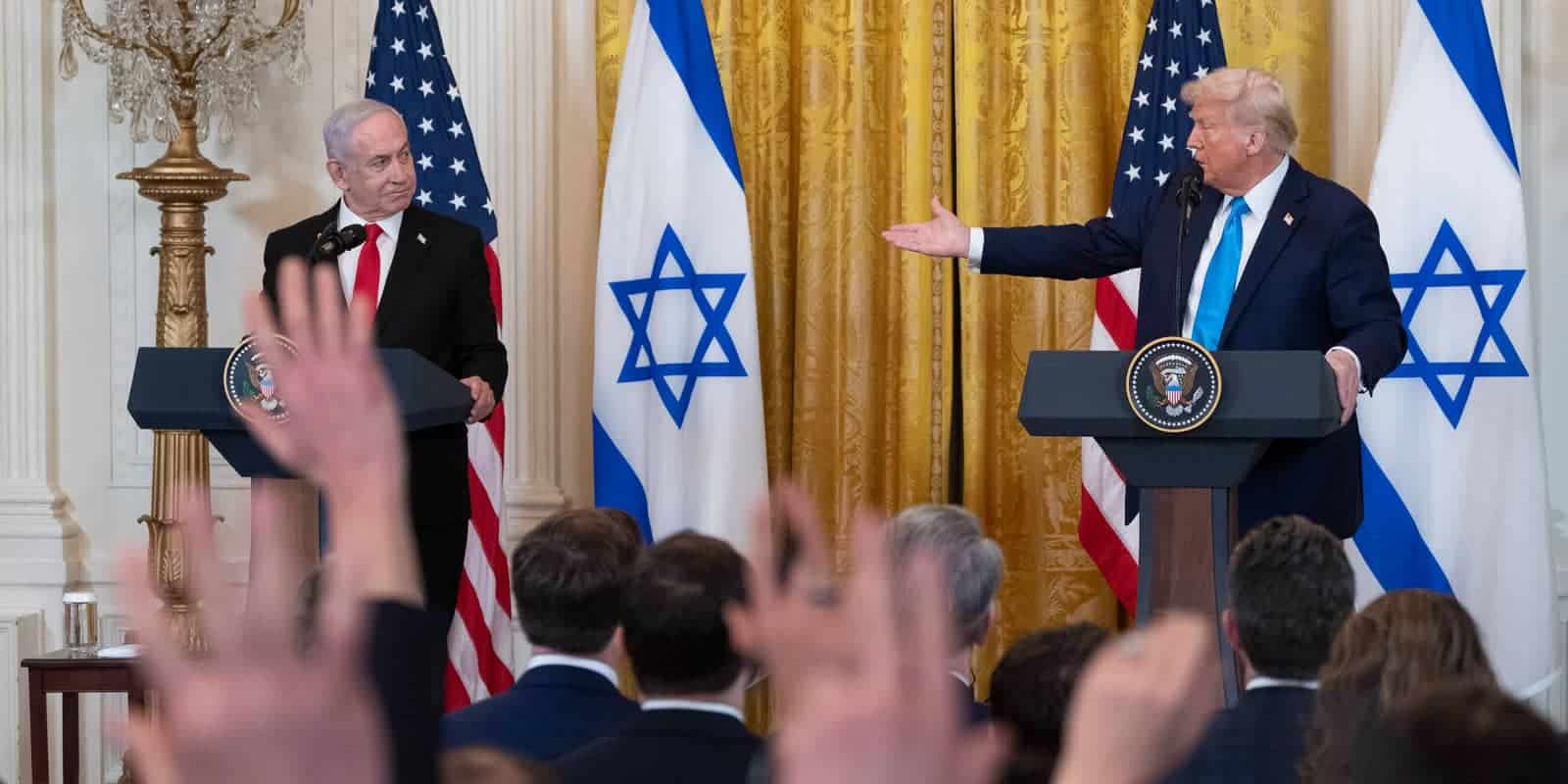
While at the outset of the Gaza war, the Israeli government publicly stated its objectives, it did not define goals for Operation Roaring Lion; nor did the U.S. administration with regard to the campaign it termed Operation Epic Fury. The analysis in this section draws on statements by President Trump and Prime Minister Netanyahu. In our view, the way President Donald Trump presents these objectives in interviews with American and international media is deliberate. It is not improvised. It forms part of a broader psychological campaign—aimed at Tehran to generate fear and uncertainty; at its allies, including Russia, China, and North Korea; at regional partners in the Gulf and NATO countries; and at public opinion in both the United States and Israel.
In our view, four main objectives can be identified:
Ensure that Iran never acquires nuclear weapons, effectively dismantling its nuclear program: This includes destroying key enrichment facilities, research and development centers, stockpiles of fissile material, laboratories for nuclear warhead production, supply systems for advanced centrifuges, and targeting nuclear scientists. This objective has remained constant from the outset, although its priority has shifted as the campaign has evolved.
Destruction of Iran’s ballistic missile array: This is a critical objective of the campaign. Israeli assessments hold that a simultaneous barrage of hundreds and possibly even thousands of missiles would be difficult to absorb. In effect, such an attack could produce non-conventional outcomes using conventional armaments. The campaign therefore targets the full value chain: launchers and missiles, production facilities, underground storage, guidance systems, spare-parts supply, both liquid and solid fuel infrastructure, and mobile launch platforms. This objective received top priority at the outset, given the direct threat to Israel, to U.S. partners in the Gulf, and to American bases in the region. The offensive also targets Iran’s broader military-industrial base.
Degradation of Iran’s ability to operate proxies: For decades, Iran has sought to encircle Israel with a “ring of fire” built through proxy forces, with the Quds Force at its core. The working assumption is that sustained damage to Iran’s infrastructure and economy will make it far harder for Tehran to rebuild and continue supporting these proxies. At the same time, the offensive targets the proxies themselves. The impact is twofold: dismantling command-and-control structures; severing financial channels through banks, front companies, and cryptocurrencies; destroying weapons stockpiles and transit routes; and degrading communications infrastructure and command centers.
Creating conditions for the collapse of the regime: The ayatollah regime is determined not to abandon its ambitions of regional—and some would argue global—hegemony, and not to give up its dreams of rebuilding capabilities developed over decades. As long as it endures, those ambitions will persist. Only the fall of the regime can fundamentally change this. This can only come from within, driven by domestic opposition. To achieve this, it is necessary to create the right conditions: weakening internal repression forces; degrading their ability to operate by disrupting command and control; and deepening the regime’s economic crisis in ways that could turn the population against it—even this, however, may not be enough. Achieving this objective ultimately depends on an uncontrollable variable: the will of the Iranian people and their ability to act under severe repression. Even so, it should remain at the top of the strategic agenda.
It is important to recognize that attaining the first three objectives described above will not on their own remove the threat. If the regime remains in place, even in weakened form, it could, within a few years, rebuild its nuclear program, restore its ballistic missile capabilities, and reconstitute its network of proxies. Even if the fourth objective is not achieved in the near term, the campaign must conclude with the full attainment of the first three, while setting the regime back by decades.
The Strategy in Practice: Flexibility and Dynamic Response
Within a day of the campaign’s launch, familiar questions surfaced: “What is the strategy?” and “What is the exit strategy?” Those who assume strategy is determined at the planning table should recall Eisenhower’s World War II observation: “Plans are worthless, but planning is everything.” A plan is static; war is not. Conditions shift, often rendering the original plan obsolete. Rigid adherence to a written plan in a changing operational environment is a recipe for failure.
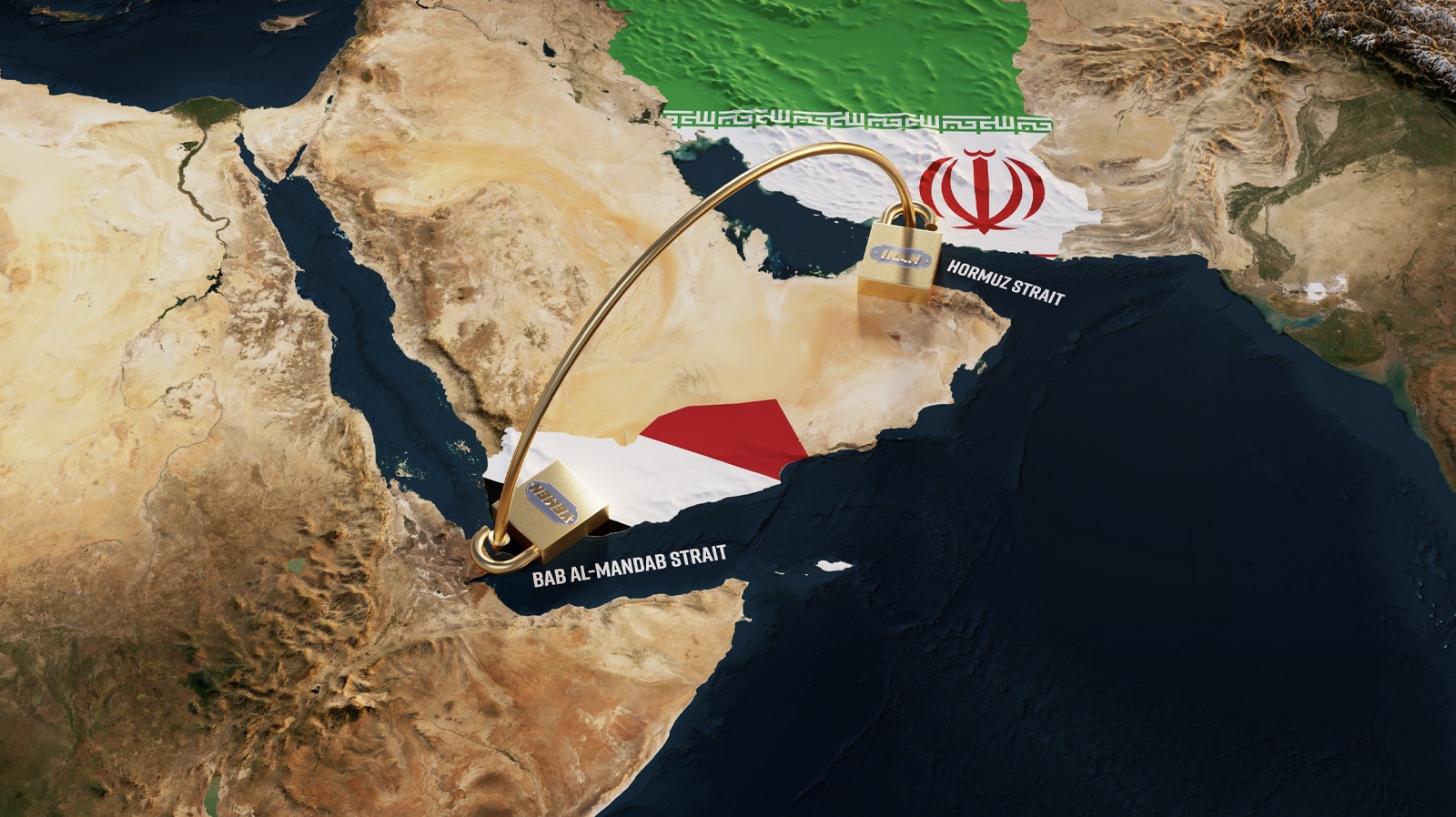
Strategy is not fixed. It emerges from a continuous learning process, shaped in real time during the campaign itself. Its purpose is to exploit opportunities while avoiding unnecessary risk. The objectives of the Iran campaign are clear, but the path to achieving them is constantly evolving as the campaign goes on. Strategy serves as a compass: it defines overarching goals while allowing for adaptation without losing direction. In the case of Operation Roaring Lion, that compass consists of the four core objectives outlined above. As the campaign unfolds, Iran has sought to weaponize energy, threatening to close the Strait of Hormuz and targeting oil and gas infrastructure in the Gulf to drive up global prices and generate political pressure on Trump to halt the war. This evolving threat requires corresponding adjustments in the operational approach.
The U.S. response to Iran’s energy war was immediate, precise, and coordinated. It launched a heavy airstrike against military infrastructure on Kharg Island—the primary hub for Iran’s oil exports—accompanied by a clear warning: if Iran continues to disrupt oil flows, the United States will target the island’s oil infrastructure as well. At the same time, Washington is deploying an amphibious ready group led by the helicopter carrier USS Tripoli, including Marine forces, assault and attack helicopters, and supporting naval assets.
The American response follows directly from its strategy: if the enemy tries to use economic pressure to halt the campaign, introduce a new objective or raise the priority of an existing one (keeping the Strait of Hormuz open) and act in a way that preserves momentum while increasing pressure on the regime. As Iran escalated and continued attacking oil and gas infrastructure across the region, President Trump issued an ultimatum: reopen the Strait of Hormuz to shipping within 48 hours, or Iran’s power stations would be destroyed one after another, starting with the largest. Trump later claimed that ceasefire talks between the United States and Iran had begun as a result of his threat and delayed its implementation by five days.
That flexibility is what separates strategy from tactical planning. It allows for real-time adjustment to shifting conditions and threats, exploitation of opportunities, and matching of tools to tasks (Israeli fighter jets for precision strikes, U.S. bombers for heavy blows, attack drones to target urban checkpoints, and special forces for covert missions) without losing overall direction.
The Internal Front: Creating Conditions for the Overthrow of the Regime
The fourth objective—creating the conditions for the Iranian regime to fall from within—is the most complex, the longest-term, and the least predictable of the campaign’s four core goals. Unlike destroying nuclear facilities or ballistic missiles, this is not a task that can be achieved through airpower or cyber operations alone. The collapse of the ayatollah regime depends on factors no outside actor can control: the will of the Iranian people, the courage of ordinary citizens, the ability of the opposition to organize, and above all, whether the regime’s coercive apparatus—the Basij, the Islamic Revolutionary Guard Corps, the police, and the intelligence services—can continue to function under sustained pressure.
The protests of December 2025–January 2026 illustrate the complexity of the issue. Hundreds of thousands of Iranians took to the streets in major cities, driven by a severe economic crisis, repression of women, and a growing sense that the regime had lost its legitimacy. President Trump promised that “help was on the way,” but external support did not arrive with sufficient force or in time. The regime responded with a brutal massacre: it arrested thousands, killed tens of thousands, used live fire indiscriminately against demonstrators, instituted a near-total internet shutdown, and reasserted control over the streets. The result was that the protests were suppressed, at least for the moment, but the regime’s brutal response left a deep and lasting scar on Iranian society.
This time, the approach is fundamentally different. From the first days of Operation Roaring Lion, Netanyahu and Trump delivered a clear, coordinated message to the Iranian public: stay home and do not take to the streets until conditions have matured. At the same time, weakening the regime’s coercive apparatus has become one of the key efforts of the campaign through precise airstrikes on Basij and IRGC headquarters across the country; destruction of communications and command-and-control systems used by internal security forces (including antennas, control centers, and communications depots); targeted drone strike (primarily using small, precision UAVs) against roadblocks, border crossings, police stations, and checkpoints in towns and cities, including in dense areas or under bridges where aircraft cannot operate effectively; attacks on stockpiles of small arms, grenades, armored vehicles, and crowd-control equipment such as tear gas and live-fire systems; and ongoing covert operations, including attempts to induce defections by senior officers in the regular army (Artesh), the arming of opposition groups in peripheral regions, and logistical support to ethnic militias.
The cumulative effect is a steady erosion of the regime’s ability to maintain full control of the streets. Basij and police units now operate with the understanding that any checkpoint can be targeted, any convoy attacked, any headquarters destroyed. The psychological impact is already visible: desertions, refusal to carry out orders, false reporting that “everything is under control,” and, above all, a growing inability to contain mass protests if and when they erupt again.
Regime collapse cannot be scheduled. History makes that clear. Few anticipated the fall of the Berlin Wall on November 9, 1989, even days before it happened; few predicted the speed of the Assad regime’s collapse in Syria in December 2025. In each case, however, the conditions developed gradually: internal erosion, loss of legitimacy, and a declining capacity to repress. The trigger can be a single event that cascades into an unstoppable chain reaction.
Attainment of these operational objectives in Iran is not an isolated event. It has the potential to reshape the global balance of power among the major powers.
The Global Context: Great-Power Competition
The campaign in Iran should be understood as part of a broader global contest between rival blocs. It cannot be separated from the strategic competition between the United States, on one side, and China and Russia on the other. If the United States gains control over energy flows from the Gulf, it could place China at a disadvantage in that competition.
China is the world’s largest oil importer, with roughly half of its supply coming from the Middle East. U.S. control over the Gulf would amount to control over a central artery of the Chinese economy. In the event of a crisis (for example, over Taiwan) China could find itself in an energy chokehold, with the U.S. able to institute an effective blockade. Beijing’s fuel supply chains would become significantly more vulnerable. This dynamic is reinforced by the broader shift already underway, including growing U.S. influence over Venezuelan oil, another key energy source for China.
China’s economy depends on energy-intensive industrial production that requires stable and affordable supplies. U.S. control over global oil flows would allow Washington to influence prices in ways that serve its strategic interests, potentially raising production costs in China and eroding its global competitiveness. It would also increase uncertainty around foreign investment, as investors factor in China’s exposure to external energy pressure. As for Russia, the relative weakness of traditional U.S. allies in Europe could open space for a recalibration of interests between Washington and Moscow in the global arena.
As the dust of battle settles in Iran, Israel is likely to emerge as the United States’ most critical strategic asset in the region, especially against the backdrop of Europe’s declining political and military weight. While European capitals face internal strain, energy dependence, and fiscal constraints that limit their ability to project power, Israel may emerge from the conflict as a battle-tested, technologically advanced, and highly capable military force able to serve as an effective “forward base” without requiring direct U.S. troop deployment. Other U.S. partners in the region, particularly the Gulf states, have not demonstrated a comparable capacity to contribute, despite significant defense spending and the presence of American bases on their territory.
Europe’s weakness is turning the alliance with Israel from a tactical necessity into a strategic cornerstone. Israel is the only country in the region with clear intelligence and operational superiority. In this context, Washington is likely to view Israel not only as a close ally, but as a partner in shaping a new regional order that fills the vacuum left by European powers and allows the United States to focus on countering China and Russia globally. This shift may also prompt a reassessment in Washington of NATO’s role and of U.S. involvement in the alliance, which has proven ineffective.
Regardless of whether or not the Iranian regime ultimately changes, one outcome of the campaign will be the strengthening of the land corridor linking India to Europe through Israel, Jordan, Saudi Arabia, and the United Arab Emirates (IMEC). This corridor offers a combined economic, energy, and technological alternative to China’s Belt and Road Initiative. Securing the Strait of Hormuz and weakening Iran are essential conditions for turning IMEC into a viable and strategically significant reality.
Challenges Ahead and the Road Forward
Despite the significant gains in the first three weeks of Operation Roaring Lion, the challenges ahead are numerous and complex. One major risk is a slide into a prolonged war of attrition, marked by endless cycles of escalation. Even after sustained damage to its ballistic missile capabilities and its proxy network, Iran could retain enough residual capacity to strike Israel and the Gulf states.
The IRGC may respond by attempting assassinations of Israeli or American officials abroad, activating terrorist cells in Europe and Latin America, or relying on remaining proxy forces—Hezbollah, the Houthis, and Shiite militias in Iraq—to strike Israel and U.S. bases in the Gulf.
The challenge in this scenario would be substantial. The most effective response is to prevent it by expanding the scope of damage across Iran’s full range of capabilities, including its economic base in order to collapse its economy and force the regime into a prolonged period of recovery.
A second challenge relates to the global and regional response of China, Russia, Turkey, and key Western European states such as France, Germany, and the United Kingdom. These actors have already launched a coordinated diplomatic push, calling for an immediate ceasefire at the UN Security Council, threatening sanctions against Israel, and promoting a narrative of an unnecessary war that threatens global economic stability. Russia, facing the loss of Iran as a key ally, may transfer advanced technologies or step up its military activity in Syria. China, which sees Iran as part of its Belt and Road Initiative, may expand economic support or even consider logistical involvement. The challenge is to sustain international legitimacy while continuing the campaign.
The response centers on sustained messaging by Trump and Netanyahu on the operation’s strategic necessity, strengthening partnerships with the Gulf states—Saudi Arabia, the UAE, and Bahrain—as well as India, and clearly framing the campaign as one of self-defense rather than occupation. In this context, Iran’s recent launch of two long-range ballistic missiles toward Diego Garcia plays into U.S. and Israeli hands: missiles with a range of roughly 4,000 kilometers place all European capitals within Tehran’s reach, despite previous declarations that it would not develop missiles beyond 2,000 kilometers.
Partial disruption of the Strait of Hormuz and attacks on oil infrastructure at Kharg Island and across the Gulf have already driven oil prices sharply higher from around $72 per barrel before the operation to over $100, with continued volatility due to disruptions in maritime traffic. If the conflict continues, prices may rise further, increasing economic and political pressure. The concern is that domestic pressure within the United States could translate into pressure on Trump to halt the campaign before its objectives are fully achieved.
The response is already underway: U.S. action to reopen the Strait of Hormuz, the use of American strategic petroleum reserves, and increased exports from Venezuela. In the long term, control over Iranian energy resources could position the United States and its allies as dominant players in the global energy market. Critics argue that a scenario in which Iran’s energy infrastructure is damaged could accelerate global inflation, given its downstream impact on fertilizers and agriculture, and could also harm both the Israeli and American economies as the risk of prolonged instability in Iran may outweigh the prospects for a controlled transition.
Another risk is that if the regime believes it is nearing collapse, it may resort to extreme measures such as the use of chemical weapons, missile strikes on U.S. bases using surviving assets, or even an attempt to deploy a radiological “dirty bomb.” Israel and the U.S. must make it clear that any use of non-conventional weapons would trigger a far more severe response.
Finally, we must recall that Iran is a multi-ethnic state. Regime collapse could lead not to a controlled transition but to prolonged instability—civil war, fragmentation, refugee flows, and the rise of new radical actors. The central “day after” challenge, if the regime falls, will be to prevent a power vacuum that leads to anarchy while fostering a viable moderate alternative.
Set against these challenges are clear and significant advantages. U.S. and Israeli intelligence capabilities enable an unprecedented tempo of operations; operational coordination between the IDF and the Pentagon is exceptionally tight; the target bank continues to expand; strategic flexibility remains high; and technological superiority is evident. Both governments also retain strong domestic support: Trump among his political base, and Netanyahu among a broad Israeli public that views the campaign as necessary.
In the coming weeks, the campaign is expected to focus on further degrading Iran’s nuclear and missile capabilities, systematically weakening its internal repression mechanisms, and creating conditions for internal upheaval. With the caveat of not boasting about victory before it is achieved, we can conclude that there is a strategy, it is being implemented, and the challenges, however significant, are manageable. The path to “peace through strength” is not easy, but it appears more attainable than at any point in recent years. Together, Israel and the United States are shaping a new chapter defined by hope, strength and responsibility.
Conclusion
Operation Roaring Lion marks a high point in the War of Redemption that Israel has been waging for more than two and a half years—a campaign the United States has joined with full force over the past month. This operation is not an isolated episode but a central link in a chain of strategic successes: significant damage to Hamas and Hezbollah; the collapse of the Assad regime in Syria and the destruction of the Syrian military; the destruction of Iran’s nuclear program and the degradation of its ballistic capabilities during Operation Rising Lion in June 2025; and the current strikes at the heart of the Iranian regime.
After three weeks of sustained, precise operations in the air and at sea, and in the cyber, and intelligence domains, it is clear that a coherent strategy is in place and being executed. Iran’s nuclear enrichment and ballistic missile production capabilities have been significantly degraded; its ability to activate proxy forces has been severely curtailed; its internal repression mechanisms have been weakened; and the conditions for mounting internal pressure on the regime—including through damage to energy infrastructure—are steadily taking shape.
Operational momentum is being maintained, the target bank continues to expand, coordination between the IDF and the Pentagon is near seamless, and strategic flexibility allows for rapid adjustment to any Iranian attempt to shift the balance of pressure. The campaign also fits into a broader global picture: strengthening the IMEC corridor as an alternative to China’s Belt and Road Initiative, improving control over energy flows, and demonstrating the superiority of Western technology over Russian and Chinese systems.
The challenges remain significant—including the risk of a prolonged war of attrition, asymmetric responses by the regime, and growing economic pressure—but the U.S.-Israeli advantages are clear, and the gains achieved to date have already begun to reshape the regional landscape for the long term.
Taking into account the Biblical warning “Let not him who girds on his sword boast like him who ungirds it,” one conclusion stands: the strategy exists, it is working, and the challenges are manageable. Israel and the United States, together, are shaping a new chapter defined by strength, responsibility, and the prospect of “peace through strength.”
Source: https://jiss.org.il/en/siboni-winner-operation-roaring-lion-taking-stock-and-looking-ahead/