
Introduction
National security rests on several pillars. Military power is among the most important, but national security also has domestic social and economic dimensions. For decades, Israel’s security posture has rested on military superiority and defensive zones. While these remain indispensable, the changing regional environment calls for an additional layer: economic security. One aspect of economic security is incorporating economic interests into the security equation, giving regional states stronger reasons to prefer cooperation and interdependence to confrontation. In a Middle East where water, energy, food, transportation, and employment are as vital as tanks and aircraft, large-scale economic initiatives can become important security instruments.
Viewed through this lens, regional initiatives such as the India-Middle East-Europe Economic Corridor (IMEC), gas exports to Egypt, the Mediterranean-Dead Sea conveyance project, large-scale desalination, green-energy production, and rehabilitation of the Jordan River should be viewed not only as engineering or environmental projects but also as initiatives that are of importance from a security perspective. IMEC shows how trade, logistics, energy, and communications infrastructure can create a web of shared interests between India, the Arabian Peninsula states, Jordan, Israel, Greece, Cyprus, and Europe. Regional water and energy projects can create a similar alignment with Jordan and reinforce stability along Israel’s eastern border. They will not erase religious hostility or terrorism, but they can raise the cost of destabilization and strengthen incentives for cooperation. Taking a broader perspective, these projects also form part of a wider contest among major powers. China is advancing the Belt and Road Initiative in pursuit of control over global trade flows, while the United States is promoting a competing framework in which IMEC plays a part. Israel would be a central and indispensable junction in this corridor. The recently signed defense agreement between Saudi Arabia, Turkey, and Pakistan make Israel’s interest in IMEC even more pronounced.
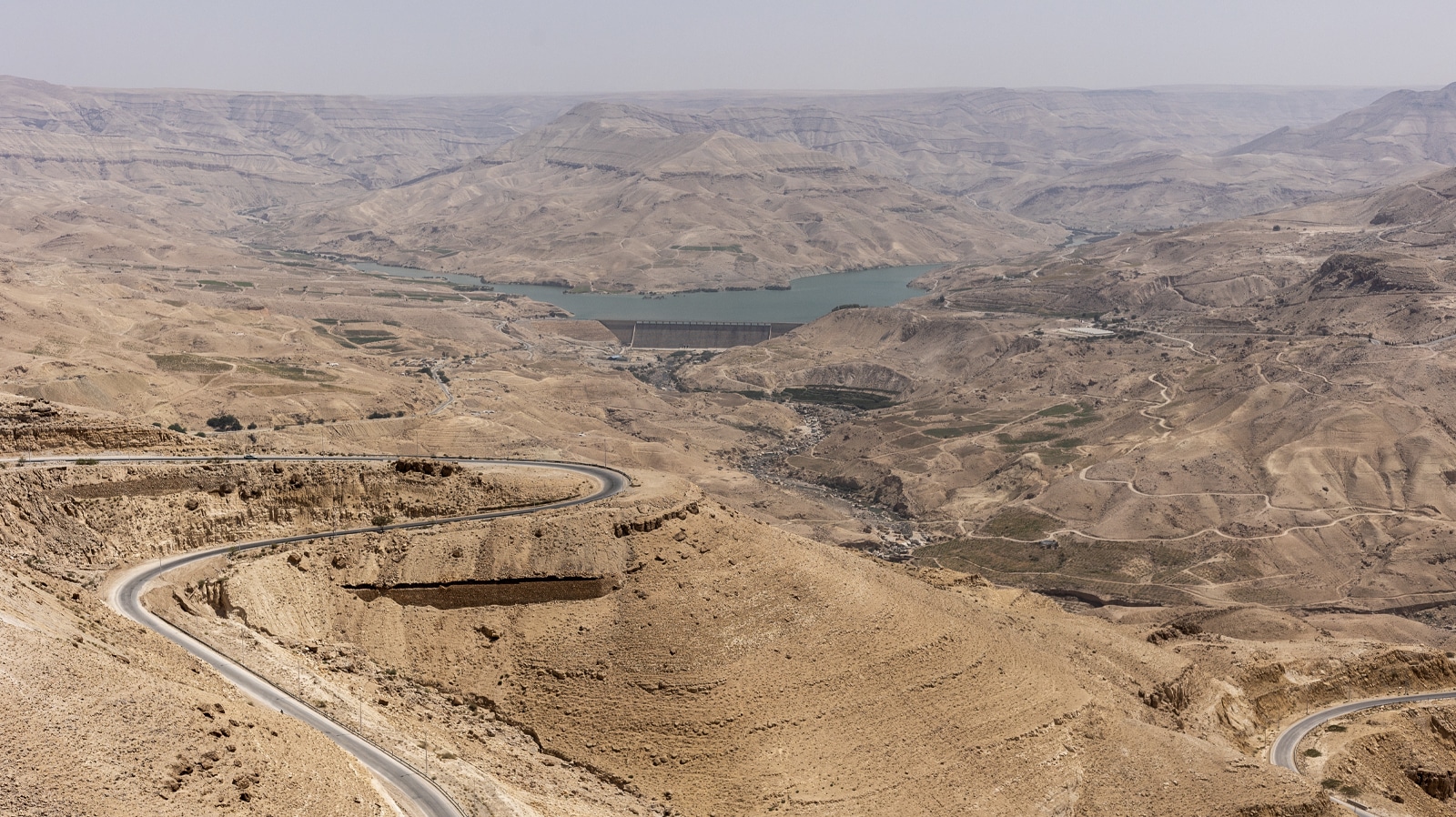
The eastern border and Jordan Valley are strategically important to Israel in military, demographic, hydrological, and environmental terms. The Lower Jordan River, once a substantial flowing waterway, has been severely depleted by pumping, dams, and diversion of its sources. The Dead Sea is receding at an alarming rate; sinkholes are damaging infrastructure; and Jordan is confronting an acute water crisis. Those environmental pressures, along with Jordan’s need for water, Israel’s advanced desalination and energy sectors, and the critical security importance of the Jordan Valley create new opportunities.
This article examines how Israel can broaden its national-security doctrine beyond the military dimension by incorporating regional infrastructure projects as a means of stabilizing the eastern border. It focuses on the relationship among water, energy, trade, environmental rehabilitation, and economic development, arguing that their effective integration can create a regional network of interests in which Jordan, Israel, and other international actors all have a tangible stake in maintaining` stability. From this perspective, IMEC, a Mediterranean-Dead Sea conveyance project, rehabilitation of the Jordan River, and development of the Jordan Valley and Arava belong within a broader security framework in which economics and infrastructure help prevent instability and strengthen Israel’s regional position.
Economics as a Component of National and Regional Security
National security is not simply the capacity to use force. It also entails preventing deterioration, shaping a favorable regional environment, reducing incentives for confrontation, and strengthening moderate partners. That is where economics and infrastructure acquire security value. A state that benefits from trade corridors, transit revenues, reliable water supplies, available energy, and employment is more likely to preserve existing arrangements. A state facing acute water shortages, unemployment, weak governance, and dependence on foreign assistance, by contrast, may become an arena for instability, smuggling, and extremism, and with growing security pressures along its borders.
The situation in Jordan makes this latter point clear. Jordan’s stability is an Israeli security interest. A weaker, poorer, and water-starved kingdom would be exposed to internal and external pressures, Iranian influence, terrorist activity, and erosion of order along Israel’s long and sensitive eastern border. A Jordan tied into regional water, energy, transportation, and trade projects—and deriving concrete benefits from cooperation with Israel and other states—would have stronger incentives to preserve the security order.
Economic interdependence is not a guarantee of peace, and it cannot replace intelligence, border control, military power, or a firm policy in the face of threats. It does, however, add another layer of restraint. If an attack on Israel also jeopardizes Jordan’s water supply, transit revenues, energy facilities, internationally financed projects, and the interests of additional states, escalation carries broader costs. The more stakeholders involved—governments, companies, and financial institutions—the higher those political and economic costs become.
IMEC gives this logic a concrete regional form. The corridor is intended to connect India, the Gulf states, Jordan, Israel, and Europe through ports, railways, roads, energy infrastructure, and digital links. Israeli participation in the project could turn it from an endpoint into a regional transit hub. For Jordan, the overland segment through its territory could generate revenue, employment, and influence. For the Gulf states and Europe, IMEC offers greater diversity in trade and energy routes. In security terms, the aim is to turn sensitive geography into a shared asset. [1]
For such projects to contribute to security, they must satisfy three conditions. They must be large enough to alter the cost-benefit calculations of states and regimes; they must protect Israel’s security interests in any scenario; and they must provide genuine benefits to neighboring states, above all Jordan, and not be perceived as unilateral ventures or cover for other objectives. Security through economics therefore demands integrated diplomatic, engineering, and security planning. The regional environment is dynamic, and other actors understand the strategic importance of these corridors as well. If Israel fails to move forward, alternative routes will. Turkey, for example, is seeking to advance a route with Syria as an alternative to passage through Israel, Cyprus, and Greece.

The Mediterranean-Dead Sea Conveyance Project: Water, Energy, and Environmental Rehabilitation
The idea of a ‘Canal of the Seas’—more accurately, a family of sea-to-sea water-conveyance schemes—has been part of regional planning for more than a century. Proposals have included routes from the Mediterranean to the Dead Sea, from the Red Sea to the Dead Sea, with various routes through the Jezreel Valley, Beit She’an, the Arava, and farther south. That long history matters. The task is not to reopen the issue from scratch but to draw lessons from alternatives already studied, the environmental and political obstacles they encountered, and the difficulty of moving from planning to implementation. The common logic of all these ideas is to convey water to the Dead Sea, exploit elevation differences for energy generation or storage, desalinate water for Israel and neighboring states, and introduce controlled quantities of brine or seawater into the Dead Sea to slow the decline in water levels. [3]
A Mediterranean-to-Dead Sea conveyance could offer two principal benefits. Part of the water conveyed eastward could be desalinated, adding to Israel’s water supply and providing additional water for sale to Jordan, thereby easing the kingdom’s water crisis. At the same time, the elevation difference between the Mediterranean and the Dead Sea could be harnessed for hydroelectric generation. Combined with solar power, the project could form the basis of a regional water and green-energy system. [4] A range of alternatives examined in the past proved economically unviable,[5] but the pressures they were intended to address are still critical.
The Dead Sea is at crisis point. Its level is falling by roughly one meter a year as a result of diversion from the Jordan and Yarmouk rivers, water use in Israel, Jordan, and Syria, and industrial activity on both shores. The receding waters result in sinkholes, damaged infrastructure, retreating shorelines, declining tourism, and a deepening environmental crisis.[6] The Lower Jordan, meanwhile, has lost most of its historic flow and in many places has become a depleted or polluted channel cut off from its natural environment.[7]
The Neve Zihor plan proposes a Red Sea-Dead Sea route through the Eilat Mountains, substantially shortening the pumping distance, using elevation differences for pumped-storage energy, and creating Lake Zihor as a major reservoir midway along the route. The planned lake, with a capacity of about 70 million cubic meters, is intended to permit pumping at Eilat to stop for as long as three weeks without disrupting the electricity supply. Its roughly ten-kilometer shoreline could also support residential projects, tourism, recreation, and aquaculture. The plan’s potential advantage lies in combining water, energy, settlement, and economic development in southern Israel. That breadth also makes careful evaluation essential, including comparison with previous alternatives, construction and operating costs, environmental risks, engineering feasibility, and financing.
The connection between water and security is deep-rooted. In the 1960s, the Jordan River’s headwaters stood at the center of the ‘War over Water.’ Israel had completed the National Water Carrier, designed to move water from the Sea of Galilee and the Jordan River to central Israel and the Negev. Arab states—primarily Syria and Lebanon, with Arab League backing—sought to divert the Jordan’s headwaters, especially the Banias and Hasbani, in order to reduce the amount of water reaching Israel. The confrontation over the diversion works in 1964-1966 involved diplomatic, intelligence, and military efforts and served as one of the factors increasing regional tensions ahead of the Six-Day War. The lesson is simple: water is not merely a civilian resource. It can quickly become a tool of leverage, a target for sabotage, and a source of escalation.[8]
The potential benefit to Jordan is substantial. One of the world’s most water-scarce countries, Jordan faces shortages that affect daily life, agriculture, industry, and even demographic stability. A dependable supply of desalinated water at an agreed price and backed by international guarantees could make cooperation with Israel a vital asset for Amman. Israel, in turn, could benefit from greater stability along its eastern border, improved security cooperation, and international support for a project that delivers environmental and regional benefits.[9]
The risks, however, should not be ignored. Introducing seawater or brine into the Dead Sea could alter its chemical composition, affect gypsum formation and water color, along with ecosystems and existing industries. A conveyance route through the Syrian-African Rift would require exacting engineering standards, safeguards against leaks and seawater intrusion into groundwater, and protection against sabotage. The project should therefore proceed in stages rather than as one grand canal: limited discharge trials and desalination facilities first; larger volumes and water sales to Jordan next; and only then consideration of a broader connection to the Dead Sea and regional energy systems. A phased approach would reduce risk and allow experience to accumulate before irreversible decisions are taken.


Restoring the Jordan River and Creating a Security Buffer in the Jordan Valley
Restoring the Lower Jordan should likewise be treated as part of Israel’s eastern-border security architecture, not simply as an environmental project. A flowing, managed, and monitored river could form a natural buffer strip, strengthen control of the area, improve surveillance and enforcement, and make illegal crossings, smuggling, and hostile activity more difficult. The river would not be expected to serve as a stand-alone barrier. It would be one element of a smart border system that also includes patrol roads, fences, sensors, cameras, drones, earthworks, controlled flood zones, and intelligence cooperation with Jordan.
Renewed flow in the Jordan River could serve several purposes at once. It would support ecological rehabilitation by restoring habitats, improving water quality, and reducing environmental hazards. It would also contribute, even if only partially, to the recovery of the Dead Sea by increasing flows from the north. In addition, it could support the development of tourism, agriculture, and community projects on both sides of the border, helping to maintain calm — an interest of all parties.
Increasing the flow of water into the Jordan River would require strict oversight. Water released into the river would have to remain within agreed upon channels and serve an agreed purpose and should not be diverted for unauthorized agricultural use. The risk is not theoretical. Policy research on Jordan’s water sector indicates that scarcity and inadequate allocations to farmers have, on multiple occasions, led to water theft, illegal connections to water pipes, and unauthorized well drilling, especially for agriculture. Continuous measurement, control points, monitoring stations, joint enforcement mechanisms, and agreed sanctions would therefore be required.
Water sold to Jordan for consumption should be kept separate from water intended to rehabilitate the river. The former should move through closed pipelines into Jordanian systems; the latter should remain dedicated to the river. Keeping the two streams separate would allow each component to be managed clearly: commercial water on one side, and a monitored environmental and security commitment on the other.
The Jordan Valley could therefore evolve from a static border zone into an integrated security and infrastructure zone. A water, energy, and surveillance axis could run through the valley, combining conveyance lines, pumping facilities, monitoring stations, solar installations, regional control centers, and regulated trade crossings. This would create a continuous state presence and an economic reason to preserve order, while improving control. A border that generates value—water, electricity, employment, and trade—is less porous and can be more effectively managed.
This integrated security and infrastructure zone is where IMEC can be linked to the Jordan River and the Dead Sea. A regional trade corridor running through Jordan and Israel could draw on water and energy infrastructure. At the same time, water and energy projects would have a stronger economic rationale when connected to logistics routes, ports, industrial zones, and data centers. Rather than treating each project separately, Israel should conceive them as parts of one system: an eastern border that functions at once as a security frontier, trade route, energy corridor, water system, and environmental project.
Recommendations
The recommendations that follow are intended to build on, not disregard, the considerable body of work already undertaken on the Canal of the Seas, the Dead Sea, the Lower Jordan, and cooperation with Jordan. Over the years, numerous initiatives, feasibility studies, route alternatives, diplomatic initiative, and engineering proposals have been examined. The central lesson from that accumulated experience is that another grand proposal is not enough. Existing ideas need to be translated into a phased, controlled, institutionalized process with clear allocation of responsibilities. The starting point should be to draw on the knowledge already accumulated: update it, identify the obstacles that blocked implementation in the past, and incorporate those lessons into a more cautious implementation model based on trials, intermediate stages, oversight mechanisms, international financing, and prior diplomatic and security understandings.
First, water, energy, and transportation projects along the eastern border should be designated national-security projects, not merely environmental or economic undertakings. That designation would integrate the Ministry of Defense, National Security Council, Ministry of Energy, Ministry of Foreign Affairs, Water Authority, Ministry of Environmental Protection, IDF, and regional planning bodies into a single process. Without such coordination, each institution will pursue only part of the overall logic and the opportunity will dissipate. Defining the effort as a national project and appointing a lead body within the Prime Minister’s Office/National Security Council framework are essential to generating the sustained institutional drive needed to overcome bureaucratic barriers.
Moreover, neither should Israel launch another feasibility study as though no previous studies existed. Earlier research, route alternatives, environmental findings, political obstacles, and cost-benefit assessments should first be systematically updated. On that basis, the Mediterranean-Dead Sea conveyance should be reconsidered as a modular project: desalination; water conveyance to Jordan; energy storage; pilot flows into the Lower Jordan; and only then expansion toward the Dead Sea. The new assessment should cover environmental, engineering, security, economic, and legal questions, together with failure scenarios such as earthquakes, leaks, sabotage, unauthorized pumping, regime change in Jordan, or delays in financing.
Water sales to Jordan should be governed by long-term agreements covering payment mechanisms, international guarantees, supply priorities in emergencies, and Israel’s ability to suspend or reduce deliveries in the event of a serious breach. Water should not be wielded as a routine threat. The purpose of these provisions is to ensure that the arrangement does not create a one-sided dependency without effective levers of control.
A joint oversight mechanism for rehabilitation of the Jordan should then translate these principles into a binding arrangement. It should provide for flow measurement, water-quality monitoring, sensors to prevent unauthorized pumping, joint patrols, cameras, periodic public reporting, and arbitration. If water is to be released both to rehabilitate the river and to create a security buffer, measurement, enforcement, and agreed sanctions must be built into the arrangement from the outset.
Local projects should also be incorporated into a broader IMEC framework. Israel should seek to ensure that the corridor becomes more than an overland trade route: it should be an infrastructure package that includes green electricity, desalinated water, communications, logistics centers, industrial zones, and advanced border terminals. The more benefits IMEC delivers to Jordan and other states, the greater its diplomatic and security significance.
The Neve Zihor project should be examined in the same spirit—as a practical pilot for security through economic development in southern Israel, not as an immediate substitute for every alternative considered in the past. If the project proves comparatively advantageous in cost, safety, engineering feasibility, environmental impact, and financing, it could become part of a national-regional infrastructure network encompassing water and desalination facilities, energy storage, solar generation, settlement, employment centers, and service hubs for the Arava and Negev. The concept could then extend beyond the Jordan Valley to other frontier regions where economic development, civilian presence, and security control reinforce one another.
These projects are expensive and complex. Experience shows that financing difficulties, risk allocation, and the absence of a clear operating model are among the main barriers to implementation. A financing model should therefore be phased from the outset: government and international funding for research, planning, and pilots in the first stage; partnerships with development banks and climate funds in the second; and private and Gulf-state capital only in the third, after engineering, environmental, and political risks have been reduced. The projects should be presented as investments in regional stability, climate adaptation, water security, green energy, and ecological rehabilitation.
No Mediterranean-Dead Sea project will save the Dead Sea by itself, just as restoring the Jordan River will not by itself solve the eastern-border problem. The appropriate policy is to learn from previous attempts and accumulate gains step by step: more water for Jordan, increased flow in the Jordan, stronger border infrastructure, greater energy generation, and more shared interests. The objective is not to reinvent the Canal of the Seas. It is to build a sequence of increasingly ambitious measures, grounded in existing knowledge and designed to reduce risk on the way to broader implementation.
Conclusion
Security through economics is not a substitute for military power but a force multiplier. Israel will continue to need a strong military, high-quality intelligence, control of its borders, and effective deterrence. Alongside those capabilities, however, it should strengthen its relationship with Jordan and create a reality where stability offers greater rewards than confrontation. In the twenty-first-century Middle East, water, energy, trade, and infrastructure are as much a part of security as weapons systems.
Israel’s eastern border offers a practical arena for this approach. Jordan needs water; Israel needs a stable border and additional energy sources; the Dead Sea needs water; the Jordan River needs rehabilitation; and international actors seek climate, water, and energy projects. Bringing these elements together could turn the eastern border from an area of risk into an area of mutual benefit.
The primary challenge is to proceed carefully, leaning on experience already accumulated. The environment must be protected; water be used for its intended purposes; Jordan should receive tangible benefits without new security risks emerging; stable financing is required; and Israel must retain effective monitoring and control. If those conditions are met, water and energy projects will be more than responses to environmental or economic crises. They will become part of a new regional-security doctrine.
The logic extends beyond Jordan and the eastern border. The Abraham Accords have shown that peace reinforced by economic, technological, energy, and tourism arrangements creates a tangible interest in preserving relations even during periods of tension. The principle applies to Egypt as well: stable peace depends not only on security arrangements in Sinai but also on a web of shared economic interests, including the gas agreement that has made energy a central component of the strategic relationship. IMEC carries the same approach across the space linking India, the Gulf, Israel, and Europe. The more deeply Israel is integrated into international trade, energy, transportation, and communications networks, the stronger its diplomatic and security position becomes. Economics, in this sense, is not an appendage to security policy but one of the principal means of shaping a regional environment in which states and other actors have a practical stake in stability.
Ultimately, long-term security is built not only by preventing threats but also by shaping interests. When water flows, electricity is generated, goods move, borders are closely monitored, states profit from calm, and security is bolstered. This is not a soft-power security doctrine but one rooted in a clear-headed view of reality: economics, infrastructure, and the environment should be integral to Israel’s security architecture. That is security through economics.
[1] White House. 2023. “Memorandum of Understanding on the Principles of an India-Middle East-Europe Economic Corridor”. September 9, 2023.
[2] Dean Shmuel Elmas, ‘Will Israel Be Left Out? The UAE’s New Bet on Building a Transcontinental Corridor,’ Globes, November 18, 2025.
[3] Brine is the concentrated saline water produced in the desalination process.
[4] Rami Arieli, “What Is the ‘Canal of the Seas’ to the Dead Sea?” Energy in a Multidisciplinary Perspective, Weizmann Institute of Science
[5] State Comptroller’s Report, Canal of the Seas Project, November 1984 (Hebrew).
[6] USGS EROS, 2024
[7] EcoPeace Middle East, 2010
[8] Moshe Shemesh, ‘The Struggle over the Use of the Jordan River Sources in the Process Leading to the Six-Day War,’ Iyunim Bitkumat Israel, 2002 (Hebrew).
[9] World Bank. 2023. “Estimated 1.6 Million People in Jordan to Benefit from New Project to Tackle Jordan’s Water Crisis and Build Climate Resilience”. June 18, 2023.
[10] Aryeh Keren and Gil Katz, ‘Neve Zihor Plan,’ July 2017
[11] Yoav Sorek, “On the Road to Drying Up: Can the Dead Sea Be Saved?” Makor Rishon, May 8, 2015.
JISS Policy Papers are published through the generosity of the Greg Rosshandler Family.
Source: https://jiss.org.il/en/siboni-winner-security-through-economics-regional-infrastructure/