

Introduction
On August 24, 2026, the United States Treasury, under Secretary Scott Bessent, formally launched “Operation Economic Outcast,” a campaign President Donald Trump branded “Economic D-Day.” Its significance lies not simply in another sanctions announcement, but in the fusion of secondary-sanctions enforcement with the existing U.S. naval blockade of Iranian ports and a widening regional effort to cut Tehran off from its commercial lifelines. The pressure is already visible: the free-market rial fell to an all-time low of more than 203,000 toman to the dollar on the day of the announcement; Iranian crude exports have collapsed to near zero under the blockade; and President Masoud Pezeshkian now openly describes Iran as being in a full-scale economic, military, and security war.
None of this means the Islamic Republic is on the verge of collapse. Regime collapse is neither predictable nor the most useful analytical yardstick. More importantly, Washington’s campaign is undermining the regime’s ability to recover from war. Iranian officials dismiss the measures as “bluffing” and “psychological warfare,” but that rhetoric masks three deeper fears: a currency slide that could become self-reinforcing, import strangulation intensified by the UAE’s August 18 decision to suspend all trade, commercial exchanges, and financial transactions with Iran, and the longer-term loss of the financial capacity needed to rebuild Iran’s military-industrial and nuclear infrastructure.
The likely outcome over the next three to six months is therefore grinding attrition rather than dramatic regime change. Operation Economic Outcast may not topple the Islamic Republic, yet it can make strategic reconstitution—air defenses, missile production, the nuclear program, and proxy financing—increasingly unaffordable. If sustained, the campaign could convert Iran’s military defeat into something potentially more durable: enforced strategic paralysis.
The Mechanics and Consequences of Economic Pressure on Iran
1. The immediate economic impact
The announcement came with the Iranian economy already weakened by war, inflation, and currency erosion. Point-to-point inflation was running near 88–90% in mid-2026, while the IMF’s April 2026 World Economic Outlook revised its 2026 growth forecast for Iran down to –6.1%, one of the sharpest country-level downgrades in that edition. The rial had already lost roughly 60% after the 12-day war and a further 22% over the following six months. Operation Economic Outcast thus did not create Iran’s crisisout of the blue; it accelerated a collapse already underway, turning chronic deterioration into visible market panic.
The currency market registered the first shock. The free-market dollar broke the psychologically important 200,000-toman barrier on August 23. It reached roughly 203,000–203,670 toman on August 24, the day of Bessent’s press conference—an 11,000-toman jump within days of the plan being trailed. Gold moved in the same direction: the Emami coin ( a gold bullion coin minted by the Central Bank of the Islamic Republic) approached 223 million toman, and 18-carat gold neared 22.4 million toman per gram, as households and traders sought refuge from the rial. The correction on August 25, following hard-currency injections by the Central Bank and renewed hopes of Pakistani mediation, did not erase the shock. It showed only that Tehran can still buy time by spending reserves that are already under pressure.
The Tehran Stock Exchange offered a more ambiguous signal. Its main index continued to rise, with heavy turnover on August 24 and the index again above 6.2 million points on August 25, but this was less a vote of confidence than an inflation hedge. Real-money inflows concentrated in dollar-linked base-metals and mining shares suggest that investors were not pricing in a recovery; they were shifting liquidity from cash to assets that might better preserve value as the rial weakens.
The decisive channel, however, is oil. The blockade, more than the new designations, is strangling the regime’s fiscal base. Reporting from the data analytics company Kpler and trade sources show no visible supertanker crossings of Hormuz carrying Iranian crude since mid-July, while Kharg Island—which accounts for roughly 90% of exports—has been effectively choked. China’s imports of Iranian crude have fallen sharply from their 2025 average. Floating storage available for sale has dwindled from roughly 105 million to roughly 80 million barrels, and Iranian Light has flipped from a discount to a premium as available supply dried up. Central Bank Governor Abdolnaser Hemmati’s admission that oil revenue had fallen “to zero” is broadly consistent with tanker data. The still-partial Goreh-Jask oil pipeline alternative cannot compensate for the loss of Kharg, leaving Tehran with a revenue shock at the core of its wartime economy.
The campaign’s pressure is cumulative rather than merely additive. The naval blockade reduces revenue; secondary sanctions increase the cost of evasion; the UAE cutoff strips Iran of its most important commercial and financial hub; and direct threats against any remaining lifeline are intended to deter third-party substitution. The strategic test is therefore whether China, regional traders, or shadow networks can restore sufficient flows to offset all three pressures simultaneously.
2. What the regime really fears
Publicly, hardline media dismiss the campaign as bluster: The Keyhan daily has asserted that Iran has “plenty” of money and mocked officials who speak of scarcity, accusing them of aiding the enemy’s psychological war. The Javan daily likewise portrays Trump as bluffing and argues that U.S.. weapons stocks, strategic petroleum reserves, and domestic political constraints make Washington vulnerable. Yet the intensity of this messaging suggests an internal struggle over the meaning of the crisis.
Currency depreciation is the first concern. Iranian economic outlets track the rial’s decline almost in real time and explicitly link its record lows to sanctions, political tension, and the UAE cutoff. Keyhan’s attacks on officials who speak of depleted resources underscore the issue’s sensitivity: if fiscal distress were not circulating within the state, hardline media would have little reason to police language so aggressively. In such an environment, inflation expectations can become self-fulfilling as households and firms move into dollars, gold, property, or durable goods before the next price jump.
The second fear concerns fuel. Iran entered the war with a structural gasoline deficit, consuming roughly 135 million liters per day against refining capacity of about 120 million liters. Imports had filled the gap; the blockade now constricts them just as wartime damage has reduced flexibility. The government is discussing a “fourth price” tier and tighter rationing to avoid a direct price shock. Provincial rationing is already taking effect, with reports of 10-liter allocations and long queues in Mazandaran in northern Iran. The memory of the November 2019 fuel-price protests gives this issue particular political weight.
The third fear is import strangulation. Persian coverage has been unusually candid, noting that the UAE cutoff will sharply raise logistics and transaction costs, threaten imports of essential goods and machinery, and remove Dubai’s network of intermediary firms and exchange houses from Iran’s evasion architecture. Ettelaat Online called the Emirati decision “a new blow to the body of Iran’s half-alive economy,” noting that replacing Dubai’s financial and commercial network will not be simple. The issue is not whether trade stops altogether, but whether rerouted trade becomes slower, costlier, and less reliable at precisely the moment Tehran needs economic stability.
Capital flight compounds the problem. Dubai’s tax structure, the dollar-pegged dirham, property-linked residency routes, and deep Iranian business networks make it an obvious refuge for capital and elites; Turkey and Oman offer additional outlets. As the rial falls to new lows, the incentive to move assets abroad intensifies, draining liquidity and confidence from the domestic economy.
The final fear is the “Venezuela scenario.” Pezeshkian’s repeated insistence that Iran’s adversaries hoped the country would become like Venezuela is revealing. Venezuela represents not immediate regime collapse but hyperinflation, mass emigration, institutional hollowing, and a state that survives while losing much of its capacity. That is the outcome Tehran is trying to avoid.
The credibility of official reassurances is therefore central. Hemmati’s claim that the Central Bank has been building foreign-exchange reserves since February and can guarantee essential imports, including medicine and industrial needs, is only partly persuasive. It is difficult to reconcile reserve accumulation with his admission that oil revenue has fallen to zero. Currency injections that began on August 25 may temporarily ease market pressures, but they also deplete the reserves Tehran needs for imports and subsidies.
Minister of Economic Affairs and Finance, Seyed Ali Madanizadeh’s seven-pillar anti-inflation program, employment-protection fund, and two-year mitigation plan all point in the same direction: the bureaucracy is preparing for a prolonged campaign, not a temporary shock. These plans may ration the pain and preserve employment at the margins, but they cannot fully absorb a revenue shock driven by a blockade, an oil-export collapse, and imported inflation.
3. Strategic effects on the regime
The campaign’s strongest effect is not on regime survival but on its freedom of action. Three senior figures—President Masoud Pezeshkian, Speaker of the Parliament Mohammad Bagher Qalibaf, and Madanizadeh—have all acknowledged, in different terms, that the decisive battlefield is now economic. Pezeshkian has described livelihoods as the central arena of struggle; Qalibaf has warned that military power cannot compensate for hungry citizens; and Madanizadeh has conceded that sanctions do have an effect. Their convergence, together with the hardline backlash, points to a genuine intra-elite debate over whether to seek an honorable exit or double down.
The guns-versus-butter trap. Under blockade, Tehran faces a brutal allocation problem. The war damaged petrochemical complexes, steel production, refining capacity, and other civilian industries. Madanizadeh has acknowledged damage to steel and petrochemicals while claiming that production capacity has been restored. Rebuilding the civilian economy now competes directly with efforts to restore strategic assets: air defenses, missile production lines, the nuclear program, IRGC capabilities, and proxy financing. With oil revenue near zero and reserves being spent to defend the rial and subsidize bread and fuel, the room for strategic reconstitution is shrinking. This is the campaign’s most consequential effect: it may lock in military defeat by making the recovery of Iran’s deterrent prohibitively expensive.
The same pressure creates two opposing incentives. One pulls Tehran toward mediation. Madanizadeh and Hemmati have both referred to reviving the collapsed Islamabad MoU, which envisioned lifting oil sanctions, removing the blockade, releasing frozen assets, and establishing reconstruction support. Pakistan’s army chief Asim Munir’s visit to Tehran on August 24 reinforced the impression that Islamabad remains the principal channel, while Pezeshkian has defended the MoU as the product of cross-institutional consensus.
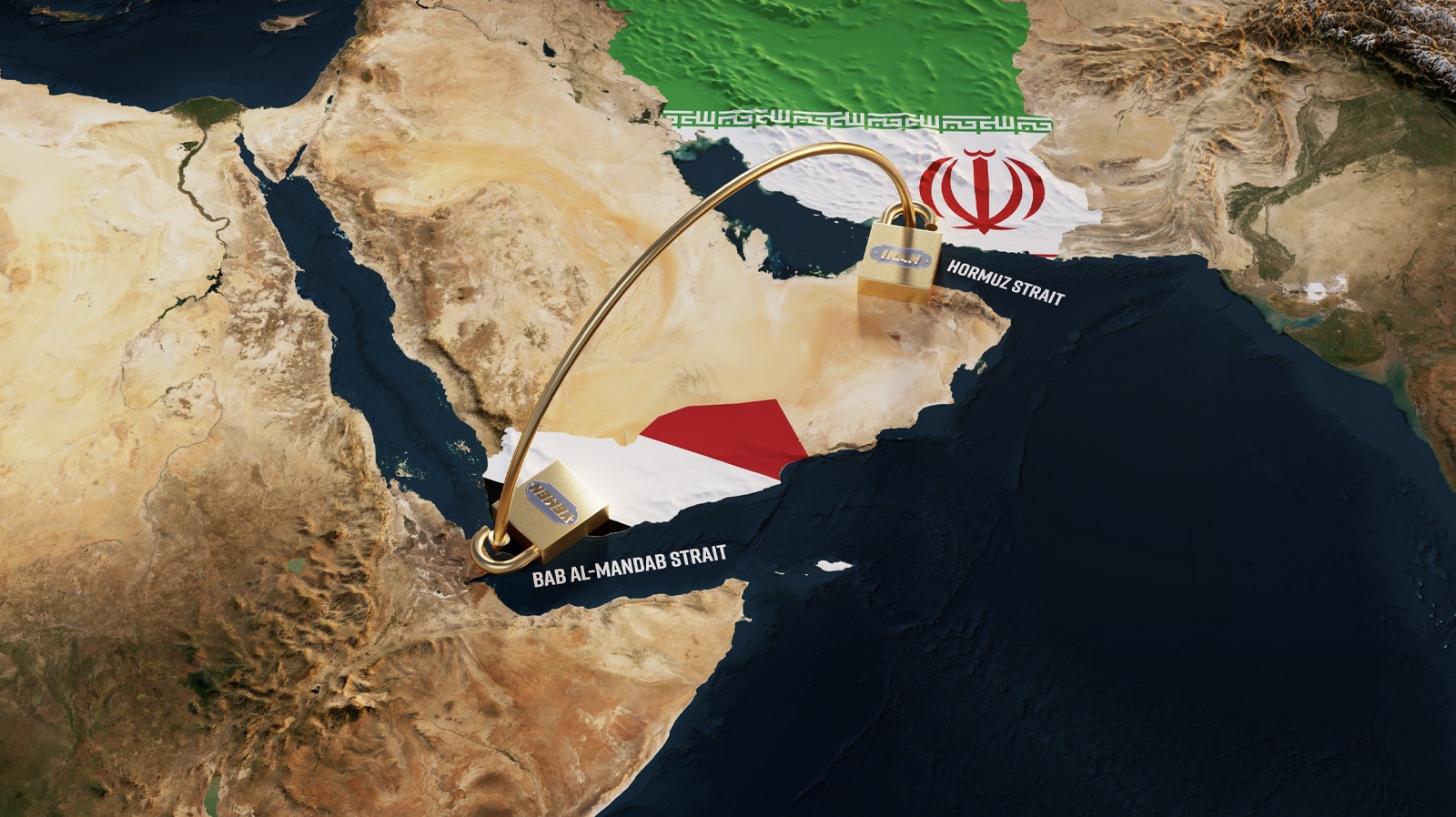
The opposite incentive is escalation. Rezai’s threat to keep Hormuz shut, the Persian Gulf Strait Authority’s blacklist-and-seizure regime, Madanizadeh’s warning that Iran’s enemies should “expect an attack from our side,” and the political analyst Mohammad Marandi’s claim that renewed military conflict is likely all show how economic strangulation can be converted into maritime leverage.
4. The fuel crisis and the novelty of the campaign
The fuel crisis. The relationship between sanctions, the blockade, and Iran’s fuel crisis runs in both directions. Iran entered the war with a chronic gasoline deficit, and wartime damage then reduced its ability to cover that shortfall through imports. The naval blockade closes the import valve just as domestic production is under strain. The result is tighter rationing, reported 10-liter allocations in Mazandaran, long queues at stations, and discussion of a “fourth price” tier. The fuel issue is therefore both a vulnerability that sanctions exploit and a crisis that sanctions intensify.
Novelty of the campaign. The current campaign is unprecedented not simply because it imposes more sanctions, but because it fuses sanctions with physical interdiction and regional commercial isolation.
The novelty of Operation Economic Outcast should be stated precisely. The 2012 sanctions regime—built around the EU oil embargo, Central Bank sanctions, and SWIFT de-linking—halved Iranian oil exports, but it remained primarily a multilateral financial-pressure campaign. The 2018 maximum-pressure campaign and the 2019–2020 sanctions drove exports sharply lower, but Iran eventually rebuilt flows through shadow fleets, Chinese teapot refiners, and yuan-based settlement.
The 2026 campaign is distinct because it combines four instruments at once: a physical U.S. naval blockade that interdicts rather than merely deters; a whole-of-government mobilization of “all agencies and authorities,” with five new sectoral determinations under E.O. 13902; the UAE trade-and-finance cutoff, which removes the principal evasion hub; and explicit threats against countries or firms that provide Iran with any remaining lifeline. An analysis by the financial magazine The Banker underscores this shift from list-based designations to systemic financial exclusion, which pressures correspondent banking, insurance, and settlement channels simultaneously. The point is not that every instrument is new, but that no prior round has paired kinetic interdiction with maximal secondary-sanctions enforcement in this way.
The Iranian counterargument. Tehran’s hardline media are not wrong to identify constraints on Washington. The depletion of the United States Strategic Petroleum Reserve, record-for-date pump prices, and China’s continued opposition to unilateral sanctions all complicate Washington’s ability to sustain maximal pressure indefinitely. Hamshahri and other outlets also stress Iran’s layered trade networks and shadow-fleet experience, while China’s foreign ministry has reiterated its opposition to sanctions not grounded in international law. Independent analysts have likewise argued that the package sits somewhere between ordinary pressure and a true “Economic D-Day,” especially as long as Washington avoids confrontation with major Chinese financial institutions.
The issue, therefore, is not whether Iran can find some leakage, but whether that leakage can restore enough revenue and imports to rebuild power, stabilize prices, and prevent strategic paralysis. The Iranian reports may be accurate, but their purpose is clearly to reassure the population. Even if the regime succeeds in finding such leakages, they will not be enough to restore revenue and imports.
Three Scenarios for the Months Ahead
Scenario A—Grinding attrition and muddling through (the most probable).
The most likely path is neither regime collapse nor a clean agreement. Oil exports remain severely suppressed, with intermittent shadow-fleet leakage to China; the rial weakens in stages, punctuated by Central Bank interventions; inflation remains extremely high; fuel rationing tightens; and localized labor or social protests recur without coalescing into a regime-threatening movement. In this scenario, Tehran prioritizes social stabilization over strategic rebuilding, slowing or freezing the reconstruction of its deterrent. Key indicators include continued Central Bank injections, reduced purchases by teapot refiners, sporadic protests, and the absence of a major Chinese-bank designation.
Scenario B—Negotiated de-escalation and MoU revival (low probability).
A second path runs through Pakistani, Omani, or Saudi mediation and a revival or replacement of the Islamabad MoU. Such a framework could trade partial sanctions relief, released funds, and limited reconstruction support for the reopening of Hormuz and constraints on Iran’s nuclear program. Taken together, Pezeshkian, Qalibaf, Madanizadeh, and Hemmati suggest a visible constituency for de-escalation, though hardline veto points remain powerful. The crucial signals would be repeated mediation visits, Iranian easing of Hormuz transit rules, and a U.S. pause on new designations.
Scenario C—Escalation spiral and Hormuz closure (medium probability).
The third path is escalation. If Tehran concludes that economic strangulation threatens regime survival or strategic irrelevance, it may act on the Secretary of Iran’s Supreme National Security Council Mohsen Rezai’s threat to close the Strait of Hormuz, seize vessels under the PGSA regime, or strike Gulf energy infrastructure. Such a move would be economically self-harming for Iran, but it could be rational from Tehran’s perspective if the alternatives are perceived as surrender or slow suffocation. Regime-linked academic Mohammad Marandi’s warning that renewed military conflict is “likely” captures this risk. Indicators include PGSA seizures, IRGC naval mobilization, a major Chinese-bank designation, and the collapse of Pakistani mediation. Yet it remains far from certain that Iran has the physical capacity to carry out its threats.
The practical bottom line is to watch fiscal indicators rather than rhetoric. The three highest-value signals are the rial’s trajectory—especially whether the Central Bank can hold the exchange rate near the 200,000–210,000 toman range—the next decision on fuel rationing or pricing, and whether Washington escalates against a major Chinese financial institution. The near-term question is not whether the regime survives; it is whether it can rebuild a credible deterrent while defending the currency, subsidizing essentials, and managing social pressure. On the current trajectory, that capacity is steadily being foreclosed.
JISS Policy Papers are published through the generosity of the Greg Rosshandler Family.
Source: https://jiss.org.il/en/grinberg-operation-economic-outcast-and-irans-strategic-paralysis/