



By Terrance J. Mintner
Europe has been offering Jordan and Turkey massive aid packages to avoid taking in more refugees from war-torn Syria, helping these countries shoulder the burden on their own
One way that European governments have tried to prevent Syrian refugees from streaming through their borders has been to offer cash assistance to Middle Eastern countries most affected by the influx of people escaping Syria’s eight-years-long war.
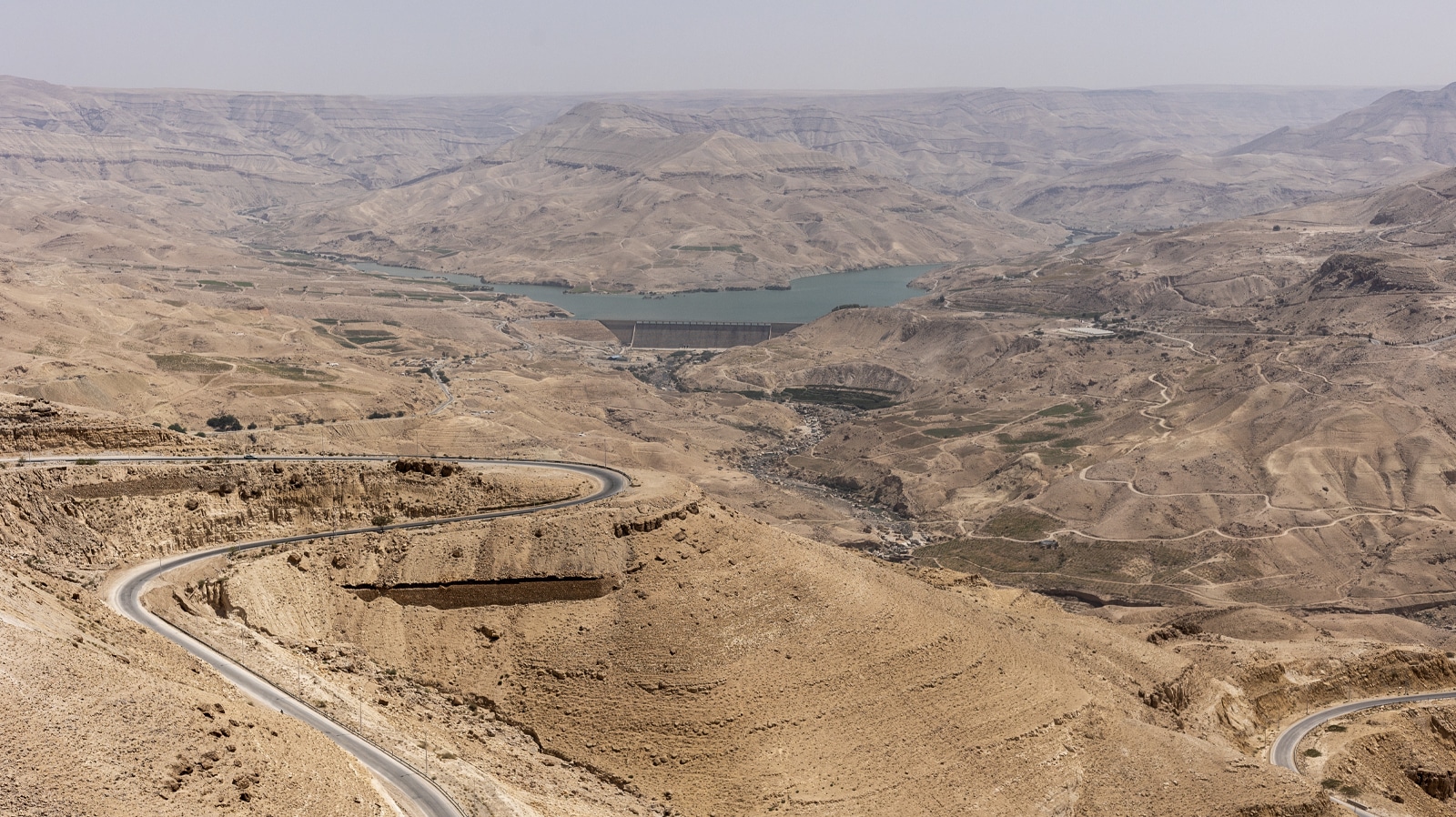
Earlier this month, France announced that it will allocate one billion euros in aid to help Jordan mitigate the impact of the Syrian refugee crisis on the kingdom’s beleaguered economy.
French and Jordanian officials have been holding meetings to hash out the details of the aid program. Jordan’s King Abdullah II met with French Minister of Europe and Foreign Affairs Jean-Yves Le Drian earlier this month to determine Amman’s needs in light of the most recent regional developments, according to a statement subsequently issued by the Jordanian government.
During the talks, Paris announced the new aid package, to be distributed over three years, on top of the already 600 million euros in loans and grants France has given to Jordan since 2016. The two governments are reportedly also working on arrangements with Syrian authorities that would allow refugees to return to their homes.
Beyond offering money for the refugee crisis, France has become one of the top European investors in Jordan, according to a statement by the French Embassy in Amman, funding projects to improve economic sectors such as energy and transportation.
Turkey also has been a recipient of European funds to help defray the cost of absorbing refugees. According to the Washington-based Brookings Institution, more than 3.5 million Syrians have sought refuge in Turkey, and the number of new arrivals is increasing every day, making Turkey the number one host country for the refugees.
To help Ankara shoulder the burden, an umbrella aid package called the Emergency Social Safety Net was set up by European countries, consisting of 58 programs with a total of 3 billion euros earmarked for the refugees.
One program, for example, delivers a monthly allowance directly to refugees via a special debit card—a Kizilay card—which can be used at any ATM as well as many stores. Eligible families—those with approved refugee status—can receive about 120 Turkish lira ($27) a month per person. That the cash is often spent locally, on rent and food primarily, has eased relations between the government and host communities.
In exchange for the aid, both Turkey and Jordan have agreed to clamp down on immigrants trying to cross into Europe.
Avi Pazner, a former Israeli ambassador to France, told The Media Line that Europe has already taken in over 1.5 million Syrian refugees since the conflict began.“The Europeans have no appetite for more refugees which comes as no surprise considering that public opinion has been growing against granting asylum to the refugees,” he said.
Some European countries have had negative experiences with Syrian refugees, including cases involving ISIS members infiltrating the continent along with asylum seekers; unruly behavior on the part of the refugees; and instances of attacks and rape perpetrated by the refugees.
“There is a lot of popular resistance in all of Europe to not open the gates to more Syrian refugees,” Pazner elaborated, adding that without the aid packages, Turkey could be enticed to encourage more immigrants to pass into Europe.
“There is in Europe after many years of a very lenient approach to the issue of refugees, a new attitude that you can see being translated politically in many European countries—like Austria, Hungary, Poland and Holland—where political parties that oppose immigration in their stated policies are gaining ground.”
Professor Emmanuel Navon, a lecturer in International Relations at Tel Aviv University and a Fellow at the Jerusalem Institute for Strategic Studies, explained to The Media Line that “[Turkish President Recep Tayyip] Erdogan has always been cynically using the refugees as pawns to extort money from the Europeans, especially from Germany.”
While Erdogan has agreed to keep the refugees in Turkey for now, he noted, the Turkish president can also turn on a dime, threatening to release more into Europe if the money is not forthcoming.
“With Jordan it is a different story because the Jordanians have taken in many refugees as well and King Abdullah is more honest on this issue than the Turkish president. Abdullah is also planning on allowing them to remain in Jordan if he has enough money to take care of them,” Navon said.
France, he concluded, has economic interests at stake in the kingdom. “That is part of [French President Emmanuel] Macron’s policy these days of trying to fill the void left by the United States in the Middle East, and boost France’s hard and soft power in the region.”
Published in The Media Line, 19.08.2018