
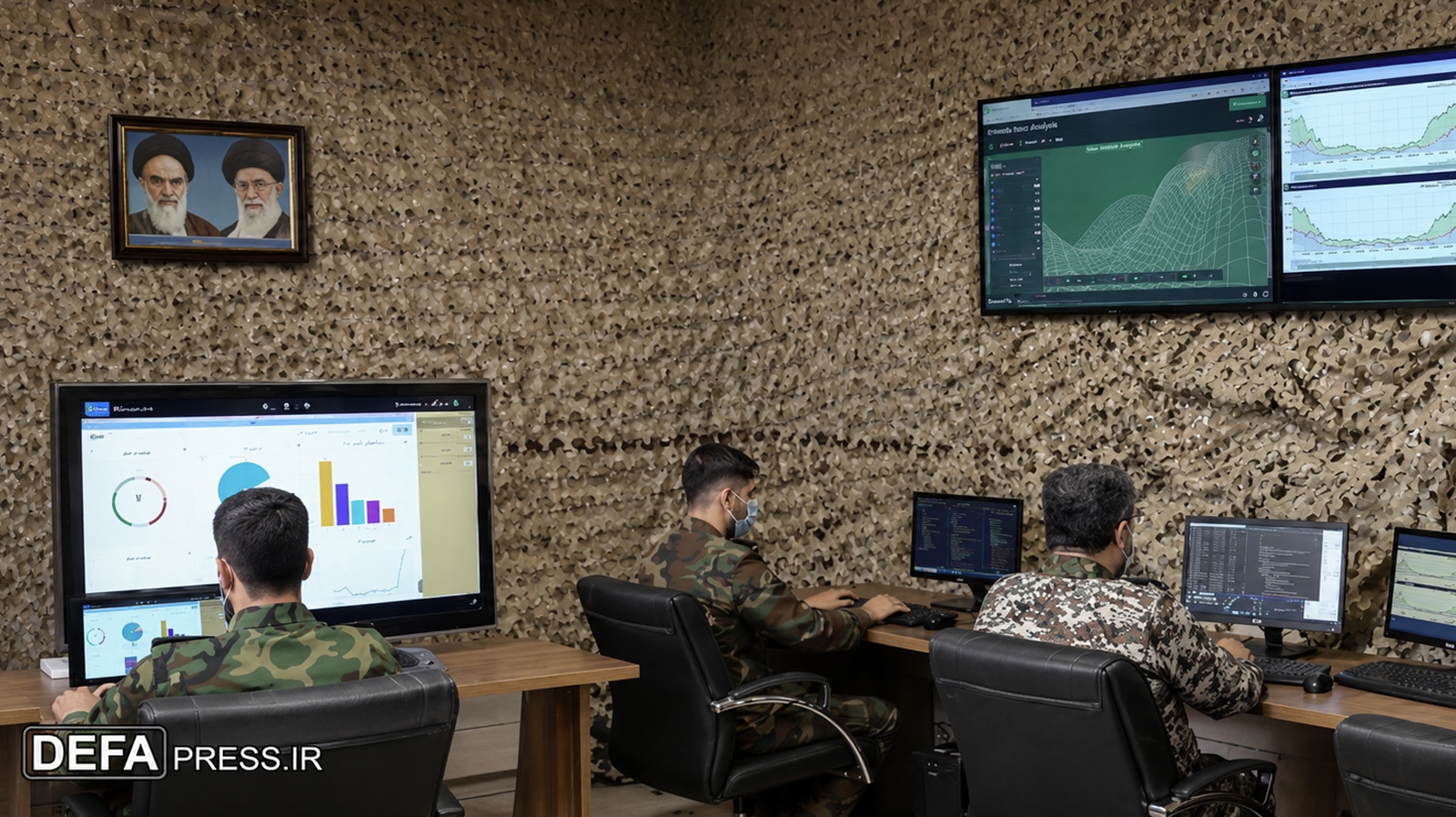
Cyberattacks on food refrigeration systems in France, damage to civilian infrastructure in the United States, and the growing activity of the Iranian hacking group Handala in Israel point to a significant development in its cyber campaign along three parallel dimensions: the geographical reach of the attacks is expanding, their nature and consequences are growing more severe, and Iran’s strategy of denial may be losing some of its effectiveness as Western countries become more willing to expose those responsible and hold Tehran directly accountable. The conclusion that needs to be drawn is that Iran’s offensive cyber apparatus must be treated as a significant part of its strategic threat and addressed in policies for deterring, punishing, and engaging with Tehran.*
France Blames the Revolutionary Guards for an Attack That Illustrates a Strategic Shift
France publicly and directly blamed Iran’s Islamic Revolutionary Guard Corps (IRGC) on November 9, 2026, for a large-scale cyberattack on supermarket refrigeration and freezing systems across the country. “I can confirm that the attack was carried out by the Islamic Revolutionary Guard Corps of the Islamic Republic of Iran,” French Foreign Minister Jean-Noël Barrot said.[1] Describing the attack’s scale and aggressiveness as unprecedented, he announced that France would seek European Union sanctions.[2]
The attackers remotely changed temperature settings in refrigerators and freezers at some 700 retail and food sites in France overnight on October 11–12, spoiling food and causing financial losses. Fires were also reported at some sites. In a statement, the French Foreign Ministry attributed the attack to Shahid Kaveh, an offensive cyber unit under the IRGC’s electronic warfare and cyber apparatus. France described it as the first offensive cyberattack on French soil undertaken solely for sabotage. It said the operation violated international law and the UN principles on responsible state behavior in cyberspace, which Iran has adopted. The Paris prosecutor’s office opened an investigation and sought international arrest warrants for senior officials in the apparatus involved in the attack.[3]
France summoned the Iranian ambassador on November 10, and Barrot made clear that Paris reserved the option of taking further measures, including action in cyberspace, if needed for deterrence and a proportionate response.[4]
Iran’s Foreign Ministry categorically rejected the French accusations in an official statement on November 10, calling claims of Iranian involvement in the cyberattacks baseless and politically motivated. The accusations, it said, were intended to divert attention from France’s policy toward Iran and the Middle East, damage Iran’s international image, and conceal failures in French civilian systems, which the ministry said could not even control refrigerator temperatures. It also warned that Tehran would not hesitate to take the steps needed to defend its national interests and security against unlawful foreign actions. The response illustrates Iran’s continued reliance on blanket state denial, even after the French government publicly and explicitly attributed the attack to the IRGC.[5]
By attacking food refrigeration systems, the perpetrators struck civilian infrastructure that supports food supply chains and food safety. The significance goes beyond the scale of the damage. The attack shows how cyber operations can reach beyond the digital realm to cause tangible physical and economic harm.
The attack in France offers a starting point for examining a broader development in Iran’s campaign. The change did not begin in November 2026, rather patterns of action have accumulated and intensified over recent years, particularly amid direct military confrontations between Iran on one side and Israel and the United States on the other.
Three main dimensions help explain this development. Iran’s attacks are reaching targets in more countries, its operations are growing more severe and can cause greater harm, and its ability to deny responsibility may be eroding:
1. Iran is Expanding the Reach of its Campaign
Iran’s has been waging a cyber campaign in Europe for year; it involves espionage, data theft, attacks on government institutions, and influence operations targeting opponents of the regime. The attack in France therefore does not mark the campaign’s beginning. What has changed is the broader range of targets, the potential for physical damage, and the growing focus on civilian infrastructure in countries that are not necessarily directly involved in fighting Iran.
An early example was the 2022 cyberattack on Albanian government institutions, which the United States attributed to Iran. The attack damaged government systems, disrupted services, and involved the release of stolen information and led Albania to sever diplomatic relations with Tehran. In an official publication in March 2026, the U.S. Department of Justice linked these operations to the Handala, Homeland Justice, and Karma websites, which it said were run by Iran’s Ministry of Intelligence.[6]
France, too, has faced previous Iranian cyber operations. In its official attribution statement in November 2026, the French Foreign Ministry cited the 2023 attack on the satirical weekly Charlie Hebdo and Iranian operations targeting the organization of the 2024 Paris Olympic and Paralympic Games. It also noted that the EU had imposed sanctions on the Iranian company Emennet Pasargad in March 2026 for its involvement in those activities. The October 2026 attack on refrigeration systems, however, marks a significant escalation whereby operations to influence and disrupt media and public targets have expanded to include direct attacks on civilian operational systems whose shutdown causes tangible physical and economic damage.[7]
Reports of another wave of attacks on refrigeration systems in European countries emerged in early November. Reuters reported on November 4 that attacks had hit supermarkets in eight European countries and refrigeration monitoring systems at three French Blood Service facilities. Staff at the blood service transferred blood supplies to alternative facilities, preventing harm to the supply. No official determination has been made, however, that all these incidents were connected to the October attack or carried out by the same Iranian unit.[8]
The evidence points to a willingness to attack a wider range of civilian targets in Europe, even at the risk of direct diplomatic confrontation with major European states. That is the conclusion to draw, rather than that Iran has only now begun attacking Europe.
By expanding the campaign’s geographic reach, Iran may be seeking more ways to pressure Western countries, demonstrate its ability to respond beyond the Middle East, and signal that support for Israel and the United States may carry a cost for Europe’s home front as well.
It should be noted that Iran is also promoting terrorist activity in Europe as it expands its cyber operations there. A recent prominent example was the attempted attack at a British airfield used by the U.S. Air Force. Several attacks on Jewish targets in Western Europe had taken place earlier.
2. More Severe Attacks and Greater Potential Harm
The second development in its campaign and the more significant one from a security perspective is the escalation of Iranian operations. Tehran’s previously placed an emphasis on espionage, data theft, website defacement, and influence operations, however in recent years it has increasingly used cyberattacks to disrupt physical processes, disable vital systems, and directly threaten the personal safety of civilians in target countries. Iran continues to use those earlier tools alongside its expanding activities, sometimes combining them. One type of activity has not wholly replaced another. The change lies in the wider range of operations and the ability to turn a limited technical intrusion into an event with serious physical, economic, and psychological consequences.
The IRGC-linked group CyberAv3ngers demonstrated this capacity in its attacks on industrial control systems in the United States. Beginning in November 2023, Iranian actors attacked controllers installed at water and wastewater facilities made by the Israeli company Unitronics. The attacks exposed the vulnerability of network-connected control systems and showed how even relatively simple technological tools can disrupt operations.[9]
A November 2026 Reuters report also mentions disruptions at U.S. water treatment facilities in July 2026, along with further attacks on transportation and maritime systems. These incidents require a distinction between those officially attributed to Iran and those whose possible Iranian connection is still being examined.[10]
The attacks in France and the United States targeted control systems connected to the physical world, with the French attack extending the same trend to the food sector. Even where the actual damage is limited, the ability to disrupt water, food, energy, or medical services gives cyberattacks strategic value as a means of pressure.
Handala: Connecting cyberattacks, influence operations, and physical threats
Handala offers a striking case study of Iran’s use of hacking groups and cover identities to combine cyberattacks, data theft and leaks, threats, and influence operations. This approach lets the Iranian regime pursue operational objectives and shape perceptions at the same time, while obscuring who directs the activity and attempting to distance itself from direct responsibility. Iran’s Ministry of Intelligence plays a central role in running the cyber and influence apparatus associated with Handala.[11]
Handala’s effectiveness does not necessarily depend on exceptional technical sophistication. Gaining access with stolen credentials, deleting data, or taking over an account can sometimes enable the group to cause significant damage, both to operations and through its influence on perceptions, especially when accompanied by a publicity and intimidation campaign.
The attack on the U.S. medical technology company Stryker in March 2026 is a major example. Handala claimed responsibility for a destructive attack that disrupted the company’s operations. The U.S. Department of Justice confirmed that one of Handala’s websites had carried the claim of responsibility and linked the group’s digital apparatus to Iran’s Ministry of Intelligence.[12]
More disturbing still is the use of stolen information and online platforms to threaten people’s lives. The Justice Department said in a statement that Handala websites had published personal details of some 190 people with ties to Israel’s defense establishment, along with explicit threats. The people running the apparatus had also sent death threats to journalists and opponents of the Iranian regime and had even claimed ties to criminals for the purpose of physically harming targets. The U.S. source documents the threats and the published claims, but it does not necessarily establish that those criminal ties actually existed.[13]
Residents of northern Tel Aviv found threatening leaflets in their mailboxes on November 9, 2026, in another example of digital activity combined with threats in the physical world. The leaflets carried a QR code directing readers to a website associated with Handala. The site threatened attacks on vital Israeli infrastructure, including power plants, oil refineries, and desalination facilities. The threat was in response to a possible Israeli attack on the Iranian axis’s energy infrastructure. Handala publicly claimed responsibility for the operation and the Israel Police and the Shin Bet opened an investigation into how the leaflets were distributed and who was involved. The incident illustrates the combination of cyber activity, influence operations, and threats in the physical world, although direct Iranian involvement in distributing the leaflets has yet to be established.[14]
Using the Handala name to convey a threat of physical harm on Israel’s streets illustrates the connection between a cyber apparatus, influence operations, and efforts to intimidate the population. That significance extends beyond the question of who actually placed the leaflets. If they prove to have been distributed under direct Iranian direction, that would strengthen the assessment that online activity is increasingly being combined with the use of operatives on the ground.
Taken together, these incidents show Iran is developing an operational doctrine in which cyber operations are also used to cause physical damage, disrupt civilian services, and even put personal pressure on adversaries. Obtaining information and influencing public opinion remain objectives, but the campaign is expanding beyond a focus on harming information and shaping perceptions to target systems, infrastructure, and people together.
3. Eroding Iran’s Deniability and the Emergence of a New Western Policy
Hacker groups, front companies, and operational identities are central to Iran’s cyber strategy because they allow Tehran to distance itself from offensive activity. They give the regime operational and diplomatic flexibility to act against adversaries, exert pressure, and cause harm while seeking to avoid direct state responsibility.
Handala’s activities reflect a significant development in Iran’s cyber strategy. Iran continues to use cover identities and concealment to obscure the regime’s involvement, but it is increasingly willing to exploit Handala’s public visibility and association with Iran to heighten its psychological impact and influence perceptions. Deniability is therefore not necessarily a central objective in every operation: sometimes, the group’s public association with Iran’s security apparatus serves Tehran’s efforts to deter, intimidate, and influence. The strategy combines operational ambiguity with deliberate or tolerated disclosure of ties to the regime, depending on each operation’s strategic objectives.[15]
The French cyberhacking case adds another dimension to the question of Iranian deniability as the French foreign minister’s explicit accusation against the IRGC and the French judiciary’s action against commanders of a specific Iranian unit leave Tehran less room to hide behind technological and operational ambiguity.
Iran’s response to France’s accusations shows the inherent tension between growing Western efforts to attribute attacks to states and Tehran’s strategy of denial. France publicly and explicitly attributed the attack to a specific IRGC unit. Iran denied the accusations outright, questioned the competence of the French authorities, and sought to portray the accusations as political manipulation. Their dispute extends beyond cyberspace to who bears responsibility and whether the response is legitimate. Western efforts to attribute attacks to states will succeed only if exposing the attackers leads to political, legal, and operational costs that affect the Iranian regime’s cost-benefit calculations.
Attributing an attack involves three distinct stages. Technical analysis identifies the attackers, intelligence attributes the operation to a state body, and a political decision holds the state publicly responsible. France’s action is particularly significant because it moves the discussion from the technological dimension to the political and legal spheres.
Iran’s strategy of denial should not however be seen as having collapsed. Iran’s ability to deny responsibility remains valuable, particularly when evidence is not fully disclosed or Western countries are unwilling to bear the costs of responding. What has changed is that Western countries are increasingly willing to challenge denials through public disclosures, sanctions, legal proceedings, and operations to disrupt Iran’s cyber infrastructure.
Rewards for Justice—Exposing the People and Organizations Behind the Operations
Washington is also seeking to erode Iran’s deniability by helping identify those responsible for malicious cyber activity against U.S. infrastructure. The State Department’s Rewards for Justice (RFJ) program offers rewards of up to $10 million for information that may aid that identification, subject to the program’s terms.
U.S. notices expose people and organizations across the operational apparatus, including commanders, operators, programmers, front companies, and those who support operations. They include CyberAv3ngers, senior officials in the IRGC’s cyber apparatus, personnel from Shahid Hemmat and Shahid Shushtari, individuals and entities linked to Emennet Pasargad, and hackers who operated within the Mabna network.[16]
Naming Iranian cyber personnel, explaining their roles, and identifying their companies and units is intended to undermine the organizational arrangements that conceal their activities. The program thus has strategic value beyond the financial reward. It also warns those personnel that working through an ostensibly civilian company or under the name of an independent hacker group offers no guarantee against exposure and legal accountability.
The program combines three purposes—gathering intelligence on the operational apparatus, increasing personal pressure on its members, and demonstrating the importance the United States attaches to the Iranian cyber threat. A listing under RFJ does not amount to a criminal conviction, however, and the program does not include everyone whom cyber researchers have linked to Iranian activity.
The Justice Department took a further step in March 2026, announcing the seizure of four internet domains used by Iran’s Intelligence Ministry for cyber and influence operations, including sites associated with Handala. The measure was intended both to disrupt the group’s activities and to expose its links to Iranian state bodies.[17]
France’s emphasis on the IRGC’s direct state responsibility complements U.S. efforts to expose the people and organizations that enable Iran’s cyber operations. Combining the two approaches could raise the political, personal, and operational costs of continued attacks.
The Strategic Implications—Should Cyber Operations Be Included in Negotiations with Iran?
For years, diplomatic and security talks with Tehran focused mainly on its nuclear program, ballistic missiles, and regional activities. However, attacks on water infrastructure, food systems, medical services, and other civilian targets show that offensive cyber capabilities have become a significant component of the Iranian threat. In view of these developments, Western policy must reconsider its approach to Iran.
Cyber operations allow Iran to act against militarily and technologically superior states by exploiting vulnerabilities in civilian systems, often at relatively little operational cost. They also allow it to pressure countries that are not directly involved in a military conflict without resorting to conventional force. This raises the question of whether talks on limiting Iran’s military capabilities continue to ignore its offensive cyber capabilities.
The answer is that Iran’s offensive cyber activity should unequivocally be included in any future substantive security dialogue with Tehran, particularly when discussions concern restraining its regional activities and preventing escalation.
Nevertheless, a comprehensive cyber agreement need not be a prerequisite for every nuclear arrangement or missile agreement. Expanding the agenda that far could prevent progress in every area. A more practical approach would establish binding rules of conduct, above all refraining from attacks on critical civilian infrastructure, ending cyber activity intended to facilitate physical harm to individuals, and assigning responsibility for the activities of government units and companies acting on their behalf.
Verification, attribution, and enforcement will be essential to any such arrangement. Without them, Iran may continue using front groups and subcontractors to circumvent its formal commitments.
Moreover, dialogue must not replace punishment—including physical strikes against those who conduct Iran’s cyber operations—or deterrence through cyber operations against sensitive targets in Iran. Diplomatic arrangements may reduce risks only if backed by a demonstrated ability to impose real costs for violations.
Conclusions and Policy Recommendations
The events described above constitute an escalation and evolution of existing patterns, rather than the invention of a new Iranian cyber doctrine. Iran had already acted against European countries, attacked civilian infrastructure, and used hacker groups to conceal its responsibility. Yet the events of 2026 point to a growing willingness to combine cyberattacks, disruption of physical systems, influence operations, and threats to adversaries’ personal safety.
The three dimensions examined in this paper are inter-connected. Geographic expansion exposes more countries to the threat, while the increasingly severe nature of the attacks raises their potential for harm and their cost to the public, and public attribution to the offending state and exposure of its operational apparatus, threaten to limit Iran’s ability to act without being held responsible.
Five main steps are needed in response:
Expand public attribution and state responsibility. The West should expose the Iranian units, their commanders, and the front companies involved in attacks, as far as the evidence allows, going beyond the names of hacker groups.
Increase pressure on individuals and organizations. The use of sanctions, legal proceedings, and reward programs such as RFJ should be expanded, focusing on chains of command, funding, and the infrastructure that supports operations.
Strengthen defenses for civilian infrastructure. Alongside energy, water, and transportation systems, priority should go to food refrigeration systems, industrial controllers, medical systems, and supply chains, where damage can directly affect people’s lives.
Address cyber and physical threats together. Handala’s activities show the need to examine the links between intrusions into information systems, publication of personal details, threats, recruitment of local actors, and attempts to inflict physical harm. This step is all the more important given the increase in terrorist activity in the West by Iran and its proxies.
Include cyber operations on the security agenda with Iran. Explicit demands should be made to restrain offensive cyber activity, particularly against civilian infrastructure and individuals, with arrangements to verify compliance and respond to violations.
The key conclusion is that cyber activity is part of Iran’s overall strategic threat, and there is no longer any justification for treating it as a separate technological field. Attacks capable of disrupting food, water, health, and energy systems, together with activities that combine digital intrusions with threats to human life, form part of a broad asymmetric campaign against Israel and Western countries.
Western states are increasingly willing to turn technical and intelligence findings about cyberattacks into public state accountability and enforcement. That is the significant development, beyond exposing Iran’s involvement. France’s statement and Iran’s response illustrate this developing struggle over state responsibility in cyberspace. France publicly identified the Iranian unit behind the attacks, held the IRGC directly responsible, and pursued punitive measures. Tehran maintained its blanket denial and sought to discredit the accusations. If this approach becomes a consistent Western policy, it could narrow the gray area Iran has relied on for years.
The central question is no longer whether Iran can cause significant harm through cyberattacks. It is whether the West can develop a policy that makes continued attacks more costly and dangerous for the Iranian regime.
* Updated November 10, 2026
[1] “France accuses Iran of cyberattacks on supermarket fridges”, Agence France-Presse, November 10, 2026, https://www.scmp.com/news/world/europe/article/3373845/french-officials-suspect-iran-behind-fridge-cyberattacks-sources-say
[2] Ibid. https://www.scmp.com/news/world/europe/article/3373845/french-officials-suspect-iran-behind-fridge-cyberattacks-sources-say
[3] French Ministry for Europe and Foreign Affairs, “Déclaration d’attribution à l’Iran de cyberattaques visant la France,” November 9, 2026, https://www.diplomatie.gouv.fr/en/presse-et-ressources/decouvrir-et-informer/actualites/declaration-d-attribution-a-l-iran-de-cyberattaques-visant-la-france
[4] “France summons Iran envoy over supermarket fridge hack, warns of response”, Reuters, November 10, 2026. Reuters, full report
[5] “Categorical Rejection of the French Government’s Baseless Accusations Against Iran” (originally in Persian) (“رد قاطع اتهامهای بیاساس دولت فرانسه علیه ایران”), Tasnim News Agency, November 10, 2026, Tasnim, original Persian report · Iran Press, English account of the statement
[6] “Justice Department Disrupts Iranian Cyber Enabled Psychological Operations”, Office of Public Affairs, U.S. Department of Justice, March 19, 2026, https://www.justice.gov/opa/pr/justice-department-disrupts-iranian-cyber-enabled-psychological-operations
[7] French Ministry for Europe and Foreign Affairs, “Déclaration d’attribution à l’Iran de cyberattaques visant la France,” November 9, 2026, https://www.diplomatie.gouv.fr/en/presse-et-ressources/decouvrir-et-informer/actualites/declaration-d-attribution-a-l-iran-de-cyberattaques-visant-la-france
[8] “French blood banks hit alongside cyberattack on European supermarkets,” Reuters, November 4, 2026, Reuters, reproduced by The Jerusalem Post
[9] “IRGC-Affiliated Cyber Actors Exploit PLCs in Multiple Sectors, Including U.S. Water and Wastewater Systems Facilities”, Joint Cybersecurity Advisory, Co-Authored by: The Federal Bureau of Investigation (FBI), Cybersecurity and Infrastructure Security Agency (CISA), National Security Agency (NSA), Environmental Protection Agency (EPA), and the Israel National Cyber Directorate (INCD), December 1, 2023, Official FBI-hosted advisory, updated December 18, 2024
[10] “French officials blame Iran for refrigerator hacks, vow retaliation”, Reuters, November 9, 2026, Reuters, reproduced by Daily Maverick
[11] “Influence Operations Disguised as Cyber Operations”, Avi Davidi, The Jerusalem Institute for Strategy and Security, March 25, 2026, https://jiss.org.il/en/davidi-influence-operations-disguised-as-cyber-operations/
[12] “Justice Department Disrupts Iranian Cyber Enabled Psychological Operations”, Press Release, Office of Public Affairs, U.S. Department of Justice, March 19, 2026, https://www.justice.gov/opa/pr/justice-department-disrupts-iranian-cyber-enabled-psychological-operations
[13] Ibid. https://www.justice.gov/opa/pr/justice-department-disrupts-iranian-cyber-enabled-psychological-operations
[14] “Shin Bet Joins Investigation: Threatening Leaflets Distributed in Tel Aviv—and the Possible Link to an Iranian Hacking Group,” N12, November 9, 2026, https://www.mako.co.il/news-law/2026_q4/Article-878b9b6f660c1a1026.htm
[15] “Cognitive Warfare Disguised as Cyber Operations: The Handala Hacking Group as a Case Study of Iran’s Cyber Proxy Strategy During the 2026 War with Israel and the United States,” Avi Davidi, Jerusalem Institute for Strategy and Security, March 23, 2026, https://jiss.org.il/davidi-cognitive-warfare-disguised-as-cyber-operations/
[16] U.S. Department of State, Diplomatic Security Service, Rewards for Justice. Shahid Hemmat · CyberAv3ngers · Shahid Shushtari (Emennet Pasargad) · Iranian Hackers (Mabna)
[17] “Justice Department Disrupts Iranian Cyber Enabled Psychological Operations”, Press Release, Office of Public Affairs, U.S. Department of Justice, March 19, 2026, https://www.justice.gov/opa/pr/justice-department-disrupts-iranian-cyber-enabled-psychological-operations
Source: https://jiss.org.il/en/davidi-irans-escalating-cyberwar/