

Israel and the United States, focused as they may be on the Iranian challenge, and constrained by political transformations, must nevertheless need take urgent steps to commence effective (albeit modular) implementation of President Donald Trump’s plan for Gaza, as the U.S. administration has itself recently pointed out. Doing so must ultimately involve disarming Hamas, ending its rule, and creating the conditions for Gaza’s reconstruction and security. At first, these steps will have to be implemented in areas outside of Hamas control. The President’s plan has been awarded international legitimacy through UNSCR 2803, and an elaborate organizational architecture has been put in place to implement it: the Board of Peace and the Office of the High Representative (OHR), the ISF (International Stabilization Force) and the National Committee for the Administration of Gaza(NCAG), a Palestinian body. In practice, however, little is happening on the ground at this stage beyond the daily management of humanitarian support through the International Gaza Support Center —a unique institution by its own right—. Images of flooded tents, manipulated by Hamas, are a reminder of the need to offer Gazans an alternative future.
At the present point in time, the existing managerial architecture, troop commitments to the ISF, and current funding all fall far short of what is needed. Even in a post-election transition period, the Israeli government needs to engage as soon as possible with the Trump administration and with other key players, including regional partners, Egypt chief among them, to set a course for effective action. Breaking Hamas’ hold requires offering Gazans a better life without Hamas, area by area, step by step, beginning in the parts of the Gaza Strip east of the Israeli-controlled “yellow line.”
Alongside continued IDF military pressure this will require a much stronger and broader leadership group at the OHR; at least 5,000 ISF troops initially and not the 500 currently promised Moroccan contingent that has yet to get the go-ahead ; a budget large enough to overshadow Hamas’ revenue from the control of commercial traffic, as distinct from aid; closely monitored and modular introduction of NCAG elements to begin the reforms necessary, particularly in education, with due attention given to the clan-controlled areas already in rebellion against Hamas; and, as construction begins, a solution, to the dual-use materials bottleneck.
Combined with a steady reduction in Hamas’ capabilities and areas of control, and a sustained campaign to draw people out of Hamas-controlled areas, these measures may well offer a path out of the current unstable situation. All other options—from annexation (and settlements?) to full and semi-permanent military rule (which the IDF is eager to avoid) to unilateral withdrawal—seem less promising.
Goals vs. Reality on the Ground
Although UNSCR 2803 does refer to a future Palestinian state—a prospect that most Israelis now reject out of hand— it is in many ways exceptional as it recognizes Israel’s right to security for its citizens before consenting to withdraw from Gaza. This explains Israel’s essential, if tentative, consent to its implementation, in parallel with the unprecedented creation of the Civil-Military Coordination Center (CMCC), now called the International Gaza Support Center (IGSC). For the first time ever, a unique mix of Israeli, American, Arab (from several countries) and European officers are working under one roof in Israel.
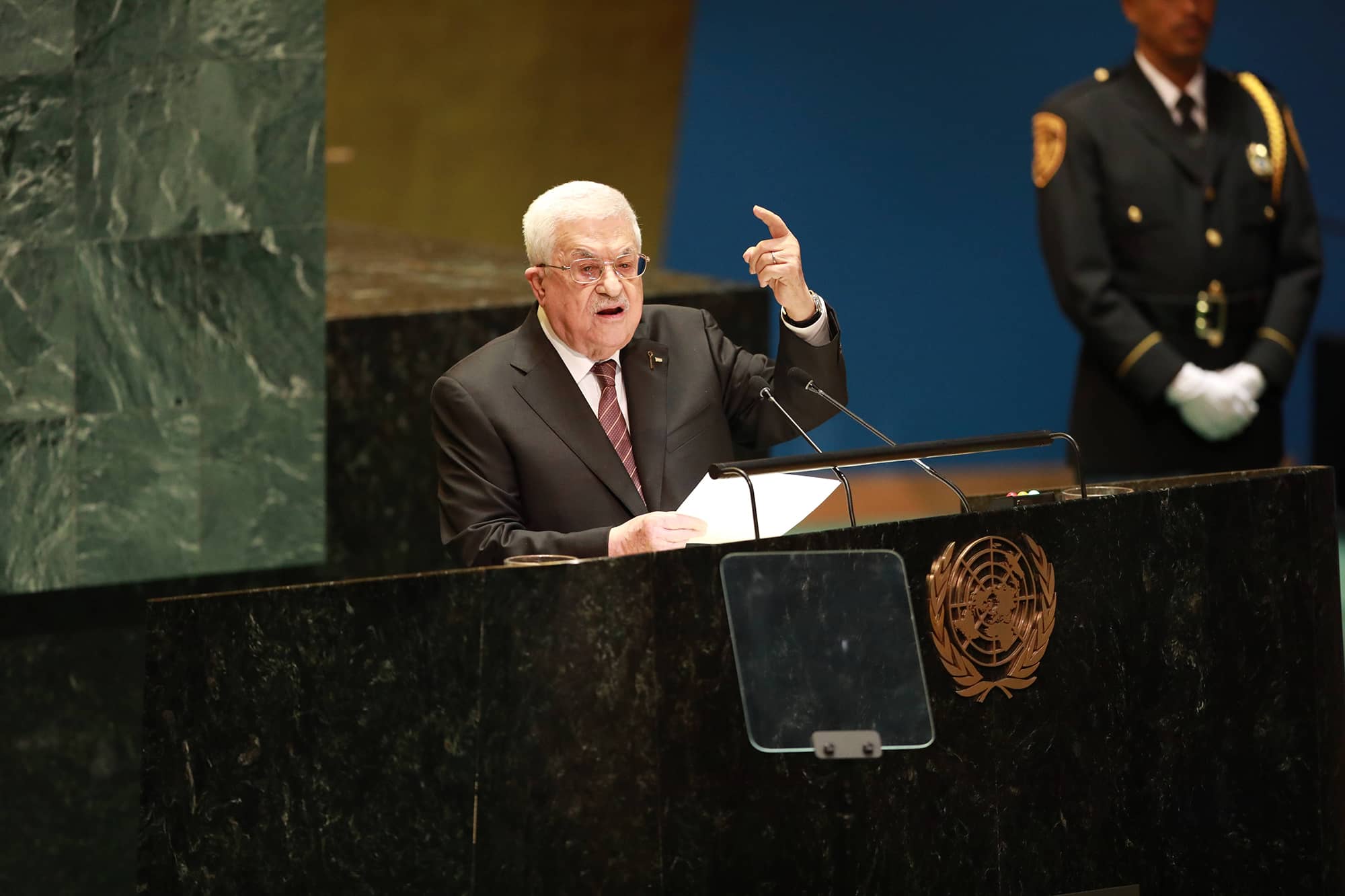
At least implicitly, this constituted then—and still indicates now—Israel’s choice, in principle, between the various options for Gaza’s future. Significant voices in Israel, including in the present governing coalition and the Cabinet, call for rebuilding settlements in Gaza ,removed in 2005 under Prime Minister Ariel Sharon’s disengagement plan, which has already been reversed in Northern Samaria. They muse about Palestinians leaving Gaza voluntarily, or being induced to do so. But neither the prime minister nor his close circle want to see this or believe it can be done. The more practical option of full military rule has also been given some thought, but the IDF, engaged on many fronts, is not keen, to put it mildly, to take on this mission. Even if the Israeli left were theoretically to support the restoration of Palestinian Authority rule (the PA was violently driven out of Gaza by Hamas in 2007) it is patently clear that at this point in history the weak and corrupt administration of Mahmoud Abbas, “Abu Mazen” (born in November 1935!) will not be able to deliver and may collapse if it tries.
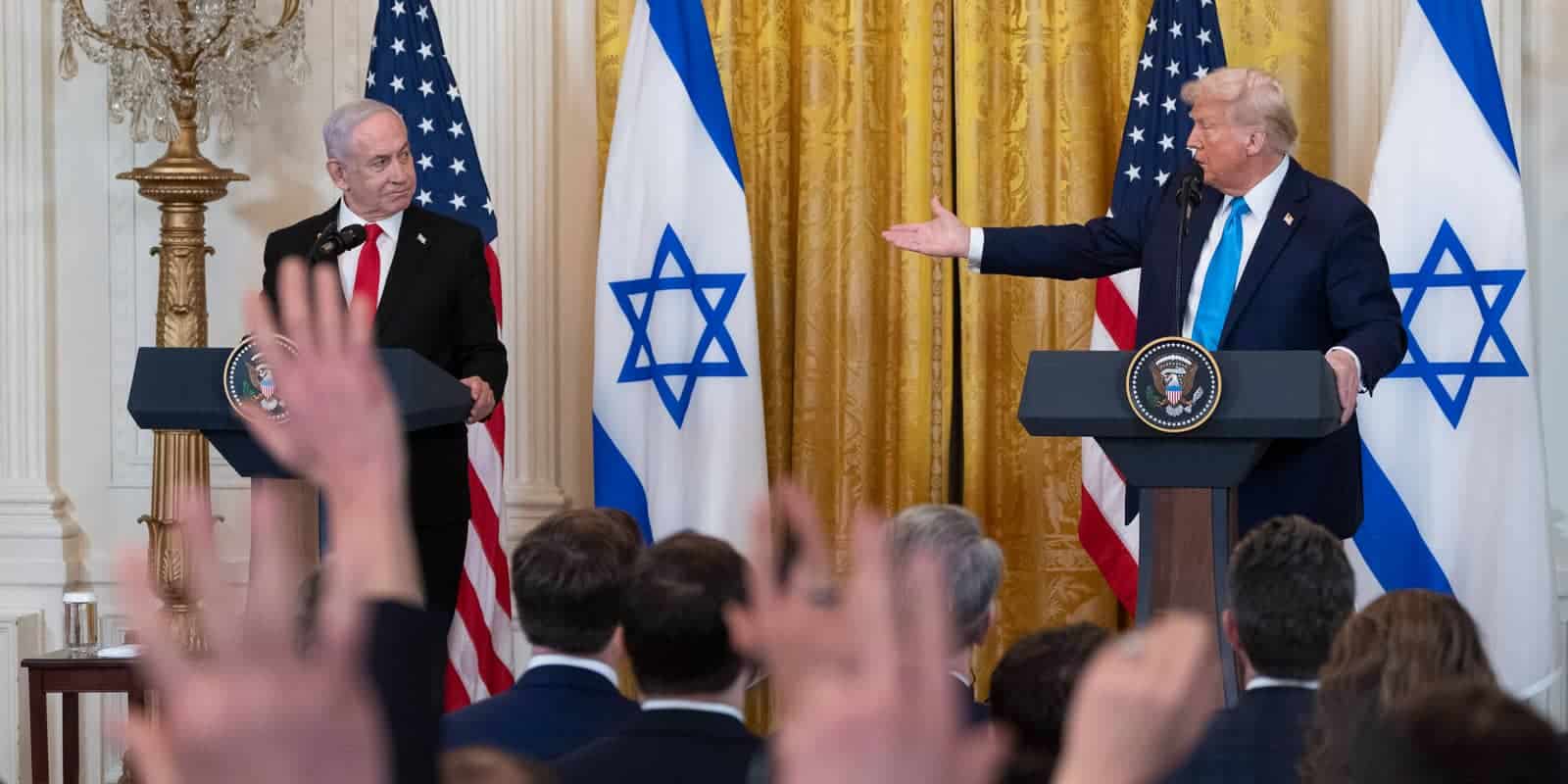
In practice, then, with President Donald Trump’s support behind it—and renewed pressure from Washington to move forward—Israel has accepted an outline for a transition period involving international management, international forces, and vetted Palestinian administrators and police officers. The design closely resembles a proposal put forward in 2024 by a group of American and Israeli former practitioners. Trump has added some grander nomenclature such as the “Board of Peace,” and the plan now has international endorsement and a UN mandate.
The devil, however, is, as usual, in the details, specifically in the growing gap between the plan and the elaborate administrative architecture aimed at implementing it (as described below), on one hand, and realities of the ground, on the other, where next to nothing has been done as yet. Gaza remains largely devastated, with images of flooding and misery projected onto the world stage. It is divided into two—or rather three—unequal parts:
- Roughly two-thirds of the territory, now mostly unpopulated, is under direct IDF control. The route of the “yellow line” keeps changing as Hamas is steadily pushed back.
- Certain areas on both sides of the line are ruled by local clans that confront Hamas and receive some Israeli military and intelligence support.
- The densely populated remainder is under full—and, unfortunately, tightening—Hamas control. By some estimates, the organization still has nearly 20,000 young men under arms and possibly three times as many small arms, which it insists on keeping even as it is willing to discuss surrendering heavier weapons. Its police force numbers about 10,000. Despite local protests, which it has brutally repressed, Hamas extracts revenue from every commercial truck bringing goods into Gaza, as distinct from the more closely managed and monitored humanitarian aid. It may also still be the recipient of external support.
Unless far more effective steps are taken to offer a viable alternative to Hamas rule, the only other options may well be to acquiesce in its current status—which no Israeli government can accept as a legitimate outcome of the war Hamas launched on October 7, 2023—or a full scale, bloody and destructive resumption of operations aimed at destroying Hamas by force, now that the hostage situation no longer constrains the IDF. To avoid these outcomes as far as possible, the existing architecture must be redesigned and significant resources mobilized to create a viable alternative.
Mapping the Existing Architecture
The multi-layered architecture designed to manage Gaza’s transition includes a hierarchy of institutional bodies, all of which need to be enhanced and invigorated if the plan’s goals are to be achieved:
- The Board of Peace (BoP), nominally headed by President Trump and bringing together an impressive array of heads of state and government, reflects his claim to have helped end this conflict (and several others). It is, however, essentially a symbolic expression of broad international support for the implementation of UNSCR 2803. In practice, the BoP has not conducted any support activities as such, and its participants have yet to deliver the funds they pledged. The recent appointment of operational and financial officers has yet to have the necessary impact.
- An offshoot of the BoP is its Gaza Executive Board, led by Tony Blair alongside Trump’s busy envoys, Jared Kushner and Steve Witcoff. They are assisted by an unusual mix of regional foreign ministers, diplomats, Egypt’s intelligence chief, the White House chief of staff, the former Dutch foreign minister now serving as UN coordinator for Gaza, and one American and two Israeli business leaders. In theory, this group can devise creative solutions and help secure the resources to implement them, but it has yet to do so to any notable extent.
- The key executive post is that of the High Representative for Gaza, Nicolay Mladenov, an experienced Bulgarian diplomat and former foreign minister. He served for years as the UN envoy to the region and gained a deep understanding of Palestinian affairs. His office, the OHR, is supported by a small team of BoP advisers, largely focused on the economic aspects of planned reconstruction. The office needs to be greatly expanded, with experienced administrators supporting and supervising what needs to be done on the ground.
- The National Committee for the Administration of Gaza (NCAG) consists of Palestinian officials vetted by Israel who are expected to carry out the functions of local governance , essentially equivalent to municipal duties. Israeli authorities have not yet allowed them to enter Gaza. Even if they did at this point, there would be no population for them to administer east of the yellow line, and they would lack the capacity to do so even if there were people there. Moreover, they would not survive a day in Hamas-controlled areas . A much more robust organizational infrastructure, backed by the international military presence, would be necessary if the NCAG is to fulfill its function.
- The International Stabilization Force was supposed to enter areas of Gaza soon, but constraints within Israel —to some extent, political—mean that even the 500 Moroccan troops already promised have yet to receive final government approval. No other prospective troop contributors, such as Azerbaijan and Indonesia, have deployed units. For good reasons, Israel bars Turkish or Qatari participation.
- Finally, day-to-day operations continue to be supervised more efficiently by the IGSC (International Gaza Support Center), formerly the CMCC (Civil-Military Coordination Center), based in Kiryat Gat, an Israeli town a short drive from the Gaza Strip. It is a unique and unprecedented framework, bringing Israeli, American, Arab, and European officers and officials together under one roof on sovereign Israeli territory. Yet its mandate does not extend to changing conditions on the ground, which remains the overriding challenge for Israel, the U.S., and the relevant regional players.
What Needs to Be Done
Given the potential drawbacks of every other option for Gaza, it is increasingly urgent for Israel, in close coordination with both the Trump administration, which has been urging it to act, and regional partners, to set in motion, in a phased and modular manner, the creation of an alternative reality in parts of the Gaza Strip now under Israeli military control, i.e., east of the present (dynamic) yellow line.
At the same time, the IDF must continue to steadily weaken Hamas through persistent military pressure and surgical strikes against its command structure, while drawing more of Gaza’s population out of its control. This does not conflict with the need to move ahead with implementing the Trump plan.
This would clearly require changes to the structure and capacity of the architecture described above. Operational matters are equally important, including monitoring the dual-use construction materials that would need to enter from Egypt to provide new housing for those willing to leave Hamas-controlled areas. In close coordination with Washington, as President Trump has urged, and, if possible, with key regional players, Israel should pursue the following:
- First and foremost, an agreed Israeli-U.S. plan, with Egypt involved, setting a timetable for implementing the first stages in selected areas, without waiting any longer for Hamas’s unlikely consent to disarm.
- A greatly expanded OHR capacity to manage all aspects of such a project on the ground, from construction to employment to education.
- An intensive U.S.-led effort to secure much greater funding for the transition, designed to render Hamas economically irrelevant to Gazans in need of resources.
- An equally intensive U.S.-led effort to increase troop commitments to the ISF at least tenfold, from 500 to at least 5,000, while retaining Israel’s right to veto participation by countries committed to supporting Hamas, such as Turkey.
- Permission, at last, for NCAG personnel and Egyptian-trained security personnel to operate in areas under IDF or local clan control, despite the continuing political difficulty posed by the unresolved Knesset election outcome. This should carry an explicit caveat as implementation proceeds area by area, their performance in pilot areas would determine their suitability and role when conditions permit further expansion.
- Finally, as noted above, Israel, Egypt, the IGSC, and the ISF need to agree in detail on a much more effective and rigorous system to monitor the entry and use of dual-use materials and goods, so that construction can begin in pilot areas.
These measures are unlikely to become a top priority amid political uncertainty in Israel and the looming possibility of renewed operations against Iran. Yet time is also of the essence in Gaza: Hamas is tightening its grip on the areas it controls and using what commercial activity remains to fleece the population. As the president has recently made clear, the current stalemate is ultimately unsustainable.
Source: https://jiss.org.il/en/lerman-ending-hamas-rule-in-gaza/