


A Policy-Oriented Think Tank Addressing Foreign Policy and National Security Issues for a Safe Israel

Italy’s far-right minister visits Israel, drawing criticism

Italy’s far-right minister visits Israel, drawing criticism.
Dr. Emmanuel Navon: Israel’s embrace of Salvini and “rebellious European governments” allows it to gain leverage over Western European powers, which have traditionally sympathized with the Palestinians.

By Isabel Debre

JERUSALEM — One of Europe’s most divisive political figures, Italian Interior Minister Matteo Salvini, opened his visit to Israel Tuesday with warm words of support for his hosts, condemning Hezbollah as a “terrorist” organization and denouncing rising waves of anti-Semitism in Europe.

Salvini is in Israel for a two-day visit that has prompted criticism over his far-right policies and anti-migration views.

He kicked off his trip with a tour of Israel’s northern border with Lebanon, where the Israeli army has uncovered tunnels it says were built by Hezbollah for attacks. He told a gathering of journalists in Jerusalem on Tuesday that no country would tolerate enemy tunnels infiltrating its territory.

“I call terrorists what they are, which is terrorists,” he said. He said he was “very proud” of the Italian soldiers serving in UNFIL, the U.N. peacekeeping force in Lebanon, which is headed by an Italian general.

Salvini, best known for bashing the European Union and cracking down on African and Arab asylum-seekers, said his government “fights anti-Semitism in every way and every form wherever it is.” He blamed Europe’s resurgent anti-Semitism on “immigration from Islamic countries.”

The leader of Italy’s populist League party, Salvini exploded onto the scene just months ago, but already exerts outsized influence on Italy’s prime minister and dominates the political conversation.

Opinion polls show him surging in popularity as he stokes anti-immigrant anxiety and positions himself at the forefront of the nationalist movements sweeping Europe. In recent months, Salvini has made international headlines by tightening criteria for humanitarian protection and refusing to allow rescue boats packed with African migrants to dock at Italy’s ports.

Salvini is set to meet with Prime Minister Benjamin Netanyahu on Wednesday and tour the Yad Vashem Holocaust memorial. Pro-refugee activists rejecting his tough stance on migrants are expected to protest at the memorial during his visit.

Israeli President Reuven Rivlin turned down a meeting with Salvini, his office said, citing a full schedule and declining further comment. Opposition lawmakers have praised Rivlin’s decision, interpreting it as a rebuke of Salvini’s views.

Salvini brushed off the backlash Tuesday, saying, “I smile when I hear criticism from the left in Italy and in Israel,” and that whoever is bothered by his visit “will have to get over it.”

Salvini’s remarks frequently drawn outrage from the Italian Jewish community. The president of Italy’s Union of Jewish Communities, Noemi Di Segni, criticized the minister’s move to abolish an anti-racism law last summer, expressing concern at the government’s “radicalization.” The Jewish Union has also slammed Salvini over his announcement that he would conduct a census of Roma in Italy, saying he was awakening memories of racial hatred and fascist tendencies during World War II.

Emmanuel Navon, senior fellow at the Jerusalem Institute for Strategic Studies, said Israel’s embrace of Salvini and “rebellious European governments” allows it to gain leverage over Western European powers, which have traditionally sympathized with the Palestinians, pressed for renewed peace talks and sought to block recognition of Jerusalem as Israel’s capital in the European Union.

“Israel needs to take advantage of this big divide in Europe right now,” Navon said. “People are uncomfortable with it, but this is in Israel’s national interest.”

Netanyahu has recently welcomed a string of contentious nationalist leaders to Israel, including Hungary’s authoritarian Prime Minister Viktor Orban, whose past remarks have been interpreted as anti-Semitic, and Philippine President Rodrigo Duterte, widely accused of committing human rights abuses. Netanyahu has also promised to participate in the swearing-in ceremony of hard-right Brazilian president-elect Jair Bolsonaro.

The Washington Post/AP 12.12.2018


Picture of Dr. Emmanuel Navon

Dr. Emmanuel Navon

Senior Fellow on leave | Expert in international relations, diplomacy, and Israeli foreign policy

Dr. Emmanuel Navon is an international relations scholar, author, and diplomat. As of August 2026, he is on leave from the Jerusalem Institute for Strategy and Security while serving as Israel’s Ambassador to Japan.

At JISS, Dr. Navon’s research has focused on Israel’s foreign policy, European–Middle East relations, the changing international order, energy security, and the strategic challenges facing democratic states. He has contributed policy papers, strategic analyses, public lectures, and media commentary aimed at informing both Israeli and international policy debates.

Dr. Navon taught international relations and diplomatic studies at Tel Aviv University for twenty-four years. His courses addressed Israel’s foreign policy, diplomacy, geopolitics, globalization, European foreign policy, and the evolution of the international system. In 2022, he received the Faculty of Social Sciences Award for Excellence in Teaching. His university teaching career began at Bar-Ilan University, and he subsequently taught at Reichman University and Israel’s National Security College.

He is the author of four published books and numerous academic and policy articles. His work has appeared in peer-reviewed journals including Review of International Studies and the Israel Journal of Foreign Affairs, as well as in international publications such as Le Monde and Newsweek. His book The Star and the Scepter: A Diplomatic History of Israel (Jewish Publication Society/University of Nebraska Press, 2020) has been translated into Hebrew, Chinese, Japanese, French, and Italian. He has also completed The Continent and the High Seas, a study of the historical and structural forces reshaping the international system and the global balance of power.

Dr. Navon has addressed government officials, diplomats, military officers, policy experts, and academic audiences across Europe, North America, Asia, and Africa. His speaking engagements have included the American Enterprise Institute, AIPAC, the Jewish Federations of North America, Georgetown University, Columbia University, and Rice University. He has appeared regularly in American, French, Israeli, and international media, including Voice of America, France 24, i24NEWS, and the Knesset Channel.

Alongside his academic career, Dr. Navon held senior leadership positions in public policy and international affairs. He served as CEO of ELNET-Israel, as head of the Political Science and Communication programme at the Jerusalem Haredi College, as CEO of the Business Network for International Cooperation, and as a founding partner of the Navon-Levy Group. From January to July 2026, he founded and served as CEO of the Euro-Med Middle East Council, a policy institute devoted to strategic cooperation between Europe, Israel, and partners across the Mediterranean.

Born in Paris in 1971, Dr. Navon graduated from Sciences Po and earned his doctorate in international relations from the Hebrew University of Jerusalem. He immigrated to Israel in 1993 and served in the Israel Defense Forces. He is fluent in Hebrew, English, and French, has working knowledge of Italian and German, and is learning Japanese. He is married, a father and grandfather, and an active triathlete.

Recent publications

Security Through Economics: Regional Infrastructure as a Lever for Stability

Long-term security depends not only on preventing threats but also on shaping shared interests. Economics,...

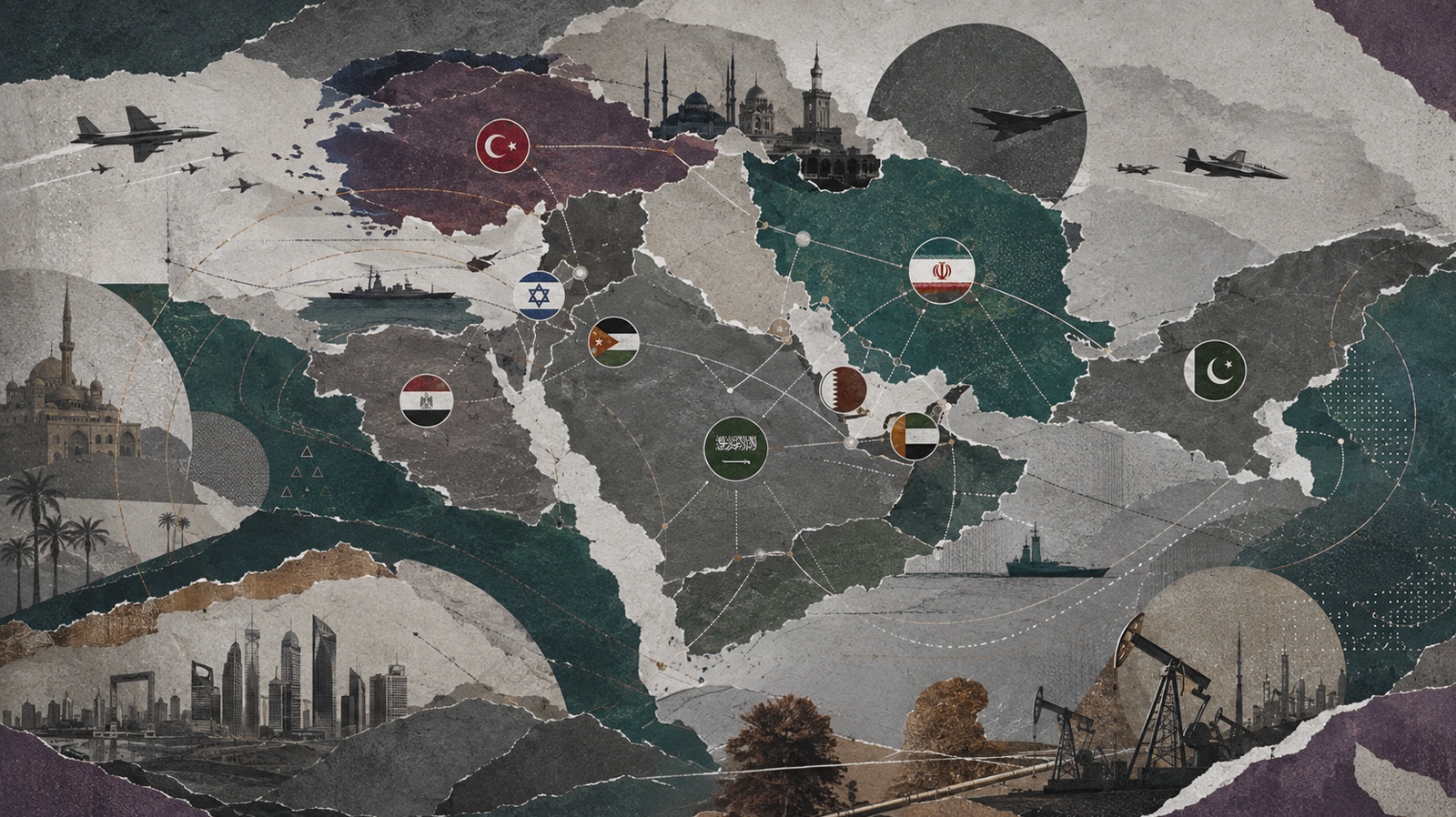
Mapping the Middle East’s Game of Camps

The multi-front war has altered the balance within and between the region’s rival camps, requiring...

Halting Arms Sales to Qatar Is Only the First Step

Israel’s decision to end defense exports to Qatar addresses only part of the problem. Doha...

By signing up, you agree to our user agreement (including the class action waiver and arbitration provisions), our privacy policy and cookie statement, and to receive marketing and billing emails from jiss. You can unsubscribe at any time.

Sign up for the newsletter

For up-to-date analysis and commentary.

Are You In?

Join 8,000+ Subscribers who enjoy our weekly digest

0
Would love your thoughts, please comment.x
()
x