


BY ISRAEL KASNETT
A nation can tell that it’s on the wrong side of an international issue when a group like Hezbollah is on its side. So when the United States urged countries to back Venezuela’s opposition leader, Juan Guaidó, amid political turmoil that has seen thousands of protesters demonstrating against President Nicolás Maduro, many countries, including Israel, had the sense to choose the right side.
Hezbollah Parliament member Mohammad Raad condemned America’s “intervention” in Venezuela and confirmed Hezbollah’s support for Maduro. But America has managed to garner worldwide support for its decision to back Guaidó in an attempt to overthrow Maduro and restore democracy to the troubled nation. Now, after initial hesitation, Israel has thrown in its support for Guaidó as well.
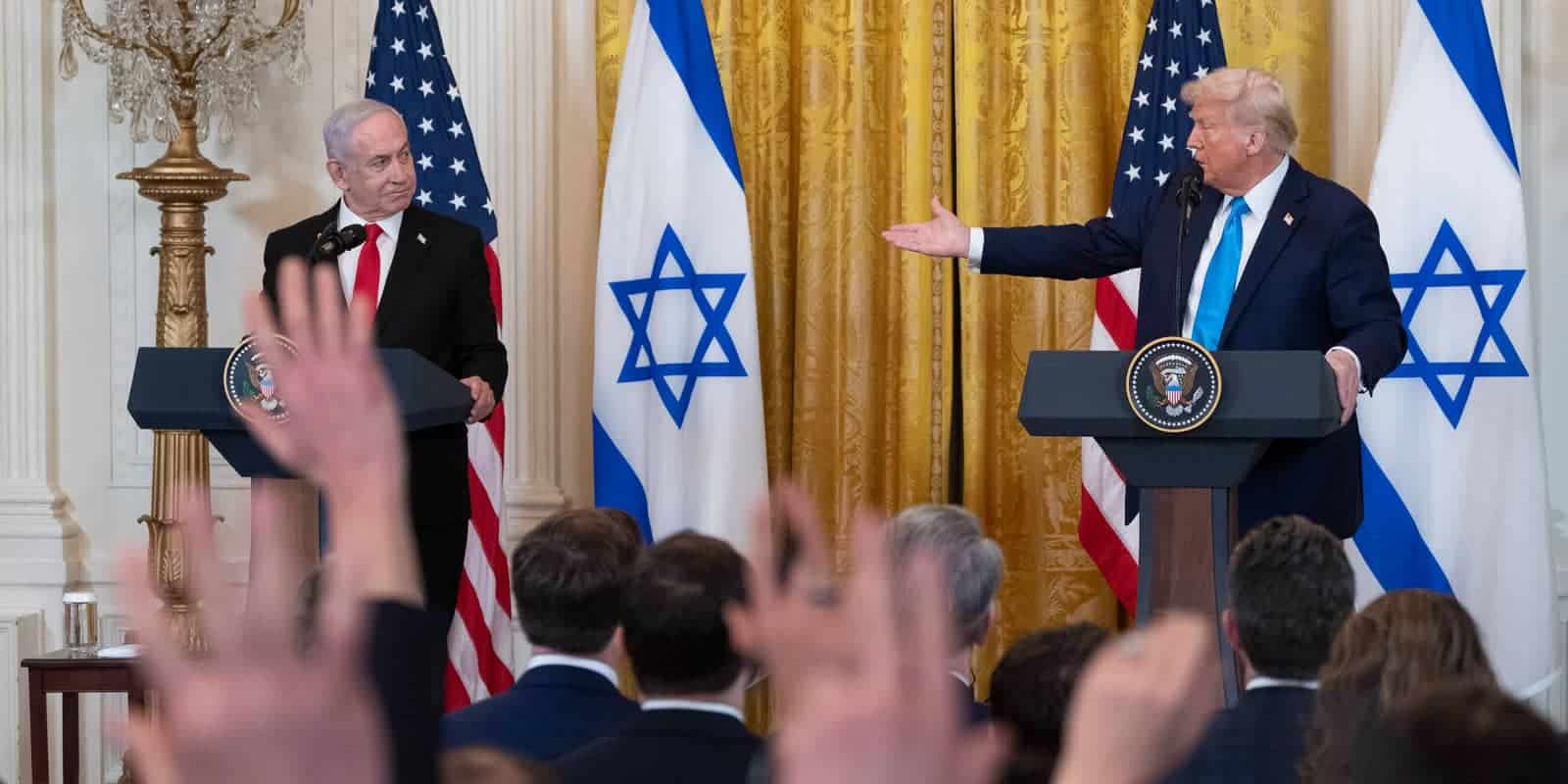
Israeli Prime Minister Benjamin Netanyahu announced that “Israel joins the United States, Canada, most of the countries of Latin America and countries in Europe in recognizing the new leadership in Venezuela.”
Following Netanyahu’s announcement, Guaidó tweeted: “74 years ago, the Auschwitz concentration camp was liberated, and today, just as our country is also fighting for its freedom, we thank Prime Minister of Israel Benjamin Netanyahu for the recognition and the support.”
What is the main reasoning behind Israel’s decision?
‘Maduro an ally of Israel’s worst enemies’
Emmanuel Navon, a foreign-policy expert at the Jerusalem Institute for Strategic Studies, told JNS that “it would have been inconceivable for Israel not to join the voices of free countries [since] Guaidó has been recognized by the United States, Canada and most Latin American democracies,” and because “the European Union has toughened its position against Maduro.”
According to Navon, “Israel has become an important international player, and it must assume its responsibilities. Recognizing Guaidó was the right thing to do—not only as a matter of principle, but also as a matter of interest. Maduro is an ally of Israel’s worst enemies—first and foremost Iran—and he has allowed Hezbollah’s presence to expand in Venezuela.”
Navon noted that Netanyahu has been successful in building alliances in Latin American with like-minded leaders such as Mauricio Macri in Argentina and Jair Bolsonaro in Brazil, both who are fighting Hezbollah’s presence in their countries. “They support Guaidó and oppose Maduro. By contrast, Maduro has the support of autocratic regimes such as China and Russia, but also of Iran and of the Palestinian Authority,” said Navon.
At the same time, there was also concern within Israel over that by backing Guaidó that this could lead to retaliatory measures by the Maduro regime against the country’s vulnerable Jewish community. The Jewish community, which once stood at around 25,000, has shrunk to as low as about 6,000 Jews as many have fled to the United States, Canada and Israel over fears of anti-Semitism from the Chávez and Maduro regimes.
U.S. Ambassador to Israel David Friedman praised Israel’s decision to back Guaidó as “standing with the people of Venezuela and the forces of freedom and democracy.”
Supporting Guaidó is a ‘win-win’ for Israel
According to Arie Kacowicz of the Department of International Relations at Jerusalem’s Hebrew University, “Israel did not have diplomatic relations with Venezuela since 2009. The U.S. asked Israel, and most of the Latin American countries supported the move, so it is a ‘win-win’ from an Israeli standpoint,” he told JNS. “In this case, Israel also chose the side of the liberal democracies that sustain Western values.”
In other words, Israel, like other democracies, sought to counter the trend that has been growing in recent years of countries with fledgling democratic institutions that have been gradually taken over by illiberal strongmen, such as in Russia, Turkey, the Philippines as well as Venezuela, which started with former leader Hugo Chávez.
“In this case, Israel aligned itself with the liberal camp, in the good normative sense,” he added. “Those who support Maduro include China, Russia and Turkey, for example.”
“Israel joined Latin American countries, the U.S., Canada, France, Germany, the U.K. and Spain, rather than the other way around,” noted Kacowicz.
At the same time, Israel’s decision on Venezuela comes as it is facing growing Iranian aggression and tensions with Russia over Syria. As such, Israel faced the risk of further straining its ties with Russian President Vladimir Putin by strongly supporting Guaidó.
“Even when Israel was young and weak, it had to take side in international conflicts. In 1950, for example, David Ben-Gurion made the right decision by supporting South Korea, despite concerns that this decision might alienate the Soviet Union (which has played a critical role in recognizing and arming Israel in 1948) and despite the criticism of Israel’s most left-wing parties (which sided with the Communists in the Korean conflict).
“Today, Israel is a major power, and power comes with responsibilities. Precisely because Israel has become a sought-after global player, it must choose sides in international events.
“Israel’s decision to recognize Guaidó was reported by most international media [outlets],” said Navon, “and Guaidó thanked Israel publicly. Even today, one consideration might have been the concern not to cross Russia, which supports Maduro. But, as I said, recognizing Guaidó was the right decision both as a matter of principle and as a matter of interest.”
JNS, 30.1.2019