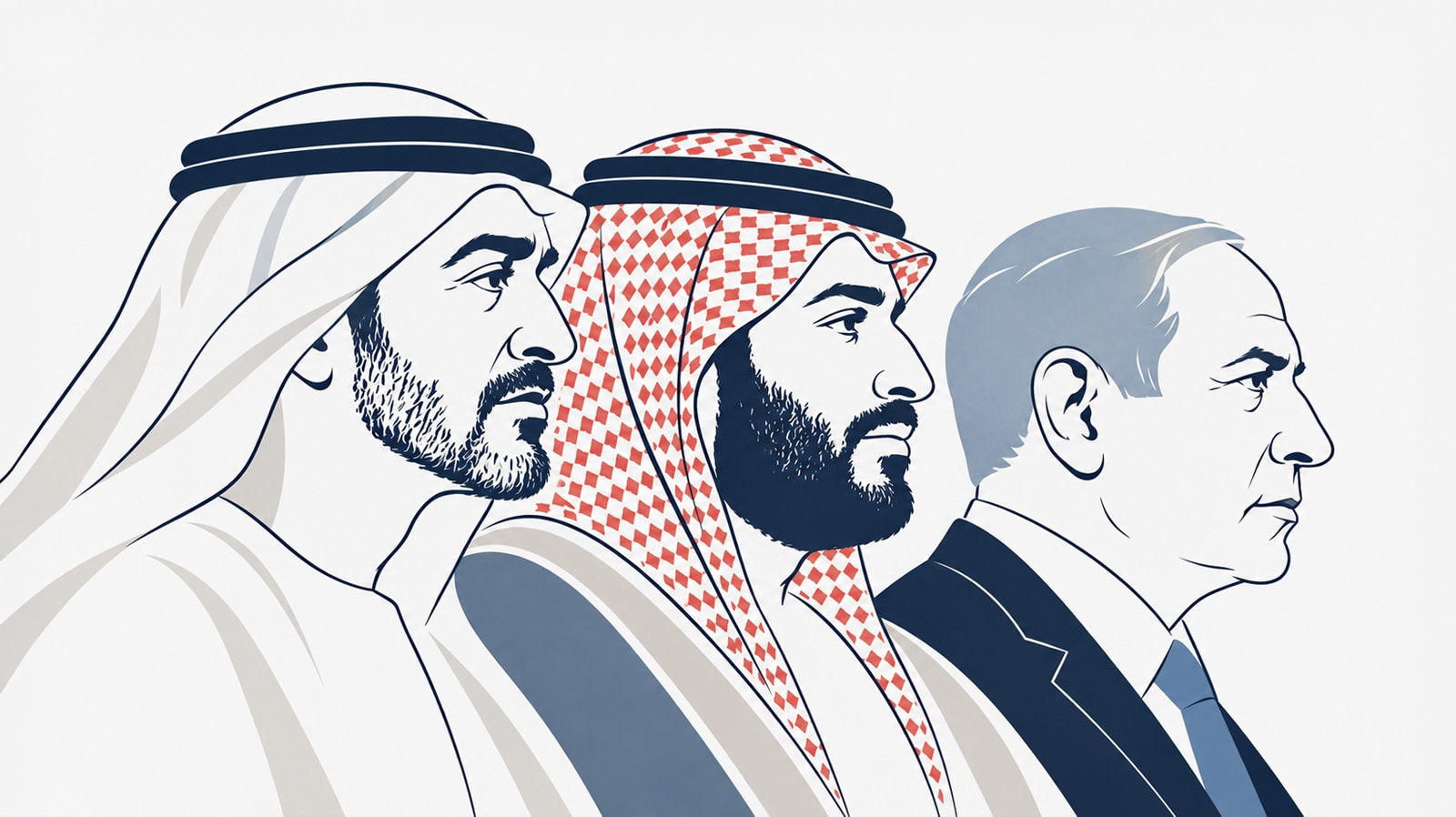


In October 2025, The Washington Post revealed documents indicating deep cooperation between Israel and the Gulf states in defense, intelligence sharing, security coordination, and even cyber cooperation. According to the documents, the cooperation included planning meetings in Bahrain, Jordan, Egypt, and at the U.S. Air Force’s Al Udeid base in Qatar. The partners also conducted exercises addressing threats such as underground tunnels—an area in which Israel has significant expertise and contributed extensive know-how. According to the report, coordination was disrupted by the Israeli strike in Doha in September, after U.S. officials portrayed Israel as allegedly failing to meet expected standards and requirements. At the core of this episode lies an implicit and unfair equation: what is prohibited to Israel is permitted to Qatar.
While Israel is required to exercise heightened caution toward Qatar and to accommodate its sensitivities, Qatar acts openly to promote anti-Israel—and at times antisemitic—propaganda in its newspapers, through affiliated social media influencers, and via media outlets and organizations it is invested in, all of which align their coverage with anti-Israel narratives. All of this occurrs without any meaningful diplomatic cost. This dynamic is not an isolated incident but a recurring pattern across major international forums in which Israel and Qatar operated in parallel during 2024–2025—at times even under U.S. initiative and leadership.
For example, within the Global Counterterrorism Forum (GCTF), a framework established through U.S. and European initiative, in which both Israel and Qatar are members, participants maintain an ongoing dialogue on counterterrorism, violent extremism, and security cooperation. Israel takes part in the forum under high expectations of diplomatic restraint, transparency, and conformity with Western norms, while Qatar enjoys the status of a legitimate partner—even as it simultaneously hosts senior Hamas figures, finances civilian infrastructure used by the organization, and enables the consistent dissemination of anti-Israel messaging through media outlets affiliated with it. The gap between the forum’s formal discourse and realities on the ground does not undermine Qatar’s standing, but it does narrow Israel’s diplomatic room for maneuver.
Qatari and Israeli involvement in U.S.-led initiatives in the cyber domain does not end there. The same equation reappeared at a more advanced stage with the Pax Silica initiative, a U.S.-led alliance for cooperation in semiconductors and artificial intelligence. At a ceremony in Doha, a U.S. undersecretary for economic affairs signed Qatar’s accession to the agreement with the Qatari minister of commerce, as the State Department highlighted Qatar as the second Middle Eastern country to join. A few days later, on January 15, the United Arab Emirates also joined. Unlike the UAE, however, Qatar’s participation in this initiative raises serious questions.
It is clear why the United States is interested in Qatar: Doha has invested vast sums in artificial intelligence, announced the establishment of a dedicated state-owned AI company under the Ministry of Foreign Affairs (QAI), and invested in leading international AI firms. These include Elon Musk’s xAI, as well as AI-related cooperation with Google, which has sent delegations to Qatar to develop an AI model based on Al Jazeera reporting. Qatari capital can contribute to large-scale U.S. projects. The price, however, is the granting of legitimacy and “strategic immunity” to an actor that uses its international standing to act against Israel.
This is especially evident in the arena of soft power. Ahead of the 2026 Venice Biennale, Qatar announced at a public ceremony the opening of a national pavilion—an uncommon achievement. At the same time, South Africa’s minister of culture disclosed that Qatar had donated funds to the South African pavilion and promoted content and competitions that encouraged portraying Israel as committing genocide in Gaza, while creating the appearance of an “organic” initiative. This constitutes a clear case of using international standing and foreign funding to shape cultural and political discourse against Israel.
This pattern also aligns with Qatari support for legal and political initiatives in the international arena, including the use of third countries, nongovernmental organizations, and multilateral forums to apply pressure on Israel—as was evident around the South African proceedings in The Hague. Qatar maintains an image as a responsible and humanitarian mediator, but in practice uses this legitimacy to act against Israel without paying a price.
Ultimately, the real risk to Israel in such shared forums is not technical but strategic: the need to “preserve the alliance” may compel systematic restraint in response to Qatari actions directed against it. When the United States is unwilling to disrupt international partnerships, the cost falls on Israel—and this is an equation that does not serve Israel’s security, its legitimacy, or regional stability.
JISS Policy Papers are published through the generosity of the Greg Rosshandler Family.
Source: https://jiss.org.il/en/admoni-what-is-prohibited-to-israel-is-permitted-to-qatar/