

Iran’s decentralized military doctrine — known in Persian as دفاع موزاییکی (defā’-e mozā’iki, “mosaic defense”) — is the Islamic Republic’s most significant strategic innovation since the Iran-Iraq War. Officially outlined in 2005 by IRGC Brigadier General Mohammad Ali Jafari and restructured in 2008 into 31 provincial commands, the doctrine was intentionally created to prevent the rapid regime collapse that occurred as a result of Saddam Hussein’s centralized command in Iraq in 2003. In March 2026, the doctrine faces its ultimate test: after the killing of Supreme Leader Khamenei and dozens of senior IRGC commanders in Operation Epic Fury/Roaring Lion, provincial commands are functioning independently under pre-delegated authority — exactly the scenario the system was designed for. The doctrine has clearly averted institutional collapse, but it has also reduced strategic coherence, controllability, and the ability to de-escalate.
1. The Persian Terminology Western Analysts Get Wrong
The standard Persian term is دفاع موزاییکی (defā’-e mozā’iki), meaning “mosaic defense” — not “mosaic command.” This distinction is important because Iranian military discourse views the concept as defensive, focusing on regime survival and territorial integrity, while Western shorthand (“mosaic doctrine,” “mosaic command”) often suggests a broader offensive approach. The more detailed term دفاع موزاییکی غیرمتمرکز (defā’-e mozā’iki-ye gheyr-e motamarkez, “decentralized mosaic defense”) is used in formal settings when emphasizing decentralization.
Several variant terms circulate across Iranian media and military publications. Radio Farda’s early 2008 reporting used طرح موزاییک دفاعی (tarh-e mozā’ik-e defā’i, “defensive mosaic plan”). By contrast, Iranian state media uses the doctrinal form دکترین دفاع موزائیکی (doktrin-e defā’-e mozā’iki). Notably, the term فرماندهی موزائیکی (“mosaic command”) does not appear in any attested Persian-language source — Iranians consistently use “defense” (defā’), not “command” (farmāndahi), as the operative noun.
The IRGC Ground Forces commander was quoted in 2008 using the vivid phrase کشور به موزاییکهای دفاعی تقسیم شده — “the country has been divided into defensive mosaics.” The mosaic metaphor was intentionally chosen: unlike a clock mechanism, where removing a gear stops the machine, a mosaic can lose individual tiles while the overall picture remains intact. The word موزاییک (mozā’ik)itself is a long-naturalized French loanword in Persian.
A group of related Persian military terms surrounds the concept: پدافند غیرعامل (passive defense), جنگ نامتقارن (asymmetric warfare), بازدارندگی نامتقارن (asymmetric deterrence), بازدارندگی شبکهای (networked deterrence), and رزم ناهمگون (heterogeneous combat). An interesting exchange occurs between Iranian and Western usage: the YJC (the Young Journalists Club, a state-owned analytical report website) noted that “foreign media consider Jafari the expert on mosaic defense doctrine,” suggesting that the formal doctrinal label was partly influenced by Western analytical framing being incorporated into Persian discourse, even though the operational concept is native.
2. From the Ashes of Saddam’s Collapse: How the Doctrine Was Born
The mosaic defense doctrine arose from a specific historical trauma: Iran’s realization that Saddam Hussein’s highly centralized command structure collapsed 26 days after the United States invaded the country in 2003. When communication between the palace and generals was cut off, Iraqi divisions either stopped fighting or disbanded. Iranian strategists learned the crucial lesson that centralized command creates a single point of failure that can be exploited by precision decapitation strikes.
The doctrine’s roots are in Supreme Leader Ali Khamenei’s decision in August 2005 to create the IRGC’s Center for Strategic Studies and appoint Jafari as its director. Jafari pinpointed two existential threats: a foreign-backed “soft revolution” through NGOs and activists, and a U.S. military strike that could overthrow the regime. He examined not only Iraq’s 2003 collapse but also NATO’s 1999 campaign against Serbia and U.S. operations in Afghanistan, concluding that any regime with a centralized structure was vulnerable to modern precision strikes. The IRGC announced publicly in 2005 that it was integrating a flexible, layered mosaic defense into its doctrine.
Two main architects shaped the doctrine. Jafari, a civil engineer and Iran-Iraq War veteran, acted as the organizational implementer who turned strategic ideas into reality. Hassan Abbasi, affiliated with Imam Hussein University, and head of the IRGC’s Center for Borderless Security Doctrinal Analysis, served as the main ideological thinker of asymmetric and prolonged warfare.
The doctrine’s organizational implementation occurred in June 2008, when Jafari, who served as Commander-in-Chief of the IRGC from2007 to 2019, launched the most extensive restructuring of the force since 1985. Each of Iran’s 30 provinces received a self-contained provincial corps. (Tehran was allocated two, including the Mohammad Rasulullah Corps for Greater Tehran.) Each was designed as an independent military entity with its own intelligence capabilities, weapons stockpiles, logistics chains, integrated Basij units, and—critically—pre-delegated authority for contingency operations.
The 2006 Israel-Hezbollah War demonstrated that Hezbollah’s decentralized, cell-based structure could withstand Israel’s decapitation efforts and fight the IDF to a standstill—a successful proof of concept. Around 2012, Iran added an offensive “forward defense” layer to the defensive mosaic concept, engaging adversaries outside Iran’s borders through the “Axis of Resistance” proxy network to prevent conflict from reaching Iranian territory.
3. What Decentralization Looks Like in Practice Across Five Domains
The key question is whether the mosaic doctrine truly reflects operational decentralization or if it is just aspirational rhetoric limited by the Supreme Leader’s centralized political authority. The evidence varies by domain, with significant differences across Iran’s military branches.
IRGC Ground Forces
The 31 provincial commands, coordinated through ten regional headquarters, have gradually gained independence since 2008. Each now operates its own headquarters, communication systems, weapons supplies, and intelligence resources. The system includes a “fourth successor” protocol—three to seven pre-selected replacements for each critical position—ensuring there is no leadership vacuum. When Operations Roaring Lion/Epic Fury killed the Supreme Leader and dozens of senior commanders in February 2026, Iranian Foreign Minister Abbas Araghchi confirmed that the system had been activated, noting that military units are now autonomous and follow general instructions provided to them beforehand. The assessments show that each province functions as a mosaic, and commanders have the authority and ability to make decisions.
Missile Forces: The Most Dangerous Aspect
Evidence strongly suggests that the authority to launch ballistic missiles has been pre-delegated to lower-level commanders. Reports from March 2026 confirm that local IRGC commanders have substantial authority and resources to respond directly without awaiting orders. Iran launched retaliatory missile strikes immediately after the February 28 attack that killed Khamenei. However, the darker side of pre-delegated authority became apparent when autonomous units struck Turkey, a NATO member, and Oman, a strike that Araghchi attributed to a mistake by units that could not be reached directly. . This also risks the Iranian regime itself because ” mosaic defense” risks becoming unchecked, while central command can lose control. Connell highlighted this risk as early as 2010.
The IRGC Navy: The Most Genuine Implementation
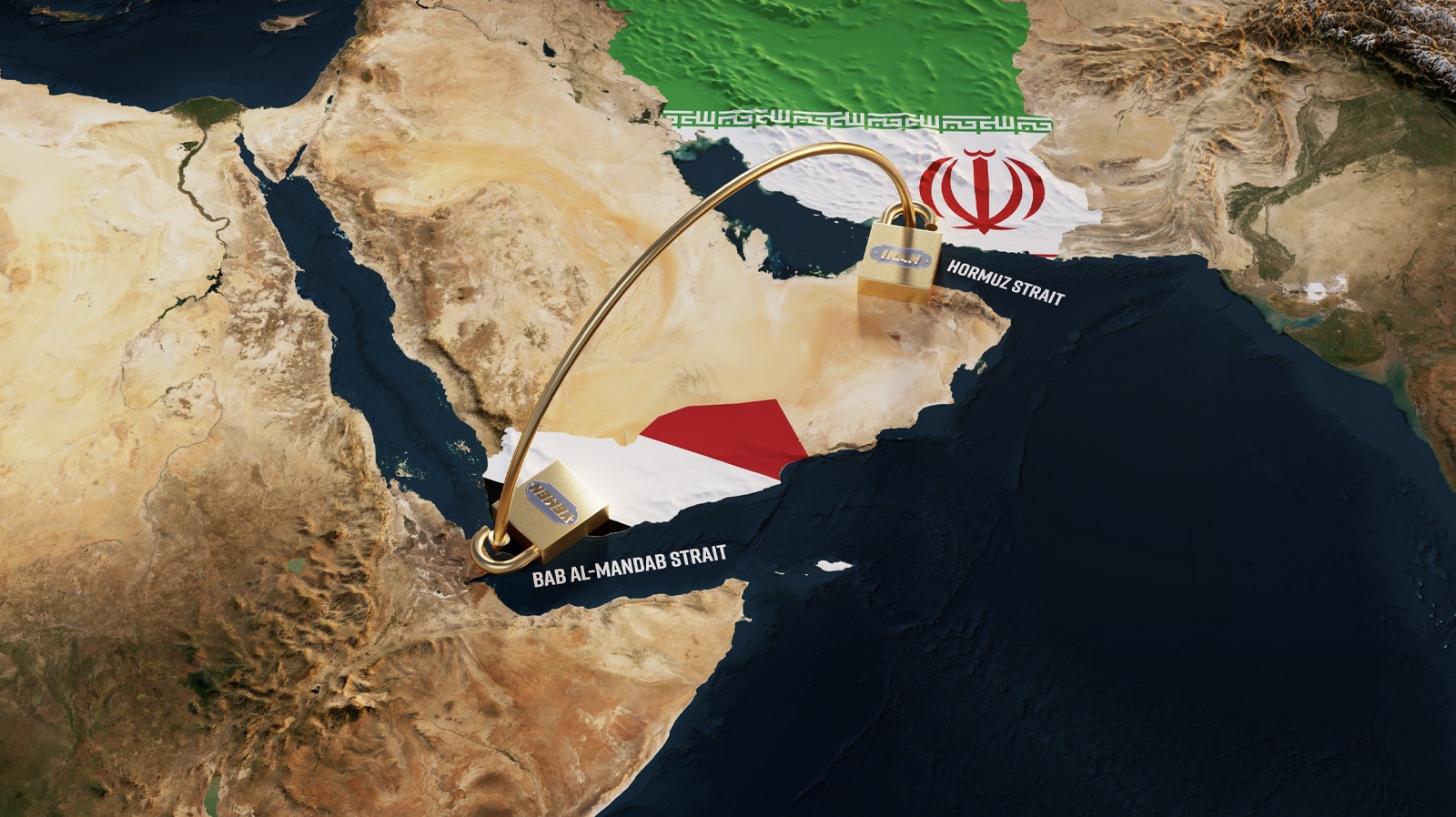
Operating over 1,500 small attack crafts under ten tons—the “mosquito fleet”—capable of 50–110 knots, the IRGCN is designed for numerical saturation rather than platform survivability. Underground naval bases situated on islands conceal fast-attack crafts and anti-ship missiles. The February 2026 “Smart Control of the Strait of Hormuz” exercise—conducted just 12 days before Operation Epic Fury—tested decentralized naval operations, drone swarms, electronic warfare, and new missile systems. However, US CENTCOM’s reported destruction of 17 Iranian vessels during the opening phase of operations suggests swarm tactics remain vulnerable to concentrated precision strikes before dispersal. On March 21, the Israeli air force bombed several naval facilities at the Enzeli port on the shore of the Caspian Sea. Several IRGC Navy ships were destroyed, and some of its facilities were hit.
The deployment of the IRGC demonstrated the application of the Mosaic Defense doctrine: it is not accidental that a large part of the IRGC Navy’s warships and institutions are located on the Caspian Sea. “This was intentionally done to scatter the IRGC Navy’s assets and prevent attacks (because the Iranians believed Israel would never be able to carry out airstrikes in that region).However, the Israeli strike also reveals the limits of this doctrine: it is neither a magic solution nor a cure-all that makes up for Iran’s other military weaknesses. Ultimately, this doctrine could not assist the IRGC Navy.“
Air Defense: The Weakest Domain
Integrated air defense inherently demands centralized radar coordination, friend-or-foe identification, and engagement control — fundamentally conflicting with decentralization principles. The January 2020 shooting down of Ukraine International Airlines Flight 752 by an IRGC Tor-M1 unit operating outside the integrated network demonstrated the danger of autonomous air defense nodes. During Operation Epic Fury, the US/Israeli coalition targeted over 7,800 aimpoints with no confirmed manned aircraft losses to Iranian air defenses.
The Basij: Mobilization and Internal Security Layer
The Basij functions as the mobilization and internal security layer within the larger structure, with around 40,000–54,000 bases organized at the neighborhood level. However, the Basij is not truly capable of independent military action on a large scale — it lacks heavy weapons, integrated command systems, and professional training. Its main value lies in amplifying the force of IRGC units, maintaining population control, gathering territorial knowledge, and providing the human infrastructure necessary for dealing with a potential insurgency. Importantly, during the 2009 Green Movement protests, neighborhood Basij members refused to attack protesting neighbors, forcing commanders to bring in units from outside areas — exposing the limits of local militia reliability against local populations.
4. The Central Paradox: A Force That Cannot Be Steered Toward an Exit
The core tension in the mosaic doctrine isn’t between rhetoric and reality (the decentralization is genuinely structural)but between political centralization and operational independence. According to Article 110 of Iran’s constitution, the Supreme Leader has exclusive authority over war and peace. The system was built with two modes: peacetime centralized control under the Supreme Leader and wartime decentralized operations through pre-delegated authority.
The paradox is deliberate, but its effects are becoming severe. A decentralized force can survive major leadership losses and keep operating, but durability isn’t the same as capability, and sustained fire isn’t the same as strategic impact. The strikes in Oman and Turkey show that a force built to keep firing regardless of political direction is also one that can’t be recalled. From that, decentralized military units will be harder to locate and eliminate, but they will also be less effective because they won’t reach critical mass.
The proxy dimension emphasizes this lesson. Iran’s “Axis of Resistance” — Hezbollah, Iraqi PMF militias, Houthis, Hamas — forms a diverse external network of distributed capability. However, proxy autonomy varies greatly: Hezbollah functions as a deeply integrated partner, while the Houthis have significant independence. A 2025 study revealed that Iran does not have strict control over its proxies and must carefully manage its relationships, taking into account the will and interests of the groups it supports. Most notably, despite rhetoric about defending Iran, some of Tehran’s proxies have remained mostly quiet since the start of Israeli-American relations, while Hezbollah joined the fight with almost all its capabilities indicating that the distributed proxy network is taking decisions according to their own calculus.
In summary, the following points can be outlined regarding the Mosaic Defense doctrine.
- Decentralization is truly structural.
- It offers real survivability against decapitation.
It allows for the breakdown of coordinated offensive capability.
- At the same time, it carries escalation risks from autonomous commanders.
- Finally, even if the regime theoretically agrees to a ceasefire, enforcing it will be very challenging.
5. Can the Mosaic Outlast the Islamic Republic Itself?
The mosaic defense doctrine has clearly prevented a rapid regime collapse and has enabled the Islamic Republic to keep fighting and launch attacks on several countries despite the harshest attacks it has ever faced. Some analysts believe Iran’s regime will likely stay in power for now, weakened but more hardline, with the influential IRGC having greater control. The system successfully appointed a new Supreme Leader (Mojtaba Khamenei) through constitutional procedures. However, Mojtaba has not yet been seen publicly, making it uncertain how much influence he has over the regime. This situation surpasses every historical comparison—Iraq 2003, Libya 2011, even Serbia 1999—because Iran’s institutional strength and doctrinal preparation are unmatched among U.S. adversaries.
The more important question is whether IRGC/Basij cells could continue as an insurgency or parallel power structure even without central authority. The evidence indicates they almost certainly could, for reasons that go beyond anything in the Iraqi Ba’athist, Taliban, or Hezbollah comparisons.
The IRGC’s institutional strength, economic resources, and doctrinal training surpass those of other regimes. However, if Israeli and American strikes target all possible human and physical assets of the IRGC and Basij, making it hard for the regime to survive as a functioning government capable of controlling the country, then even the mosaic doctrine might not enable the regional structures of the IRGC and the Basij to keep functioning.
It appears that the greatest threat right now is not the regime’s survival but the resilience of its autonomous units at the local level. They could incite chaos, sabotage efforts, and hinder stabilization.
Azerbaijan: Another Front in Iran’s Doctrine
As mentioned, the Axis of Resistance and proxy warfare are strategic extensions of the Mosaic defense principle. Meanwhile, Hezbollah embarked on openly attacking Israel, and less spectacular events came under the radar against the backdrop of the war.
Two Iranian drones struck Azerbaijan’s territory: one hit the airport in the city of Nakhchivan (about 20 kilometers from the Iranian border), injuring two civilians, while another fell near a school in the village of Sakarabad on March 5. The Azerbaijani Foreign Ministry confirmed reports of Iranian drone strikes on the autonomous exclave of Nakhchivan. The ministry added that Iran must provide explanations quickly and take steps to prevent similar incidents in the future. The drones that hit Nakhchivan were Shahed-136—a standard suicide drone that Iran supplied to Russia. Therefore, any accidental strike is considered unlikely.
Iran has denied conducting drone attacks on Azerbaijan. In a statement, the General Staff of Iran’s Armed Forces said: “The Islamic Republic of Iran, while respecting the sovereignty of all countries— especially Muslim and neighboring states— denies that its armed forces launched a drone toward the Republic of Azerbaijan.”
Iran’s military statement suggested Israel might have orchestrated the incident, stating, “Such actions by the Zionist regime to disrupt relations among Muslim countries through various means have precedent.”
The statement continues, “Based on the investigations, this action appears to have been carried out to accuse the Islamic Republic of Iran.” Separately, “informed sources,” told Fars News that the IRGC, the Iranian Army, and “Iraqi Resistance Groups” were unaware of the details of the incident and “strongly reject any link to the drone.”
Conclusion: Durability Is Not Victory
The mosaic defense doctrine is a truly innovative and well-executed military concept—one that, by March 2026, has delivered on its main promise of preventing a forced end to the war through decapitation. No other U.S. adversary has developed a similar system. Its roots in analyzing Iraq’s 2003 collapse, along with 18 years of institutional development and real-world testing, make it one of the most important asymmetric warfare innovations of the 21st century.
Yet the doctrine’s success exposes its most significant limitation. A system built solely for survival at the expense of controllability results in what has been called “war without a center”—operationally continuous but strategically without direction. The Oman mistake, the Turkey strike, the decline from coordinated salvos to sporadic launches, and the failure to negotiate a ceasefire all show that the mosaic keeps the war going but ending it on favorable terms is going to be a complicated task.
For post-regime persistence, the IRGC’s mix of decentralized military structure, extensive economic empire, neighborhood militia networks, and explicit doctrinal planning for insurgency surpasses any historical comparison. The key uncertainty is not whether IRGC cells can survive—they almost certainly can—but whether they will stay united without the ideological anchor of velayat-e faqih, or whether internal splits, loss of patronage, and popular opposition will weaken the network’s effectiveness over time.
However, the regional aspect of this doctrine, specifically terror attacks by “autonomous IRGC units” or proxies, will likely continue. This mode of operation allows the regime to deny involvement; when Iranian officials claim they knew nothing about an attack by the IRGC, they might truly have been unaware. Proxies or “decentralized units” may carry out these operations independently without formal approval from higher command.
Therefore, both the U.S. and Israel should work to disrupt Iran and its proxy networks alongside the primary effort to weaken and dismantle the regime’s strategic capabilities.
JISS Policy Papers are published through the generosity of the Greg Rosshandler Family.
Source: https://jiss.org.il/en/grinberg-irans-mosaic-defense-faces-its-real-test/