

Israel and the Gulf states had no reason to be surprised by the U.S.-Iran memorandum. Washington had appeared to be moving in this direction for some time. As early as late March, a scenario assessment by the Jerusalem Institute for Strategy and Security identified this as one of the principal contingencies and argued that Israel had to prepare accordingly. Several articles published by the Institute raised the same concerns, warning that the campaign could move in this direction because President Trump was sensitive to the economic pressure generated by the closure of the Strait of Hormuz. Brig. Gen. (res.) Sasson Hadad captured the dilemma in the title of one such piece: “Who Cracks First Under Economic Pressure: Washington or Tehran?” Yet the fact that this outcome was foreseeable does not make it any less bitter. The terms reached by Washington and Tehran inevitably leave Israelis—as well as opponents of the Iranian regime, residents of the Gulf states, and many Americans—with a sense of disappointment, anger, and frustration. Those reactions are fully justified, for several reasons:
- The memorandum gives Iran substantial relief in exchange for reopening the strait, without first giving up anything concrete regarding its ability to acquire nuclear weapons or ballistic missiles, and without committing not to rebuild its regional proxies, foremost among them Hezbollah. Its only undertaking on this front concerns some form of arrangement for the enriched uranium it already holds, which at a minimum would be down-blended. That does represent some movement in the Iranian position, but without a ban on enrichment inside Iran, its significance will remain limited.
- The agreement gives legitimacy to Iran’s Islamist regime, sharply departing from the Trump administration’s stance toward Tehran until the war began. The rationale is dubious: changes in personnel inside the regime are being treated as if they amount to regime change. That legitimacy is then used to justify channeling enormous sums to the regime precisely when it is under severe economic pressure.
- With Washington’s consent, Lebanon has been coupled to the agreement with Iran. This places severe restrictions on Israel’s ability to intensify pressure on Hezbollah.
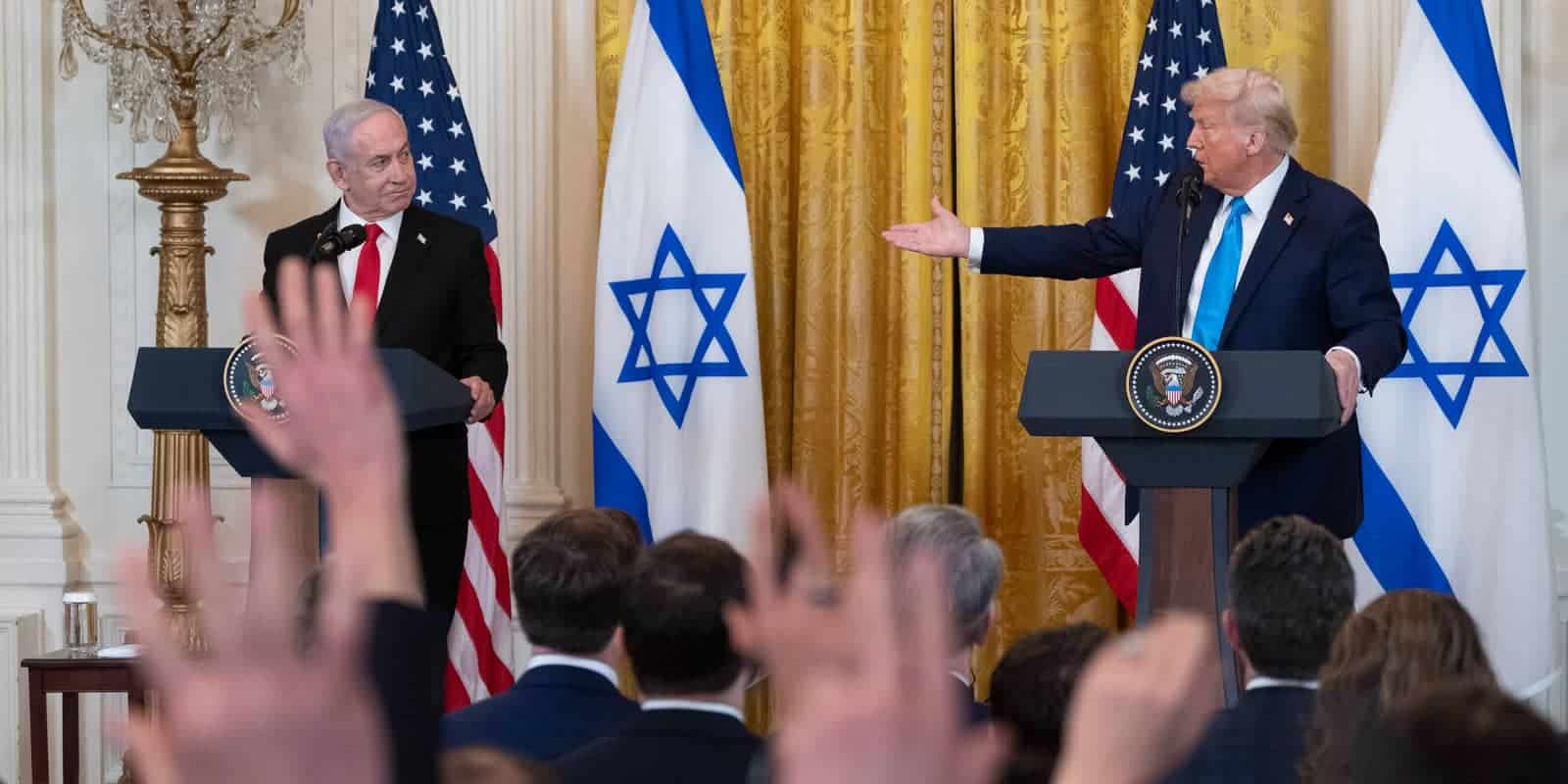
- The agreement has exposed a gap between Israel and the United States. This gap harms their ability to achieve the war’s objectives and may also have lasting effects on the bilateral relationship. It has emerged at a time when criticism of Israel, sometimes hostile in tone, is gaining ground in American public opinion—not only among Democrats but even among some Republican supporters. In practice, this was seen in Israel’s exclusion from the discussions on the MoU and the disregard shown for its demands.
The Iranian regime is the obvious beneficiary of what is perceived as a display of American weakness. China and Russia benefit as well. Their reading of the agreement and the war is that the United States lacks Western allies willing to share risk; that it cannot absorb economic pressure; and that it will fight only so long as the fighting does not entail casualties. The conclusion they draw is that America’s adversaries now have more room to operate.
Beyond frustration, and beyond criticism of the administration’s conduct, Israel must now focus on reducing the damage as much as possible:
- Israel must make clear to the president and his advisers what should already be clear to them: any final agreement must contain provisions that ensure Iran has permanently abandoned its nuclear program. That means removing enriched uranium from Iran; prohibiting enrichment on Iranian soil; establishing an inspection mechanism with access anywhere, at any time, including military sites; restricting the types of ballistic missiles Iran may produce; and forcing full disclosure of every component of the nuclear program. Israel must also insist that Iran not be allowed to rebuild the military capabilities of its proxies, and that any arrangement in Lebanon be kept separate from the understanding with Iran.
- Israel must continue to show that it is determined to retain control of the buffer zones and security areas it has established around its borders—in Syria, Lebanon, Judea and Samaria, and Gaza. These areas are essential to maintain defensible borders. At the same time, Israel must prepare for the possibility that the war will resume, because it is far from certain that the negotiations will produce an agreement. The Iranians, buoyed by a sense of success, may take a rigid position in the talks. That risk is compounded by criticism from Iran’s hardline camp, which is already attacking the minimal flexibility shown by the negotiators. The United States, for its part, will also find it difficult to conclude the talks without achievements that allow the administration to sustain its claim that Iran will indeed be denied nuclear weapons.
In any event, the disappointment caused by the memorandum should not obscure what Israel and the United States achieved in Operations “Rising Lion” and “Roaring Lion.” The damage to Iran’s strategic architecture was enormous: its nuclear infrastructure, its ballistic missile production, its political and military leadership, and its military capabilities all suffered severe damage. These results were achieved while relying on airpower alone, refraining from strikes on strategic economic assets, and accepting the lead role of the United States. Within those limits, Israel and the U.S. achieved the maximum possible. They recognized that it would be difficult to force Iran into further major concessions on the nuclear file, missiles, or proxies. Regime change certainly could not have been achieved by these means alone. None of this proves that the campaign was unnecessary, or that it would have been better not to launch it. A serious assessment of the war’s results will be possible only once the outcome of the negotiations is known.
JISS Policy Papers are published through the generosity of the Greg Rosshandler Family.
Source: https://jiss.org.il/en/kuperwasser-the-us-iran-understanding/