

Israel’s national security doctrine grew out of Ze’ev Jabotinsky’s “Iron Wall” doctrine, which held that a strong Jewish military force—an “iron wall”—was necessary to convince the Arab inhabitants of the land that any attempt to expel the Jewish settlement in the Land of Israel was doomed to fail. According to Jabotinsky, only then would pragmatic elements within the Arab world gain strength, allowing for the emergence of durable political agreements and compromises. Though a century has passed since those words were written, it is striking how closely they align with the principle of “peace through strength” that Israel and the United States are now seeking to advance in the region.
The concept of an Iron Wall was adapted by David Ben-Gurion and served as the foundation of Israel’s national security doctrine during the first decades of statehood. It was later distilled into the principles of early warning, deterrence, and decisive victory. For much of the country’s existence, however, there was a notable absence of substantive debate over national security doctrine as the cornerstone of military thought and the development of operational theory. Even after the dramatic changes that followed the 1967 Six-Day War—including expanded borders and the creation of strategic depth—Israel’s security doctrine remained unchanged, still rooted, in part, in the assumption of a lack of strategic depth.
The same applied in the early 1980s, following the signing of the peace treaty with Egypt and the growing focus on the Palestinian issue. In the years that followed, other major developments influenced Israel’s national security, including the Lebanon War, the First Intifada in 1987, the Oslo Accords in 1993, and the signing of another peace agreement with a key Arab state—Jordan—in 1994. Beyond the Palestinian issue and the peace treaties, a further fundamental shift had a major impact on Israel: the growing threat to the home front from missiles and rockets. This threat escalated at the time with rocket fire from Lebanon and became evident to every Israeli citizen during the 1991 Gulf War. Despite these changes, which unquestionably affected Israel’s security reality, no systematic process was undertaken at the time to reassess or update the country’s security doctrine.
In the early 2000s, the Meridor Committee, headed by minister Dan Meridor, formally known as the “Committee for the Formulation of the National Security Doctrine” made a significant attempt to update Israel’s national security doctrine. The Committee operated from 2003 to 2006 and, for the first time, proposed substantial changes to David Ben-Gurion’s security doctrine—most notably, the addition of a “fourth pillar”: defense. Another key change reflected in the committee’s conclusions was the shift from the principle of decisive victory—one of Ben-Gurion’s original three pillars—toward a doctrine of containment. Although the committee’s conclusions were never formally adopted or ratified as binding policy, its recommendations, particularly the emphasis on defense as a foundational principle, permeated Israel’s security establishment and influenced its operations.
This approach guided Israel throughout the 2000s, including during the early phase of the Second Intifada, at least until Operation Defensive Shield in the West Bank in March 2002. The doctrine stood out in the 2000 withdrawal from southern Lebanon and even more so in the 2005 disengagement from Gaza, including the withdrawal from the Philadelphi Corridor, which had served as the main route for smuggling weapons and explosives into the Strip.Bottom of Form
In August 2018, Prime Minister Netanyahu presented a national security doctrine he had formulated.[1] The document emphasized the Iranian threat as an existential danger to Israel, underscored the need to build economic and technological power as a basis for military and diplomatic strength, and the expansion of the “campaign between the wars” (mabam) doctrine. This doctrine aims to continuously degrade enemy capabilities, slow their force buildup, and delay their readiness for war, based on the premise that the goal is to prevent conflict or at least extend the periods between wars as much as possible. It clearly reflected a preference for Meridor’s doctrine of containment over Ben-Gurion’s doctrine of decisive victory.[2]
Israel must update its security doctrine
The events of October 7 brought an end to the doctrine of containment. Prime Minister Netanyahu grasped this within the first 24 hours, and by October 8, with terrorists from Gaza still operating inside Israeli territory, he was already talking about reshaping the Middle East. In the months that followed that painful day, Israel acted according to Jabotinsky’s “Iron Wall” doctrine. This meant mobilizing national resources to decisively defeat the threat, leveraging the Air Force’s comparative advantage, launching a ground maneuver into enemy territory, pursuing cooperation with the United States wherever possible—especially after President Trump took office—and strengthening the resilience of the home front to function under wartime conditions.[3]
Israel struck Hamas, dealt a severe blow to Hezbollah, indirectly contributed to the fall of the Assad regime, and destroyed most of Syria’s military capabilities. Finally, it inflicted significant damage on Iran’s nuclear and ballistic missile programs. In the wake of these achievements—especially the dramatic blow to Iran—voices have surfaced calling for regional peace agreements, including talk of expanding the Abraham Accords. Countries now seek to form alliances with Israel, the rising regional power and the leading ally of the United States under President Trump.
Now is the moment to revive Jabotinsky’s “Iron Wall” doctrine. He argued that Israel needs an “Iron Wall”—a strong Jewish military force to deter the Arabs and prove that any attempt to uproot Jewish settlement in the Land of Israel is doomed to failure. Only once the Arabs internalize that they cannot undermine the Jewish national home, Jabotinsky claimed, will it be possible to reach durable political agreements and compromises. Under the leadership of Netanyahu, who often refers to the “Iron Wall” as a foundational text, Israel now stands at a historic juncture, where it can translate the extraordinary military gains achieved over the past two years into diplomatic achievements and a more secure reality than ever before.
A return to decisive victory
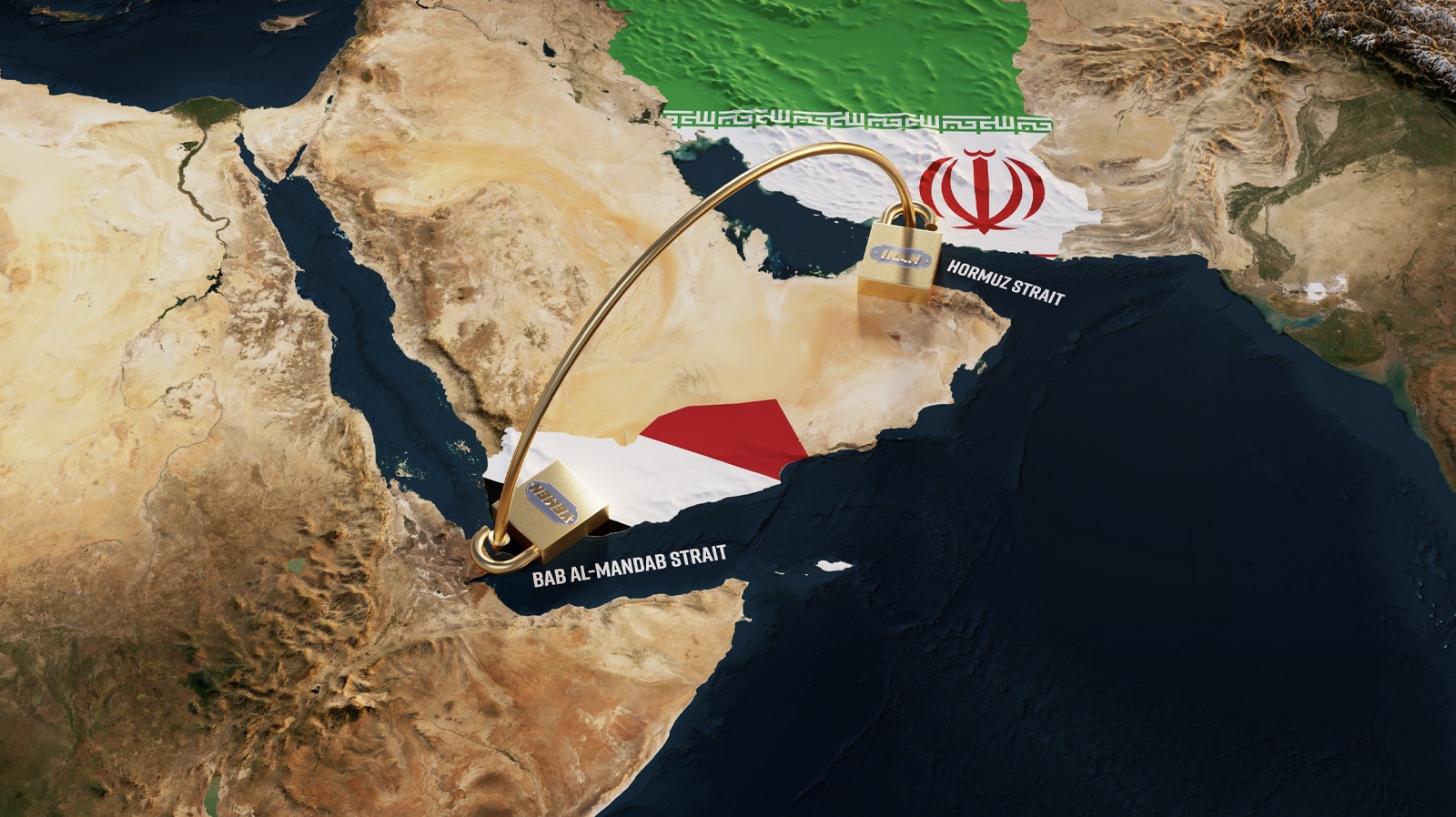
To shape its long-term security reality, and consequently its projection of political power, Israel must return to the doctrine of decisive victory. This doctrine focuses on dismantling enemy capabilities rather than relying on deterrence operations. The shift has become imperative in the wake of the “Swords of Iron” War and Israel’s confrontation with threats from Hamas in Gaza, Hezbollah in Lebanon, Iranian infrastructure in Syria, Iraq, and Yemen, as well as the ballistic missile threat and nuclear program in Iran.
The broad ground operation in Gaza—during which the IDF seized territory, destroyed underground tunnels and above-ground infrastructure, and eliminated senior Hamas figures—demonstrated the necessity of decisive victory to eliminate the organization’s military capabilities and prevent similar future attacks. Israel must adopt a doctrine of decisive victory to ensure that groups like Hamas cannot rebuild their strength.
In Lebanon, the confrontation with Hezbollah demonstrated that Israel can take offensive action to destroy capabilities and target leadership. In the years leading up to the war, Israel carried out pinpoint airstrikes in Syria—part of the “campaign between the wars” doctrine—that destroyed weapons shipments from Iran to Hezbollah, including anti-aircraft missiles and precision-guided munitions. This modus operandi showed that preventive action alone was not enough. Decisively defeating Hezbollah required neutralizing its infrastructure, targeting its fighters and senior commanders (such as in the pager and walkie-talkie operations), striking weapons depots and command centers, and eliminating the group’s leadership—most notably through the assassination of Nasrallah. The goal was to strip Hezbollah of its offensive capabilities and force it into a prolonged recovery process. These blows also weakened Hezbollah’s standing within Lebanon, which is now seeking, with American backing, to dismantle the group’s military capabilities.
The seizure of a security zone in southern Syria and the Syrian Hermon, along with the destruction of most of Syria’s military capabilities just days after the Assad regime collapsed, also reflected Israel’s shift to a doctrine of decisive victory. Finally, the strikes on Iran’s nuclear facilities and long-range missile infrastructure have ushered Israel’s security doctrine into a new era.
The need for a doctrine of decisive victory also stems from growing public pressure in Israel for a strategic shift following the failure of containment, as exposed on October 7, and from the recognition that confronting the radical axis led by Iran requires resolute action. A doctrine of decisive victory that combines military force with diplomatic efforts (“peace through strength”) is essential to ensuring Israel’s security against threats from both states and nonstate actors. This is the course Israel is now pursuing.
Israel must enforce its gains
Required changes to Israel’s security doctrine should also take account of the need to sustain decisive victory through enforcement. Now that Israel has struck Hezbollah and damaged Iran’s nuclear and missile programs, it must shift to maintaining those gains by preventing its enemies from rearming and rebuilding their capacity to threaten the state. That is why Israel has continued to carry out strikes in Lebanon even after the ceasefire agreement. Guided by intelligence, Israel is actively working to prevent Hezbollah from restoring its capabilities.
The IDF is carrying out similar enforcement operations in Syria, aiming to eliminate residual Syrian military capabilities, target terrorist elements seeking to threaten Israel, and disrupt Iranian efforts to re-entrench in the country. One example of this enforcement approach was the IDF’s July 2025 operation in Syria, which sought to uphold Israel’s strategic interests by preventing Syrian regime forces from moving south of Damascus and by protecting the Druze community in the town of -Suwayda in the Jabal al-Druze region.
It’s important to remember that after the heavy blow dealt to Iran by Operation Rising Lion, Israel will likely need to act again soon—this time to enforce its gains with the aim of preventing the regime from rebuilding its nuclear and missile programs.
The enforcement doctrine isn’t just about stopping attacks on Israel; it is also about preventing adversaries from building up strategic capabilities in the first place. That requires a broad toolkit, not only military means but also economic, legal, and diplomatic instruments.[4] As was the case after the war in Lebanon and following the collapse of the Assad regime in Syria, this approach depends on close coordination with the United States to secure international legitimacy for the use of force and to ensure backing for sustained enforcement operations. It also requires Israel to maintain continuous intelligence coverage across multiple arenas and preserve the operational freedom it currently enjoys throughout the Middle East.
Enforcement marks the most significant departure from David Ben-Gurion’s original security doctrine. While Ben-Gurion championed rapid, decisive victory—recognizing Israel’s lack of strategic depth and limited resources, especially manpower—today’s approach requires a follow-on enforcement phase to preserve the military gains achieved through swift victory.
Security sustainability
The shortages of weapons and spare parts that hampered the IDF’s operational capabilities during the war—especially under the Biden administration—revealed just how dependent Israel remains on others to implement its security policy. This underscored the urgent need to develop the capacity for advanced procurement, production, and acquisition programs that would allow Israel to pursue nearly any military plan based solely on its own security interests. Full independence may not be realistic, but Israel must move in that direction as far as is possible.
Israel must aim for security sustainability—that is, strategic independence, especially when it comes to weapons systems and munitions. To achieve this, Israel needs to diversify its procurement sources and produce as much of its critical weaponry and platforms domestically as possible. To reduce dependence on the United States, Israel should also explore alternative sources for acquiring ammunition, weapons, and advanced military systems—either in addition to or in place of what it currently buys from the U.S.—in line with the expanded force structure it requires. Wherever possible, Israel should spread critical procurement across multiple countries and pursue defense partnerships with other states that share similar strategic interests.[5]
To ensure long-term security sustainability, Israel must reduce its dependence on the United States as much as possible. That includes gradually phasing out U.S. military aid and reinvesting in its own defense industry. In parallel, Israel needs to reassess and redefine its reference threat scenarios and the stockpile levels required to meet them, so it can maintain sufficient reserves for a prolonged war or national emergency.[6]
Conclusion
The evolution of Israel’s security doctrine reflects the shifting strategic landscape in which it operates. Whereas Ben-Gurion’s era focused on rapid, decisive victories against conventional armies, Israel now faces far more complex threats, including terrorism and cyberattacks. Jabotinsky’s “Iron Wall” continues to influence Israeli strategy, though it has undergone major adaptations. The peace treaty with Egypt, and to a lesser extent with the Hashemite Kingdom of Jordan, serve as proof of the validity of the “Iron Wall” doctrine. Even if these states never fully accepted the legitimacy of a Jewish state in the Land of Israel, they came to understand that eliminating it was not feasible in the foreseeable future, and that it made no sense to devote national resources to that goal. Israel’s recent achievements appear to reaffirm for Egypt that maintain the peace treaty is the wiser strategic choice.
The “Iron Wall” today consists not only of military force capable of dealing a heavy blow to the enemy, but also advanced defense systems, cutting-edge technologies, intelligence capabilities, diplomacy, and national cohesion. To Jabotinsky’s original idea, Israel must add robust economic and technological capacities that serve as the foundation for developing modern weapons and intelligence tools and sustaining a strong, modern defensive force.
The shift from decisive victory to defense and containment stemmed in part from the belief that defeating nonstate actors outright was difficult to achieve. The policy of “quiet will be met with quiet,” which dominated Israel’s Gaza strategy before 2023, showed its limitations—especially on October 7—because it allowed Hamas to regroup between rounds of fighting and to prepare a devastating assault. The “Swords of Iron” war marked a partial return to the doctrine of decisive victory but also underscored the need to update Israel’s security doctrine for contemporary realities.
The shift from reacting to intentions to preempting capabilities reflects a recognition that preventing the enemy from arming is more effective than waiting for intentions and operational capacity to align. Targeted strikes in Syria and Gaza aimed at terror infrastructure have shown that this approach can significantly reduce long-term threats—but only if Israel maintains precise intelligence and advanced technological capabilities.
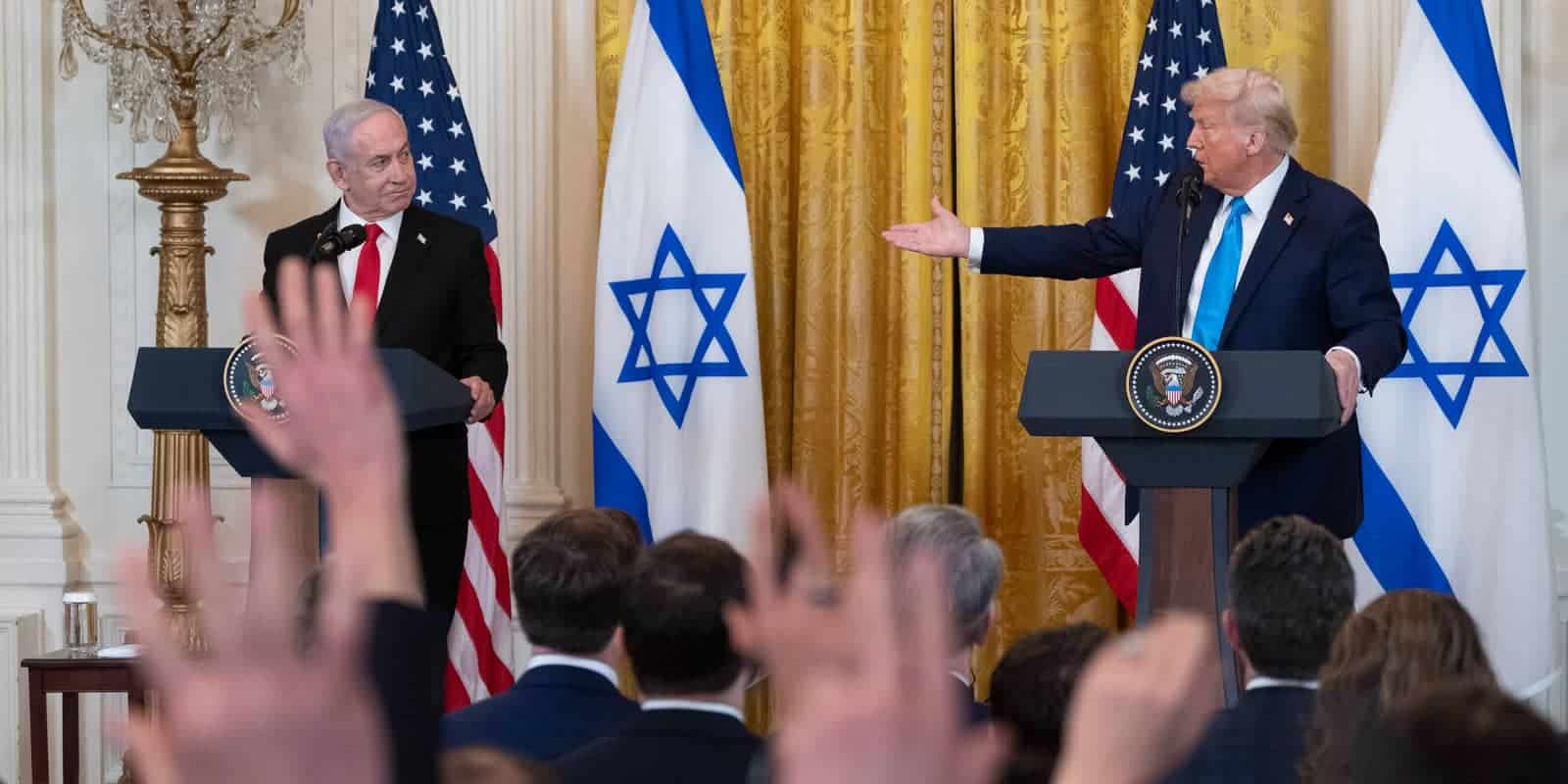
Israel’s security doctrine has evolved from an offensive model based on ending every conflict with a decisive blow to an integrated approach that combines defense, containment, and prevention. The “Iron Wall” remains the conceptual anchor, but it must now be adapted to the challenges Israel faces today. “Swords of Iron” proved that despite military and technological progress, achieving full victory over nonstate actors remains a major challenge. The future of Israel’s security doctrine will depend on continued investment in technology, a resilient economy, robust intelligence, and effective diplomacy—while holding fast to the core principles of early warning, deterrence, and defense. This must go hand in hand with alliances and agreements with both nearby and distant states. This is the “peace through strength” that Israeli Prime Minister Benjamin Netanyahu and U.S. President Donald Trump speak of—a peace that secures Israel’s resilience and prosperity and strengthens its regional and global standing.
[1] Ariel Kahana, “Netanyahu Presents: ‘Security Doctrine 2030,’” Israel Hayom, August 15, 2025.
[2] For further reading, see Efraim Inbar and Menachem Bakhar, The Myopia of Containment, JISS, April 2024.
[3] For further reading, see Yossi Kuperwasser, Policy Paper: Disarmament of Gaza, June 2023.
[4] Eviatar Matania, Redefining Israel’s Security, Misgav Institute, 2024.
[5] For example, Israel should not purchase engineering equipment such as D9 bulldozers exclusively from the American company Caterpillar; there are other manufacturers around the world that are just as capable—Komatsu (Japan), Liebherr (Germany), Hyundai (South Korea), Hitachi (Japan), and of course others. While this involves building an entire logistical infrastructure for maintenance and operation—not just procuring the equipment—Israel must evaluate the issue from a long-term perspective to avoid the kind of American embargo it faced during the height of the Swords of Iron war.
[6] Kobi Michael and Gabi Siboni, Israel 2.0, Misgav Institute, 2025.
JISS Policy Papers are published through the generosity of the Greg Rosshandler Family.
Source: https://jiss.org.il/en/siboni-winner-from-the-iron-wall-to-peace-through-strength/