


Key Points
United States President Donald Trump issued an order on November 24 directing the Secretary of State and the Secretary of the Treasury to examine whether branches of the Muslim Brotherhood in Jordan, Egypt, and Lebanon should be designated as terrorist organizations. The order cited, among other reasons, statements by representatives speaking in their name who expressed support for the 7 October attack—carried out by the Brotherhood’s Palestinian branch, Hamas—and called for similar attacks to be repeated. The administration will consider expanding the designation to additional branches at a later stage. The partial nature of the measure drew criticism from those who had expected a more comprehensive designation.
The President’s order was preceded by a declaration by the Governor of Texas designating the Muslim Brotherhood, including its affiliated American organizations, as a terrorist organization.
Even though this is a partial measure at this stage, it represents an important breakthrough that reflects a shift in the American position on the issue. This comes after a decade in which the possibility of designating some Brotherhood-affiliated organizations as terrorist entities was discussed but was never implemented, in part due to Qatari pressure. Qatar will likely again attempt to dilute the move through its levers of influence. The timing of the announcement, which comes amid a tightening of relations between the U.S. administration and Qatar and Turkey, both sponsors of the Muslim Brotherhood, is notable and likely reflects an effort to placate critics of this trajectory. In any case, the presidential order does not apply to Brotherhood actors operating in Qatar, Turkey, or within the United States itself.
Background: The History of Efforts to Designate the Brotherhood as a Terrorist Organization
In recent years, the United States has experienced waves of violent demonstrations, particularly since the outbreak of the war in Gaza, that have been linked to pro-Palestinian and Islamist organizations operating in the country. One of the dominant movements in this context is the Muslim Brotherhood, which enjoys substantial support, much of it from immigrants. The movement has a broad global presence, including in the United States, where it maintains a well-funded and, in part, institutionalized economic network.
Among the organizations active in advancing its agenda in the United States is the Council on American-Islamic Relations (CAIR). Founded in 1994 in Washington, CAIR has been the subject of several investigations concerning terror financing and the encouragement of terrorism in the United States. From an early stage, the Muslim Brotherhood’s activity was tied to Qatar through the activity at American universities of the Islamist cleric Yusuf al-Qaradawi, who supported terrorist attacks against Israel and operated with generous financial backing from the Qatari emir.
The protests promoted by various branches of the Muslim Brotherhood have gained the support of activists—some of them senior figures—within the left wing of the Democratic Party, who view these protests as an expression of cultural diversity within a broader American multicultural approach. This cooperation is part of the so-called Red-Green Alliance, which holds that socialist actors should work with Islamist activists to give voice to the oppressed. Opposition to this threat has come mainly from the Republican Party although moderate figures within the Democratic camp have also spoken out against it.
Back in Trump’s first term, senior Republican officials began to speak out and introduced legislative proposals to restrict the Muslim Brotherhood and its affiliated organizations. In fact, as early as 2015—during President Obama’s tenure—Republican members of Congress introduced a bill requiring the State Department to submit a report to Congress assessing whether the Muslim Brotherhood should be designated a terrorist organization. The Obama administration’s position at the time, as stated by Secretary of State John Kerry before the House Foreign Affairs Committee, was that the Muslim Brotherhood “writ large is not a terrorist organization.”
According to experts, one reason the movement was not designated as such was its substantial internal fragmentation, as it does not constitute a single unified entity. On July 11, 2018, the House Committee on Oversight and Government Reform, Subcommittee on National Security held a hearing titled “The Muslim Brotherhood’s Global Threat.” The hearing examined the Brotherhood’s links to terrorist groups, its intelligence channels, its political influence, and the possibility of officially designating parts of the movement as a terrorist organization. Conservative think tanks in the United States recommended crafting a precise policy (“a scalpel, not a hammer”)—meaning the U.S. should not classify the entire Muslim Brotherhood as a single organization, but rather examine specific branches that meet the legal criteria for designation as a terrorist group.
One of the prominent figures in this effort was Texas Senator Ted Cruz, who has been working since 2015 to advance legislation against the organization. His activity prompted direct Qatari countermeasures. Documents obtained by Fox News revealed that American lobbying firms were hired by Qatar to act against the senator and other supporters of the bill and to harm their reputation. In an interview with Fox News, Cruz pointed to Qatari support for the organization: “The Qatari government spends billions of dollars promoting and even financing the Muslim Brotherhood, Hamas, and other terrorist groups. They have bought or intimidated vast swaths of Washington, D.C. into silence. It is no surprise that they view the few remaining outspoken opponents of the Muslim Brotherhood in Congress as enemies of Qatar. It is time for the United States to reevaluate its relationship with Qatar.”
Texas as a Model
Qatari involvement is evident in various domains in Texas. In the educational and social fields, the Qatari Consulate in Houston hosted social and cultural events that led to agreements between the consulate and the Barbara Bush Literacy Foundation in Washington. Cooperation in education was also reflected in the establishment of a branch of Texas A&M University in Doha. The university recently decided to close the Doha campus in 2028, with some faculty members to be employed by Qatari universities. As part of the cooperation agreement, it was reported that the contract included $1.3 billion provided to the university by Qatar in exchange for full control over the intellectual and material property developed through more than 500 joint technological research projects—some in fields of exceptionally high national-security sensitivity, including nuclear science, artificial intelligence, cyber security, robotics, biotechnology, and advanced weapons development.
This was not the only security-related connection between Qatar and Texas. Qatar paid for flights and accommodations for the Dallas police chief and three additional officials for five days in 2025 under the pretext of training in security skills ahead of the World Cup in the United States. Subsequently, after Qatar signed agreements with both the Biden and Trump administrations regarding participation in providing security for the World Cup, joint exercises were held on Qatari soil involving Qatari and American forces, including armed personnel from Texas. Members of the Division of Homeland Security and Emergency Management, as well as officials from the Fire Marshal’s Office in Montgomery County, Texas, took part in the exercise.
Another aspect of Qatari influence in Texas is in the energy sector, reflected in Qatar’s involvement in the export of American liquefied natural gas. QatarEnergy holds 70 percent of the Golden Pass LNG Terminal, located on the Texas–Louisiana border, while ExxonMobil owns the remainder.
In view of the above, it seemed likely that efforts in Texas against the Qatar-backed organization were doomed to failure. Nevertheless, on November 18, Republican Texas Governor Greg Abbott declared the “Muslim Brotherhood” and the Council on American-Islamic Relations (CAIR) to be “foreign terrorist organizations and international criminal organizations.” According to Abbott, “The Muslim Brotherhood and CAIR have long made their goals clear: to forcibly impose Sharia law and establish Islam’s ‘mastership of the world,’”
His order prohibited members of these organizations from purchasing real estate in Texas. In response, CAIR sued the state, arguing that the designation violated members’ property rights and freedom of expression. The organization claimed Abbott was an “Israel First” politician stoking anti-Muslim hysteria in order to smear American Muslims who criticize the Israeli government. As expected, Qatari media outlets such as Al-Araby al-Jadeed echoed the Islamist council’s allegations.
The Presidential Order
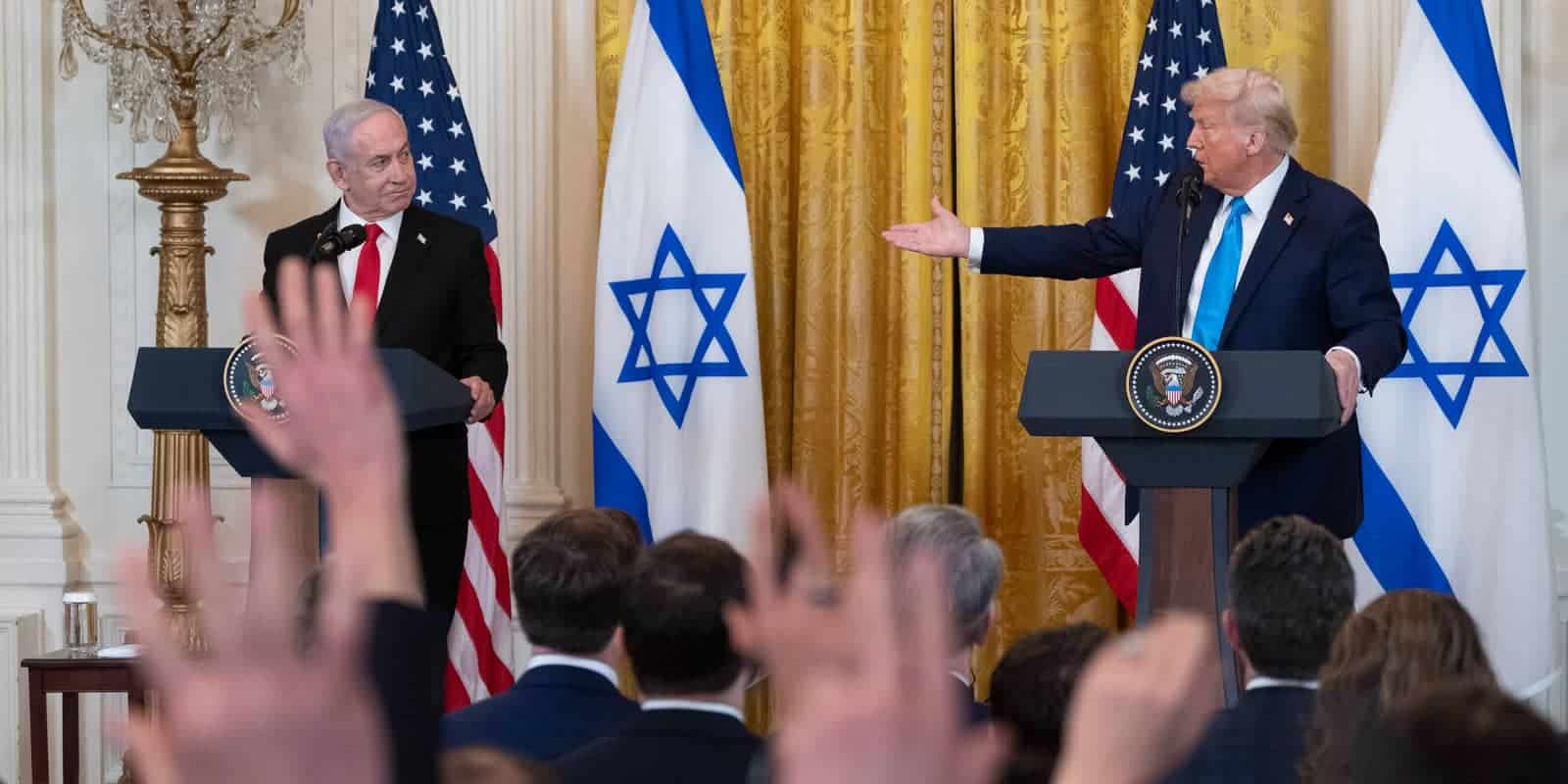
Despite these positive developments, the Texas measure was seen largely as symbolic, since the authority to designate terrorist organizations rests with the federal government. However, following the Texas move, President Donald Trump also took action. He initially announced his intention to declare the “Muslim Brotherhood” a foreign terrorist organization, saying: “It will be done in the strongest and most powerful terms.”
The threat posed by Qatari involvement on behalf of the Muslim Brotherhood remains. According to Laura Loomer, a journalist close to Trump, the designation of the Muslim Brotherhood as a terrorist organization was supposed to be signed in early November, but the Qataris delayed it because they wanted the Trump administration to help secure the release of a senior Muslim Brotherhood terrorist from prison in Egypt.
Despite Qatari opposition, Trump eventually issued a presidential order, though it fell far short of the sweeping measure his supporters had expected. Contrary to earlier assumptions, and partly due to internal U.S. legal definitions, this was not a comprehensive executive order outlawing the Muslim Brotherhood as a whole within the United States or designating it as a terrorist organization. Instead, the president issued a gradual directive. Trump did not designate the entire movement as a terrorist organization but created a mechanism enabling such a designation to be applied incrementally—branch by branch—depending on whether each one meets the criteria set out in U.S. law. In the order, Trump instructed Secretary of State Marco Rubio and Treasury Secretary Scott Bessent to submit a report determining whether branches of the Muslim Brotherhood should be designated as foreign terrorist organizations. Trump directed Rubio and Bessent to take action accordingly within 45 days of submitting the report. The White House statement referenced the branches of the Islamist movement in Lebanon, Egypt, and Jordan and emphasized that in implementing this order, the United States is working in coordination with its regional allies in the Middle East, including Qatar and Turkey, both known for supporting the Muslim Brotherhood and Hamas.
The decision not to issue a blanket designation but instead apply the law in stages—targeting specific branches one at a time—was viewed by some in the American right as creating a loophole that would allow Muslim Brotherhood affiliates to restructure their activities to evade the order. Similar voices questioned why Qatar and Turkey were not mentioned at all. Trump’s counterterrorism adviser, Dr. Sebastian Gorka, responded to the criticism by explaining that the order targets Brotherhood organizations within countries, not the countries themselves. However, this response from administration officials bordered on wilful ignorance. An organization such as the International Union of Muslim Scholars, headquartered in Qatar and considered a leading proponent of Muslim Brotherhood ideology (its former president being the preacher Yusuf al-Qaradawi), whose members have advanced anti-American content and even called for jihad against Israel, is left entirely unaddressed by the order.
From all the above, it appears that even if Trump’s measure is implemented, Qatari pressure on the administration will likely ensure that the step remains largely declarative and not fully enforced. This is a substantive test for the Trump administration: whether it will once again adopt the Qatari worldview, which prefers appeasing terrorism rather than confronting it.
Appendix: Text of the Presidential Order
Designation of Certain Muslim Brotherhood Chapters as Foreign Terrorist Organizations and Specially Designated Global Terrorists
By the authority vested in me as President by the Constitution and the laws of the United States of America, including the Immigration and Nationality Act (8 U.S.C. 1101 et seq.) (INA), and the International Emergency Economic Powers Act (50 U.S.C. 1701 et seq.) (IEEPA), it is hereby ordered:
Section 1. Purpose. This order sets in motion a process by which certain chapters or other subdivisions of the Muslim Brotherhood shall be considered for designation as Foreign Terrorist Organizations, consistent with section 219 of the INA (8 U.S.C. 1189) and specially designated global terrorists, consistent with IEEPA (50 U.S.C. 1702), and Executive Order 13224 of September 23, 2001 (Blocking Property and Prohibiting Transactions with Persons Who Commit, Threaten to Commit, or Support Terrorism), as amended.
The Muslim Brotherhood, founded in Egypt in 1928, has developed into a transnational network with chapters across the Middle East and beyond. Relevant here, its chapters in Lebanon, Jordan, and Egypt engage in or facilitate and support violence and destabilization campaigns that harm their own regions, United States citizens, and United States interests. For example, in the aftermath of the October 7, 2023, attack in Israel, the military wing of the Lebanese chapter of the Muslim Brotherhood joined Hamas, Hezbollah, and Palestinian factions to launch multiple rocket attacks against both civilian and military targets within Israel. A senior leader of the Egyptian chapter of the Muslim Brotherhood, on October 7, 2023, called for violent attacks against United States partners and interests, and Jordanian Muslim Brotherhood leaders have long provided material support to the militant wing of Hamas. Such activities threaten the security of American civilians in the Levant and other parts of the Middle East, as well as the safety and stability of our regional partners.
Sec. 2. Policy. It is the policy of the United States to cooperate with its regional partners to eliminate the capabilities and operations of Muslim Brotherhood chapters designated as foreign terrorist organizations pursuant to section 3 of this order, deprive those chapters of resources, and thereby end any threat such chapters pose to United States nationals or the national security of the United States.
Sec. 3. Implementation. (a) Within 30 days of the date of this order, the Secretary of State and the Secretary of the Treasury, after consultation with the Attorney General and the Director of National Intelligence, shall submit a joint report to the President, through the Assistant to the President for National Security Affairs, concerning the designation of any Muslim Brotherhood chapters or other subdivisions, including those in Lebanon, Jordan, and Egypt, as foreign terrorist organizations consistent with 8 U.S.C. 1189, and specially designated global terrorists consistent with 50 U.S.C. 1702 and Executive Order 13224.
(b) Within 45 days of submitting the report required by subsection (a) of this section, the Secretary of State or the Secretary of the Treasury, as applicable, shall take all appropriate action consistent with 8 U.S.C. 1189 or 50 U.S.C. 1702 and Executive Order 13224, as applicable, with regard to the designation of any Muslim Brotherhood chapters or other subdivisions described in section 1 of this order as foreign terrorist organizations and specially designated global terrorists.
Sec. 4. General Provisions. (a) Nothing in this order shall be construed to impair or otherwise affect:
(i) the authority granted by law to an executive department or agency, or the head thereof; or
(ii) the functions of the Director of the Office of Management and Budget relating to budgetary, administrative, or legislative proposals.
(b) This order shall be implemented consistent with applicable law and subject to the availability of appropriations.
(c) This order is not intended to, and does not, create any right or benefit, substantive or procedural, enforceable at law or in equity by any party against the United States, its departments, agencies, or entities, its officers, employees, or agents, or any other person.
(d) The costs for publication of this order shall be borne by the Department of State.
DONALD J. TRUMP
THE WHITE HOUSE,
November 24, 2025.
JISS Policy Papers are published through the generosity of the Greg Rosshandler Family.