
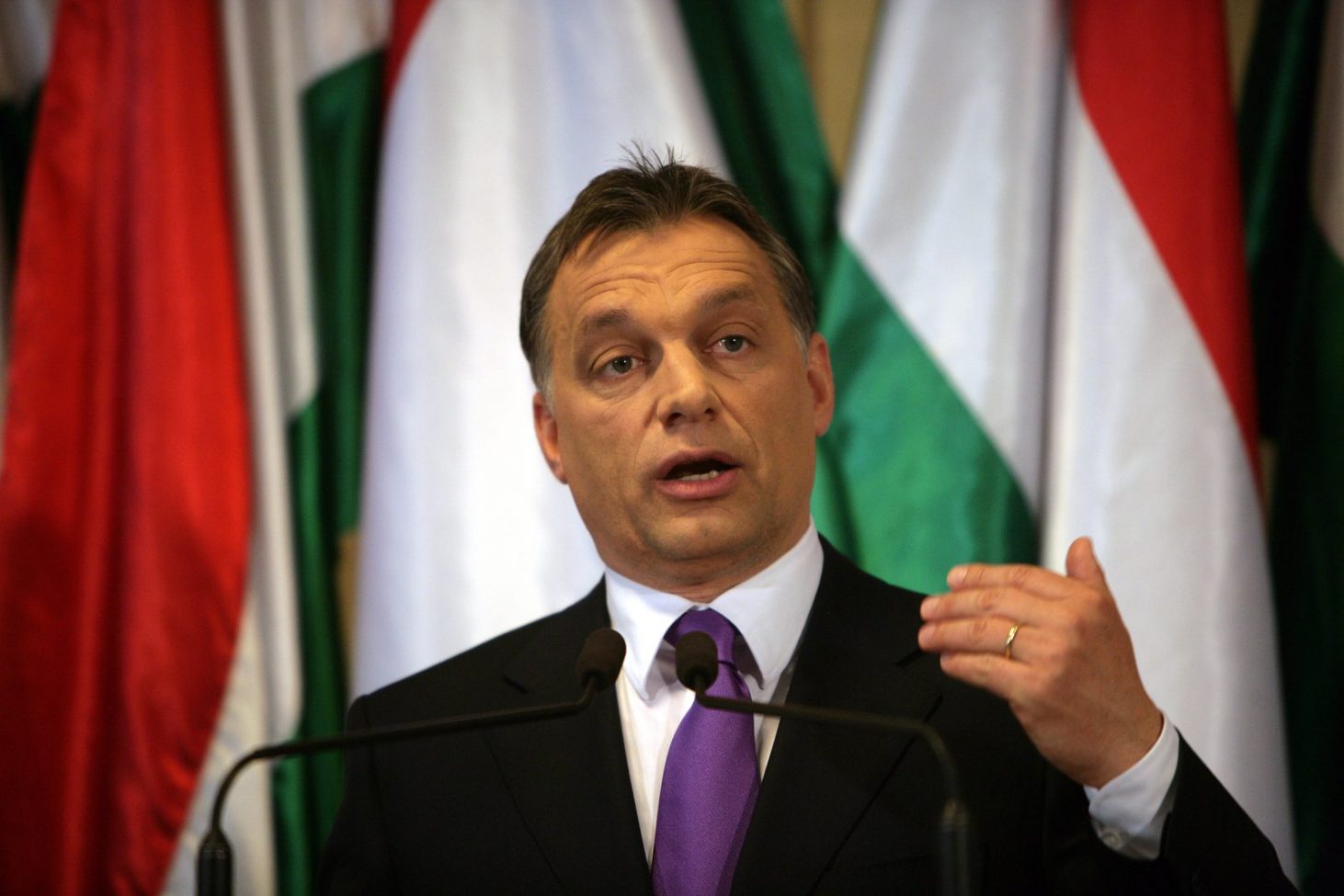

Some Israeli politicians (such as Yair Lapid and Tamar Zanberg) have called for the boycott of Viktor Orbán’s visit to Israel because of his contentious declarations (he has praised Miklós Horthy, the Hungarian leader who colluded with Hitler during most of WW2, and his campaign against the Hungarian-born Jewish financier George Soros had anti-Semitic overtones). Should the Israeli government look the other way for the sake of Realpolitik?
Israel faces this question not only with Hungary but also with other European countries such as Poland and Austria. Austria’s coalition government, for example, includes the FPÖ –a party that has a neo-Nazi past but boasts today about its pro-Israel credentials. This is a classic foreign policy dilemma between principles and Realpolitik. Israel has faced similar dilemmas in the past, for example when it signed a reparations agreement with Germany in 1951 or, more recently, when it apologized to Turkey over the Marmara incident. Ironically, those who oppose the visit of Orbán to Israel were generally supportive of the apology to the autocratic and anti-Semitic Recep Tayyip Erdoğan in the name of political realism.
Two questions need to be addressed regarding Israel’s relations with Europe’s nationalistic governments: a. Should Israel shun them as a matter of principle? b. Even from a purely realistic point of view, should Israel upgrade its relations with those governments?
On the first question, one needs to differentiate between Europe’s nationalistic governments, even within the “Visegrád Group” (Poland, Hungary, the Czech Republic, Slovakia). In Poland, the current government’s policy is a mix of social conservatism, neo-Socialist economics, and pro-American foreign policy. Hungary’s government also combines social conservatism with economic interventionism, but its foreign policy is pro-Russian (or, to be accurate, pro-Putin). Czech Prime Minister Andrej Babiš is a Trump-like elite-bashing billionaire with no coherent worldview. Czech President, Miloš Zeman is as pro-Israel as it gets (he was a lone voice in Europe supporting the transfer of the US embassy to Jerusalem, and he has called upon the Czech government to follow suit). Slovakian President Andrej Kiska is a Putin opponent who supports sanctions against Russia.
As for Austria, its young chancellor Sebastian Kurz has publicly scolded Iran’s president for denying the Holocaust as well as Israel’s right to exist; he has expelled dozens of radical Turkish imams, ignoring the threats of Erdoğan; and during his recent visit to Israel he recognized his country’s role in the Holocaust (he also departed from EU protocol by paying a visit to the Western Wall). Kurz himself is a moderate conservative but his coalition government includes the FPÖ, a party with neo-Nazi roots (the party’s first leader, Anton Reinthaller, was a former Nazi cabinet member and SS officer). The FPÖ’s current leader, Heinz-Christian Strache, is at pains to rebrand his party’s image and to prove its pro-Israel credentials. At the same time, he is also a Putin apologist.
The overall picture is, therefore, a complex one. The nationalist governments of Eastern Europe are not a uniform club of neo-Nazi anti-Semites. Their policies, however, often deserve the criticism they attract. Orbán did undermine the freedom of the press and the independence of the judiciary, and the Polish government did try to criminalize the exposure of Polish collaboration with the Nazis. Yet Israel does not boycott the no less autocratic governments of China or Russia, because doing so would do a disservice to Israel’s national interest. Those who called for the cancellation of Orbán’s visit did not boycott Putin’s visit to Israel in 2012, nor did they condemn Israel’s apology to Erdoğan in 2013. Realpolitik must be consistent, and self-righteousness cannot be selective.
The second question is whether upgrading relations with the Visegrád Group and with Austria best serves Israel’s interest. The answer is mostly yes, but with one caveat. The Czech Republic, Hungary and Romania recently blocked an EU decision meant to condemn the transfer of the US embassy to Jerusalem. The Czech President and the Romanian Prime Minister have both expressed their support for the transfer of their country’s embassy to Jerusalem. The governments of Eastern Europe can therefore be useful and ad hoc counterweights to unwelcome votes of the European Council or to hostile initiatives coming from the European Commission.
At the same time, however, the pro-Russian foreign policy of Orbán and of Austria’s FPÖ are hardly in Israel’s interest given Russia’s support for Israel’s adversaries in the Middle-East (and despite the coordination between Israel and Russia in Syria). Even from a Realpolitik point of view, therefore, there is also a downside to the otherwise valuable upgrading of Israel’s ties with “rebellious” European governments.
Published in The Times of Israel, 17.07.2018
JISS Policy Papers are published through the generosity of the Greg Rosshandler Family.
photo: Bigstock