


Amid the escalation in the Middle East and the war with Iran, Pakistan is moving to leverage its strategic assets, from its unique geographic position to the complex web of ties it maintains simultaneously with Tehran and Washington. Islamabad is now trying to position itself as a pivotal mediator in the efforts to end the confrontation between the American-Israeli coalition and Iran. After failing to uphold its defense agreement with Saudi Arabia, and amid domestic sectarian sensitivities and military tensions with Afghanistan, Pakistan is adopting a declared policy of neutrality while solidifying its status as a diplomatic crossroads.
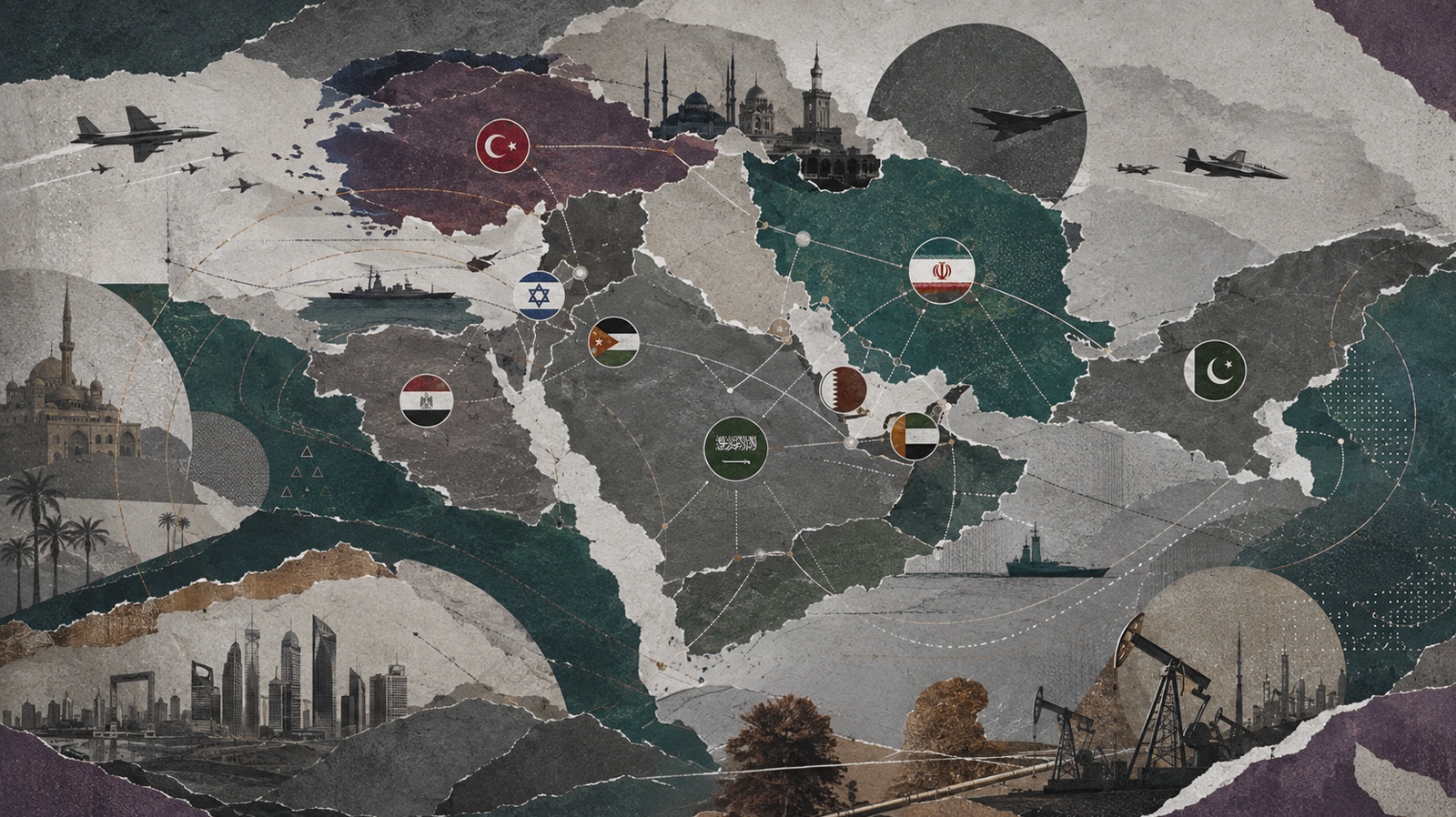
According to reports, Pakistan’s Chief of Staff, Field Marshal Asim Munir, spoke with President Trump on March 22, while Prime Minister Shehbaz Sharif held a parallel conversation the following day with Iran’s president, Masoud Pezeshkian. Pakistan has not been operating in a vacuum; its efforts have joined broader regional mediation initiatives that include Oman, the Middle East’s traditional neutral mediator, which has openly criticized the military confrontation and called for a diplomatic solution, as well as Turkey, Iran’s neighbor and a NATO member. This mediation axis, which also includes Egypt, has in recent weeks maintained continuous communication channels with senior officials in Tehran and with American representatives. A source familiar with the matter told The Washington Post that the mediating states are working to convene a secret summit in Islamabad as early as this week, bringing together senior American and Iranian officials.
Pakistan maintains a strategic proximity to Tehran, rooted in part in the presence of a large Shiite minority within its borders, numbering some 40 million citizens. This unique affinity, previously reflected, among other things, in the fact that the Pakistani nuclear scientist Abdul Qadeer Khan was the one who provided Iran with the essential knowledge for uranium enrichment—has recently been reaffirmed by the new supreme leader, Ayatollah Mojtaba Khamenei. In an unusual statement released to the Iranian media on Nowruz, the Persian New Year, Khamenei expressed his deep admiration for Pakistan, stating that his love for Pakistan is open and unwavering. From Tehran’s perspective, there is currently no real reason to oppose mediation by Islamabad. Although relations have had their ups and downs, Pakistan is still seen as a preferred partner over New Delhi, which chose to delay condemnation of the strikes and condolences over the death of the elder Khamenei.
Islamabad’s geographical location is once again playing a significant role, boosting its standing as a central player in the mediation process. While the Middle East has ceased to be a safe haven for senior Tehran officials due to Israel’s lethal assassination policy, Pakistan offers a protected diplomatic sanctuary. Throughout history, Pakistan has masterfully positioned itself as an indispensable strategic asset for Washington. It leveraged its geo-strategic position as a frontline against the Soviet Union during the Cold War, and later as a vital base in the War on Terror against the Taliban—interests that compelled the U.S. to maintain a close and complex alliance with it, despite deep disagreements over nuclear issues and human rights. Now, it appears Pakistan is doing it once again.
Adding to these considerations are the internal sectarian tensions between the country’s Sunnis and Shiites, friction that has intensified since the signing of the Strategic Mutual Defence Agreement (SMDA)with Saudi Arabia in September, continued through the recent campaign against Iran, and escalated further during a recent Iftar dinner.
Against a backdrop of rising domestic tensions, Munir met with Shiite clerics for a Ramadan iftar intended to signal reconciliation. Instead, the gathering quickly turned into a political scandal. However, the event quickly spiraled into a political scandal that has gripped the Pakistani public in recent days. Instead of a dialogue of reconciliation, Munir launched into a patronizing hour-long monologue, centered on the message: “Sab Se Pehle Toh Pakistan Hai”- Pakistan Comes First. The speech was perceived by those present as an opaque display of power, showing no intent to address the community’s grievances. During the event, Munir clashed with the leader of the Shiite Ulema, and in an unprecedented outburst, lashed out, saying that “’If you love Iran so much, they are welcome to leave – a statement widely seen as questioning the loyalty of the Shiite minority to the state.
The attack on Iran has increased pressure on the Pakistani street. Upon news of the assassination of Iran’s supreme leader, Ali Khamenei, Pakistan’s prime minister Shehbaz Sharif issued a sharp public condemnation. However, this was not enough to quell mass protests that united Shiites and Sunni fundamentalists, who accused the government of aiding “infidel” Christian and Zionist forces. The unrest reached a violent peak with an attack on the American Consulate in Karachi, during which ten civilians were shot at point-blank range by Pakistani police. This incident has significantly heightened criticism of the government, particularly within the Shiite community.
Pakistan exerts tremendous effort to project itself as a stabilizing force in the Muslim world, one capable of navigating the delicate balance between Saudi Arabia and Iran, or in other words, between the Sunni and Shiite worlds. While it manages this equilibrium meticulously, under Munir’s leadership, it appeared that the country was strengthening its ties with Washington and the Saudi-led Sunni axis.
When Iran struck Saudi Arabia, all eyes turned toward Islamabad in expectation that Pakistan would fulfill its obligations under the security agreement signed only months prior. The September agreement, widely seen at the time as laying the groundwork for an anti-Iranian alignment, was put to the test. However, it appears that concepts of loyalty and the Arabic sense of “Sharaf” (honor) did not take deep root in South Asian political culture. In the moment of truth, as Saudi interests faced a tangible threat, Pakistan recoiled from direct military involvement. The government justified its withdrawal by citing the open war against the Taliban in Afghanistan, a bloody campaign that has persisted for over a month and claimed the lives of hundreds.
Pakistan’s rising prominence as a potential mediator rests not only on its geographical advantage but also on an evolving diplomatic dynamic with the Trump administration. Since Trump return to office, working ties between Islamabad and Washington have visibly tightened, with General Munir regarded as a dependable partner for advancing regional security interests (Trump reportedly refers to him as “my favorite general”). Of particular note in this context is Pakistan’s involvement in Trump’s 20-point plan for Gaza.
It appears that the extensive connections of Special Envoy Steve Witkoff which include his family’s business ties to Pakistan, are perceived as an additional layer of trust and mutual understanding between the parties. Against this backdrop, Pakistan now seems to hold the right cards to host the critical diplomatic effort in the region. The focus now shifts to the nature of Pakistan’s involvement in the mediation process. It remains to be seen whether the intricate diplomatic web Islamabad has spun between Washington and Tehran can endure the harsh realities of the field and ultimately secure a sustainable ceasefire.
While India possesses the necessary credentials for mediation, including a reliable and direct channel to Tehran, structural constraints in its relationship with the United States could have hindered its prospects as a primary mediator. Unlike Pakistan, over which Washington wields significant leverage, India remains fiercely committed to its strategic autonomy—a stance only further entrenched by recent trade disputes over tariffs. Paradoxically, New Delhi’s stoic neutrality may have cost it the coveted role of mediator; the U.S. appears to favor a partner more aligned with its own strategic directives. Nevertheless, India is likely to lend its support to regional peace efforts, even if they are spearheaded by its arch-rival. For the Modi administration, de-escalating the crisis is a paramount interest, not only for the sake of regional stability but also as a necessary counter-narrative to the biting domestic criticism that followed his return from Israel.
JISS Policy Papers are published through the generosity of the Greg Rosshandler Family.