


Introduction
The War of Redemption and the prolonged fighting on the northern front have laid bare the scale of Israel’s vulnerability vis-à-vis Hezbollah. Israel has significantly degraded the organization’s long-range rocket and missile capabilities, and the threat of a Hezbollah ground offensive has receded. Yet the short-range threat remains largely intact. Alongside the familiar dangers south of the Litani—rockets, mortars, explosive charges, and booby traps—Hezbollah now fields several types of drones, including fiber-optic-guided drones that the IDF is struggling to cope with.
Fiber-optic-guided drones have become one of the most serious short-range threats on the Lebanese battlefield. The technology is difficult to defeat because the drone remains connected to its operator by a thin fiber-optic cable that unwinds behind it in flight. Unlike drones that depend on wireless communications, this physical link cannot be jammed, disrupted, or deceived by electronic warfare. It gives the operator real-time control, a high-quality video feed, and the ability to guide an explosive payload with considerable accuracy across many kilometers, including deep into areas held by Israeli forces and even across the border.
These drones are cheap, easy to operate, hard to detect, and hard to intercept. Costing no more than tens of thousands of shekels, they enable Hezbollah to attack outposts, buildings, vehicles, armored fighting vehicles, observation positions, and exposed troops in open terrain. The risk to Hezbollah’s drone operators is minimal. With Iranian technological support, Hezbollah has turned these drones into a tool that threatens IDF movement throughout the areas it holds in southern Lebanon and also endangers communities on the Israeli side of the border. Israel therefore needs a broad operational answer, not only a technological fix.
The IDF halted its advance in southern Lebanon in part because of the cease-fire with Lebanon, imposed by the United States. It now holds a strip extending up to ten kilometers from the border, reaching what is known as the “yellow line,” or the direct anti-tank fire line. That line is intended to prevent direct fire of anti-tank missile attacks against Israeli communities and to deny Hezbollah the ability to launch a ground assault into Israel. But the drone threat, especially the fiber-optic-guided drone threat, has changed the battlefield equation. This weapon allows Hezbollah to maintain constant pressure on IDF forces deployed in the area and on frontline communities. Unlike long-range missiles, these drones can be launched from a truck, from inside a building, or even from a concealed position in open terrain, and they are extremely difficult to detect in advance. As a result, the entire area north and south of the Litani can become a launch zone enabling direct threats to civilian lives and to the IDF’s freedom of action.
This article examines the threat and the operational courses of action available to the IDF. We are confident that work is already underway to develop technological solutions for detecting and destroying this threat and therefore have left that issue outside the scope of this discussion. Our focus is on the operational dimension and on the optimal ground posture required to protect Israel’s northern communities. In our view, Israel needs a deep security buffer zone, anchored in natural terrain and backed by a determined concept of operations. Such a zone is necessary to restore security to the residents of the north, disrupt Hezbollah’s concept of “continuous war,” and return the initiative to the IDF.
The Need for a Security Zone Extending to the Litani
The need for a security zone in southern Lebanon did not disappear with the IDF’s withdrawal from its previous incarnation in 2000. It is an operational requirement that has become more urgent in light of the reality that emerged on the northern front during the War of Redemption and the continuing confrontation with Hezbollah. Since Israel’s withdrawal in 2000, Hezbollah, with Iranian assistance, has turned the area between the international border and the Litani River into a sophisticated, densely networked military zone.
The area contained dozens, and perhaps hundreds, of attack tunnels, advanced weapons depots, concealed launch positions, logistical infrastructure, and decentralized command arrays. This has made southern Lebanon an arena in which Hezbollah can employ short-range threats with high effectiveness, exploiting the geographic advantage of direct proximity to Israel’s northern communities. Those communities remain within range of short-range high-trajectory fire, as well as UAV and drone attacks, without sufficient warning time.
Fiber-optic-guided drones have become a major battlefield threat. Linked by a thin fiber-optic cable, they are fully immune to electronic warfare, radio interference, jamming, and deception. They give the operator precise real-time control and high-quality video, even at ranges of several kilometers, and can penetrate deep into areas controlled by the IDF. The shorter the distance between the operator and the target, the greater the threat, because fiber-optic-guided drones with ranges of 10–15 kilometers are readily available and inexpensive. As the range increases, the scale of the threat declines. Drones with ranges of 30–40 kilometers, and more, do exist, but their availability remains much more limited.
So far, the IDF has focused on holding a security area up to what is known as the direct anti-tank fire line. The line is meant to prevent direct-fire attacks on Israel’s northern communities and reduce Hezbollah’s ability to carry out a surprise ground assault against them. The map below shows the IDF’s forward defense line.

The IDF is focused on three key operations in this area. First, securing the area to keep Hezbollah forces out and prevent them from using it for direct fire on Israeli communities or for short-range high-trajectory fire, including mortars and recoilless artillery. Holding ground also denies Hezbollah the infrastructure needed for raids against northern communities. Second, the IDF is destroying terrorist infrastructure in the area: tunnel sites, bunkers, weapons depots, and launch positions concealed in homes and courtyards, along with buildings that served Hezbollah operatives. Third, the IDF is using fire beyond the forward line held by Israeli forces (the “yellow line”) to destroy threats north and south of the Litani.
As the defense minister said recently after a situational assessment: “At the end of the operation, the IDF will deploy in a security area inside Lebanon—along the defensive line against anti-tank missiles—and will exercise security control over the entire area up to the Litani … and all houses in the Lebanese villages adjacent to the border will be destroyed, following the Rafah and Beit Hanoun model in Gaza, in order to remove once and for all the border-adjacent threats to the residents of the north. High-trajectory fire from other areas in Lebanon is also being addressed and will be addressed with increasing intensity.”
Despite the effort to prevent Hezbollah from operating south of the Litani, it continues to do so. This allows the organization to fire short-range high-trajectory weapons and launch drones against IDF forces and even against northern communities. The area north of the IDF’s current security zone still gives Hezbollah room to use short-range drones, whether fiber-optic-guided or wirelessly controlled. Firepower alone will not provide an effective or sustainable answer to these threats.
To better protect the north and reduce the scale of the threat, Israel should consider taking the entire area up to the Litani. Even that would not remove every threat from southern Lebanon, but it would sharply reduce the threat, especially to the western Galilee. The discussion should not be framed as an all-or-nothing choice. Security measures often matter precisely because they reduce a threat, even when they cannot eliminate it completely.
The operational case for making the Litani the maneuver’s end line rests on a comparison between the two main alternatives: the current direct anti-tank fire line and the Litani line. The Litani option may encounter U.S. opposition, but Israel must explain to the American administration why this line is essential to its security. By contrast, the current anti-tank line is imaginary: it is not anchored in natural terrain. Its only relative advantage is that it partly reduces the threat of direct-fire toward Israeli communities and allows the IDF to clear a smaller area first. But its operational shortcomings are decisive. Without a natural barrier, the line leaves Hezbollah free to reinforce from the north, as it has in recent weeks. Even after the IDF destroyed some bridges over the Litani, Hezbollah has been able to send in reinforcements and weapons.
The current direct anti-tank fire line also requires a larger force as it is roughly 40 percent longer than the Litani line [see map]. It keeps IDF troops in open, exposed terrain, increasing their vulnerability to explosive devices, ambushes, and drone attacks. It also forces a more frontal pattern of operations because it is not anchored in a natural boundary. Nor does it significantly reduce short-range rocket fire, mortars, or drones. Most of these threats remain close to the IDF’s forward line and continue to endanger both northern communities and forces in the field.
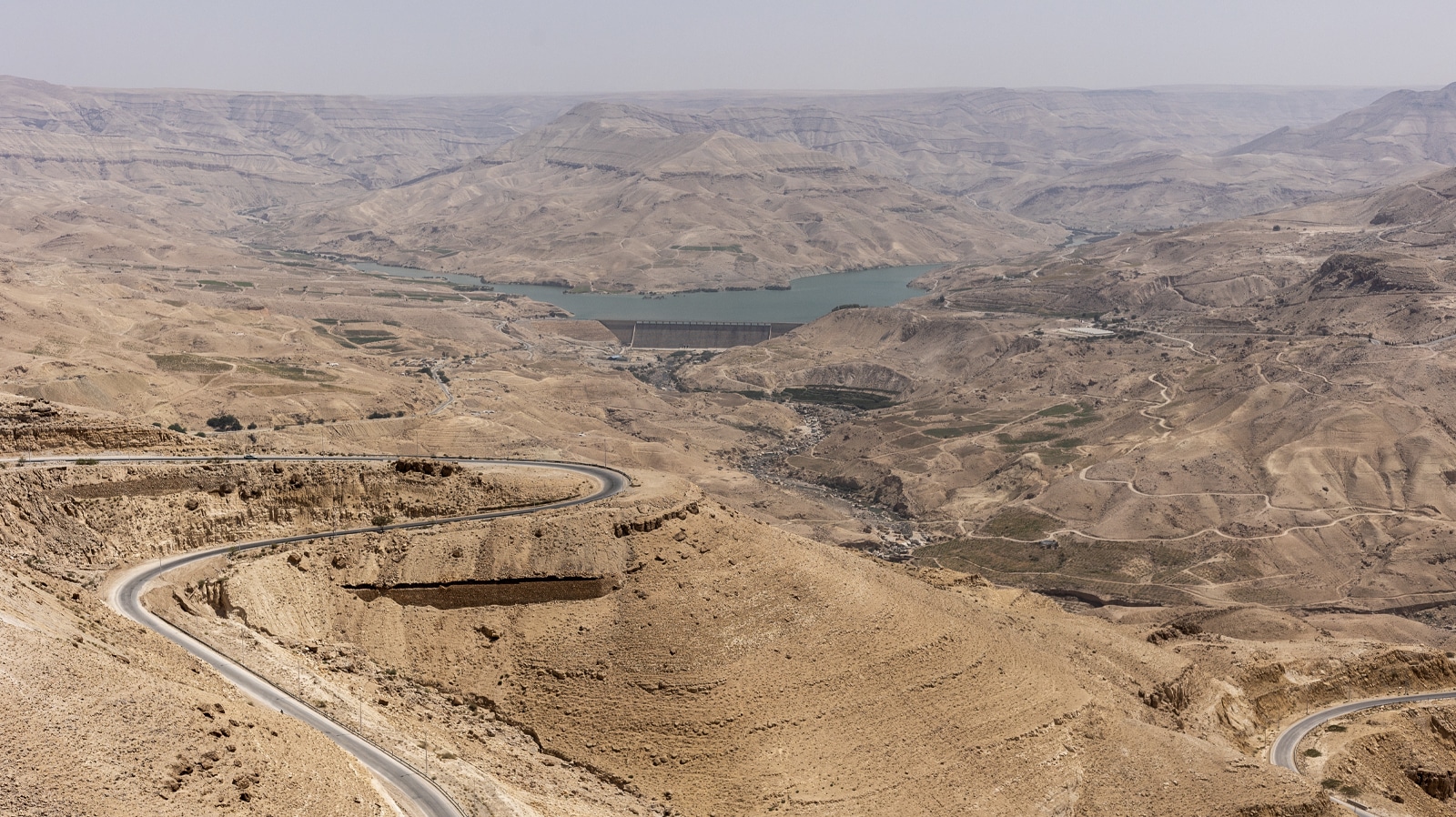
The Litani line, by contrast, offers a clear operational advantage. It follows strong natural terrain—a deep river with steep ravines—that is difficult to cross, especially without bridges. It creates a shorter line to hold, adds depth, and provides far more warning time against incursions and short-range fire. It pushes most short-range threats northward, including high-trajectory fire and small fiber-optic-guided drones, sharply reduces short-range launches, and directly influences the greater Tyre area, a vital Hezbollah center. The Litani also allows the IDF to divide the area naturally into sub-zones based on the streams that flow into the river, making continued control easier to manage and enabling more flexible defensive deployments.
The case for extending the zone to the Litani also rests on the need to significantly reduce Hezbollah’s ability to use short-range high-trajectory fire. If the IDF stops at the current anti-tank fire line, much of the area south of the Litani remains exposed to partial enemy control, allowing Hezbollah to continue this fire with little interference. Moving the line to the Litani would push most high-trajectory fire positions northward, increase their physical distance from Israeli communities, lengthen warning times, and allow active defense systems to operate more effectively.
A line at the Litani would not be sufficient everywhere. In some sectors, especially around the Litani Bend, Israel would need positions beyond the river. The Nabatieh Plateau is the key case. Because it lies near Metula and the Galilee Panhandle communities, it provides control over major movement routes and over Israeli communities in the area. Holding it is therefore essential to defending the northern Galilee Panhandle.
The Litani line would require the IDF to clear and hold a larger area. Even so, its advantages outweigh the costs: it would reduce short-range high-trajectory fire, improve protection against fiber-optic-guided drones, push the enemy northward, and increase pressure on the Lebanese state. This is not merely a tactical adjustment; it is a paradigm shift. A line at the Litani would push back short-range threats, lengthen warning times, improve Israel’s ability to hold the area, and increase pressure on both Hezbollah and the Lebanese government. Only a deep defensive line anchored in natural terrain can achieve these goals and create the long-term deterrence needed to restore security to the residents of the north.
Holding the Litani line also has political value. It would pressure Hezbollah and the Lebanese government and send a clear message that Israel will not return to the old border—at least not before Hezbollah is fully dismantled and Lebanon becomes a state genuinely at peace with Israel. If negotiations with the Lebanese government advance and Israel is required to discuss reducing its presence in Lebanon, the Litani would provide a front line to which Israel could withdraw from if necessary while still protecting the northern border communities. For these reasons, extending the security zone to the Litani is an essential requirement that serves both operational and political purposes. It would move the IDF from passive defense to active control of the area.
A deeper security zone would put Lebanon itself under greater pressure, especially in the greater Tyre area, where major Shiite population centers are located. This pressure would thus extend to the Lebanese government and the Lebanese army as well. Had Israel begun the maneuver on this basis, it could have achieved a more significant operational result: limiting Hezbollah’s ability to reinforce its forces and strike the Israeli home front, while allowing the IDF, once established on its final lines of advance, to focus on clearing operations based on analysis of the enemy and operational priorities. The IDF would also have made far better use of its forces and time than it did in the way the maneuver was conducted in practice.
Recommendations for the Military and Political Leadership
The overriding purpose of an IDF presence in southern Lebanon is to secure Israel’s northern communities. Without that presence, Hezbollah operatives and with the Shiite population will soon return to the area.
Militarily, the political leadership must define in advance a clear, measurable, and binding objective for the IDF: a security zone under Israeli control up to the Litani River; the complete removal of terrorist organizations from that area; and a durable mechanism for holding a shorter line anchored in natural terrain. At the same time, as negotiations with the Lebanese government proceed, Israel should seek to remove all restrictions on the use of air, artillery, and ground power against Hezbollah infrastructure, including deep inside Lebanon.
Israel should be free to act preemptively against drone infrastructure, high-trajectory weapons depots, and Hezbollah command posts. The government should also order the preparation of a plan for a local Lebanese force—Christian and Druze—to defend its own communities alongside the IDF. The historical experience with the South Lebanon Army points to real difficulties, but the present risk is far greater than the price of such a move. Israel must also prepare both domestic and international opinion for the reality of a long-term Israeli military presence inside Lebanon, while stressing that this is an essential national mission to protect the communities of the north.
Several recommendations follow regarding how IDF forces should operate in the field:
The way IDF troops operate in the area has a major effect on the outcome. Maintaining operational discipline reduces their exposure and lowers the enemy’s ability to hit them. Analysis shows that most casualties from high-trajectory fire and explosive drones appear to have resulted from attacks on concentrations of troops and vehicles; disabled vehicles left for extended periods in open terrain; and forces remaining too long inside conspicuous buildings, especially where the IDF has destroyed most of the surrounding structures.
Commanders must resist the logistical convenience of concentrating forces or stationing troops in buildings. During any forced halt, forces should disperse, soldiers should leave disabled vehicles, and units should use tactical measures that reduce drone effectiveness, such as cables and nets. This is a critical point: if implemented properly, these measures will reduce IDF casualties even before technological solutions are in place.
Some weapons solutions are already emerging, and experience suggests that Israeli ingenuity will eventually produce answers. But the IDF should not wait for a comprehensive solution. It should equip forces immediately with shotguns and anti-drone munitions that disperse metal fragments. It should also examine the broad reintroduction of Vulcan cannons. Linked to detection systems, the Vulcans could become a force multiplier against drones and UAVs of all types.
Operational discipline and weapons fixes are not enough. The IDF must also strike the sources of the threat. Explosive drones and short-range high-trajectory fire depend on production, storage, and launch networks. The IDF has target intelligence on production and storage sites, and, in many cases, it can also locate launch areas. It should hit these infrastructures hard, including by moving civilians out of the relevant areas and carrying out automatic retaliatory strikes once Israel has announced in advance that such strikes will follow.
Even then, better discipline and strikes on launch sources will not solve the problem. Hezbollah is deployed across Lebanon, and its production and logistical infrastructure lies outside the area under discussion. Israel therefore needs freedom to operate deep inside Lebanon as well, and it must make the case to the United States on this point. The argument should be straightforward: striking Hezbollah’s force concentrations would weaken the organization, help the Lebanese government, and improve the chances of reaching an agreement with it.
Regionally, Israel’s political leadership must also prevent Syrian forces from entering Lebanon. Any Syrian presence there, even one directed against Hezbollah and Shiite forces, would create a long-term threat that could prove worse than Hezbollah. Under Turkish influence, Syria would bring not only its official army into Lebanon but also elements of global Sunni jihad. That would expose Israel’s northern border to another dangerous presence. The result would be a more severe threat: even if Hezbollah is weakened, Sunni jihadist forces and Turkish influence could fill the vacuum and create a new danger. Israel must make clear, both diplomatically and through operational preparations, that it will act to thwart any Syrian attempt to enter Lebanon.
Iran’s role and the need to sever its Lebanese arm: Hezbollah is not an independent Lebanese organization, it is an extension of the Islamic Revolutionary Guard Corps. Any diplomatic-security plan, and any U.S.-backed agreement with the Lebanese government, must therefore include a systematic effort to sever Iran’s proxy tentacles in Lebanon. That requires not only military strikes on infrastructure, but also economic, diplomatic, and intelligence pressure on Tehran. Israel should work with the United States and other Western governments to remove all restrictions on action in Lebanon, while making clear that “peace talks” with the Lebanese government are not relevant to removal of the Hezbollah threat. The Lebanese government is weak, subject to Shiite influence, and paralyzed by Hezbollah. It cannot enforce sovereignty in southern Lebanon or disarm Hezbollah. Israel must therefore act independently and shape conditions on the ground in a way that forces Lebanon to contend with the consequences of an Israeli presence deep inside the country. Israel should also explain that progress toward an agreement with the Lebanese government requires that Hezbollah is substantially weakened.
Conclusion
Hezbollah’s threat to Israel now centers on short-range capabilities. This may reflect an effort on the part of Hezbollah to avoid giving Israel grounds to strike deep inside Lebanon, or operational difficulty resulting from the damage to its capabilities. Either way, the immediate threat now consists mainly of short-range high-trajectory fire and drone attacks, especially fiber-optic-guided drones. These threats rely on cheap technology that is hard to disrupt and easy to operate. The IDF must therefore provide responses both for its forces in the field and for the residents of northern Israel.
Extending the security zone beyond the direct anti-tank fire line to the Litani is an effective response that can be implemented immediately. A comparison between the current anti-tank line and the Litani line leads to a clear conclusion: the Litani is the better option. It follows a natural barrier, shortens the line Israel must hold, adds depth, and pushes most short-range threats northward. It would reduce Hezbollah’s ability to fire high-trajectory weapons at Israel’s home front and lessen the drone threat. Holding the Litani line would also give Israel political leverage in future negotiations with the Lebanese government after the mission against Hezbollah is completed.
The political leadership should give the IDF a clear timetable for reaching and securing the required lines, including the Beaufort Ridge and the Nabatieh Plateau, and then clearing the area from north to south. At the same time, Israel must develop an operational response to the drone threat. This should include improved tactical conduct in the field, as well as offensive action to impose costs and destroy the threats and the entire production, storage, launch, and support chain behind them throughout the area, including north of the Litani. Israel should also examine the creation of a local Lebanese force (Christian and Druze) and cooperation with Christian militias, despite Israel’s difficult history with such arrangements.
At this stage, the Lebanese government is too weak to serve as a relevant partner and cannot enforce its sovereignty in Lebanon. Israel must therefore act to sever Iran’s Lebanese proxy arm while preventing any Syrian forces from entering the country. If Syrian forces were to do so, this could bring jihadist and Turkish-linked elements into Lebanon and give them another staging ground against Israel.
Ultimately, a security zone up to the Litani would be far more than a military move. It would put the initiative back in the IDF’s hands, better protect the residents of the north, and increase the chances of creating a better security and political reality. Effective tactical action, guided by operational logic in service of a strategic objective, could ultimately deliver the required result. The sooner this is done, the better.
JISS Policy Papers are published through the generosity of the Greg Rosshandler Family.