
Israel has been engaged in wars with its enemies since its establishment in 1948. In general, it has attacked their military assets to reduce their ability to harm its soldiers and civilians, rarely pursuing more ambitious objectives such as regime change. Bombing raids deep inside Egypt during the War of Attrition (1969–1970) were intended, inter alia, to bring down the country’s charismatic leader, Gamal Abdel Nasser. In 1982, following missile attacks from Lebanon, Israel invaded its northern neighbor, partly to secure the election as president of Bashir Gemayel, the leader of the Christian camp, who was willing to cooperate with Israel against the foreign presence of the PLO and Syrian forces in his country. Nasser remained in power, and Gemayel was assassinated shortly after his election. These failures prompted a more sober assessment of a small country like Israel’s ability to use military force to change a neighboring country’s regime or bring about its collapse. Indeed, none of Israel’s national security doctrine papers have ever mentioned regime change—not even the latest, published by Prime Minister Benjamin Netanyahu on October 18, 2026.
During the Twelve-Day War with Iran in June 2025, Netanyahu, who is usually very cautious about employing military force, said that regime change was neither a declared nor an official objective, but could be one of the outcomes. Ultimately, he said, it was a matter for the Iranian people. His message became more explicit when the United States and Israel jointly launched a new war against Iran on February 28, 2026. The aim, he said, was to remove the existential threat posed by the Islamic Republic and create the conditions for Iranians to reclaim their country. His remarks echoed the messaging emanating from the White House.
Media reports speculated about a Mossad-planned invasion by Kurdish forces from Iraq to hasten the fall of the regime in Tehran and bring Mahmoud Ahmadinejad, the Islamic Republic’s former president, to power. Ahmadinejad hardly represents regime change, and airpower is ill suited to achieving such an objective. Nevertheless, the perception that Israel was pursuing so ambitious a political goal gained ground both at home and abroad.
When Netanyahu presented the new national security strategy on October 18, 2026, he did state orally that Israel had adopted a policy of regime change in Iran to eliminate permanently the existential threats posed by the Islamic Republic’s nuclear and missile programs. He added that instructions to that effect had been sent to all security agencies. Regime change had become the preferred alternative to endless cycles of sabotage and escalation.
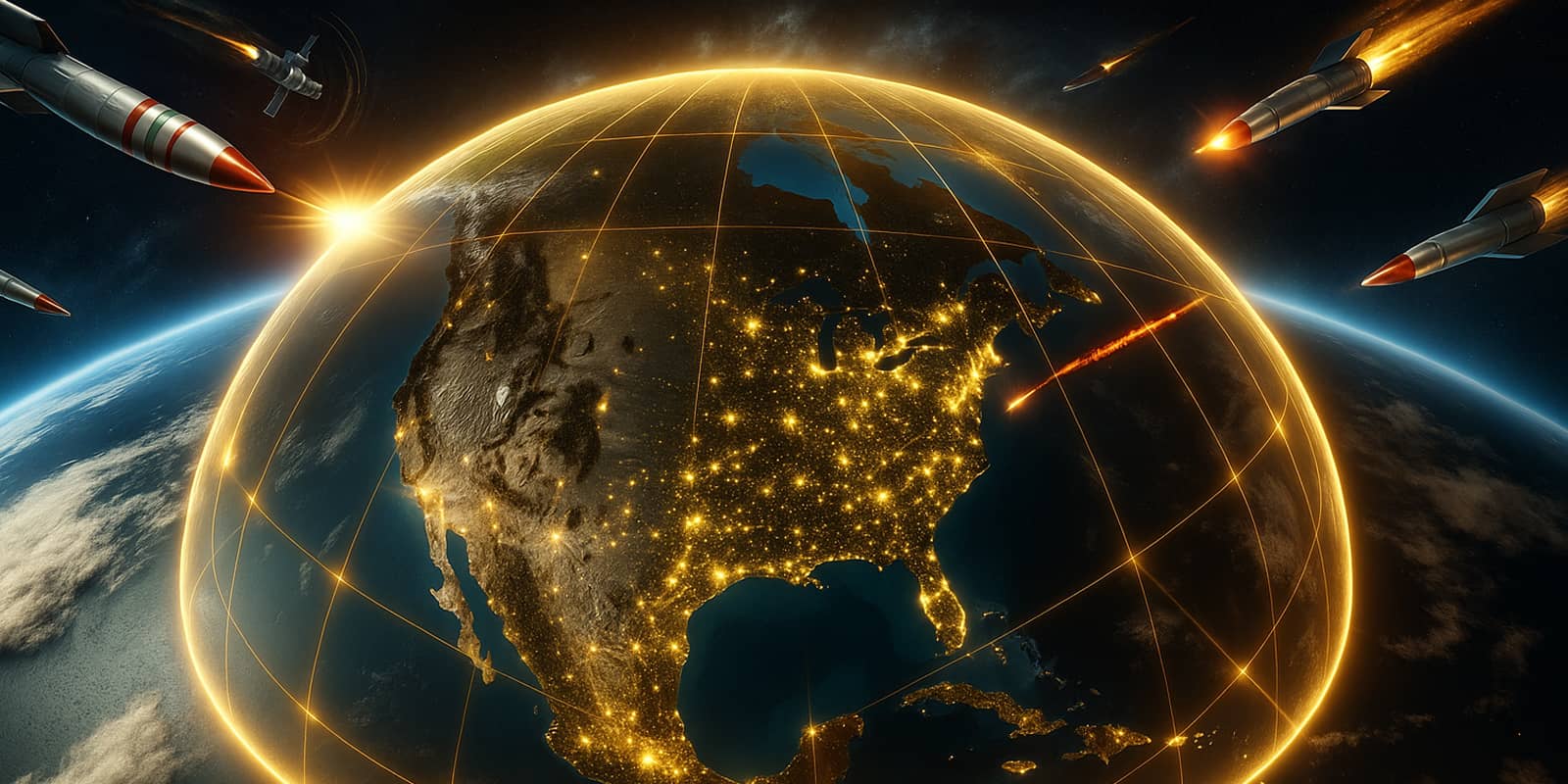
Israeli leaders and strategists appear to have concluded that targeted strikes and degrading measures can delay Tehran’s capabilities only temporarily, leaving Israel to fight round after round. After October 7, 2023, many Israelis concluded that fighting Iran’s proxies while leaving their sponsor intact was unsustainable. Iran’s direct missile attacks in 2024 reinforced this view as missile and drone strikes exacted an ever-higher price, despite Israel’s having the world’s best multilayered air defense system. Moreover, the threat that has persisted for decades stems from the regime’s radical ideology, not just its capabilities. Iran’s proxies, too, depend on Tehran for their ability to impose costs on Israel. Many in Israel now regard the overthrow of the fanatical regime as the only way to end Iran’s hostility.
The timing of the change in Israel’s security thinking reflected the assessment that the Iranian regime had been left weaker than ever. Israeli analyses held that a severe domestic crisis of legitimacy, grave economic difficulties, increasingly stringent sanctions, a blockade of energy exports, and the heavy damage inflicted on the regime’s proxies—Hezbollah, Hamas, and the Assad regime—had created a rare opportunity to bring it down. Washington and Jerusalem believed that most Iranians opposed the regime and would take to the streets despite its brutal repression of earlier demonstrations. They gradually concluded that military and economic pressure at that particular moment would help an internal opposition coalesce and spur popular uprisings that would topple the country’s leadership.
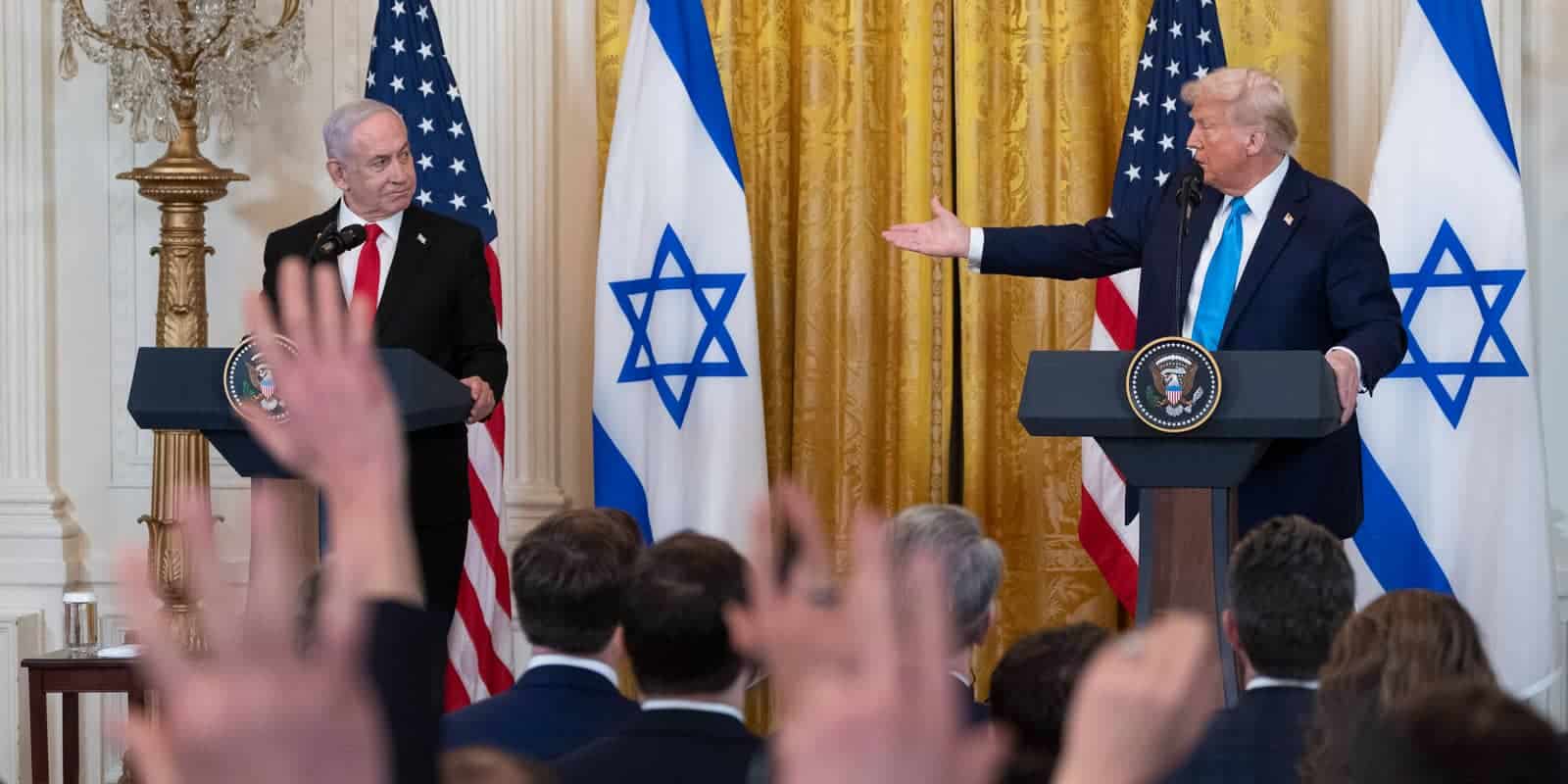
This approach was consistent with the renewed U.S. policy of maximum pressure and military involvement. The personal chemistry between President Donald Trump and Netanyahu also appears to have led to U.S. participation in the military campaigns against Iran in 2025 and 2026. Trump readily intervened on Netanyahu’s behalf during Israel’s election campaign, telling Israelis that Netanyahu was his best partner for winning the war against Iran. The decision to incorporate Israel into U.S. Central Command (CENTCOM), made during Trump’s first term, eased military coordination both in defending Israel against Iranian missile barrages and in dividing tasks in the strikes against Iran.
Israel’s experience in the three years since it was caught by surprise on October 7 also contributed to its sense of strength. Successful counterattacks in several theaters and a robust economy encouraged the belief that even a small country dependent on the United States could adopt the ambitious goal of regime change in Iran, provided it coordinated with Washington. This shift in Israeli thinking was, of course, partly a response to a major change in U.S. policy: the United States had actively joined the strikes against Iran. These circumstances made broader Israeli objectives seem attainable.
Even before the United States bombed Natanz in June 2025, Israeli politicians and strategists were repeatedly declaring that Israel had become a regional power and had transformed the Middle East. Israel’s war against Hezbollah contributed to the formation of a new government in Lebanon and the collapse of the Assad regime in Syria, encouraging hopes of a similar outcome in Iran.
Iran’s multiethnic population also prompted proposals to break up the country. During the election campaign, Netanyahu even boasted that Israel could topple the regime in Tehran without American help. Such talk recalls the euphoria after 1967.
Many Israelis have long argued that nothing could be worse than Iran’s current religious extremist regime. Its fall would be a clear Israeli victory, one that Arab states would greatly appreciate. The regime’s collapse could also spur regional realignment and ease some Arab states’ concerns about joining the Abraham Accords. A moderate Iran, however, could raise Arab fears of a renewed Israeli-Iranian alliance. Still, concerns about the adverse consequences of the Iranian regime’s possible collapse carry little weight in Israeli decision-making. The search for Tehran’s 60 percent enriched uranium is expected to continue to keep it from falling into the wrong hands. The absence of a central authority in Iran would pose a nuclear risk; the worst-case scenario would be the transfer of enriched uranium stocks and technical expertise to neighboring countries or nonstate actors. Conversely, a new regime might dismantle the program in return for sanctions relief, following the Libyan model.
Jerusalem is not afraid of chaos in Iran, since it would give Israel greater freedom of action in locating the enriched uranium. Disruptions to oil supplies during a chaotic collapse of the regime could send oil prices soaring; Iranian exports are already under pressure from the U.S. blockade. Over the longer term, however, a stable Iran with a new regime that is reintegrated into the global economy could add substantial energy supplies and lower prices. Chaos that sends millions of refugees into neighboring countries is not Israel’s problem, and it would divert the international media’s hostile attention away from Israel. Nor will Jerusalem lose sleep over China and Russia losing a valuable anti-American ally. As Israel loses sympathy in America, Jerusalem will emphasize its strategic contribution to sustaining the United States’ global standing. This could help offset negative American public opinion about the war.
Forcibly eliminating Iran’s nuclear program would send an important message to those seeking a nuclear bomb. Similarly, the fall of a long-established revolutionary theocracy would warn authoritarian regimes everywhere and spur debate about the targeted killing of leaders and regime change more generally.
As of late October 2026, the Islamist government in Tehran has survived the U.S.-Israeli war that began on February 28, 2026, along with the subsequent U.S. naval blockade and economic sanctions intended to strangle Iran’s economy. The regime appears weakened but remains intact and has become even more radical. It may yet fall under continuing U.S. economic and military pressure. The United States would then have to choose between helping stabilize the country and staying out.
Meanwhile, in the hope that Trump will remain hostile to the Islamist government in Tehran, Israel has adopted regime change as a strategic objective for the reasons outlined above. It hopes to achieve this goal as America’s junior partner. Doing so will in any event require patience and methods suited to the objective: training opposition forces, increasing economic pressure and diplomatic isolation, damaging infrastructure, and conducting limited ground operations. If the mood in Washington changes, whether because of domestic political dynamics or Iranian diplomatic maneuvering, Israel may find itself alone, with its ability to bring about regime change in Tehran in doubt. Although its military achievements have improved its regional standing, leaving the task in Iran unfinished without eradicating the nuclear program and missile-production infrastructure would leave Israel vulnerable in the event of a prolonged confrontation with Iran.
Source: https://jiss.org.il/en/inbar-regime-change-in-iran/