


Introduction
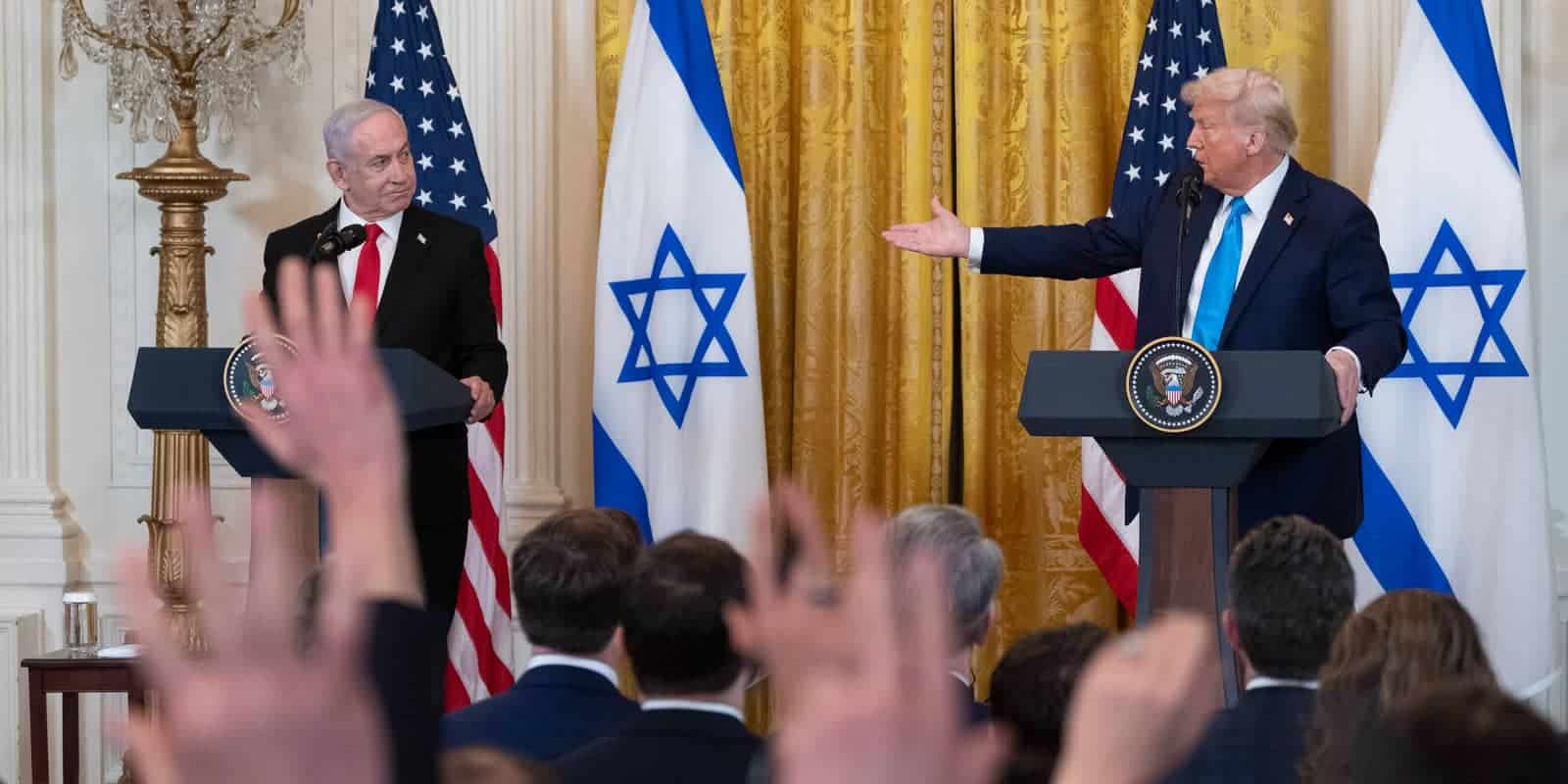
Since the outbreak of the War of Redemption, Israelis have engaged in an extensive and often heated debate over its achievements. The discussion has addressed the war’s military, diplomatic, and psychological dimensions, but much of it has revolved around Prime Minister Benjamin Netanyahu’s promise of “absolute victory.” He first used the phrase publicly in the Knesset on October 12, 2023, during the formation of the emergency government. It soon became a recurring theme in the media, public discourse, and international forums—a source of hope for some and a target of criticism and ridicule for others.
Netanyahu repeated the phrase throughout the war.[1] Addressing officers at an IDF company commanders’ course in January 2024, he said: “My principal expectation is absolute victory. There is no substitute for victory. I hear commentators and all kinds of pundits in the television studios saying, ‘It cannot be done’ and ‘It need not be done.’ It can be done, it must be done, and we have no alternative other than absolute victory.” Before the IDF entered Rafah, he joined soldiers for a reading of the Book of Esther on Purim in March 2024 and declared: “We will enter Rafah and achieve absolute victory. We eliminated Haman, we will eliminate Sinwar as well.” In December 2024, after severe blows dealt to Hezbollah precipitated the fall of the Assad regime, he stated: “The absolute victory that was mocked is now becoming a reality.”
His critics turned the phrase into a focal point of attack. Some argued that its deliberate ambiguity enabled Netanyahu to postpone agreements, avoid securing the hostages’ return, or prolong the war. Others maintained that the military could not act on a term that had never been translated into operational directives.[2] Still others claimed that securing the release of the hostages constituted the “only absolute victory” and accused the prime minister of using the slogan to evade responsibility.[3]
This article examines what “absolute victory” should mean in practice. It assesses the war’s aims and achievements, in all of its arenas—Gaza, Lebanon, Syria, and Iran—through July 2026, and the remaining challenges. We ultimately argue that Netanyahu used the phrase primarily to sustain public resolve and fighting spirit during the war’s most difficult moments. Yet the objective itself extends far beyond rhetoric. Israel must turn its battlefield gains into a lasting improvement in its strategic position by adopting a security doctrine that reshapes the Middle East, establishes new and defensible borders and security zones, and permits Israeli settlement wherever circumstances allow. Only such changes can alter the regional balance of power over the long term.[4]
The Difference Between Victory and “Absolute Victory”
Understanding “absolute victory” first requires breaking victory itself down into its basic components. Victory is not a military concept in its own right, but the continuation of military defeat through the broader instruments of national security. In an earlier article, we set out the relationship between military defeat and victory. We argued that victory does not follow automatically from success on the battlefield, but requires an integrated effort employing the full range of national-security tools, including diplomatic, economic, and informational instruments.
The first and most basic requirement is to cripple the enemy as an organized military force. That means destroying its infrastructure, eliminating senior commanders, dismantling its command-and-control systems, and denying it the ability to employ force coherently. Even then, the result is never permanent. A defeated enemy can rebuild and threaten Israel again. Victory, at least in part, requires using the gains secured through military defeat of the enemy to fulfill the war aims established by the political leadership. It is achieved when long-term political objectives have been secured that materially improve a country’s national-security position. Victory therefore has three principal components: military defeat of the enemy, a shift in perceptions, and an improvement in Israel’s diplomatic and economic standing in the region.
In a previous article, one of the authors analyzed the use of the term “absolute victory.”[5] The phrase was taken from President Franklin D. Roosevelt’s address to Congress after Pearl Harbor: “No matter how long it may take us to overcome this premeditated invasion, the American people in their righteous might will win through to absolute victory.”[6] When Netanyahu adopted it in the context of the War of Redemption, he was addressing four audiences: the Israeli public, the fighting forces, the enemy and its leaders, and the international community. His purpose was to leave no doubt that Israel’s government and people intended to achieve all the war’s objectives—first in Gaza and then in the other theaters.
Criticism of the term ultimately reflects disbelief in the possibility of victory and, by extension, rejection of the war’s objectives. Yet a lack of resolve would expose Israel to intolerable pressure in every theater and create grave security risks. In substantive terms, there is no difference between “victory” and “absolute victory.”
Ultimately, there is no substantive difference between “victory” and “absolute victory.” The latter served chiefly to warn the enemy that Israel would not relent until it had defeated it militarily and turned that achievement into decisive victory across all fronts.
From Battlefield Success to Victory in the War of Redemption
Having defined victory, it is useful to assess Israel’s position in each theater. We examine the elements of military defeat of the enemy achieved in the different arenas of the War of Redemption and the extent to which they contribute to victory in each. In Gaza, Israel has destroyed most of the capabilities of Hamas and Palestinian Islamic Jihad, secured the release of all the hostages, and established a presence across large parts of the Strip, excluding most of the populated areas. The IDF continues to strike the remnants of Hamas with the aim of disarming the organization and demilitarizing the entire Gaza Strip.
The Gaza border region has also recovered. More people now live in its communities than did on October 6, 2023, and economic and social life has revived. Israel exercises full control over approximately 70 percent of the Strip, and not a single shot was fired from Gaza during Operation Roaring Lion. The campaign destroyed terrorist infrastructure, severely damaged Hamas’s leadership, and led to a cognitive change on both sides of the border. Hamas and Palestinian Islamic Jihad, however, remain symptoms of a deeper problem. Gaza’s collective ethos still centers on Israel’s destruction. Even if Hamas is dismantled as an organization, the population will produce new terrorist groups. Any comprehensive solution must therefore allow Gazans who wish to leave to emigrate voluntarily to other countries.
Israel has not yet secured victory in Gaza. Hamas still controls more than 30 percent of the territory, and Israel must complete its takeover of those areas. Large-scale emigration to other countries must also become possible. The 20-point plan that established the Peace Council addressed emigration, as did the summary issued after a meeting of Gulf foreign ministers, which stated that “no one [in Gaza] will be forced to leave Gaza, and those who leave will be free to return.”[7] Finally, Israel should establish communities in the Strip, beginning in the northern security perimeter and later wherever circumstances permit.
In the northern arena, although the IDF has dealt Hezbollah a severe blow, it has not stripped the organization of its military capabilities. In addition, the Trump administration made an error in linking the Lebanese theater to its negotiations with Iran. In our assessment, this has damaged both Israel and the United States, harming Washington’s broader regional agenda. Restrictions on IDF operations have prevented Israel from bringing its full power to bear against Hezbollah. There is also a danger that a future U.S.–Iran agreement could effectively grant the organization immunity. Israel must not accept such an outcome.
The agreement signed between Israel and Lebanon is the first sign of the wedge Israel has succeeded in driving between Iran and Lebanon. This opening, which Israel should seek to widen, allows the IDF to intensify the destruction of terrorist infrastructure in the villages of southern Lebanon with the acquiescence of the Lebanese government. That agreement extends to a continued IDF presence in the south until Hezbollah is disarmed. The agreement is also deepening the divide between the Lebanese government and Hezbollah. Together, the military campaign and the agreement with Lebanon are bringing Israel closer to victory in the Lebanese theater.
Remaining in the north, the Assad regime has fallen, the IDF has destroyed the bulk of Syria’s military power, and Israel now holds a security zone extending from the summit of Mount Hermon along the Golan Heights. Control of that zone, together with continuing action against emerging threats, anchors Israel’s success in this theater. It also creates an opportunity for long-term cooperation with Syria’s Druze community.
By defending the Druze in Suweida against sectarian violence and attacks by Syrian government forces and Bedouin groups, Israel strengthened its position in southern Syria and across the region. It expanded its security control near the border and demonstrated its deterrent power against the al-Sharaa regime. Military achievements have created potential for the Druze to become part of a long-term security arrangement with Syria. Their deep ties to the Druze in Israel—who serve loyally in the IDF—could enable them to form a stable local buffer, guarding the border and providing reliable intelligence. Druze autonomy, local armament, and an agreed joint Israeli-Druze presence could help stabilize the area, block Iranian and jihadist penetration, and support a broader U.S.-sponsored security arrangement that protects Israel’s long-term interests.
To its south, Israel has also dealt with much of the Houthi threat, despite the initial surprise caused by the group’s entry into the war and the great distance involved. Israeli intelligence coverage has improved dramatically, while repeated strikes have damaged Houthi capabilities and leadership. Internal power struggles and continuing conflict with rivals in Yemen have further diverted the organization’s attention and reduced its ability to threaten Israel.
Finally, there is the campaign against Iran. Operations Rising Lion and Roaring Lion inflicted significant damage on the Islamic Republic, but their most important effect was to remove a psychological barrier that constrained Israel in confronting Iran directly. We examined the extent of the damage caused in these operations in an earlier article. Military defeat, however, is not enough. It must be followed by economic and diplomatic pressure that brings about the collapse of the clerical regime.[8] Above all, Israel must persuade the United States not to couple any agreement dismantling Iran’s nuclear program—an outcome that currently appears remote—with sanctions relief that would allow the Iranian economy to recover. The regime appears to have suffered a severe blow and to have been weakened, despite the violence and repression it has employed against the Iranian people. As more evidence of that repression emerges and economic conditions remain dire, the regime’s position is likely to deteriorate further. Israel should do all it can to assist that process. Conversely, if the memorandum of understanding leads to an eventual agreement that leaves Iran in control of traffic through the Strait of Hormuz and lifts sanctions, the regime could recover and within a few years once again pose a grave threat to Israel and the Gulf states.
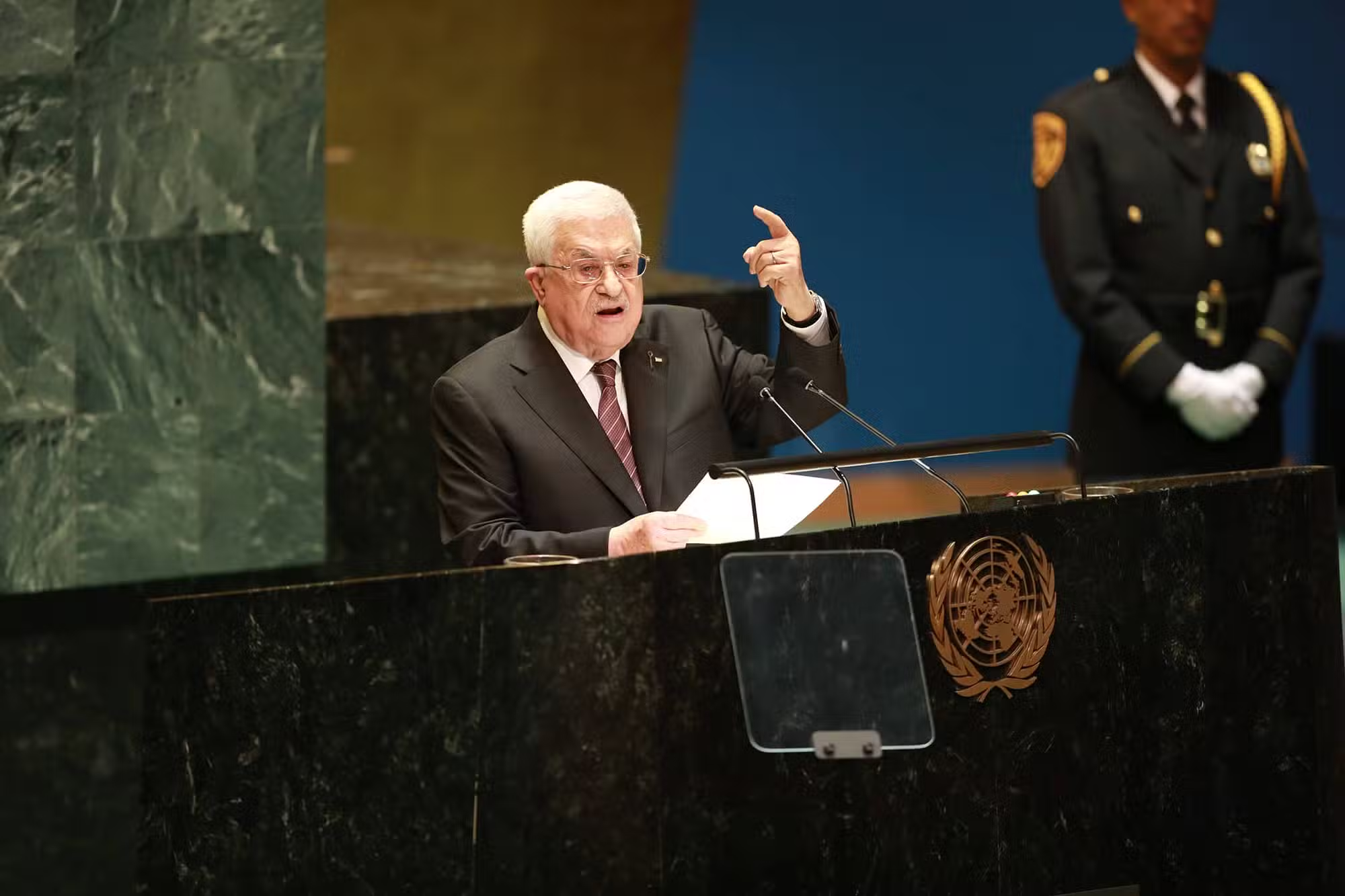
Judea and Samaria are another active front in the War of Redemption. Terrorist capabilities there already pose a serious threat and will become still more dangerous when Mahmoud Abbas leaves the scene; he will not live forever. Iran is working through Hamas, Palestinian Islamic Jihad, and elements within the Palestinian Authority to draw the Palestinian security services into the conflict. This together with the Palestinian Authority’s corruption and involvement in incitement and support for terrorism make existing arrangement in Judea and Samaria untenable. Israel should instead adopt an “emirates model” in which the PA is dismantled and replaced with autonomous entities in the main Palestinian cities, including Jenin, Nablus, Hebron, Ramallah, and others. Israel would assume full control and sovereignty over the areas located inbetween these entities and abrogate the Oslo Accords, which in any case are not honored by the Palestinian Authority. This would give Israel more direct security control over the urban centers and prevent the emergence of a unified terrorist state. The policy would face international opposition and could affect relations with the Abraham Accords states. Israel must therefore prepare international opinion and advance the plan in step with developments on the ground.
History shows why battlefield triumph cannot be confused with lasting victory. Israel’s extraordinary success in the Six-Day War did not prevent the War of Attrition from beginning only months later or the Yom Kippur War from erupting six years afterward. The military achievements of the War of Redemption are therefore only the foundation. Israel must build on them to defeat its enemies strategically and transform its position in the Middle East, despite the many obstacles along the way.
The Great Transformation
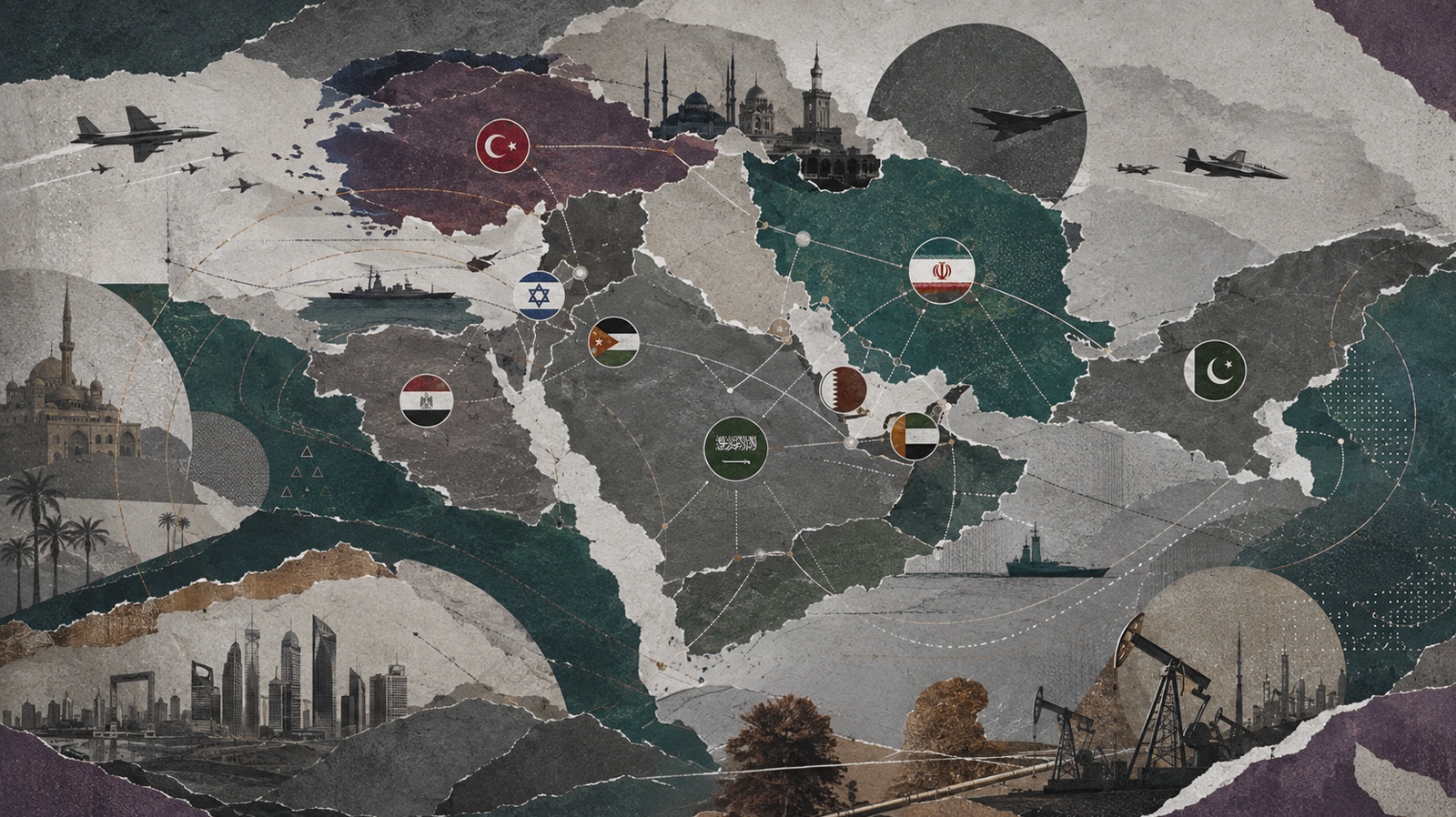
The war has restored the logic of Jabotinsky’s Iron Wall. Israel’s battlefield victories and control of territory in every theater on its borders have left its enemies facing a far less favorable strategic equation. Despite Tehran’s boasts, the Iranians themselves recognize Israel’s military superiority. Across the Middle East and beyond, perceptions of Israel’s capabilities and resolve have changed accordingly. Iran’s “ring of fire” has suffered not only devastating physical damage but also a profound psychological blow.
The War of Redemption has also created enormous potential for diplomatic and economic development. The war and the campaigns against Iran have opened up broad economic and diplomatic opportunities by contributing to a more stable regional environment and reinforcing the Gulf states’ view of Israel as a reliable partner against the Shiite threat. At the same time, deeper Israeli cooperation with India may extend to a far-reaching economic and technological alliance. The agreement with Lebanon, in which several Gulf states are involved, will also strengthen their ties with Israel.
The eastern Mediterranean offers similar opportunities. Israel’s ties with Greece and Cyprus are deepening through the EastMed Forum, joint development of natural-gas fields, construction of energy pipelines, plans for electricity and water corridors linking the Middle East to Europe, and extensive naval and military cooperation. These projects could turn Israel into a major economic hub and attract substantial foreign investment in infrastructure, energy, technology, and high-tech industries. They would also help establish Israel as a regional power that combines military strength with economic leadership.
Beyond military defeat of enemies, a shift in perceptions, diplomatic arrangements, and long-term economic improvement, victory has another component that embodies the essence of the broader change: the establishment of new and defensible borders through the creation of security zones and Israeli settlement. This is what distinguishes a temporary victory—which may erode under international pressure or as the enemy recovers—from a historic and irreversible victory that alters the balance of power for generations.
Israel’s withdrawal from the security zone in Lebanon demonstrated the strategic value of settlement. Without settlements, the state proved unable to withstand domestic and international pressure to abandon an area that had protected its northern communities. Settlement is an important national value, although diplomatic constraints may limit what Israel can implement. It should nevertheless establish communities in its security zones—and throughout the country—wherever possible. Settlement in security zones has several advantages: it provides a measure of immunity against both internal and external pressures to withdraw from territory,[9] advance the national objective of settling the land, and exacts a territorial price for enemy aggression. If the enemy attacked those communities, Israel would seize another security zone and settle that as well, repeating the process until the enemy gives up. This is an updated application of Jabotinsky’s “Iron Wall” doctrine.
October 7 exposed the grave danger of leaving Israeli communities on the front line without adequate defensive depth. Before the war, hostile forces along the Gaza border, opposite the northern communities, and on the Syrian frontier could dominate the approaches to those communities, maintain comprehensive surveillance, infiltrate Israeli territory, and prepare an attack at any time. History shows that narrow, exposed borders invite aggression. Israel is therefore applying the lesson systematically by establishing broad security belts, free of hostile populations, to provide greater protection.
These buffer zones must be more than conventional military areas. Israel is establishing broad belts cleared entirely of hostile forces and populations, destroying terrorist infrastructure in the villages within them, and preventing the enemy population from returning. Any violation—whether an armed infiltration or other suspicious movement—would be met under permissive rules of engagement and without prior warning.
Israeli settlement in these zones would impose the cost that Israel’s enemies value most. They show little concern for the lives of their own people, but regard land as their greatest asset and base their identity and legitimacy on its “liberation.” The most effective deterrent is therefore to demonstrate that attacks on Israel will cost them territory permanently, not merely for the duration of a war. Israel should already designate areas for settlement for both security and civilian purposes—doing so would be a reflection of a change in Israel’s doctrine in the wake of the War of Redemption.
In Gaza, possible locations include Dahaniya, the communities of the northern security perimeter, and the northwestern coastal strip, relatively fertile areas near the border that could support agricultural communities with a security role. In Lebanon, Israel should consider the Marjayoun Valley and lands that once belonged to farmers from Metula. More broadly, the Litani River is Israel’s natural border. Settlement in southern Lebanon would create territorial continuity with the Upper Galilee and links to the Christian villages in the area. This may seem remote given current conditions vis-a-vis the United States and Lebanon, but creative solutions are possible; for example, a 100-year lease for Israeli agriculture and settlement. Similar models could be considered in Syria. In Judea and Samaria, Israel should expand the farm initiative, which has proved an effective means of controlling open land, into open areas formally designated as Areas A and B and ultimately establish permanent communities there. International opposition should shape how Israel proceeds, not lead it to abandon the idea in advance.
Settlement in these areas would not be an act of “punishment” or “revenge,” but an integral part of victory. It would strengthen security, gain greater international acceptance over time—as occurred in the Golan Heights after 1967—and establish realities that would be extremely difficult to reverse. It would also convey a clear message: Israel does not merely defend itself; it builds and expands.
Settlement after previous wars helped transform Israel from a narrow and vulnerable state into a regional power. The same model shaped the Galilee, the Negev, the Golan Heights, and Judea and Samaria. Israel should now apply it systematically in every theater of the War of Redemption. Hamas, Hezbollah, and Iran launched the war on October 7. Their aggression has forced Israel to change the map in order to safeguard its existence.
The principal obstacle will be diplomatic pressure from the United States, Europe, and the United Nations against “annexation” and “settlements.” Past experience, however, shows that realities on the ground can reshape the international debate. Israel must present the security zones and the communities within them as an existential security requirement, not as a punitive measure.
Conclusion
After more than 1,000 days of war, Israel has reached a decisive stage. Despite the heavy loss of life, domestic criticism, and international pressure, it stands in a far stronger position than it did when the war began. Israel holds the upper hand in every theater. Iran’s “ring of fire”—the long-term strategy designed to encircle Israel and erase it from the map—has largely been dismantled. Hamas has lost most of its military and governing capabilities; Hezbollah has been dramatically weakened; the Assad regime has fallen; and Iran has sustained severe damage to its nuclear program and missile-production capacity. These are not marginal gains, but historic achievements that are reshaping the Middle East.
Despite the criticism and ridicule it has attracted, Netanyahu’s concept of “absolute victory” offers a clear strategic vision. Israel must defeat its enemies militarily in Gaza, Lebanon, Syria, and Iran, and then turn those gains into a lasting victory by changing perceptions, securing diplomatic arrangements, creating security zones, and establishing Israeli settlements that alter the balance of power.
In Gaza, Israel has dismantled much of Hamas’s infrastructure, expanded its control, and enabled residents to return to the border communities. It must still complete its conquest of the Strip, destroy Hamas, and allow and assist those who wish to emigrate. In Lebanon, Israel has begun to drive a wedge between Hezbollah and the government. In Syria, it has established a stable security zone, creating the possibility of cooperation with the Druze. Against Iran, it has broken the psychological barrier that once constrained direct Israeli action and inflicted severe damage on the regime. In Judea and Samaria, where Iran seeks to gain a foothold among the Palestinian security services and strengthen extremist forces, Israel should dismantle the Palestinian Authority, establish local entities under the emirates model, and place open areas under Israeli sovereignty.
Absolute victory ultimately means more than defeating Israel’s enemies on the battlefield. It requires reshaping the Middle East, establishing defensible borders, creating physical and psychological buffers, and securing Israel’s position as a strong and safe regional power. Only resolve, combined effort, and long-term perseverance can ensure that the October 7 massacre is never repeated and that Israel emerges from the war stronger, larger, and more prosperous than ever.
The War of Redemption is a process of national renewal. It gives Israel an opportunity to transform regional realities, restore deterrence, expand the strategic space essential to its security, and safeguard the future of its children. If Israel completes the mission—turning impressive military achievements into absolute victory through security zones and settlement—it will ultimately be able to say: We did it. We won—not merely a battle, but the war as a whole. Victory is possible. It is essential. And it is within our grasp.
[1] Shirit Avitan Cohen and Lilach Shoval, “Netanyahu to IDF Company Commanders Course: ‘My Principal Expectation Is Total Victory—Nothing Less,’” (Hebrew) Israel Hayom, January 25, 2024.
[2] Avihai Kravchik, “Total Victory? Giora Eiland Warns Netanyahu That It Could Blow Up in Our Faces,” (Hebrew) Maariv, February 13, 2024.
[3] Uri Misgav, “Netanyahu’s Plan to Sacrifice the Hostages,” (Hebrew) Haaretz, February 8, 2024.
[4] Gabi Siboni and Erez Winner, ““Decisiveness and Victory: A Military and Political Analysis,” JISS, December 16, 2025.
[5] Gabi Siboni and Kobi Michael, “On the Importance of ‘Total Victory,’” Misgav Institute, February 26, 2024.
[6] Franklin D. Roosevelt, speech transcript, New York, “No matter how long it may take us to overcome this premeditated invasion, the American people in their righteous might will win through to absolute victory,” Library of Congress.
[7] “Joint Statement Following the Ministerial Meeting of the United States and the Gulf Cooperation Council,” U.S. Department of State, June 25, 2026.
[8] Gabi Siboni and Erez Winner, “The Waning of the Iranian Crescent,” JISS, April 13, 2026.
[9] Israeli communities in the Gaza Strip necessitated an IDF a presence in the area, thus providing protection for the Gaza border communities as well.
JISS Policy Papers are published through the generosity of the Greg Rosshandler Family.