



By CHARLES BYBELEZER
While President Trump has overjoyed Israel’s public and political establishment, his upcoming peace plan risks derailing all progress
Perhaps the thorniest issue in the Israeli-Palestinian conflict is the future status of the West Bank where approximately half a million Israeli citizens live in scattered communities. On Saturday, Netanyahu added fuel to the complex fire by affirming that, “all the settlements, without exception, regardless of the blocs, must remain under Israeli sovereignty.” More specifically, the premier stressed that under his watch he would not uproot even one Israeli from the West Bank, nor would there be any discussion whatsoever of peace if Trump suggests it.
Then, on Sunday, Netanyahu went a step further by saying that “a Palestinian state will not be created, not like the one people are talking about. It won’t happen.”
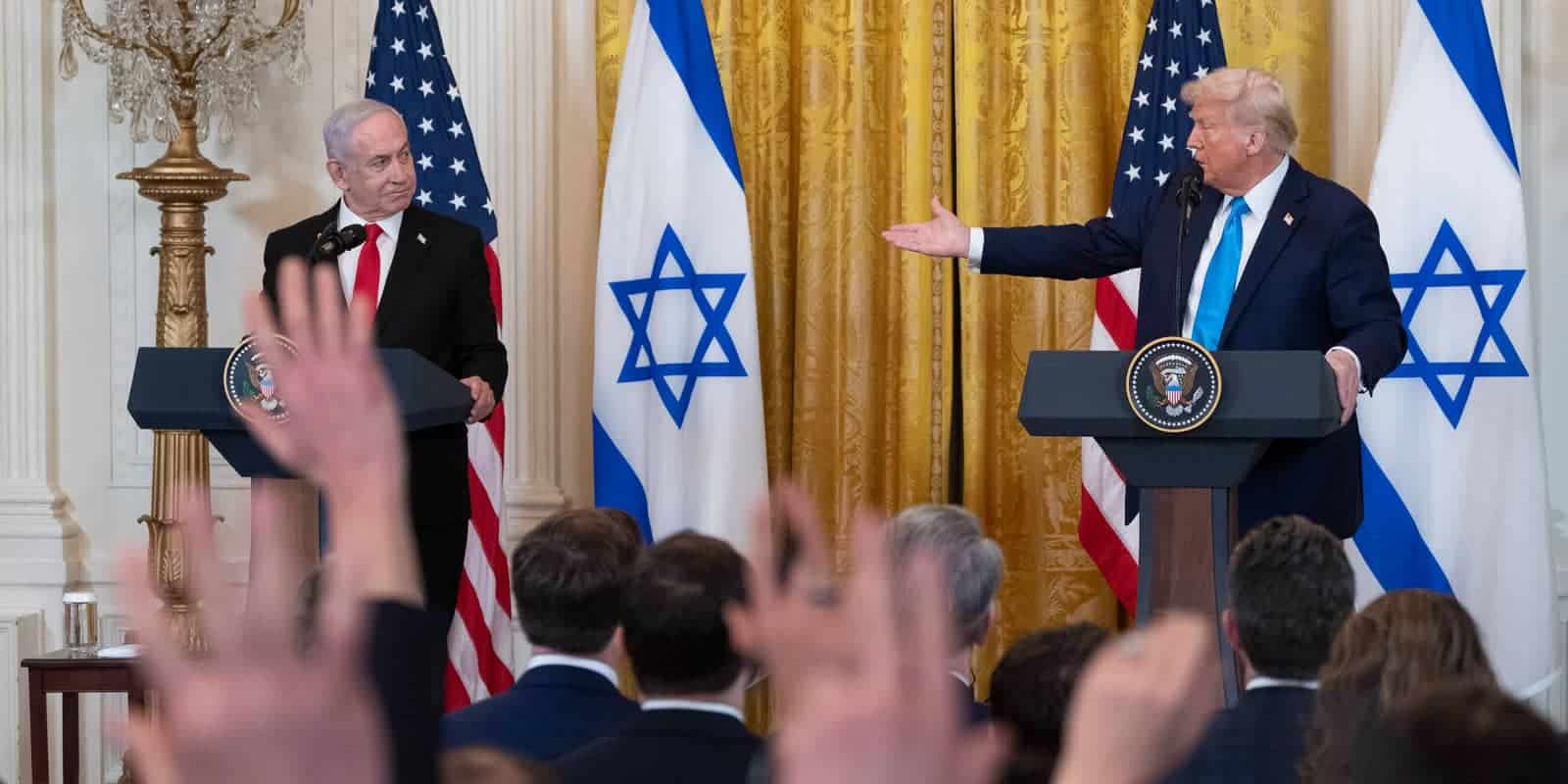
Normally, pundits would attribute such statements to elections rhetoric, but Netanyahu revealed that he conveyed these non-negotiable conditions with Trump during his March visit to Washington. The premier also told the US president that Israel demands “continued control of all the territory to the west of the Jordan” in order to secure the nation. The prime minister made clear that if the US plan contradicted his positions then “it won’t [materialize].”
The revelation caused an uproar in Ramallah, with top-ranking PLO official and longtime peace negotiator Saeb Erekat suggesting “Israel will continue to brazenly violate international law for as long as the [global] community…reward[s] it with impunity.” He added that the Palestinians will “pursue [their] rights through international forums, including the international criminal court, until we achieve our long overdue justice.”
Most likely, then, the most the Palestinians can hope for are minor interim steps focused on economic development to enhance their lives, which, in turn, might make them more amenable to compromise.
Alternatively, the most unpredictable American president in history could, alternatively, drop a bombshell on Israel and follow his predecessors’ lead by endorsing the two-state formula along with the associated stipulations. This potentiality stems from the realization that the PA, along with other Arab nations, would never countenance a deal with fewer benefits than previous ones.
The Media Line discussed the issues with Professor Efraim Inbar, president of the Jerusalem Institute for Strategy and Security.
The Media Line, 07.04.2019