

Introduction: From Deterrence to Attrition
For years, Iran has recognized that it cannot match Israel or the United States in a direct military confrontation. Its air and naval capabilities are limited and this has pushed Tehran to develop a strategic approach that enables it to export the Islamic revolution while competing with militarily superior adversaries. Accordingly, Iran has developed a strategy built around three primary pillars: an extensive missile arsenal, the pursuit of nuclear capability, and a regional proxy network.[1]
The regional war triggered by Hamas’s October 7, 2023 attack exposed the limits of that model. Iran’s long-standing vision of exporting the Islamic Revolution was dealt a grave blow, and it was unable to prevent strikes on its own territory. Rather than abandon the capabilities it built, Tehran appears to have adjusted how it uses them to fit a different logic of war. As seen during Operations Epic Fury and Roaring Lion, this logic could be said to be one attrition focused on gradually wearing down Israel’s and the United States’ capacity and willingness to continue the fight, above all by eroding the domestic and international legitimacy of the campaign.
At the conceptual level, Iran’s approach can be seen as a shift toward compellence, in the sense articulated by Thomas Schelling: the use of sustained pressure to force an adversary to change course, halt its actions, or render them ineffective. Unlike deterrence, which aims to prevent action, compellence seeks to stop or reshape it,[2] often through a multidimensional strategy of attrition.
Because the regime views the current campaign as an existential fight, it places no constraints on using the full range of tools at its disposal—closing the Strait of Hormuz, striking Gulf states and Israel, and targeting American assets—to pressure Washington and Jerusalem to halt the war while it remains in power. Its key asset in this context is the prevailing assumption that no attempt will be made to topple the regime through a ground invasion. Even if ground force is used, it is likely to be limited to clearly defined missions such as opening the strait, seizing Kharg Island, or securing and exfiltrating enriched uranium. As a result, the regime’s survival is not immediately at risk, so long as it can deter internal challengers from attempting to remove it through mass civil unrest or force.
This article examines how Iran employs its pressure levers in the current war and how they are intended to shape decision-making in Jerusalem and Washington. It analyzes four primary arenas of pressure: economic, diplomatic, influence, and military. The first three are aimed primarily at undermining the legitimacy of continuing the war, while the military dimension is designed to reinforce them by directly disrupting operational capabilities. Together, these elements reflect a broad strategy of multidimensional attrition intended to end the war on terms that serve Tehran’s interests—chief among them regime survival and the shaping of a more favorable regional environment.
Economic-Diplomatic Pressure: Hormuz as a Global Lever of Compellence
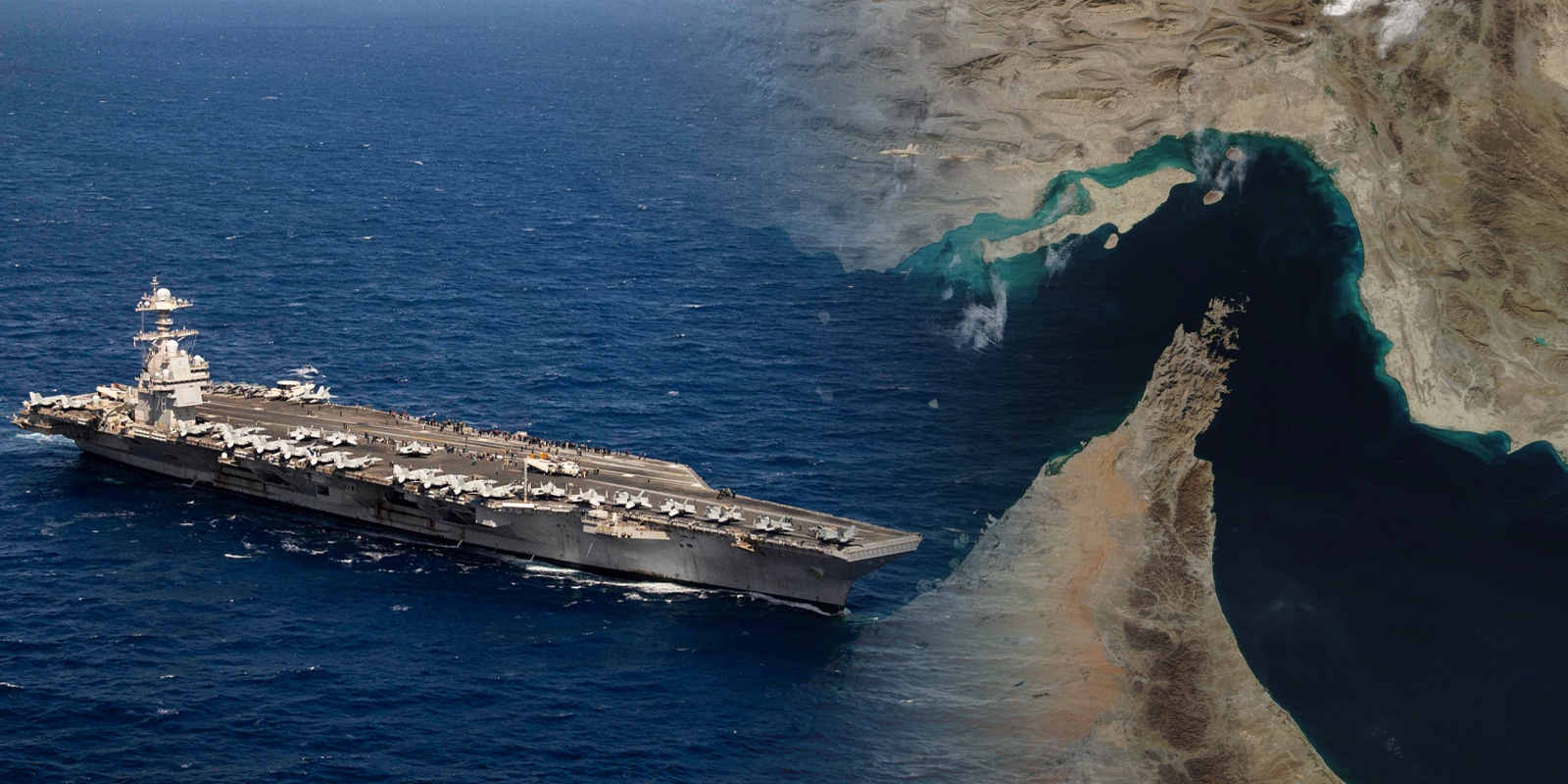
Iran’s most significant move in the current war has been the closure of the Strait of Hormuz—one of the world’s most critical energy chokepoints, through which a substantial share of global oil and gas supplies passes. By threatening maritime traffic in this corridor, Tehran seeks to generate disruption in global energy markets that will translate into pressure on Israel and the United States from both producer and consumer states to accept its terms for ending the war. In theoretical terms, this is a textbook case of economic compellence: applying pressure through harm to third parties in order to influence an adversary’s decision-making. In that context, a spokesperson for Iran’s Khatam al-Anbiya emergency[3] command stated that “oil and energy prices cannot be lowered through artificial respiration”—a remark that reflects a deliberate strategy of systemic pressure to achieve strategic effect.
At the same time, closing the strait is not merely a tactical pressure tool but part of a broader effort to reshape the rules of the maritime domain. Iran is working to establish a new “regime” governing transit through the strait, with the aim of securing dominance, and potentially de facto sovereignty, over this strategic space. The Tasnim News Agency reported that Iran is calling for “the implementation of a new legal regime in the Strait of Hormuz,”[4] while voices within the political system have gone further, advocating full sovereignty. A member of the Majlis, Goudarzi, stated that “this capability [control of the Strait of Hormuz] will become an economic advantage for Iran once a new legal regime is approved.”[5] This extends trends beyond the immediate wartime context and reflects a broader Iranian ambition to reshape the regional and economic order.
A practical expression of this approach is the introduction of selective transit rules designed to signal effective Iranian control. The Iranian daily Donya-ye Eqtesad reported that the strait is closed to vessels linked to Israel, the United States, and their allies, while remaining open to Chinese shipping and states considered “friendly to Iran.”[6] In doing so, Tehran is not only exerting pressure on its adversaries but also drawing distinctions among international actors and rewarding strategic partners.
In this context, a growing economic alignment between Iran and China is also becoming evident. The Tabnak website cited reports that Tehran is considering allowing oil-carrying vessels to transit the strait with fees paid in Chinese yuan rather than U.S. dollars.[7] If implemented, such a move would extend beyond the immediate tactical context of the war and reflect an effort—however limited—to challenge the dominance of the U.S.-led financial system. Even if the feasibility of this move remains constrained in the short term, raising the option itself serves as an additional lever of pressure in the international arena.
Alongside economic pressure, Iran is applying direct diplomatic-military pressure through strikes on regional states that host U.S. bases—primarily Saudi Arabia, the United Arab Emirates, Qatar, and Bahrain. Although Tehran frames these as targeted attacks against American assets under the principle of self-defense,[8] in practice they often extend beyond those targets and affect the broader state environment. Iran seeks to exert indirect pressure on the United States by destabilizing host countries, assuming they will respond by pushing to reduce the American military presence on their territory.
As the war has progressed, the scope of threats has expanded to include civilian infrastructure across the Gulf. Following U.S. President Donald Trump’s threats to strike Iran’s electricity infrastructure, regime-affiliated media circulated a poster titled “Say Goodbye to Electricity!” listing major power stations in states in the region.[9] Additional threats have targeted other civilian infrastructure, including hotels; Iranian Foreign Minister Araghchi claimed that U.S. forces operate from them.[10] This pattern reflects a shift from focused deterrence to broader threats against civilian spaces, as part of an expanded effort to pressure decision-makers across the region.
Beyond the steps already taken, Tehran retains additional escalation options it has not yet used. These include activating the Houthis to close the Bab el-Mandeb Strait,[11] thereby extending pressure on maritime trade routes, and expanding strikes against U.S. and Western interests in additional countries. Throughout the course of the war, incidents have been reported in Oman,[12] Azerbaijan,[13] Turkey,[14] and Cyprus.[15] Such incidents remain isolated but may point to the potential for broader escalation, whether by design or as a result of poor coordination among different elements within the Iranian system.
In terms of effectiveness, the economic-diplomatic lever appears to be Iran’s most powerful tool, but also the most sensitive to calibration. On one hand, it carries real potential to influence international actors; on the other, excessive use could trigger backlash, including the formation of a regional or international coalition against Iran. Tehran therefore appears to be operating in a measured and incremental manner, maintaining escalation thresholds—for example, by threatening infrastructure before striking it. This pattern reflects an effort to balance effective pressure with the need to avoid escalation that could spiral into a loss of strategic control.
At the same time, the ability of Gulf and Western states to absorb shocks in energy markets, along with the existence of partial supply alternatives, limits the immediate effectiveness of this lever. Moreover, applying excessive pressure could incentivize these actors to close ranks against Iran, thereby narrowing its room for maneuver.
Cognitive Pressure: Shaping Perceptions and Eroding Legitimacy
Parallel to its actions in the economic-diplomatic arena, Iran is conducting a broad information campaign targeting multiple audiences, both domestic and external. This effort aligns with concepts of political warfare and strategic influence, aimed at shaping perceptions, attitudes, and behavior among relevant audiences in order to achieve political objectives. The core message Tehran seeks to inculcate can be summarized as follows: continued war against Iran is futile and will lead only to unnecessary damage and suffering. This message is constructed from several complementary components, each tailored to a different audience.
First, with regard to the purpose of the war, Tehran seeks to frame the campaign as strategically futile for Israel and the United States. Regime mouthpieces portray offensive actions such as strikes on Iranian energy infrastructure as signs of desperation and stagnation in achieving war aims.[16] The objective is to undermine the adversary’s sense of purpose and progress.
Second, the regime highlights its own survival as evidence of its adversaries’ “failure.” Its continued survival is presented as proof that Israel and the United States have, in effect, abandoned the goal of regime change.[17] Tehran is reinforcing this message domestically, while at the same time tightening control over public spaces, encouraging pro-regime demonstrations at sensitive moments, signaling threats against opponents, and showcasing enforcement and punitive measures. Particular attention is given to perceived threats in peripheral regions, especially along the western border with Iraqi Kurdistan. Taken together, these steps are designed to project stability and control, and to signal that the regime’s survival is not under threat.[18]
In parallel, Iran is running an influence campaign designed to highlight the costs of the war for its adversaries, tailoring its messaging to distinct target audiences.
Israel
In Israel’s case, Iran combines military pressure with a parallel effort to shape public perception. The regime is working to maintain continuous missile fire—through the IRGC and its proxies, especially Hezbollah and the Houthis—targeting population centers in order to keep pressure on the civilian rear. These attacks are paired with explicit threats designed to heighten the sense of threat. For example, IRGC Air Force commander Majid Mousavi warned that “from now on, missiles with warheads weighing one ton or more will be used, and the rate and scale of attacks will increase.”[19] In a separate statement, he asserted that “Iranian missiles dominate Israeli airspace” and that “the skies over southern Israel will be lit for hours [by explosions].”[20]
At the same time, Iran is active in the cyber domain, running influence operations designed to shape public perception. The cyber persona “Handala,” which has carried out a series of hack-and-leak operations, including an attack on the servers of the Institute for National Security Studies,[21] illustrates an effort to penetrate the public sphere, create a sense of vulnerability, and apply indirect pressure on decision-makers. In parallel, Tehran is pushing propaganda campaigns aimed at undermining trust in Israel’s leadership and diverting attention from the damage sustained by its own leadership. One such campaign falsely claimed that Prime Minister Benjamin Netanyahu had been killed or seriously wounded and was no longer directing the war.[22]
The United States
In the United States, Iranian messaging is aimed primarily at the public, framing the war as futile and as serving Israeli interests rather than American ones. An Iranian Foreign Ministry spokesperson stated in this context that the war “is not the American people’s war, and every citizen and official can at the very least disavow it.”[23]
Iran’s information campaign in the U.S. also draws on conspiracy-driven narratives and emotionally charged themes designed to erode trust in government. Before his assassination, Ali Larijani claimed that the “Epstein group” was planning a September 11 style “false flag” operation in which it would put the blame on Iran to justify escalation.[24] Iran’s intent is to tap into past trauma and existing distrust of institutions to weaken public support for the war.
Regime-aligned English-language outlets, such as the Tehran Times, reinforce these narratives for American audiences. A post on X, for example, claimed that “the American people are tired of Israeli rulers controlling American democracy,” tying the message to ongoing domestic protest movements in the U.S.[25]
As part of its information campaign, Tehran also highlights the human cost of the war. Former IRGC commander Mohsen Rezaei wrote, “Are American soldiers ready to die for Israel? We are waiting…”[26] Tasnim, for its part, stated that “the return of coffins from the battlefield is yet another reminder that the decision to go to war is not merely political; it carries a human cost…”[27]—a message intended to generate public pressure on the administration.
Alongside the human toll, Iran underscores the economic costs of the war for the United States. Majlis Speaker Mohammad Bagher Ghalibaf warned, “We monitor your portfolios. This is your final notice.”[28] In parallel, Iran is active in the cyber domain against U.S. targets, including an attack on the Stryker Corporation, a medical device manufacturer, that reportedly caused significant damage.[29]
Assessment of the Effectiveness of Iran’s Cognitive Pressure
Iran’s information operations rest on the assumption that public pressure in Israel and in the United States can be translated into political pressure on decision-makers to end the war. At this stage, however, its impact appears limited. In Israel, despite efforts to undermine public confidence and trust in the country’s leadership, social cohesion remains relatively high. In the United States, while public discourse reflects concern over the costs of the war, it has not yet translated into decisive pressure on government policy.
At the same time, when combined with military and economic pressure, the information campaign may generate cumulative effects over time, particularly if the war drags on and its costs rise. In that sense, it is not designed to produce immediate results, but to serve as a central component of a broader strategy of attrition.
In sum, Iran is operating a multidimensional information campaign aimed at undermining the public and political legitimacy of continuing the war, while widening the gap between the American and Israeli administrations and their publics. Although direct impact of Iran’s influence operations remain limited for now, they constitute a meaningful supporting element within Tehran’s broader pressure architecture.
Military Pressure: Disruption, Proxies, and the Limits of Force
Iran also applies military pressure against Israel and the United States, primarily to disrupt the effectiveness of operations against it and complicate continued military activity. Of all its pressure levers, this is the domain in which Tehran faces the clearest disadvantage, given the capability gap with its adversaries. As a result, it relies heavily on asymmetric tools, chief among them missile fire directed at civilian targets and deployment of the proxy organizations it has cultivated over the years. At present, however, the results of this effort remain limited.
Tehran’s direct capabilities include its ballistic missile arsenal, UAVs, and its air defense network. Despite their scale, these systems have not produced significant strategic effects to date, such as disabling critical infrastructure or degrading the sustained aerial capabilities of Israel and the United States. There have been some localized successes in the U.S. arena, including the destruction of radar positions[30] and damage to an AWACS aircraft on the ground in Saudi Arabia,[31] but their overall impact remains limited.
In the Israeli arena, Iran’s air defense efforts have been largely limited to intercepting unmanned aerial vehicles.[32] There are likely ongoing attempts to target Israeli air force bases in order to constrain operational freedom, but there is no reliable evidence of meaningful success so far. This underscores Iran’s limited ability to directly alter the military balance.
By contrast, Iran’s proxy organizations represent the more effective component of its military pressure, serving as a strategic force multiplier. Their activity spans multiple arenas—Lebanon, Iraq, and Yemen—but Lebanon stands out as the most significant. Hezbollah, which joined the fighting on the third day of the war,[33] has paid a heavy price but has since maintained an active and coordinated front with Iran, including synchronized barrages.[34] This dynamic forces Israel to divide attention and resources across multiple theaters.
Israel has responded with a broad military campaign in Lebanon, expanding its ground presence[35] and diverting resources, including airpower, to that front. This dynamic serves Iranian interests to some extent, as it may come at the expense of focus and effort directed at Iran itself. In this sense, proxy activity illustrates its role within Tehran’s broader attrition strategy. On the other hand, Hezbollah may ultimately pay costs that outweigh the benefits derived from its involvement.
Iran’s proxy organizations should be understood not merely as military tools, but as a multidimensional strategic system that enables Iran to operate simultaneously across multiple arenas while obscuring responsibility and reducing the risk of direct escalation. They are therefore a central component of Tehran’s ability to sustain a prolonged strategy of attrition.
Assessment of the Effectiveness of Iran’s Military Pressure
At this stage, Iranian military pressure on its own appears unlikely to produce either decisive outcomes or to compel an end to the war on terms favorable to Tehran. Its effects are largely tactical and constrained in both time and scope. Its main contribution lies in reinforcing other pressure levers: sustaining a continuous sense of threat, forcing Israel and the United States to disperse resources, and creating more favorable conditions for economic and cognitive pressure to take hold.
At the same time, the ability of Israel and the United States to sustain significant military operations, combined with effective defense and recovery mechanisms, limits the impact of this lever. In that sense, Iran’s military pressure does not alter the balance of power but contributes to its gradual erosion over time.
In sum, the primary purpose of military pressure is to disrupt Israeli and American operations and to buy Iran time—until the cumulative effect of its other pressure levers translates into political pressure to bring the war to an end.
Conclusion: A Multidimensional Attrition Strategy—Achievements, Constraints, and Implications
Iran is deploying a broad set of economic, diplomatic, cognitive, and military pressure levers in an effort to bring the war to an end on terms that serve its interests. Its current efforts align closely with a strategy of compellence and attrition, seeking to shape Israeli and American decision-making through the accumulation of pressure across multiple domains simultaneously.
Most of these levers are not designed to deliver a direct military victory—an outcome beyond Tehran’s reach—but to erode the political and public legitimacy of continuation of the war, both domestically and internationally. In doing so, Iran seeks to widen the gap between its adversaries’ war aims and their willingness to bear the costs required to achieve them.
Nevertheless, Iran’s objectives appear to extend beyond restoring the status quo. Repeated statements in Tehran that “there is no going back” point to a broader ambition to reshape the regional order in ways that constrain U.S. freedom of action and strengthen Iran’s position—including on issues not directly tied to the war.
A list of demands published in the Kayhan daily reflect Iran’s objectives. These include calls for a U.S. withdrawal from the region, a ceasefire across all arenas, changes to the legal regime governing the Strait of Hormuz, the lifting of sanctions, and recognition of Iranian territorial claims.[36] Embedded within these demands is also an unprecedented push to formalize Iran’s umbrella over its proxy groups. Quds Force commander Esmail Qaani echoed this position, writing: “Get used to a new order in the region; Netanyahu dreamed of a security buffer, but the fire of Hezbollah and Ansar Allah [the Houthis] has shattered that illusion.”[37]
These demands suggest a strategic outlook in which even partial gains would constitute a meaningful shift in the regional balance of power.
At the same time, these demands can also be interpreted as bargaining positions giving the regime a tree it can climb down later, allowing it to present compromise internationally while claiming victory domestically.
In practice, as of this writing, Iran’s pressure levers have yet to produce a meaningful breakthrough: there has been no significant distancing between the Gulf states and the U.S; the confrontation with Hezbollah has not substantially reduced military pressure on Iran; and neither Europe nor China is exerting decisive pressure to end the war. These factors point to the limits of Iran’s attrition strategy in the short term.
However, if the war continues and its costs escalate, this strategy may gain traction. In that context, the regime’s apparent willingness to define success in terms of mere survival could prove a double-edged sword: while this strategy supports short-term resilience, it may undermine Iran’s economic and social stability over the medium to long term—especially if critical infrastructure, particularly in the energy sector, is damaged.
In this sense, the central innovation in Iran’s strategy lies not in the power of the tools at its disposal but in how it deploys them to create sustained, multidimensional pressure designed not to defeat the adversary on the battlefield, but to erode its willingness to continue fighting. The success of this approach depends on several conditions: a prolonged conflict, rising costs for Iran’s adversaries, and the absence of a clear military outcome. In the absence of these conditions, the impact of Iran’s pressure campaign is likely to remain limited.
*This paper is based on information current as of March 30, 2026. The author thanks Daniel Hirschfeld for his contribution to the research.
[1] “‘The Need to Review Iran’s Defense Doctrine’ (original in Persian: لزوم بازنگری در دکترین دفاعی ایران),” Asr Iran, June 30, 2025, https://www.asriran.com/fa/news/1073057
[2] Reichberg, Gregory M., and Henrik Syse. “Threats and coercive diplomacy: An ethical analysis”. Ethics & International Affairs 32.2 (2018): 179–202.
[3] Khatam al-Anbiya Headquarters: We Will Not Allow a Single Liter of Oil to Pass for the Benefit of America’ (original in Persian: قرارگاه خاتمالانبیا: اجازه عبور یک لیتر نفت به نفع آمریکا را نمی دهیم),” Tasnim News Agency, March 11, 2026, https://www.tasnimnews.ir/fa/news/1404/12/20/3538015
[4] ‘Iran’s Six Conditions for Agreeing to End the War with America and the Zionist Regime’ (original in Persian: شروط ششگانه ایران برای موافقت با توقف جنگ با آمریکا و رژیم صهیونیستی),” Tasnim News Agency, March 22, 2026, https://www.tasnimnews.ir/fa/news/1405/01/02/3546492
[5] Goudarzi: We Withstood 48 Years of Sanctions, but the West Began to Lose Breath Within a Month’ (original in Persian: گودرزی: با ۴۸ سال تحریم ایستادیم، اما غرب در یک ماه به نفس نفس افتاد),” Fars News Agency, March 27, 2026, https://farsnews.ir/NargesJafari/1774602559094349694
[6] The Current State of the Strait of Hormuz and Oil Prices’ (original in Persian: آخرین وضعیت تنگۀ هرمز و قیمت نفت),” Donya-ye Eqtesad, March 10, 2026
[7] ‘Iran’s Condition for Reopening the Strait of Hormuz’ (original in Persian: شرط ایران برای باز کردن تنگه هرمز),” Tabnak, March 14, 2026, https://www.tabnak.ir/fa/news/1362792
[8] ‘Baghaei: Our Targets in the Region Are American Centers’ (original in Persian: بقائی: اهداف ما در منطقه مراکز آمریکایی است),” Tasnim News Agency, March 5, 2026, https://www.tasnimnews.ir/fa/news/1404/12/14/3532063
[9] Ibid.
[10] ‘Araghchi: U.S. Forces Are Hiding in Hotels in Gulf States’ (original in Persian: عراقچی: نظامیان آمریکا در هتلهای کشورهای خلیج فارس پنهان شدهاند),” Tasnim News Agency, March 26, 2026.
[11] ‘An Attack on Kharg Will Open the Way to Destabilizing the Red Sea and Bab el-Mandeb’ (original in Persian: تجاوز به خارگ مسیر ناامنسازی دریای سرخ و بابالمندب را فراهم میکند),” Tasnim News Agency, March 22, 2026, https://www.tasnimnews.ir/fa/news/1405/01/01/3546290
[12] “Drone hits fuel tank at Oman’s Duqm port”, Reuters, March 3, 2026.
https://www.reuters.com/world/middle-east/drone-hits-fuel-tank-omans-duqm-port-2026-03-03
[13] “Azerbaijan accuses Iran of ‘terrorist’ drone attack on airport that injured four people”, The Guardian, March 5, 2026, https://www.theguardian.com/world/2026/mar/05/azerbaijan-accuses-iran-drone-attack-airport-injured-people
[14] “NATO Air Defenses Intercept Missile in Turkish Airspace”, Wall Street Journal, March 10, 2026, https://www.wsj.com/livecoverage/iran-war-us-israel-trump-2026/card/nato-air-defenses-intercept-missile-in-turkish-airspace-XvwXpMfAQokM9tyfoUfR
[15] “Iranian-made drone hits British air base in Cyprus”, Reuters, March 2, 2026,
https://www.reuters.com/world/europe/british-air-base-cyprus-hit-by-suspected-drone-strike-sky-news-reports-2026-03-02
[16] ‘The Enemy’s Strategic Suicide at the Asaluyeh Refinery’ (original in Persian: انتحار راهبردی دشمن در پالایشگاه عسلویه),” Fars News Agency, March 18, 2026, https://farsnews.ir/Sadeghi/1773836650188807907
[17] ‘Netanyahu No Longer Talks About Regime Change in Iran! Interesting, Isn’t It?’ (original in Persian: نتانیاهو دیگر حرفی از تغییر نظام در ایران نمیزند! جالب نیست؟),” Tasnim News Agency, March 23, 2026, https://www.tasnimnews.ir/fa/news/1405/01/03/3547112
[18] ‘Between Internal Stability and External Pressure,’” Jerusalem Institute for Strategy and Security, March 30, 2026, https://jiss.org.il/davidi-iran-between-internal-stability-and-external-pressure/
[19] IRGC Aerospace Force Commander: From Now On…’ (original in Persian: فرمانده نیروی هوافضای سپاه: از این پس),” ISNA (via X), March 9, 2026, https://x.com/isna_farsi/status/2031056170346009042
[20] ‘Commander Mousavi: I Declare Missile Dominance Over the Skies of the Occupied Territories’ (original in Persian: سردار موسوی: تسلط موشکی بر آسمان سرزمینهای اشغالی را اعلام میکنم),” Fars News Agency, March 21, 2026, https://farsnews.ir/mohammadreza_dehghan/1774116539998708150
[21] Influence Operations Disguised as Cyber Operations: The Handala Hacking Group as a Case Study of Iran’s Cyber Proxy Strategy During the 2026 War with Israel and the United States,’” Jerusalem Institute for Strategy and Security, March 23, 2026, https://jiss.org.il/en/davidi-influence-operations-disguised-as-cyber-operations/
[22] ‘Comparison of Posts on Netanyahu’s Channel in the Two Most Recent Wars: Is He Alive?!’ (original in Persian: مقایسه پستهای کانال نتانیاهو در 2 جنگ اخیر: او زنده است؟!),” Tasnim News Agency, March 15, 2026, https://www.tasnimnews.ir/fa/news/1404/12/24/3540911
[23] “This war is not the war of the American people…” (Post on Esmaeil Baqaei’s X account), X, March 18. 2026, https://x.com/IRIMFA_SPOX/status/2034326484228231461
[24] ‘Larijani: Iran Has No War with the American People’ (original in Persian: لاریجانی: ایران جنگی با ملت آمریکا ندارد), Tasnim News Agency, March 15, 2026, https://www.tasnimnews.ir/fa/news/1404/12/24/3541244
[25] “#BREAKING President @drpezeshkian: American people tired of Israeli kings ruling over US democracy” (Post on Tehran Times’ X account), March 29, 2026.
https://twitter.com/TehranTimes79/status/2038346258180362703
[26] ‘Rezaei: Are American Soldiers Ready to Die for Israel? We Are Waiting’ (original in Persian: رضایی: سربازان آمریکایی میخواهند برای اسرائیل بمیرند؟ منتظریم),” Tasnim News Agency, March 26, 2026, https://www.tasnimnews.ir/fa/news/1405/01/06/3549224
[27] ‘The Return of American Soldiers in Coffins; Trump Faces the Bitter Side of the War with Iran’ (original in Persian: بازگشت تابوتهای سربازان آمریکایی؛ ترامپ در برابر بخش تلخ جنگ با ایران),” Tasnim News Agency, March 8, 2026, https://www.tasnimnews.ir/fa/news/1404/12/17/3534475
[28] Ibid.
[29] Cognitive Warfare Disguised as Cyber Operations: The Handala Hacker Group as a Case Study of Iran’s Cyber Proxy Strategy During the 2026 War with Israel and the United States,’” Jerusalem Institute for Strategy and Security, March 23, 2026, https://jiss.org.il/davidi-cognitive-warfare-disguised-as-cyber-operations
[30] “Radar bases housing key US missile interceptor hit in Jordan, Saudi Arabia, and UAE, satellite images show”, CNN, March 6, 2026. https://edition.cnn.com/2026/03/05/middleeast/radar-bases-us-missile-defense-iran-war-intl-invs
[31] “Photos show heavily damaged US radar jet at Saudi base”, BBC, March 29, 2026.
https://www.bbc.com/news/articles/cwyd07m7e1xo
[32] “Iran says it shot down 13 US, Israeli drones across country”, Anadolu, March 7, 2026.
https://www.aa.com.tr/en/middle-east/iran-says-it-shot-down-13-us-israeli-drones-across-country/3853920
[33] ‘Hezbollah Officially Announces a Retaliatory Operation Against Israel’ (original in Persian: حزبالله رسماً عملیات انتقامجویانه علیه اسرائیل را اعلام کرد), Tasnim News Agency, March 2, 2026, https://www.tasnimnews.ir/fa/news/1404/12/11/3528935
[34] ‘Combined Barrage from Iran and Lebanon; Another Strike on Haifa Refineries,’ (Hebrew) Channel 13 News, March 30, 2026, https://13tv.co.il/item/news/politics/security/haifa-905061089
[35] ‘Netanyahu: “Hezbollah Is Not the Same Hezbollah. I Have Ordered the Expansion of the Security Zone,”’ (Hebrew) Ynet, March 29, 2026, https://www.ynet.co.il/news/article/hkqh8pujwg
[36] ‘Nine Conditions Proposed by the Conservative Newspaper Kayhan for Ending the War’ (original in Persian: 9 شرط کیهان برای پایان جنگ), Noandish, March 29, 2026, https://noandish.com/fa/news/212850/9
[37] ‘Commander Qaani: Get Used to a New Order in the Region…’ (original in Persian: سردار قاآنی: به نظم جدید منطقه عادت کنید), IRIB News (Telegram), March 30, 2026, https://t.me/iribnews/327524
JISS Policy Papers are published through the generosity of the Greg Rosshandler Family.