


BY CHARLES BYBELEZER
Iran’s “moderate” President Hassan Rouhani this weekend referred to Israel as a “cancerous tumor” implanted by Western colonial powers that needs to be eradicated. He is the latest Iranian leader to either deny the Holocaust or outright call for the Jewish state’s destruction.
This includes suave-speaking Iranian Foreign Minister Mohammad Javad Zarif, who in May was captured on video mouthing “Death to Israel” and, for good measure, “Death to America” following a speech by Supreme Leader Ayatollah Ali Khamenei.
In response, Israeli Prime Minister Binyamin Netanyahu denounced Rouhani’s “slander,” reiterated that Jerusalem will defend itself against Iranian aggression, and stressed that such rhetoric proves “why the nations of the world need to join in the sanctions against the Iranian terrorist regime which threatens them.” Instead, most of the nations of the world—led by the European Union—are busy devising mechanisms to circumvent renewed American financial penalties on the Islamic Republic.
This, despite the fact that Israel earlier this year outed Tehran for lying about its previous nuclear activities, and notwithstanding that the Iranians were busted for attempting this summer to perpetrate attacks targeting dissident groups in both France and Denmark.
Then there is Iran’s fueling of conflict across the Middle East through its ongoing support for the Assad regime in Syria; Hizbullah in Lebanon; Popular Mobilization Units in Iraq; the Houthis in Yemen; and Hamas in the Gaza Strip.
Nevertheless, the Obama administration had no qualms about courting the mullahs, using the 2015 atomic accord and its $100-billion bail-out as an instrument to upend decades of U.S. foreign policy by shunning traditional Sunni allies in favor of Shiite Tehran. This was hailed, mind you, by the American media as the exploit of a visionary who was ushering in peace in our time.
Contrast this with the West’s reaction—save for United States President Donald Trump—to the grisly murder of Saudi journalist Jamal Khashoggi.
Most European powers immediately sanctioned the 18 people arrested in connection with the killing—even as these same states refuse to blacklist Hizbullah’s “military wing”—while Germany and, ironically, Denmark suspended future arm sales to the kingdom.
Congressional Democrats, who near-unanimously backed Obama’s embrace of Iran, are pushing for the same recourse with some even calling for the complete severing of ties to the House of Saud.
Meanwhile, the American media has essentially become a mouthpiece for Turkish President Recep Tayyip Erdogan—the world’s foremost jailer of journalists—by parroting his leaks despite the obvious attempt to leverage the crisis in order to weaken Riyadh, which, by happenstance, views Turkey as a foe due to its support for the Muslim Brotherhood and close relations with Iran and Qatar.
Dr. Uzi Rabi, Director of the Moshe Dayan Center for Middle East and African Studies at Tel Aviv University, believes that while there is an element of hypocrisy at play, the inconsistencies are the inevitable manifestation of opposing approaches to dealing with a complex and turbulent region.
“Just this morning there were maybe 100 people [injured] in Syria in a chemical attack, but there was no outcry [against Iran which is deeply involved in the war],” he noted to The Media Line. “There are different schools of thought in terms of solving problems, and many continue to suffer the consequences because they view things [through the lens of] Western ideals.
“President Trump is to a degree changing this equation by assuming a policy based on other considerations. But there is not one common rhythm as each player in this multi-polar world is pursuing its own interests.” It is admirable that many in the West are dedicated to upholding “universal values,” even though such principles are evidently unique to “enlightened” countries. This holds, however, only when a given campaign is proportionate to the crime, with standards applied uniformly across the board.
In fact, one is tempted to conclude that the discrepancy in the treatment and coverage of Iran and Saudi Arabia has less to do with morality than with geopolitics, as by no objective measure is Riyadh a greater destabilizing force or responsible for more deaths, civilian or otherwise, than Tehran. As regards Western interests, specifically, it is undeniable that the mullahs currently pose a much greater direct threat to Europe and the United States than the Saudi royals.
“One cannot talk about human rights and then support the nuclear deal with Iran, as it is now apparent that the accord has not moderated Tehran’s conduct and everyone knows what it is about,” Dr. Emmanuel Navon, a Professor of International Relations and a Fellow at the Jerusalem Institute for Strategic Studies, contended to The Media Line.
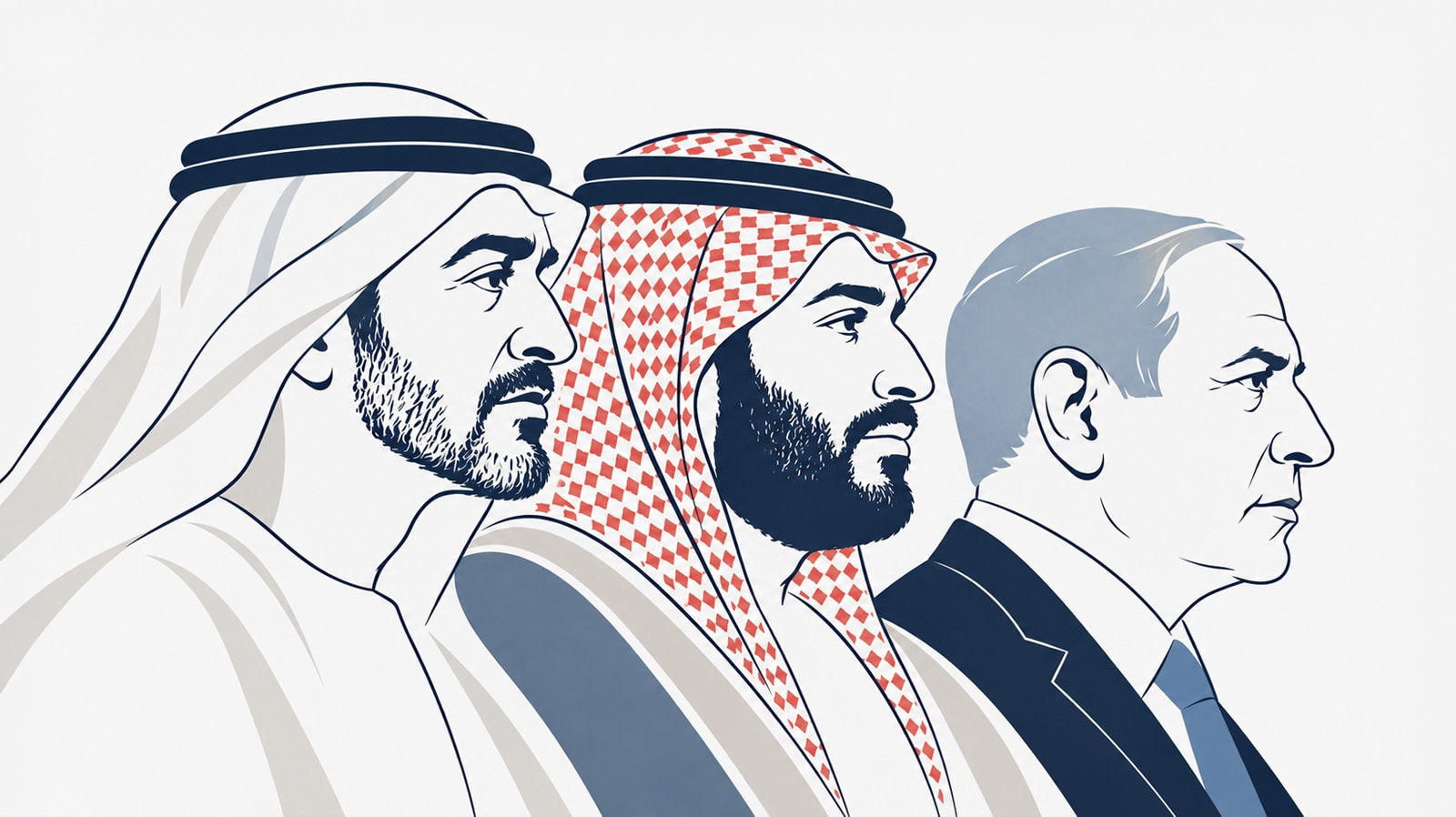
“So while it is outrageous for President Trump to let Saudi Arabia get away with murder, so to speak, the atomic agreement was also indefensible. Perhaps the U.S. administration could have extracted more of a price from [Saudi Crown Prince] Mohammad bin Salman, but at the end of the day this is about realpolitik.” Accordingly, many analysts agree that the current over-riding sentiment in the West is the by-product of a prevailing ideological bent towards the Iranian-Turkish axis—which, notably, is backed by Russia—versus the burgeoning Sunni Arab-Jewish state alliance.
That President Trump is an ardent proponent of the latter no doubt at least partially accounts for the ongoing heated debate.
In his speech Saturday, Rouhani also urged the global Muslim community to rally together in opposition of the United States, which his regime considers the “Great Satan.” It is somewhat perplexing that so many “devils” would choose to side with the world’s foremost state sponsor of terrorism, one that openly defines itself as an enemy, rather than work to reform an oft-brutal friend.
The Jerusalem Post, 26.11.2018
Source: https://jiss.org.il/en/navon-why-is-murder-by-iran-but-not-saudi-arabia-permissible/