
Introduction
The geopolitical and security landscape of the current era has presented Europe and Israel with a complex challenge arising from the convergence of jihadist terrorism, online radicalization, and political Islamist movements cooperating with the progressive left. This article examines the ideologies, organizations, and networks that justify violence and seek to exploit democratic institutions to undermine democracy itself.
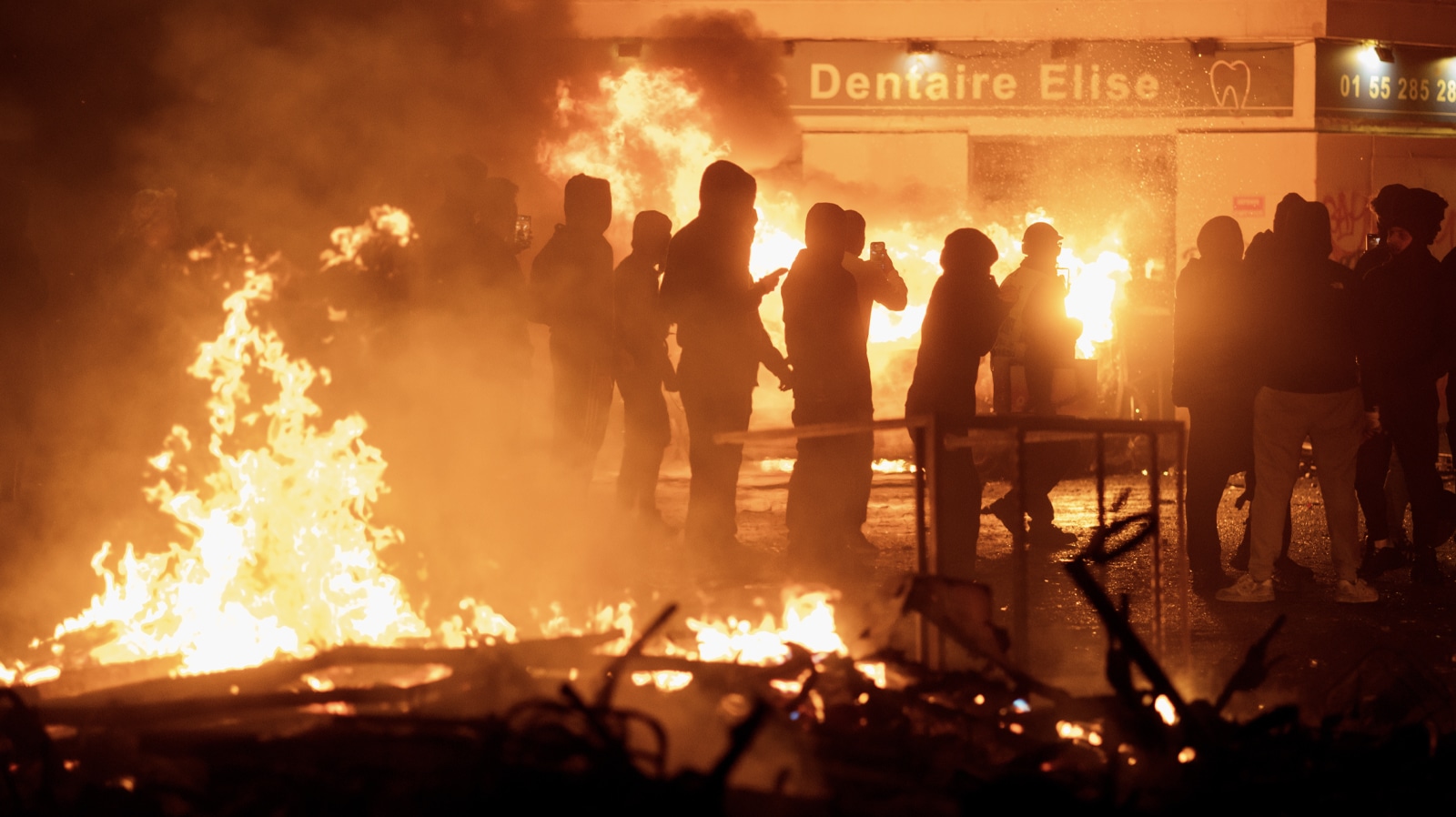
A sober assessment must consider two main arenas together. The first is the West, particularly Western Europe, where several major countries—above all France, Belgium, Spain, and Italy—face widespread waves of rioting and mass disturbances. We have seen similar trends in the United States as well. Various actors stand behind the rioters, with Islamist and socialist-Marxist movements joining forces. The second arena, inseparable from the first, is the Israeli domestic arena. In recent years, radical political Islam has posed a growing threat there, notably through the northern branch of the Islamic Movement and groups associated with the principles of the Muslim Brotherhood. These actors work systematically to undermine sovereignty, radicalize the Arab-Israeli population, and exploit democratic and parliamentary institutions to advance subversion from within.
This article examines three interconnected levels of the threat. The first is direct violence and terrorism, ranging from planning attacks to acts by individuals influenced by online propaganda and in mosques. The second is the financial infrastructure that supports this radicalization. The third, complementing the other two, is the communications apparatus that enables and fuels continued radicalization. Finally, we examine the response of the state and all its institutions, including how they exercise governance and enforce the law, and the intelligence and operational work required in the “soft war.”
The Threat
The Islamist threat now extends beyond traditional terrorist organizations such as al-Qaeda and ISIS, which stage high-profile attacks designed to attract maximum public attention. It also involves creeping, structural Islamization accompanied by violence. The growth and concentration of Muslim populations in Western European countries have reached a critical mass that produces eruptions at almost every protest, even if they are not directly related to the Muslim community.[1]
European leaders’ lack of preparedness and unwillingness to confront the Islamist threat neglects the problem and contributes substantially to its growth. Preachers and mosques that serve as centers of radicalization compound it, as does a digital environment in which incitement and propaganda cross borders. In this environment, Muslim networks and movements, backed by the radical and progressive left, offer radical interpretations of religion, identify enemies—especially Israel and the Jews—and legitimize violence. Most major cities in Western Europe have neighborhoods where the state has little presence, trust in the police is low, the illegal economy is strong, and entering poses a high risk to law enforcement personnel. These areas are not all exclusively Muslim, but many have Muslim majorities.
France is trying to use state powers to counter Muslim separatism. Its domestic security service, the DGSI, identifies Islamism as a challenge because it seeks to control society and place its rules above the laws of the Republic.[2] France responded by enacting a law to strengthen the principles of the Republic and expanding oversight of associations, educational institutions, and foreign funding.[3] According to the French Interior Ministry, by August 2022 more than 26,000 inspections had been conducted, 836 institutions had been closed temporarily or permanently, and €55.9 million had been collected or returned to the state treasury.[4] The data indicate that the law has not stopped separatism. French sources argue that it has largely prompted these associations to keep a low profile rather than bringing about substantive change. The latest riots in France, in October 2026, bear this out. Islamist separatism continues to spread in the suburbs. When the state tries to enforce the law, it faces violent resistance, attempts to impose sharia in public spaces, and ambushes and severe violence targeting security forces.[5]
Belgium has faced a challenge from radical Islamism and political Islam for many years, particularly in districts such as Molenbeek in Brussels and in Antwerp. Parallel forms of social control have emerged in these areas, with considerable social pressure to impose religious norms such as dress dictated by radical interpretations of Islam, separation of the sexes, and preference for rules drawn from sharia over civil law. The Belgian security services, OCAM and VSSE, consistently report on the structural influence of networks linked to the Muslim Brotherhood. Operating through associations, mosques, European organizations, and educational institutions, these networks seek to shape public debate and influence institutions. Law enforcement also faces real difficulties, including hostility toward the police, a sense of alienation from the state, and repeated reports of areas where security forces struggle to operate freely.[6] Foiled terrorist plots, including an attempted drone attack on the prime minister in 2025, illustrate that the challenge extends beyond violent radicalization to the construction of a parallel society that undermines the principles of sovereignty and public order.[7]
In southern and central Europe, particularly Spain and Italy, the Islamist threat combines ideological penetration, foreign funding, and exploitation of immigration systems. Clandestine preaching networks and mosques influenced by Salafi and Muslim Brotherhood schools of thought operate in both countries. Some receive funding from Gulf actors, mainly Qatar and Kuwait, through charities such as Qatar Charity.[8] In Italy, organizations such as UCOII have received tens of millions of euros from Islamist actors to fund mosques and Islamic centers. In Spain, clandestine prayer rooms, radical sermons, and mosque financing by extremist Gulf actors have come to light. At the same time, Islamist actors exploit illegal migration routes from Africa—through the Sahel, Morocco, Ceuta and Melilla, the Canary Islands, and the Mediterranean—taking advantage of weaknesses in the Schengen Area’s border controls.
Qatar is a major player in Europe. Its principal media outlet, Al Jazeera, plays a destructive role by producing content in several languages, including English and Arabic, aimed at Western audiences and Muslim communities in Europe and Israel. The network systematically inflames passions, spreads conspiracy theories, glorifies terrorist organizations as “freedom fighters,” and encourages hatred of the West and Israel. This content plays a central role in driving radicalization among young Muslims in Europe and Israel, and even in the United States.
The problem of political Islam is present throughout Western Europe. What sometimes appears to be crime or immigrant protest has clear religious features, including attacks on Christian sites and damage to Jewish institutions. Muslim Brotherhood networks exploit Western democracy, using foreign funding—mainly from Qatar and Turkey—to establish community institutions that foster a separate identity and radicalization from an early age.
The threat is expected to evolve across borders, exploiting democratic foundations to undermine democracy itself. Ease of movement, unregulated foreign funding, and readily accessible digital platforms provide channels for messaging and advancing a common agenda. Artificial intelligence is likely to accelerate this process, making it easier to tailor propaganda to specific audiences, fabricate content, and direct individuals toward action. For European authorities, the distinction between protest, subversion, and terrorism is expected to become increasingly difficult as religious and political activity, institutional influence, illicit economic activity, and incitement to violence expand. There is also concern that terrorists and radical activists who have moved between the Middle East, Europe, and North Africa will continue spreading operational knowledge, online recruitment methods, and direct incitement.
As economic hardship in Europe worsens and the Muslim population continues to grow, the divide between Muslims and wider society will deepen. These developments will strengthen de facto autonomy under religious law, including sharia courts that offer a partial alternative to the state’s legal system, and bring more frequent violent clashes with local police. In any event, Europe’s traditional values face a major challenge, and it is doubtful that they can withstand the consequences of radical Islam’s spread across the continent.
The Threat in Israel
Security and policy discourse in Israel and Western countries tends to focus on physical and security threats, while downplaying the religious and theological motives of Islamist actors. This leads to a flawed understanding of the threat.
Political Islamism no longer threatens Israel solely on external fronts. In recent years, two dimensions of the threat have become clear: ideological and financial influence from outside the country, and radicalization and separatism within Arab society inside Israel. The combination of these two dimensions is especially dangerous when it intersects with the widespread possession of illegal weapons by Arab criminal organizations and within Arab society.
The Muslim Brotherhood is the main source of radicalization among Israeli Arabs, using funding and doctrine that come chiefly from Qatar and Turkey. Hamas is its Palestinian branch, and the Brotherhood has a clear ideological connection to the Islamic Movement in Israel. This funding reaches not only Gaza and Judea and Samaria but also organizations and activists within Israel itself, sometimes under cover of social, educational, or humanitarian work. Iran and members of its “axis of resistance” are also working to advance this trend. Tehran continues to regard the destruction of Israel as a major religious and ideological goal and supplies funding, training, and weapons to organizations such as Hamas, Islamic Jihad, and Hezbollah.
This ideology asserts the supremacy of sharia, denies Israel’s legitimacy as a Jewish state, and calls for a separate Islamic identity that competes with the state’s laws. Its influence spreads through sermons in mosques, propaganda materials on social media, and organizations operating under legal cover.
Religious incitement against Israel relies heavily on the activities of three states: Qatar, Iran, and Turkey, which use funding, propaganda, and ideology. Qatar finances organizations and institutions linked to the Muslim Brotherhood and uses media outlets such as Al Jazeera to portray the conflict as a religious war against the Jews and Zionism. Iran supplies Hamas and Islamic Jihad with weapons and military support, along with a theological doctrine that treats Israel’s destruction as a religious commandment. It encourages incitement in mosques and on social media. Turkey under Erdoğan gives Islamist organizations a political and media platform, supports Hamas, and promotes the theme of “defending al-Aqsa,” which is also used to incite parts of Arab society in Israel. The combination of foreign funding, religious propaganda, and ideological preaching creates and sustains radicalization and encourages the view that the conflict is a struggle between religions rather than merely a political conflict.
The Israeli government outlawed the northern branch of the Islamic Movement in 2015 because of its ties to Hamas, incitement, and advocacy of replacing the state with an Islamic caliphate. The ban did not eliminate the Islamic Movement’s ideological influence. Sheikh Raed Salah, who headed the northern branch, was tried and imprisoned. After his release, he began leading a body known as the “Committees for Spreading Peace,” or the “Peace Committees.” These committees mediate and settle disputes and combat violence within Arab society. Security officials, however, say they provide cover for the northern branch’s continued activities. In January 2025, the defense minister designated the committees a terrorist organization, on the grounds that they were an arm of the outlawed northern branch of the Islamic Movement and promoted an anti-Israel agenda.[9] Despite this, Sheikh Raed Salah recently brokered a reconciliation between two of the largest crime families in Arab society. Someone able to reconcile these families can also call on his supporters to vote in Knesset elections, contrary to past practice, and in the future assign them targets for attack.
During Operation Guardian of the Walls in May 2021, violence with nationalist and religious features erupted in mixed cities. Attacks took place on synagogues, Jewish property, and security forces, and there were also violent assaults on Jews who happened to be nearby, including lynch attacks. These events showed how quickly religious and nationalist tensions can ignite. A serious potential scenario is that of riots similar to those currently occurring in Europe breaking out in Israel. Given the large quantities of illegal weapons possessed by Arab criminal organizations and within Arab society in Israel, firearms could conceivably be used in the event of riots. An estimate cited in Knesset discussions put the number of unlicensed weapons in Israel at about 400,000, including long guns, explosive devices, machine guns, antitank weapons, and fragmentation grenades. The overwhelming majority are held by criminal organizations and others within Arab society.[10]
Arab criminal organizations are motivated primarily by financial gain, but security officials have repeatedly warned that Iran is trying to exploit criminal networks and readily available weapons to carry out terrorist attacks. There is a real concern that, during a security emergency, these weapons could also be turned against Jewish civilians and security forces, as occurred in some incidents during Guardian of the Walls. Although this has not happened so far during the War of Redemption, the concern remains ever present.
Islamist actors exploit Israel’s freedom of expression, freedom of worship, and civil rights to subvert the state’s foundations. They incite in mosques, on social media, and in educational institutions, cultivate a sense of victimhood, and oppose any sign of integration or civic partnership. Their ideology regards the entire Land of Israel as waqf land—a Muslim endowment—that cannot be relinquished, and the Palestinian national struggle as part of an all-encompassing religious war.
Two developments stand out as the threat evolves: the growing political power of Islamist movements and the declining barriers to participation in their activities. Young people can now become radicalized within small online groups, with their beliefs reinforced by religious justification in mosques. Meanwhile, political Islamist actors will continue seeking positions of influence at both the local and national levels—in the Knesset, local government, academia, the judiciary, and the media—with the aim of reshaping Western societies and Israel from within.
Proposed Responses
Confronting radical Islamism in Europe and in Israel requires a realistic, sober assessment that does not conceal the root of the problem behind politically correct explanations. A major obstacle is the persistent, mistaken tendency of political leaders and policymakers to attribute terrorism, riots, and rising violence solely to socioeconomic factors such as financial hardship, difficult working conditions, educational disparities, or social frustrations. Such conditions may provide fertile ground, but ignoring the clear religious and ideological motivation and the central role of radical Islamism is dangerous willful blindness. Many European leaders, including French President Macron and Spanish Prime Minister Sánchez, repeatedly explain attacks and outbreaks of violence in terms of neglect, integration problems, housing hardship, and the like. In doing so, they avoid naming the problem and addressing the roots of religious radicalization. An effective response requires an honest acknowledgment that the challenge also stems from a fanatical ideology that seeks to undermine the democratic order in the West and Israel, rather than from temporary economic difficulties alone.
An effective response must first strike at the roots of the financial and ideological value chain that sustains political Islamism. Money flows through a complex web of associations, charitable foundations, and domestic and foreign funders. It fuels organizational activity, the establishment of educational and community institutions, and the acquisition of civic and political influence. The cognitive infrastructure built with these funds radicalizes people and amplifies a religious and political narrative that legitimizes defiance of the state, violence, and the marginalization of democratic values. A comprehensive response must therefore systematically cut off financial lifelines while actively curbing incitement and propaganda in both the public and online domains. Only by drying up funding and dismantling ideological infrastructure can the spread of this phenomenon be effectively countered.
European countries, and Israel as well, must move from reacting to events to a long-term policy that combines law enforcement, intelligence, financial oversight, and stronger governance. They must distinguish religious practice, community activity, and legitimate political criticism from incitement, aiding terrorism, and the undermining of state sovereignty. Targeted, effective enforcement means determined action against terrorist financing and incitement, subversion, and attempts to establish parallel systems of control, such as the adoption of sharia in certain areas. It also means acting against the formation of independent militias and the use of civil institutions to bypass state institutions. Effectiveness should be measured by the number of indictments and the severity of penalties, alongside effective disruption of funding channels and attempts to shape public perceptions in ways that undermine state sovereignty.
Financial transparency is essential. Religious, educational, and community institutions must fully disclose the amounts and sources of the funding they receive, and its beneficiaries. Foreign money must be monitored, including the money-laundering operations of Qatar and Turkey, and legal and diplomatic measures must be taken against them. Europe and Israel also need oversight and regulation of foreign media outlets and funded institutions, as well as legal and regulatory action against media organizations and institutions that encourage violence or provide a platform for incitement.
Israel must bolster its diplomatic and security measures by firmly strengthening its governance and sovereignty throughout the country, especially in peripheral regions and open areas. Ensuring a consistent, permanent settlement presence throughout the land is one way to achieve this critical goal. The agricultural farm initiative also has a role to play in the national and social campaign against the spread of political Islam and land seizures. By establishing a continuous settlement presence, maintaining a foothold on the ground, and protecting state land, these farms serve as a pioneering response to attempts to erode Israeli sovereignty.
The struggle over land must be accompanied by an equally determined campaign against foreign capital flowing from Qatar and Turkey. The Turkish government and bodies acting on its behalf invest in Jerusalem’s Holy Basin and in other centers of influence across the country. Through associations, religious projects, the restoration of historic buildings, and welfare and educational activities, Turkey seeks to establish a deep foothold and reshape public and religious life. Its aim is to advance the hegemony of political Islam and undermine Israeli sovereignty in the very heart of the capital. Countering this requires close oversight, blocking hostile sources of foreign funding, and defending national interests to prevent the emergence of autonomous centers of power that threaten the state’s Jewish and democratic character.
Determined action against major criminal organizations in Arab society is critical to restoring governance and ensuring security. Organized crime poses more than a criminal threat to public safety. It provides fertile ground for radical political Islamist elements, who see the vacuum of state authority and inadequate enforcement as an opportunity to establish alternative centers of power. Without forceful enforcement, criminal organizations can amass enormous financial resources, hold illegal weapons, and spread fear that erodes law enforcement and judicial institutions. Dismantling criminal networks, confiscating their weapons, and destroying their sources of funding are therefore more than a policing task. They are among the most important means of reducing the influence of radical actors, strengthening Israeli sovereignty, and restoring law and order throughout the country.
Conclusion
The Islamist threat in Europe and Israel extends beyond direct terrorism. It rests on a broad system of religious and political ideology, outside funding, propaganda, community institutions, and influence networks operating within democracies. In Europe, this takes the form of deepening separatism, parallel centers of social control, weaker governance in some urban areas, and growing cooperation between Islamist movements and the radical and progressive left. In Israel, additional factors include the activities of Iran, Qatar, and Turkey; the influence of organizations associated with the Muslim Brotherhood; religious and nationalist incitement; organized crime in Arab society; and the exceptionally large amount of illegal weaponry. Together, these factors create a dangerous link between radicalization, financial and ideological infrastructure, weak law enforcement, and a real capacity to move rapidly from defiance and subversion to large-scale violence.
The response therefore cannot be confined to dealing only with the consequences of violence. It must recognize the central religious and ideological motivation and systematically disrupt the chain that sustains it, from funding and propaganda operations to institutions used to build power and influence. Intelligence, law enforcement, punishment, and financial oversight must be accompanied by practical steps to restore state sovereignty. These should include a continuous presence on the ground, protection of state land, and the strengthening of settlements and agricultural farms, including in the Negev and Galilee. Hostile foreign funding must also be blocked from reaching centers of influence, above all Jerusalem. Criminal networks must be dismantled, and illegal weapons taken out of circulation.
Future trends such as growing use of artificial intelligence, tailored propaganda, and cross-border networks are expected to accelerate radicalization and make it harder to identify the transition from political and religious activity to subversion and violence. Policy success must therefore be measured by more than the number of enforcement actions. It must also be judged by the number of indictments and severity of penalties, the disruption of funding and influence channels, the reduction of parallel centers of control, and the restoration of the state’s ability to enforce its laws, defend its sovereignty, and preserve its national and democratic character.
[1] Muslims accounted for approximately 6% of Europe’s total population in 2020 (about 46 million people, including Russia). Excluding Russia and Turkey, the number is currently estimated at approximately 32–33 million. In Western European countries, the figures are as follows: France, about 8%–10% (approximately 6–7 million); Belgium, about 6%–7.5%; Germany, about 6%–7% (approximately 5.5–6 million); the United Kingdom, about 6%–6.5%; the Netherlands, about 5%–6%; Spain, about 5% (approximately 2.4–2.5 million); and Italy, about 4%–5% (approximately 2.5–2.7 million). The main sources are Pew Research Center, ‘Religion in Europe’ (2025) and ‘Europe’s Growing Muslim Population’; and the United Kingdom’s 2021 census (ONS). Most Western European countries do not officially collect data on religion, so these are estimates based on surveys, origin, and immigration.
[2] DGSI, France’s General Directorate for Internal Security, ‘Combating Islamist Separatism,’ June 11, 2022.
[3] Noemie Bisserbe and Matthew Dalton, ‘France Passes New Bill to Tighten Control of Mosques,’ Wall Street Journal, July 23, 2021.
[4] French Ministry of the Interior data, ‘Law Reinforcing Respect for the Principles of the Republic 2022,’ October 5, 2022.
[5] Remarks by former interior minister Bruno Retailleau: ‘Extreme violence among young people: In France, Sharia law is applied in certain neighborhoods.’
[6] ‘Their ultimate goal is the global caliphate: How are the Muslim Brotherhood infiltrating Belgium?’ RTL, May 22, 2025.
[7] Jessica Rawnsley, ‘Suspected jihadist drone plot against Belgian PM foiled,’ BBC, October 10, 2025.
[8] Giulio Meotti, ‘Qatar: “A Wolf in Sheep’s Clothing,” Bankrolling Islamism in Europe,’ Campus Watch, April 9, 2019.
[9] Elinor Fabriker, ‘A Terrorist Organization in Disguise: Raed Salah’s New Venture Is Outlawed,’ Makor Rishon, January 28, 2025. (Hebrew)
[10] ‘No Fewer Than 400,000 Weapons, 400,000!’ The Main Arena, Knesset Channel, August 27, 2023. (Hebrew)
Source: https://jiss.org.il/en/siboni-winner-islamism-and-the-erosion-of-state-sovereignty-in-europe-and-israel/