

Introduction
Prime Minister Benjamin Netanyahu’s publication of Israel’s national security strategy marks a watershed, not because every one of its principles is new, but because it seeks to translate the lessons of the War of Redemption from operational responses into binding doctrine for national policy and security. The document distills Israel’s experience of recent years—both the actions it has taken and the changes in its strategic position—and lays the groundwork for institutionalizing the lessons within existing structures.
For decades, Israel relied on an unwritten doctrine attributed to David Ben-Gurion, built around deterrence, early warning, and decisive military defeat of the enemy. Defense was added over time. Yet Israel never developed a comprehensive way to link the definition of national interests, the ranking of threats, choice between alternatives, resource allocation, and oversight of implementation. We examined the evolution of Israel’s national security strategy in an earlier article, “From the Iron Wall to Peace through Strength.”[1] The State Comptroller has described the absence of such guidance as a persistent failure. He found that the lack of an official doctrine impaired the political leadership’s ability to direct and challenge the IDF and other security agencies, and to oversee force buildup and priorities.[2]
National security rests on more than military strength. Its foundations include security, diplomacy, the economy, society, demographics, and other factors. The national security strategy guides how the state deploys, coordinates, integrates, and directs all the resources and means at its disposal. Together with the policy derived from it, the strategy is intended to coordinate and synchronize the work of all agencies and government ministries.
The foundational security documents outlined below provide the theoretical basis for directing these efforts.

Three types of documents must be distinguished:
1. A national security strategy that sets out methodological principles and basic rules derived from the state’s fundamental circumstances and needs.
2. A national security strategy that expresses the incumbent government’s long-term view on security issues.
3. A national security policy that defines how to implement the strategy. It sets priorities and the diplomatic and security agenda for putting the strategy into practice.
The operational concepts of security agencies and government ministries derive from all three.
The October 7 attack and the War of Redemption that followed exposed the cost of the gap between a changing reality and the concepts through which the government and security establishment interpret that reality. Our enemies reject Israel’s very existence as the state of the Jewish people. They exploit Israel’s preference for temporary quiet, containment, negotiated arrangements, and an illusion of deterrence over systematically thwarting the enemy’s force buildup. The document matters because it seeks to establish prevention, initiative, and offensive action as the guiding principles of security policy, rather than simply options in a toolkit.
The official publicly released document highlighted ten principles:
1. Preventing Israel’s enemies from acquiring nuclear weapons;
2. Independent action and the ability to defend the country independently;
3. Credible deterrence grounded in a real ability to inflict damage;
4. Continuous intelligence warning, coupled with critical thinking and the use of stratagems;
5. Initiative and offensive action, including preventive strikes;
6. Multilayered defense of the home front;
7. Establishment of regional and international alliances;
8. Self-reliance in armaments and advanced technologies;
9. A battle for public opinion and legitimacy;
10. A definition of victory that also rests on national cohesion, settlement, heritage, and ties with Diaspora Jewry.
Together, these principles link the use of force, force buildup, foreign relations, and the social foundations of national security.
This article examines the ten principles of the new national security strategy, their interaction, and how well they reflect the lessons of the War of Redemption. We first set out the background and the need for binding government guidance. We then examine each of the principles before considering the domestic arena, including illegal weapons, as a challenge to implementation of the strategy. The article closes with the institutional, budgetary, and social conditions needed to turn the ten principles into workable policy.
From a Document to a Binding Process
The National Security Strategy Law, which took effect in June 2025, provides the institutional basis. The law states that whenever a new government is formed, the National Security Council must draft a diplomatic and security strategy, specify its objectives, identify and rank threats and opportunities, present alternatives, and submit the strategy for approval within five months. The strategy must also be presented to the Knesset Foreign Affairs and Defense Committee.[3]
The published strategy thus serves not as a final document but as the beginning of a binding process. It should guide the government’s security policy; the operating doctrines of the IDF, security agencies, and relevant government ministries; multiyear work plans; stockpile policy; the defense production base; home-front preparedness; and diplomatic policy. The real test of a strategy document is whether its declarations become priorities, budgets, measurable targets, and timetables.
The Ten Principles in Light of the War of Redemption
The following analysis treats the ten principles both individually and as an integrated whole. It also addresses several elements implicit in them that require attention in their own right. The War of Redemption taught us that failure in one component can nullify achievements in others. Intelligence without readiness is insufficient. Defense erodes without offensive action. Technology without social resilience cannot ensure endurance in a prolonged campaign and security against external threats is meaningless without effective governance and action against illegal weapons.
We examine the principles below:
Preventing Israel’s enemies from acquiring nuclear weapons
As a matter of national survival, Israel must prevent an enemy bent on its destruction from acquiring a military nuclear capability. The Begin Doctrine, which was never formally articulated, dates to the aftermath of Operation Opera, which destroyed Iraq’s Osirak reactor in June 1981—incidentally, on the eve of an election. It holds that Israel will not accept weapons of mass destruction, above all nuclear weapons, in the hands of an enemy regime that threatens its existence, or of hostile regimes in the Middle East.
The doctrine rests on five core principles. First, prevent the enemy from acquiring nuclear weapons, rather than settle for deterring it once it has already acquired them. Second, act while the opportunity remains open, before a facility becomes operational, fortified, or active in a way that could cause an attack to release radioactive material. Third, exhaust intelligence, diplomacy, and covert tools, while retaining the option of force if they fail to remove the threat. Fourth, be prepared to act independently despite international opposition and a heavy diplomatic cost. Fifth, plan precisely to minimize harm to civilians and foreign experts as far as possible.
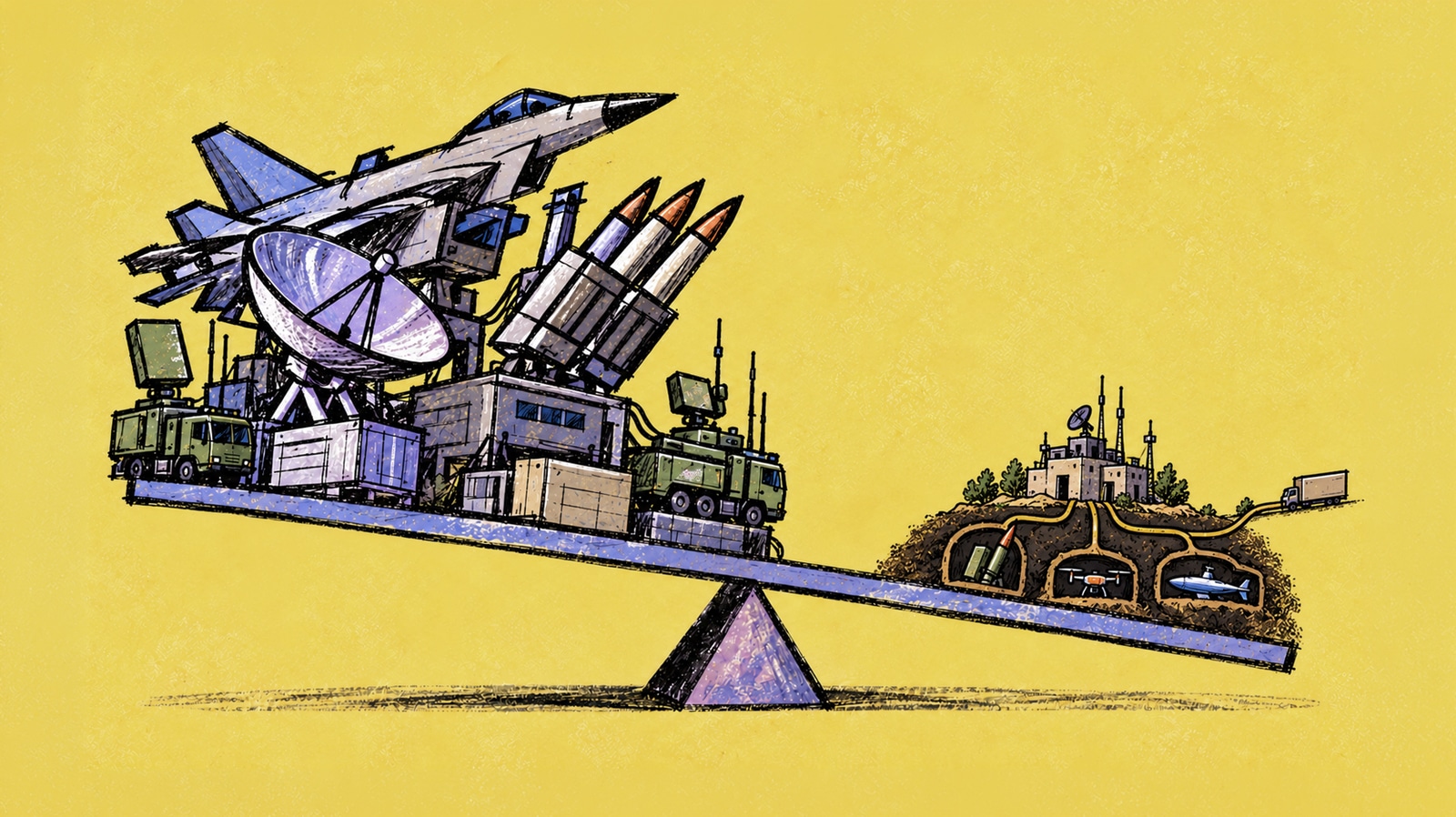
During the War of Redemption, the Israeli government acted on this doctrine to disrupt Iran’s nuclear capabilities. Having learned from Israel’s strike on the Iraqi reactor, Iran built a dispersed, fortified, underground network rather than rely on a single reactor. It includes enrichment facilities, conversion capabilities, testing and manufacturing facilities for turning enriched material into weapons, scientific expertise, a supply chain, and a supporting network of ballistic missiles and air defenses. Israel’s actions in the two campaigns, Operation Rising Lion and Operation Roaring Lion, were intended to strike simultaneously at the components that enable a breakout to nuclear weapons and Iran’s ability to defend and rebuild them. The Foreign Ministry described the objective of the operations as neutralizing the threat created by the simultaneous acceleration of the nuclear weapons and missile programs. It stressed that precautions had been taken to reduce civilian harm and prevent radiological effects.[4] Israel thus applied the Begin Doctrine against Iran, but its work is unfinished. Neutralizing Iran’s nuclear capabilities will probably require the overthrow of the current regime and its replacement by one that abandons nuclear ambitions. The Begin Doctrine is thus a continuing commitment to preventing an enemy intent on Israel’s destruction from becoming a nuclear threshold state.
Deterrence grounded in the ability and willingness to use force
Hamas’s October 7 attack exposed just how hollow Israel’s deterrence of its enemies had become. Deterrence depends on the willingness to use force, not merely the scale of force buildup. Before the attack, Israel did everything in its power to avoid confrontations and contain them. The War of Redemption shows that credible deterrence comes from demonstrated strength, readiness to use it, decisive defeat of the enemy, and sustained enforcement that prevents the enemy from rebuilding its capabilities. Israel now acts this way in every theater.
We must always remember that the enemy alone determines whether it has been deterred. We should therefore examine its force buildup and capabilities, rather than rely on interpretations of its intentions. Hamas and Hezbollah used the period of quiet before October 7 to grow stronger and prepare for war. During the War of Redemption, sustained strikes on the enemy restored deterrence in some theaters. The new national security strategy treats deterrence as perishable: it must be maintained through enforcement backed by the ability to defeat the enemy decisively. In other words, there can be no more waiting for rockets to rust on their launchers. This policy must be replaced by preemptive strikes on launchers and the facilities that manufacture them.
Early warning, intelligence, and critical thinking
Given its security and diplomatic position, Israel must be able to obtain the intelligence it needs across all areas of national security activity. Yet abundant intelligence did not prevent a grave warning failure at the outset of the War of Redemption. Clearly, the problem lay in how intelligence personnel, commanders, and decision-makers interpreted that intelligence. The war exposed the link between groupthink, institutional conformity, and the failure to provide adequate warning. An institution in which the same views keep reinforcing one another struggles to question basic assumptions, such as the belief that Hamas is weak and deterred.
Intelligence performance therefore cannot be judged solely by the volume of intelligence, collection capabilities, or daring operations deep in enemy territory. Above all, it depends on the ability to offer competing interpretations, protect minority views, and challenge the prevailing assessment. The failure to provide adequate warning before the Yom Kippur War led to the creation of a Review Department in the IDF Intelligence Directorate, known as the “Devil’s Advocate,” (Ifcha Mistabra) to challenge intelligence assessments. Although this approach collapsed, the directorate decided to retain the existing model, merely enlarging the unit and placing a brigadier general in command. To reduce the risk of another error and focus on assessing and thwarting the enemy’s capabilities, no less than a cultural and structural change is needed.
Israel’s national security doctrine must ensure diversity and pluralism in intelligence analysis. An independent national assessment body should therefore be established alongside military intelligence, outside the IDF and answerable to the political leadership. The National Security Council would be the appropriate home for this body. It would draw on the existing intelligence agencies’ work, challenge their assessments, and offer the security cabinet alternative interpretations, rather than replace those agencies. Its purpose would be to ensure genuine analytical pluralism, protect minority views, and prevent a single, unchallenged Intelligence Directorate assessment from becoming the state’s understanding of reality.
Defense
Any concept of defense must begin with offensive action. Defense cannot be built on fences, early warning, protective measures, and interception alone. The first task is to deny the enemy the ability to use its forces by thwarting its buildup, striking its infrastructure, establishing buffer zones, and taking the fight into its territory. Defensive systems are intended to limit the damage that remains and keep essential functions running. They cannot remove the threat on their own.
The new strategy emphasizes buffer zones, which are crucial to Israel’s defense because the country cannot be defended from the border itself. A fence is an obstacle; it provides no security depth. Israel cannot allow a return to a situation in which a fence defending a community also serves as the national border, with bloodthirsty murderers nearby. October 7 taught us that the security of communities must not be entrusted solely to early warning, a technological barrier, and local forces. A buffer zone must form part of a defense that combines territorial control, intelligence, a barrier, available forces, and continuous offensive action across the border.
Defending borders and frontier communities requires a multi-layer concept built on offensive action to thwart the threat, depth and buffer zones, an unbroken barrier, control of the area, intelligence, rapid-response forces, and strong communities along the border. Communities cannot depend solely on the arrival of military forces. Each community should have a trained, equipped, readily available local defense force able to stop an infiltration and protect residents until reinforcements arrive. Such forces, however, must neither operate as independent militias nor replace the IDF and police. They must be part of a national and regional defense array with clear responsibilities, joint command and control, and rehearsed defense plans. That system must also protect roads, farmland, and areas between communities. A large National Guard is thus integral to the national security doctrine.[5]
Drones pose a national challenge that extends beyond any one agency’s responsibilities. They link cross-border smuggling, domestic crime and terrorism, intelligence gathering, and threats to bases and critical infrastructure. The new security doctrine recognizes this threat and therefore calls for a multilayered approach combining intelligence, control of low-altitude airspace, law enforcement, facility protection, regulation, and cooperation among all relevant agencies. Putting this into practice requires clear lines of responsibility and authority, with a distinction drawn between legitimate civilian activity and hostile use.
Finally, defense must also address the quantities of illegal weapons and military equipment in the Arab community, particularly those held by criminals. We must remember that the unrest we are currently witnessing in France could also occur in Israel. Unlike in France, however, riots here could involve widespread gunfire. Implementation of the national security doctrine thus requires aggressive action to stop smuggling and the theft of weapons and military equipment from the IDF, and to disarm the Arab community and the criminal elements within it.
Alliances and Israel’s status as a regional power
Establishing Israel as a regional power is both a diplomatic and an operational objective. A regional power’s strength is measured by its ability to defend national interests near and far, influence the balance of power, and build coalitions. The gains made in the war against Iran’s “ring of fire” showed how much deep intelligence coverage, operational range, and ties with the United States and other regional partners matter. The ability to build alliances with Greece and Cyprus in the eastern Mediterranean as a way to curb Turkey’s expansionist ambitions is also of importance.
No power acts alone. Having demonstrated its considerable value as a partner during the war, Israel enjoys regional-power status that allows it to set the Middle Eastern agenda as well as respond to it. Its ties with India and other countries in the East are an important example. The new alliances identified by the prime minister should rest on practical interests: air defense, early warning, trade routes, energy, cyber, and countering Iran’s force buildup and threats from radical Sunni actors. Cooperation of this nature strengthens Israel’s independence because it expands its options without replacing Israeli capabilities.
The security doctrine emphasizes alliances and cooperation and shows that they are integral to national security. Their value is measured not only by declarations of friendship or formal agreements, but also by what they contribute in practice to stability, freedom of action, the industrial base, and the creation of mutual interests. These alliances should of course be established alongside the important partnership with the United States.
Technology and independent force buildup
The prolonged campaign exposed the limits of reliance on supply chains outside Israel. Maximizing independence does not mean autarky or giving up American aid. It means identifying the munitions, spare parts, and materials whose absence would impair freedom of action, and developing production capacity, stockpiles, and substitutes for them.
Israel must distinguish between critical components that should be manufactured domestically and areas in which it should diversify suppliers and secure priority-supply agreements. A broad industrial base costs money in peacetime, but reduces the risk of an embargo, political crisis, or maritime disruption halting a campaign midway. Israel needs independent manufacturing capacity and must continue to build its comparative advantage. These requirements show how closely military strength, the economy, and industry are connected.
Technological superiority is a military force multiplier, but cannot replace mass, readiness, or combat doctrine. Artificial intelligence can shorten intelligence and strike cycles; space can broaden intelligence and strike capabilities; quantum computing may change encryption and sensing, and robotics can reduce risks to troops. Yet technological systems depend on data, communications, and people who understand their limitations. Thus, maximizing technological advantage requires integrating personnel, organization, and technology.
The national security strategy should combine expanded domestic production of munitions and essential systems with procurement from several countries and international cooperation to develop critical weapons, while reducing dependence on the United States. Following on from this, armaments independence should be built on Israeli production and diversified procurement, together with joint development and manufacturing with other partners, including India. These partnerships are intended to broaden the production base and supply options, thereby strengthening Israel’s freedom of action.
The battle for public opinion and legitimacy
The fight against antisemitism and delegitimization is a significant part of national security as it affects freedom of action, arms supplies, foreign relations, and the safety of Jews worldwide. Antisemitism, denial of Israel’s right to exist, and campaigns funded by adversary states must, however, be distinguished from legitimate criticism of government policy. Conflating them could weaken the fight.
Israel’s ability to make decisions, use force, and maintain ties with its partners depends in part on two vital resources: perceptions and legitimacy.Hasbara is necessary, but it cannot by itself counter a comprehensive campaign that combines information, funding, law, organization, and technology. The state must do more than respond to crises through hasbara: it must conduct continuous operations on this front. Nonmilitary warfare must be recognized as a theater of combat within national security, with an operational body reporting to the prime minister. Hasbara cannot bridge a gap between messaging and deeds. The War of Redemption proved that Israel faces a deliberate international campaign against it and sustains a heavy price on this front. It must take the offensive and emerge victorious here as well.
Decisive defeat of the enemy and victory
Victory must be given a prominent place in the national security strategy. First, it has an important public role: it sustains morale during war and helps mobilize different groups within the country behind a common purpose. It also matters in addressing other audiences—the enemy’s population and leaders, as well as foreign countries and leaders. At the same time, the concept of victory also has value in building a common language within the framework of the national security doctrine.
“Decisive defeat” is a military achievement that neutralizes the enemy’s effective resistance and enables the mission to be accomplished. “Victory” is broader: it means achieving the war’s objectives and a sustained improvement in national security. Success on the battlefield is therefore insufficient. It must be coupled with policy that preserves gains and creates better conditions.
The War of Redemption showed just how much this distinction matters. Victory follows decisive military defeat of the enemy and is achieved through the use of national security tools. The test of victory is whether Israel’s security and diplomatic position improves for years to come, not simply whether the fighting stops. Achieving victory involves changing security strategy, shaping the regional environment, and establishing defensible borders and security zones.
National spirit
National spirit should be an important component of national security. The War of Redemption showed that national spirit does more than express values alongside military strength. It is one of the foundations that make the use of that strength possible. Alongside the profound shock of October 7, Israelis demonstrated the ability to mobilize, take civilian initiative, and shoulder responsibility for one another. Reserve military service and volunteering to help victims, families, and the security and rescue services expressed a shared responsibility for the state’s continued existence. These acts show that the connection between the battle front and the home front goes beyond providing resources. It also rests on belonging, commitment, and a willingness to bear the burden.
National spirit contributes to security because it can sustain perseverance, recovery from crises, and the ability to function under pressure. Weapons and technology cannot be separated from the people who operate them or the society that supports them. A prolonged war requires more than forces ready for combat. Families must cope with long absences, employers must make service possible, communities must help those who have been hurt, and civilian institutions must keep functioning. National spirit thus provides the social foundation linking force buildup to the ability to use that force over time.
The national security strategy requires broad national agreement on fundamental principles: Israel as the nation-state of the Jewish people; democratic government; a willingness to fight for the country’s security while pursuing victory; encouragement of independent thinking; settlement of the Land of Israel and cultivation of Jewish heritage; and maintaining ties with Diaspora Jewry and encouraging Aliyah. All are essential elements of national spirit.
National cohesion does not require uniform opinions. A society can be committed to its security while disagreeing over how war is run and which priorities to set. The ability to disagree without abandoning shared responsibility expresses resilience, rather than its opposite. National spirit is therefore worthy of a place in national security strategy, and of its place in the new document.
Conclusion
Israel’s new national security strategy should use the lessons of the War of Redemption to shape the country’s security future, moving beyond responses to past events. It should replace containment and threat management with prevention, initiative, and denial of enemy capabilities. This shift should go hand in hand with intelligence mechanisms that sustain critical thinking, greater independence in force buildup, and alliances that expand freedom of action. Decisive military defeat of the enemy is essential, but the goal should also be victory, measured by the ability to preserve gains and create a better and long-lasting security and diplomatic environment.
Three elements are implicit in the strategy and, in our view, deserve greater weight.
First, restoration of effective governance by dealing with illegal weapons, especially those held by criminal elements in Arab society. This must be a critical component of the strategy and will require draconian law enforcement against those who possess or trade in illegal arms, prevention of smuggling, and coordination among ministries to collect and seize illegal weapons in order to disarm criminal networks. Possession of long guns can only mean readiness to commit acts of terrorism, and criminals who possess such weapons must be treated accordingly.
Second is the need for a clear and unequivocal statement that there is no room for another state between the Jordan River and the sea. Israel should address the needs and rights of the residents of Judea and Samaria and how their daily lives are managed, but at the same time it must deal with the threat from the tens of thousands of trained gunmen currently operating under the Palestinian Authority.
The third element is settlement and Israel’s hold on the land, which is currently being challenged at home and abroad. Israel should vigorously expand settlement throughout the land, in part because it plays a critical role in defending it.
Above all these stands national spirit, expressed during the War of Redemption through mobilization, volunteering, and mutual responsibility. Sustaining it requires trust, a fair distribution of the burden, support for those who serve and their families, and the ability to disagree while maintaining shared responsibility. The doctrine will draw its strength from bringing together military power, effective governance, settlement, the economy, partnerships, and national cohesion. Only this combination, grounded in clear policy that sets priorities and in continuous planning and oversight, can turn the war’s achievements into security for years to come.
[1] Gabi Siboni and Erez Winner, “From the Iron Wall to Peace through Strength,” JISS, July 22, 2025.
[2] State Comptroller, “The Absence of a National Security Concept and the Ramifications to Fundamental Processes at Both the Political Level and Within the Israel Defense Forces,” special report, November 11, 2025.
[3] National Security Strategy Law, 5785–2025, Sefer HaHukkim (Book of Laws) 3423, 660.
[4] Ministry of Foreign Affairs, “Operation Rising Lion: Key Factual and Legal Aspects of the Iran–Israel Conflict,” June 13–24, 2025.
[5] Gabi Siboni and Erez Winner, “Community Defense as the Foundation of Homeland Defense,” JISS, September 29, 2026.
Source: https://jiss.org.il/en/siboni-winner-israels-new-national-security-strategy/