
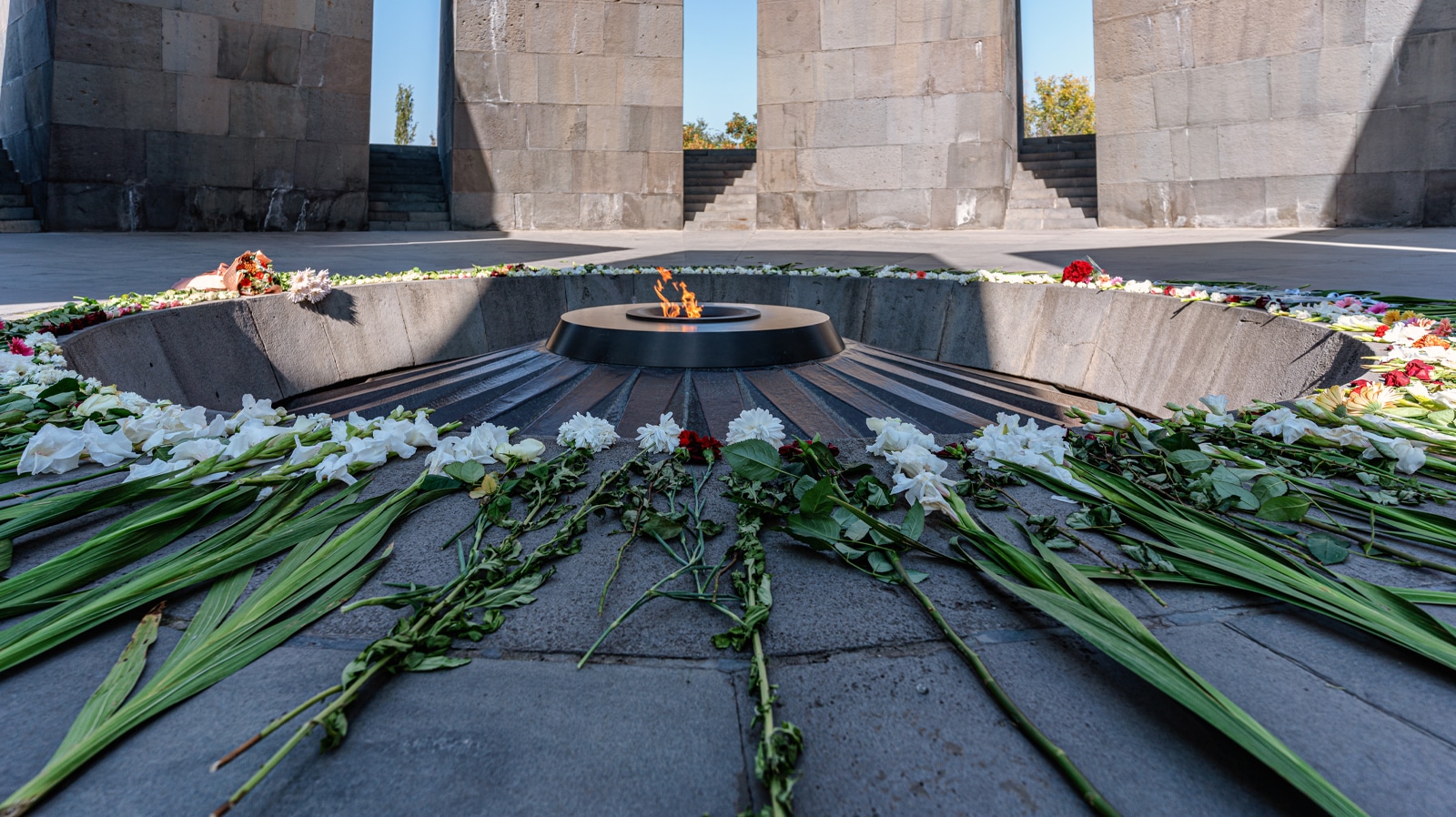

Israel’s decision to recognize the Armenian Genocide is an example of poor diplomacy, poor decision-making, and a poor understanding of history. It appears not to have been preceded by sufficiently serious deliberation. The question is not whether the Israeli foreign minister has a legal right to promote such an initiative; he does. No one should not be surprised by Jerusalem’s desire to respond in kind to Ankara’s aggressive stance toward it; that desire is legitimate and justified. The question, however, is whether the measure serves that goal and whether it creates more problems than it solves.
The reactions, across the board, from all the countries impacted in anway by Israel’s move show that it not only fails to achieve any of its tacit objectives but also creates additional issues that further complicate Jerusalem’s stance. On June 29, the Azerbaijani Foreign Ministry expressed serious concern about the Israeli government’s decision to recognize the mass killings of Armenians in Ottoman Turkey in the early 20th century as a genocide and called forJerusalem to revise its stance.
Armenian Reactions
- Armenian Prime Minister Nikol Pashinyan said that Yerevan sees no need to respond to the Israeli government’s decision to recognize the 1915 killings of Ottoman Armenians as “genocide”. Pashinyan told reporters on June 29, “We see no need for a response, because we believe that it is in Armenia’s interest to refrain from becoming involved in efforts to turn the issue of the Armenian Genocide into a political weapon.”
- The Central Council of the nationalist, anti-government opposition party, the Armenian Revolutionary Federation (ARF) said:
“If and when this initiative reaches its logical conclusion and the Israeli parliament also confirms the recognition of the Armenian Genocide as a state position, we welcome this position, echoing Minister Sa’ar’s logic directed against Turkey that such recognition ‘does not give it ( Israel) immunity from historical truths,’ including its complicity in the atrocities committed against the Armenian people in Artsakh. At the same time, we expect Israel, which has recognized the Armenian Genocide, to take responsibility by supporting the preservation of memory and by fighting against its denial.” - The Facebook page of former President Serzh Sargysyan’s opposition Republican Party quoted Armen Hovsepyan, a member of the Republican Party Council: “… Most notably, just a few years ago, the same Israel, as a strategic military partner of Azerbaijan, not only supported but also widely used Israeli drones, missile systems, and other modern weapons of the Azerbaijani army during the 44-day war, which played a significant role in its outcome. This support became an important component of military potential, resulting in thousands of Armenians being killed, tens of thousands being displaced, and further events culminating in the complete depopulation of Artsakh. In this regard, it is difficult to ignore the political responsibility of those states that have been arming Azerbaijan for years. Therefore, if Israel recognizes the Armenian Genocide today, this cannot erase the trajectory of its previous foreign policy. This only shows that in international relations, even the assessment of crimes against humanity often becomes an instrument of geopolitical struggle.”
- Tigran Abrahamyan, a member of the Republican Party of Armenia and, until the 2026 elections, a deputy in Armenia’s National Assembly, posted on his Facebook feed, “One of the most striking manifestations of the situation is that the country recognizes the Armenian Genocide, and, despite this, the illegally acting regime in the Republic of Armenia has long excluded this topic from its foreign policy agenda. Israel’s motives, difficult Israeli-Turkish relations, and Israel’s broad support for Azerbaijan on the Artsakh issue are the subject of constant discussion and analysis. However, the foreign policy agenda proclaimed by the Armenian ruler resembles an ‘ostrich policy.’ Perhaps the time will come, if, of course, this is not already happening, when official Yerevan will ask various countries to refrain from raising the topic of the Genocide and not to make statements on this matter, as was the case with the issue of Artsakh.”
- Stanford University political scientist Arthur Khachikyan said: “The recognition of the Armenian Genocide by the Israeli government can only be welcomed. But I would like the tragedy of our people not to be used as a means of political pressure at a convenient time, especially by those who continue to exterminate the civilian population of Palestine, and by those who supplied Azerbaijan with weapons and allowed it to defeat and evict the Armenian population from Karabakh. As a political gesture, this can only be welcomed.”
The Israeli move has triggered multiple reactions from pro-Russian Armenian channels, which unleashed harsh verbal attacks on Pashinyan for “keeping silent over the Israeli recognition of the Armenian Genocide”
- A post on the Telegram channel Armenia Sensations-Reconquista stated: “In the context of Pashinyan’s anti-Armenian and pro-Turkish policy, this fact puts him in an extremely uncomfortable position. They cannot positively assess Israel’s recognition of the Armenian Genocide, but they cannot ignore the Israeli government’s decision either… Given Pashinyan’s special attitude toward Turkey, we will not even be surprised if the Armenian authorities send a note of protest to Israel.” This post was reposted by the pro-Russian news outlet Yerevan.
- Telegram channel Mina_Z wrote, “Pashinyan, sticking his tongue out at the seat of a bicycle, is cowardly silent.”
- Telegram channel Parallelj stated: “In passing, it cannot be ruled out that Israel, in an effort to maintain a balance, may accompany its decision with the recognition of some other ‘events’—for example, the story of Khojaly, fabricated by Azerbaijani propaganda, in which, during the first Artsakh war, the Azerbaijani side killed its own citizens and placed the responsibility on the Armenians. Israel is a strategic partner and ally of Azerbaijan, and to avoid offending Baku, it is capable of any diplomatic maneuver. You can expect anything. … Nikol Pashinyan, in fact, a Turkish-Azerbaijani agent who relies on the security forces and on his people placed in high posts, is capable of any provocation to delay or disrupt both the vote in the Knesset and the signing of the document on the recognition of the Armenian Genocide by the president of Israel.”
Telegram channel Tsitsak wrote: “By regularly comparing Netanyahu to the Nazis, accusing Israel of orchestrating the Palestinian genocide, and severing trade ties, the Turkish leader himself has turned the Armenian issue into a convenient diplomatic cudgel. In Tel Aviv, it seems, they decided: since you are so concerned about the word “genocide,” get it back—in a mirror, loudly, and from the parliamentary rostrum. Not a gesture of support for the Armenians, but a calculated blow to the Turks, a response to every attack by Erdogan… There is also an Azerbaijani angle. Relations between Israel and Baku no longer look so cloudless: the Azerbaijani authorities diligently avoided openly involving allies in the anti-Iranian campaign, which Jerusalem clearly took into account. The crack in the ‘quiet coalition’is making itself felt, and the recognition of the genocide is also a signal: not only to the Turks, but also to those accustomed to unconditional Israeli loyalty.”
The impact of the issue in question extends beyond rhetoric; it cannot be reduced to whether someone is pleased or displeased by it. The recognition has sparked a chain reaction of countermeasures that could have negative implications. Put simply, Israel’s move risks triggering backlash against Israel itself, as well as against Israel’s allies.
Iranian reactions
Official and semi-official Iranian reactions
Iranian state and semi-state media largely rejected the moral framing advanced by Israel and instead portrayed the recognition as a tactical and retaliatory move aimed at Turkey.
Outlets such as IRNA, ISNA, and other aligned platforms emphasized that Israel has historically raised the Armenian issue selectively, especially during periods of acute friction with Ankara.
Iranian coverage also amplified the Turkish Foreign Ministry’s denunciation of the Israeli decision as both hypocritical and politically instrumental.
Tasnim’s more structured analysis argued that the timing reflected several overlapping drivers, including Turkish rhetoric on Gaza, Turkey-Armenia normalization, Eastern Mediterranean disputes, and the broader Israeli-Turkish security competition.
In that reading, the recognition was less a values-based policy shift than a multi-use instrument of strategic pressure on Ankara.
The Informal Analytical Sphere
In the informal analytical sphere—especially in commentary associated with Ehsan Mohavediyan, an Iranian international relations scholar and foreign policy analyst, and in Armenian- or Iran-focused outlets that relay his arguments—the Israeli recognition was interpreted through a security lens centered on Iran’s northern frontier. This line of analysis holds that Israel’s diplomacy on the genocide question cannot be separated from its intelligence, military, and political cooperation with Azerbaijan. A recurring claim in these writings is that a Turkish-Azerbaijani push for a corridor through southern Armenia would threaten the Iran-Armenia border and deepen Iran’s sense of encirclement.
The same commentary often portrays Azerbaijan as a platform for Israeli pressure on Iran and frames developments in the Caucasus as part of a broader anti-Iranian regional design.
Some of those analyses go further by linking present-day regional competition to narratives about Syrian armed groups, demographic engineering, and historical memory politics that evoke antisemitic conspiracies.
An Anti-Pashinyan Narrative
After the Israeli decision, critics of Armenian Prime Minister Nikol Pashinyan argued that his restrained response reflected diplomatic weakness or an unwillingness to capitalize on an apparent symbolic victory. Iranian media circulated criticism of Pashinyan. Iranian media, then recast his restraint as a refusal to participate in what they described as Tel Aviv’s political game.
Overall, the Iranian reaction shows that the recognition was not read as an isolated moral gesture but as a move embedded in the broader contest over corridors, alignments, and influence in the South Caucasus.
The Israeli recognition of the Armenian Genocide harms Pashinyan because his hostile opponents portray him as a traitor. This portrayal only helps Iran and Russia. On the other hand, it yields no tangible benefit for Israel vis-à-vis Turkey.
Yet there are other, even more serious implications beyond Israel’s failure to achieve anything. On the historical level, there is no proof that the Ottomans sought to exterminate all Armenians; no Armenian was murdered in Jerusalem under Ottoman rule in 1915. This starkly contrasts with the situation of the Jews during the Holocaust, when the Nazis hunted down all Jews everywhere, irrespective of their opinions, age, gender, and ideology. No one disputes the fact of the terrible massacre perpetrated by the Ottomans. By contrast, the Holocaust is denied on ideological grounds. Thus, there is no room to equate the Armenian massacre with the Holocaust. It should not be forgotten that this is precisely the aim of demands that Israel recognize the Armenian massacre as equivalent to the Holocaust.
Finally, the Israeli move damages Israel’s strategic relations with Azerbaijan. The Armenian opposition abroad equates the Karabakh wars with the 1915 massacres. Yet Armenia and Azerbaijan fought each other without any connection to the Ottoman Turks. Those wars saw many massacres perpetrated by Armenians, the most hideous of which was the Khojaly massacre in 1992. The Khojaly massacre was the bloodiest of these, but not the only one.
In other words, the association of Azerbaijan with the Ottoman Empire serves to equate the exodus of ethnic Armenians—which was their decision—with the 1915 massacres of Armenians in specific locations of the Ottoman Empire. A democratically elected Armenian president is being portrayed as a traitor because he is depicted as complicit in that Karabakh genocide. Israel’s recognition of the Armenian Genocide is being turned against Israel by its critics, who claim that by genocide committed by the Turks, Israel is said to want to hide its participation in the Azerbaijani one.
The Armenian government approved a bill on July 16 to formalize the country’s role in developing TRIPP (the Trump Route for International Peace and Prosperity), which is envisioned as a key node in the emerging Middle Corridor trade network. However, the plan’s final implementation is subject to amendments to Armenia’s constitution and approval by the Armenian Constitutional Court.
ussia and Iran are making efforts, including mobilizing Armenian propaganda against Pashinyan, to prevent the implementation of this strategic plan. Paradoxically, but not surprisingly, the Israeli move plays into the hands of Iran and Russia.
Finally, Azerbaijani public opinion is shocked by Israel’s position, given that Azerbaijan has always stood by Israel and has on many occassions prevented condemnations of Israel at various international forums. Such behavior contradicts the principles of reciprocity between partners. Azerbaijani President Ilham Aliyev is obligated to respond to public opinion, which expects either an explanation from Israel or a response from the presidency.
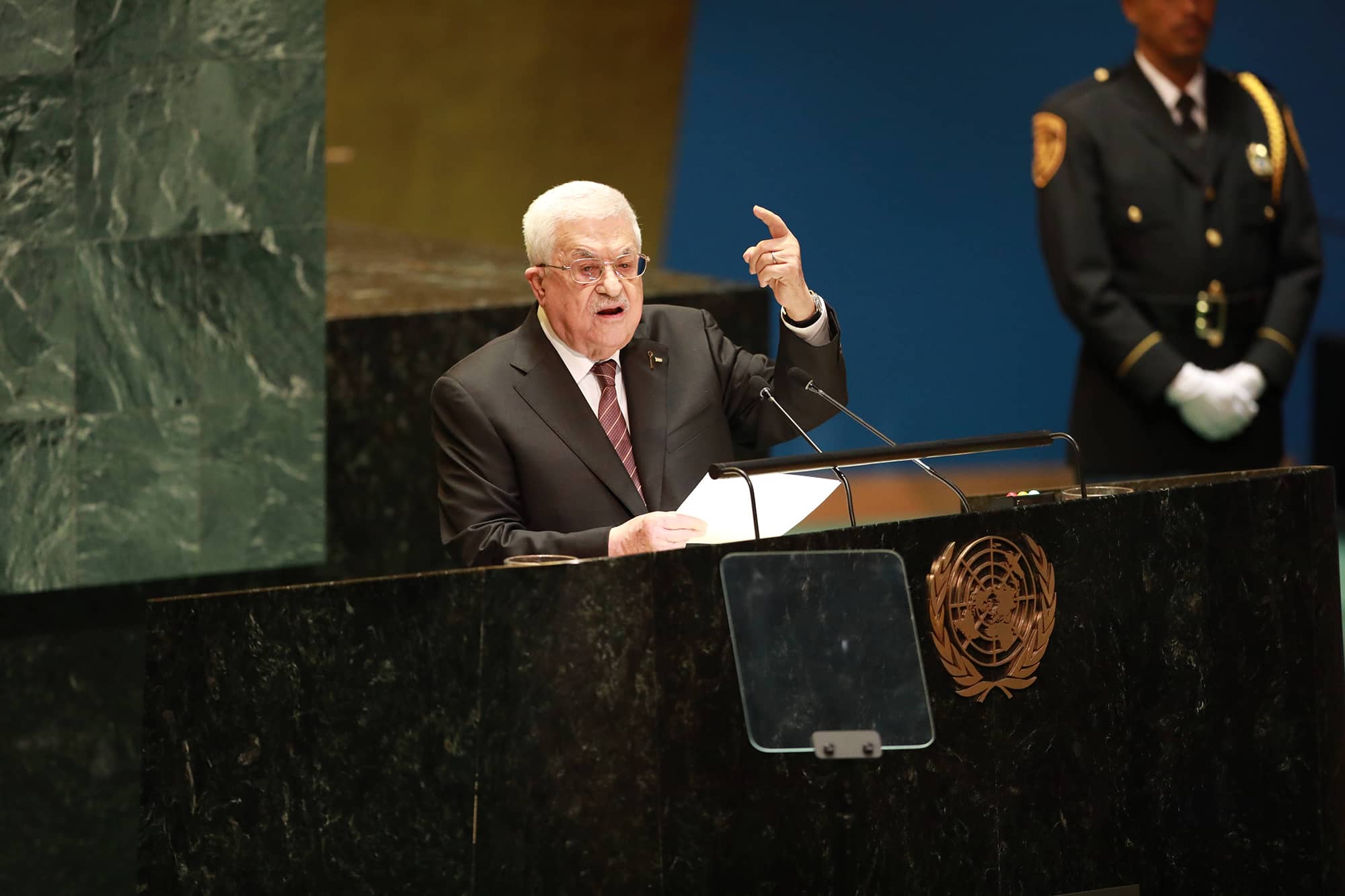
Azerbaijan tacitly responded to Israel’s recognition of the Armenian Genocide by hosting Palestinian Prime Minister Mohammad Mustafa and announcing plans to open a diplomatic office in Ramallah. At first glance, the two issues appear unrelated. Yet it is noteworthy that this move toward the Palestinians was only promised when Baku opened its embassy in Tel Aviv in 2023, but now it is being implemented against the backdrop of Israel’s move. The Palestinians and some other Muslim nations have been pressuring Azerbaijan to treat Israel’s war against Hamas in Gaza as a genocide.
In this case, geopolitical, historical, moral, and realpolitik considerations converge to support the clear conclusion that Israel’s move to recognize the Armenian Genocide must be rescinded immediately.
JISS Policy Papers are published through the generosity of the Greg Rosshandler Family.