

Introduction
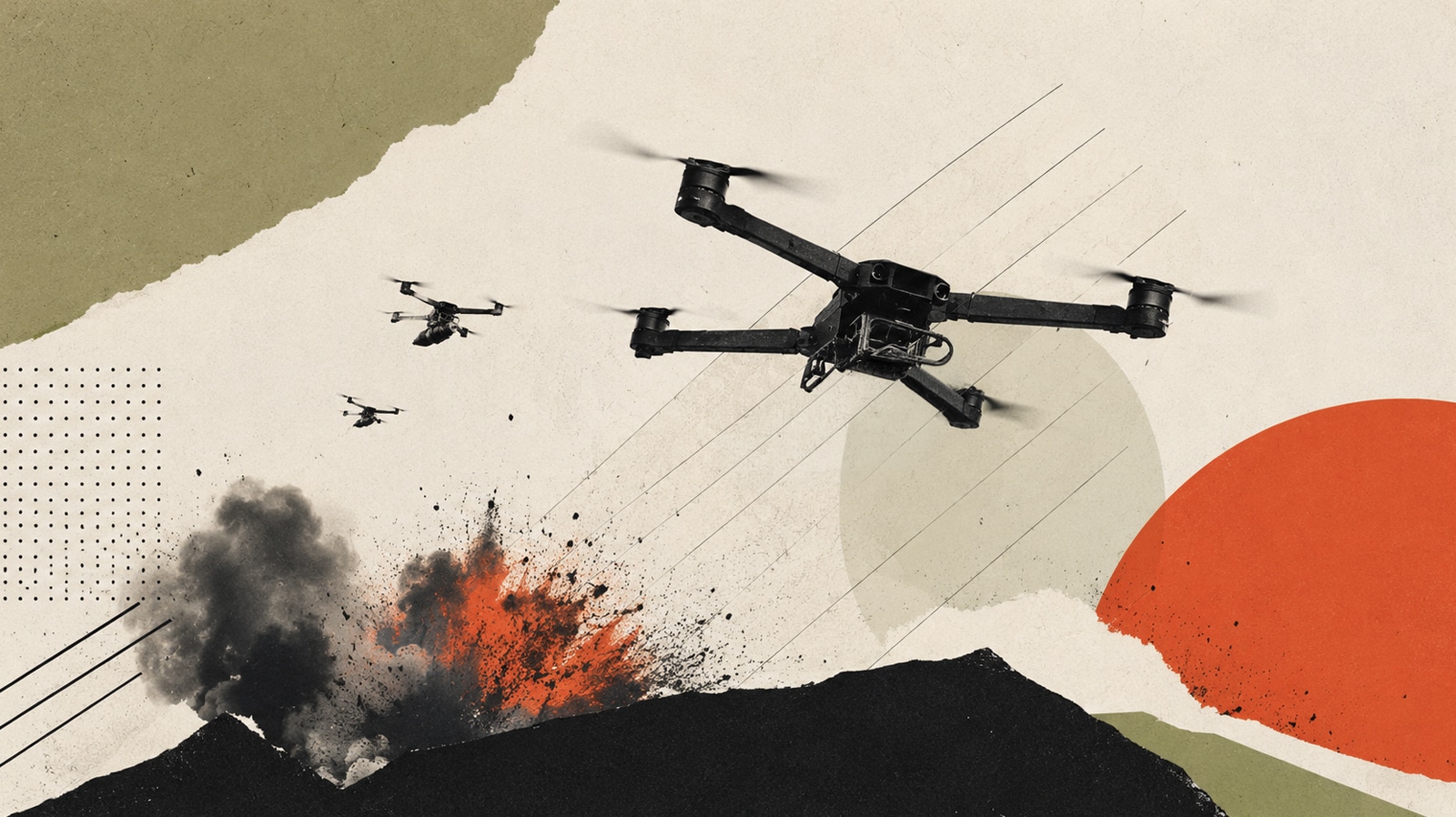
Drones have become one of the world’s most complex security challenges. Not so long ago they were regarded as innocuous civilian devices suited to photography and surveying, agricultural work, infrastructure monitoring, package delivery, or simply recreation. Yet recent operational experience has shown how quickly a small, inexpensive, readily available, and portable device can be adapted to gather intelligence, carry weapons, and attack and disrupt. Militaries, terrorist groups, and even criminal organizations now make extensive use of drones. Drones can be operated individually or form part of broader combat systems built around swarms, artificial intelligence, and continuous connectivity.
The main challenge in countering drones is that the operator’s intent matters more than the drone’s physical characteristics. A citizen photographing a landscape, a contractor inspecting roofs, and a municipality monitoring fires may all use the same device that a criminal organization employs to smuggle drugs. A terrorist group can load it with explosives; a military can use it to deliver precision strikes. Existing law deals relatively well with law-abiding users. It is far less equipped to address the malicious use of a small, cheap, portable device that serves both civilian and military purposes, can be bought quickly, and takes little to modify. Better enforcement alone will not solve this problem. The underlying approach must also change.
Experience in Ukraine and the Middle East, including the War of Redemption, shows that small drones now do far more than supplement existing combat systems. They are changing the economics of war and the cost-benefit equation, while accelerating the sensor-to-shooter cycle. At a cost of thousands or even hundreds of dollars, a drone can disrupt an expensive defensive system, strike an armored vehicle or civilian infrastructure, adjust artillery fire, or generate a major cognitive impact. The principal threat is not the autonomous device itself; it is the capabilities it carries, its economics, and the low risk in its deployment. It combines mass production, decentralized communications, software that learns, and cheap sensors with the capability to send large numbers of unmanned vehicles into combat in place of fighters.[1] This is the significance of Shin Bet Director David Zini’s recent warning that drones pose a long-term threat to state security. His statement was intended to signal a clear and present danger requiring a national response.[2]
Prime Minister Benjamin Netanyahu reinforced this warning in August 2026, describing a global threat that is changing the battlefield. An armed drone, or one operating in a swarm, however small it may be, can be no less lethal than an advanced combat platform, he noted. Netanyahu said Israel was among the most advanced countries in countering drones but warned that the effort could not pause even for a moment and directed the defense establishment to strike the drones themselves, their operators, and the places from which they are launched.[3]
Israel needs a national response to the drone threat. The task cannot rest with a single agency or be reduced to a narrow technological solution. Intelligence services, air defenses, police, local authorities, domestic security agencies, industry, the justice system, and civilian command bodies must work together, backed by legislation and regulation. The existing legal and regulatory framework, developed around a technological reality that was relevant more than thirty years ago, must be updated.
When Civilian Drones Become Weapons
The dual-purpose nature of drones is what makes the threat unique. Unlike fighter jets, missiles, and artillery, drones are sold in regular stores and are used by researchers, farmers, construction companies, emergency authorities, and photographers. These civilian uses provide cover for anyone seeking to turn a drone into a weapon. There is no need for weapons factories or elaborate smuggling networks. Basic technical skills, available components, 3D printing, improvised explosive charges, and the ability to fly a small device close to the ground can suffice. In that sense, drones collapse the boundaries between civilian tools and weapons.
Legislation and regulation tend to treat civil aviation and security separately. Civil aviation rules focus on safety, licensing, distance from flight paths, flight altitude, operator responsibility, and privacy. Security priorities are detection, classification, interception, intelligence, and protecting facilities. Yet drones operate precisely where these two fields meet. They use civilian infrastructure, fly through civilian space, and sometimes appear to be civilian aircraft, but their purpose may be malicious. As long as the state continues to address the issue through this outdated institutional division, it is responding to a new threat with the language of the past.
More fundamentally, the law largely assumes that operators want to obey it. Registration and training requirements, altitude limits, distance from airports, and designated no-fly zones are effective rules for law-abiding citizens, businesses, and professional operators. They do nothing to deter someone planning a terrorist attack, damage to infrastructure, intelligence collection, or disruption of a public event. Civilian regulation is therefore essential, but it cannot by itself provide security.
Small drones challenge the basic assumptions of air defense. Developed primarily to counter planes, helicopters, missiles, and relatively large aircraft, these defenses must now contend with small devices that fly slowly at low altitude, sometimes on unpredictable courses. Their radar and thermal signatures are small, and they can operate in dense urban areas. As drone numbers rise, detecting and intercepting each one becomes only part of the task. Defenders must also cope with the volume of incoming threats, avoid being overwhelmed, and keep the cost of interception proportionate. An expensive interceptor is hard to justify against a cheap drone unless its use is necessary. But a drone capable of carrying explosives or striking a critical facility cannot be ignored simply because it is small.
Israel therefore needs a national approach to the threat distinct from the rules governing civilian drone use. The state need not classify every drone as a weapon, but it must be prepared for the possibility that a drone can become a weapon within minutes. The answer is a layered system of safeguards, rather than a blanket ban on civilian use. Licensing, remote identification, mandatory markings, and dynamic no-fly zones must operate alongside importer responsibility and controls on certain components. Authorities also need the capacity to enforce the rules immediately and clear powers to neutralize suspicious drones. Otherwise, the malicious operator retains the initiative.
Consider what it means if a drone outlet can open along a known smuggling route while the state knows that large drones are carrying weapons across its borders, yet cannot effectively oversee their import, sale, purchase, or operation. That is a dangerous gap in state control. The relevant test is not whether a drone can be used for transport, photography, or other work; it is whether a drone can be quickly turned into a means of smuggling or attack. As this is often the case, some drones, especially heavy models, those with long range, and those that can be converted, should be licensed in a similar fashion to arms and weapons. The state has introduced registration for electric scooters, and there is no justification for failing to require registration, markings, and stricter oversight for drones with a high potential to cause harm.
Individual drones are only the beginning; developments point toward a near-term shift to swarms. A swarm is not a collection of individual drones; it is a distributed system that communicates, adapts, and withstands failures. Its strength derives from the collective behavior of the swarm, not from the power of any individual device. Swarms can divide tasks, replace a damaged device, and combine intelligence collection with deception, disruption, and attack. Even the destruction of part of the swarm need not stop it. This is fundamentally different from a random group of drones and challenges defenses organized around finding and intercepting one target at a time.
The Russia–Ukraine war serves as a testing lab for the warfare of the future. First-person-view (FPV) drones, loitering munitions, unmanned ground vehicles, and unmanned vessels have changed how forces fight and behave, as well as the rate at which they suffer losses. A cheap aerial drone can locate a force, adjust fire, or hit an armored vehicle. At sea, unmanned vessels can threaten ships and ports. On land, robots can carry equipment, evacuate casualties, conduct reconnaissance, and even carry machine guns. These developments extend the threat beyond aviation to a multidimensional battlefield that connects operations in the air, on land, at sea, and underwater within a single system.
The evidence already shows how serious this threat has become. Russia and Ukraine have long been engaged in extensive drone warfare. Israel’s vulnerability was exposed on October 7, when Hamas used drones to disrupt surveillance and defensive systems. Hezbollah has operated fiber-optic drones in southern Lebanon, using a thin fiber-optic cable for guidance instead of relying on conventional radio frequencies, making standard jamming methods less effective against them. Drones are also being used to smuggle weapons shipments across the borders with Jordan and Egypt. Drones are not a future threat; they are a clear and present danger that is growing faster than the state’s ability to counter it.[4]
Israel faces a wide range of drone threats. Fiber-optic drones are immune to conventional electronic jamming. SIM-equipped drones can communicate over existing cellular networks, receive a pre-programmed route, and wait for a pre-determined activation time. Autonomous drones can recognize targets visually and keep carrying out their mission after losing contact with an operator. Swarms add the ability to time simultaneous attacks, creating overload on detection, interception, and decision-making. The drone threat thus cannot be viewed as a single technological family, rather it is a whole operational world in which devices can readily be bought, imported, converted, and operated, while regulatory controls remain far weaker than the risk warrants.
The question of responsibility is complex. Should the air force take charge because the threat comes from the air, the police when a drone operates in a civilian area, or the Shin Bet when terrorism is involved? Licensing and oversight raise the role of the Civil Aviation Authority, while public protection could be considered the purview of the Home Front Command. Each possesses powers over part of the puzzle; however, these separate powers fall short of the required national response. Israel needs a joint operational doctrine, an explicit division of authority, a headquarters able to exercise control and enforcement in real time, and a mechanism for rapid transition from routine operations to emergency response.
Drone traffic cannot be controlled adequately by treating the air force as solely responsible for the country’s skies or by confining the Civil Aviation Authority’s work to law-abiding operators. Nor can the National Drone Initiative, established to promote safe and regulated civilian use, take the place of security capabilities for control, detection, and enforcement. Without a system that brings all the above functions together, drones above cities, borders, and essential facilities will continue to fly between boundaries of responsibility.
Protecting Public Spaces and Closing Legal Gaps
Away from the battlefield, drones pose a different but equally dangerous threat. Stadiums, power plants, airports, gas platforms, demonstrations, schools, hospitals, and state ceremonies can all be put at risk by a small drone overhead that can create physical danger, cause panic, violate privacy, disrupt air traffic, or exert a broad psychological effect. Actual harm is not necessary for serious disruption: an unauthorized flight into a protected area can force activities to stop, crowds to evacuate, or infrastructure to shut down, while damaging public trust.
Europe has already experienced disruption caused without a physical attack. In recent years, sightings of drones—or objects believed to be drones—near airports, military facilities, and essential infrastructure have triggered emergency responses, closed airports, canceled flights, and forced aircraft to divert. Some of these incidents were attributed to Russia or believed to have been following Russian methods, while in other cases, there was no conclusive evidence of who operated the devices. Attribution matters, but so does the lesson that such incidents can cause public alarm, disrupt civilian activity, and test the response of NATO and European states without an attack on a physical target.[5]
The state must strike a difficult balance. It cannot allow terrorists and criminal organizations to exploit civilian airspace freely, but neither should counter-drone measures become a vehicle for indiscriminate surveillance, disproportionate intrusions on privacy, or unchecked exceptional powers. The challenge is to create a response that matches the asymmetric nature of the threat: authorities need the ability to detect, identify, and immediately neutralize dangerous drones, while operating under clearly defined powers, transparent procedures, documented actions, effective oversight, and judicial or administrative review where appropriate.
The question of who has the authority to act against drones exposes a particularly serious lacuna in the law. Neutralizing a drone through measures such as jamming its communications, taking control of it, firing on it, capturing it, bringing it down, or blocking its navigation can have consequences beyond the drone itself. Civilian communications and other aircraft may be affected; people, property, and privacy may suffer harm. It is therefore insufficient simply to authorize the neutralization of dangerous drones. The law must allocate powers according to the action involved, specifying who can declare a no-fly zone, identify a drone as suspicious, jam it, or intercept it. It must also determine liability for damage and how to preserve the chain of custody of evidence for investigation and prosecution.
Unrestricted sales are themselves part of the security threat. Without registration, oversight, and tracking, the state cannot establish who holds potentially dangerous drones, where they are, or why they were acquired. That is the consequence of allowing imports, purchases, and transfers without identifying the buyer, recording the device’s characteristics, requiring markings, or making the seller accountable. This may be acceptable for an ordinary consumer product, but it cannot be allowed for a device that can be adapted for smuggling, intelligence collection, or even weaponized. The unrestricted sale of drones does not merely reflect a lacuna in the law; it directly increases the threat by allowing malicious operators to exploit the legitimacy of the civilian market and evade early detection and interdiction.
The threat becomes even more pronounced near borders, above border communities, and over security facilities located in civilian areas. In these cases, the challenge in differentiating between domestic security, national security, and airspace defense becomes even more difficult. A drone crossing a border may lead to a response from the air force, while one launched from a town or village may initially fall under police authority. A terrorist operator brings in the Shin Bet. A threat to essential civilian infrastructure requires ministries, infrastructure companies, and emergency authorities to act together. In the absence of a unified national framework, agencies will remain confined to their separate powers, and the enemy will exploit the gaps between them.
Confronting the challenge of drones in the public sphere requires a change in the way they are viewed. People see drones as toys or work tools, but the response to them must now take into account their dual-use nature. The objective is civic responsibility, not panic or a blanket prohibition. People should know where flights are forbidden, report suspicious activity, understand the risks of flying near sensitive facilities, and accept that some areas require strict restrictions. Technology and enforcement alone cannot provide national resilience; the public must also understand the new rules.
Recommendations
Having set out the nature of the threat, the legal gaps, and the shortcomings in the existing allocation of responsibility, the next step is to move from diagnosing the problem to addressing it. The drone threat requires a practical, phased, and implementable set of recommendations that addresses both legitimate civilian use and the potential for drones to be converted into weapons or used for malicious purposes. The recommendations below move from diagnosis to a national response, combining institutional responsibility, legislation, enforcement, technology, and civilian oversight in a national framework.
A permanent national coordinating authority should be established with clear responsibility for the drone threat, with authority in routine conditions and emergencies alike. This authority should connect all the relevant bodies, including the air force, police, Shin Bet, Civil Aviation Authority, Home Front Command, Israel National Cyber Directorate, Ministry of Transport, Ministry of Defense, local authorities, and infrastructure organizations. Its task would be to maintain an up-to-date picture of the situation nationwide, set standards, conduct scenario drills, and define the division of powers to ensure that nothing falls through the gaps between military and civilian responsibilities.
The legal framework must catch up with current technology. It should establish remote identification requirements and effective registration of drones and operators, impose responsibilities on importers and suppliers, and license sales subject to oversight and tracking. Authorities should be provided with legal mechanisms for establishing both permanent and dynamic no-fly zones, as well as powers to neutralize suspicious drones along with legal protection for operators of interception systems, whose work must be subject to documentation and oversight. The law must distinguish legitimate civilian activity from dangerous or malicious use in a way that permits prompt intervention, not merely retroactive punishment.
Israel should immediately introduce strict temporary legislation while developing the permanent legal framework. The interim law should remain in force until comprehensive regulation is in place. The temporary order should make every drone traceable to a clearly identified holder with possession, importation, manufacture, marketing, sale, transfer, lending, and operation of drones all requiring registration in a national database and the assignment of a permanent and unerasable tracking number. During the interim period, drone flights should be prohibited in and around built-up areas, along borders, over vital facilities and critical infrastructure, near airports, and close to large public gatherings and major traffic arteries, except under specific, time-limited permits. Platforms such as drones with substantial payload capacity, unusually long range, autonomous capabilities, or potential for conversion should require a purchase and possession license and security screening. Operators should also have to install remote identification means as a condition of operation.
Under the temporary order, sale or transfer of drones without real-time reporting should be prohibited. Customs should hold personal imports that lack a license, and drones left unregistered after a short transition period should become illegal to possess and subject to seizure. The police, IDF, and other authorized bodies should be empowered to detect and identify drones that violate the law or pose a tangible risk, take control of them, jam them, bring them down, and seize them. These powers should extend to seizing control equipment and detaining the operator. Breaches should be criminal offenses, allowing confiscation of drones, revocation of licenses, and financial penalties on importers, sellers, and operators. The temporary order should also contain safeguards against an emergency arrangement becoming permanent without oversight. Its term should be limited to one year, any extension should require approval by the Foreign Affairs and Defense Committee, and the government should submit quarterly reports to the Knesset covering the extent to which the powers have been used, infringements of rights, and progress on permanent legislation.
A multi-layer defense architecture should be established as there is no single solution to the drone threat. Early detection, automated classification, and intelligence need to be combined with electronic jamming, capabilities for taking control of drones, inexpensive kinetic fire, and directed energy wherever feasible. Physical protection, deception, dispersal, and hardened infrastructure must form part of the same architecture. The aim goes beyond bringing down individual drones to eliminating the attacker’s cost advantage. An attacker using cheap devices must not be able to force an expensive defensive response to every small threat. Defenders therefore need a range of options matched to the risk.[6]
Preparations must address swarms as well as individual drones. Research indicates that the challenge is not merely the number of devices but their ability to adapt and act collectively. Israel should develop ways to recognize operational patterns of swarms, disrupt their communications networks, impair coordination among drones, protect command-and-control systems, and deploy counter-swarms. It should also consider using interceptor drones, distributed sensors, and artificial intelligence to detect anomalies. Exercises should test responses to saturation attacks against bases, ports, communities, and public events.
Security measures must ultimately balance civil values with national defense needs. Israel should establish mechanisms for oversight of detection and neutralization technologies, procedures for retaining data, measures to minimize privacy infringements, and mandatory reporting after significant neutralization incidents. It must also ensure that emergency powers do not become permanent and unchecked. The seriousness of the threat makes public trust essential to the response. Trust is established when the public understands the danger and sees the state act decisively, while knowing that its actions remain subject to limits, scrutiny, and accountability.
Conclusion
Drones demand a response precisely because they cut across the distinction between civilian and military activity, domestic and national security, simple technology and advanced combat systems, and civil liberties and the need for protection. Drones are more than just individual devices. They reflect an age in which cheap, accessible, decentralized systems can produce effects on a vast scale. Treating them as toys invites surprise both in combat and in public spaces; treating every drone as a military threat would damage an open society and its civilian economy. The challenge is to develop an approach that is both balanced and resolute.
Israel must act before a major drone incident in a public space or a large-scale swarm attack along its borders forces the issue. Regional conditions, the annihilation doctrines of its enemies, lessons from current wars, and the speed at which civilian technologies are weaponized all demand preemptive actions. Israel must respond with a national effort that is balanced and multidisciplinary. This should combine updated legislation and clearly assigned institutional responsibility with multilayered technological defenses, continuous drills, intelligence, industry, and public resilience.
In the near future, the decisive question may be whether the state can recognize the moment a civilian tool becomes a weapon, rather than how it classifies the device in the first place. The answer will determine more than the effectiveness of air defenses or the security of sensitive facilities; it will also determine whether Israel can sustain open and secure civilian life when a drone can take off from a backyard, a rooftop, a car, or a boat. The drone threat is not a peripheral issue; it is a test of Israel’s national preparedness.
[1] Gabi Siboni and Erez Winner, “The Future Battlefield Is Here,” JISS, August 10, 2026.
[2] Almog Boker, “The Drone Threat on the Border—and the Shin Bet Chief’s Policy Shift” (Hebrew), N12, January 10, 2026.
[3] “Netanyahu: We Will Address the Drone Threat from the Gaza Strip” (Hebrew), Arutz Sheva, August 25, 2026.
[4] Joe Truzman, “Israeli Defense Minister Declares ‘War’ on Drones Smuggling Weapons from Egypt,” Foundation for Defense of Democracies, November 7, 2025.
[5] Associated Press, “Mysterious Drone Flights in NATO Airspace Have Caused Alarm across Europe. Here’s What We Know,” AP News, November 5, 2025.
[6] Tal Shahaf, “‘Drones That Will Attack Drones’: Israel’s Race to Stop One of the Battlefield’s Most Painful Threats” (Hebrew), Ynet, June 1, 2026.