
Throughout the forty days of Operation Roaring Lion / Epic Fury, Iran used ballistic missiles and UAVs against the Gulf states as a means of exerting indirect pressure on the United States to bring the fighting to an end. These strikes targeted not only U.S. military assets across the Gulf but also critical infrastructure and civilian sites. They did not stop with the ceasefire: Kuwait and the United Arab Emirates were hit on several occasions, and Qatar reported intercepting missiles directed toward its territory.
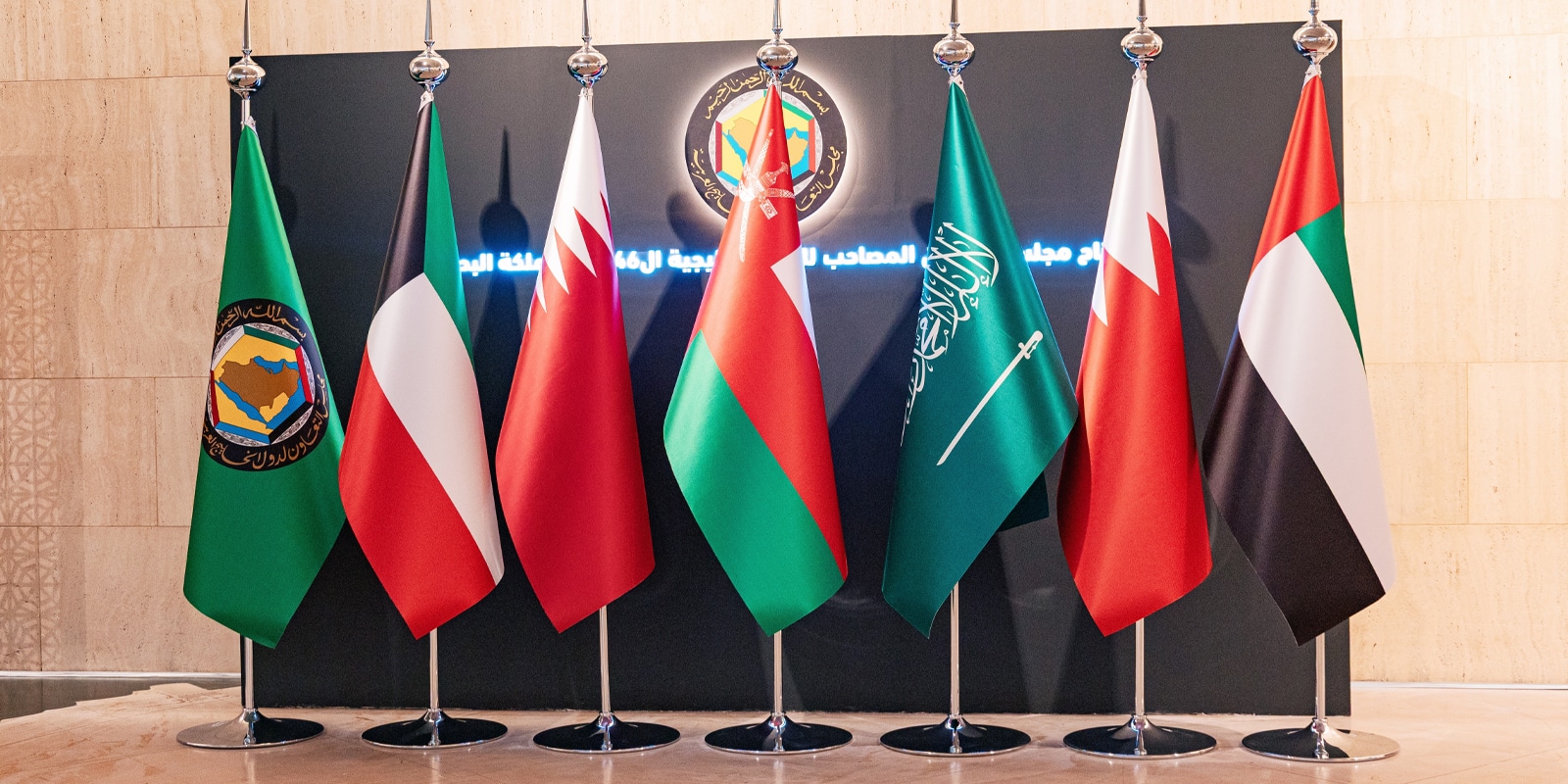
The pattern of attacks was uneven, both in scale and in intensity, and that disparity shaped how individual Gulf states responded. The initial Gulf reaction leaned toward restraint. Over time, however, as the attacks continued, that posture fractured. Some states began to push for a more forceful response, while others prioritized mediation efforts and the preservation of the status quo. Three distinct lines of response emerged:
The United Arab Emirates, which suffered the largest number of attacks (over 2,200 launches), took the lead in advancing a forceful response, defined not only by rhetoric but by action. Unlike other Gulf states, it also chose to articulate this position publicly. The UAE foreign minister declared that his country would not be held hostage by terrorists, while Anwar Gargash, the president’s diplomatic adviser, issued harsh criticism of Iran and set out conditions for any future arrangement. Gargash demanded that the Gulf states receive binding guarantees against renewed aggression, formalization of a non-aggression principle, and Iranian compensation for damage to civilian and critical infrastructure.
The clearest signal came from the UAE ambassador to the United States, Yousef Al Otaiba, who wrote in The Wall Street Journal that the UAE was prepared to join an international effort to reopen the Strait of Hormuz. On March 21, the UAE, Bahrain, Australia, South Korea, and several European countries issued a joint statement declaring their readiness “to contribute to appropriate efforts to ensure safe passage through the strait.”
The UAE coupled its public posture with sustained diplomatic pressure to move from signaling to execution. According to reporting in The Wall Street Journal, it was prepared to join a U.S.-led military effort to reopen the Strait of Hormuz and worked to advance a UN Security Council resolution authorizing such action. Emirati diplomats simultaneously pressed partners to support a military option to open Hormuz.
At the operational level, the UAE also explored measures to secure the strait, including mine-clearing efforts. The country’s geographic position, providing direct access to the Strait of Hormuz, makes it a natural staging point for maritime operations and, as a result, a central partner in any multinational effort to ensure freedom of navigation.
Beyond the diplomatic arena, the UAE also adopted a series of economic and administrative measures. It froze Iranian assets and shut down institutions linked to the regime in Tehran, including the Iranian Club and a local hospital. On March 29, reports indicated that it had seized assets worth billions of dollars belonging to Iran.
The UAE also revoked all residency permits held by Iranian nationals and imposed a blanket ban on entry and transit for Iranian citizens and passport holders. Separate reports in mid-March and after the ceasefire claimed that Emirati aircraft had carried out strikes inside Iran, although these reports remain unverified. In early April, the UAE Ministry of Foreign Affairs issued a clarification stating that there had been no change in the country’s defensive policy.
Saudi Arabia aligned with the UAE, driven by a growing conviction within the leadership that a “historic opportunity” had emerged to remove the Iranian threat, in the words of Mohammed bin Salman. During wartime discussions with President Trump, the Saudi crown prince reportedly sought to influence him to intensify military pressure in the expectation that it could produce regime change in Iran.
By the final phase of the war, Riyadh also departed from its prewar posture and allowed U.S. forces to operate from King Fahd Air Base in strikes against Iran. At the same time, it worked to assemble an international political-military coalition and set out strict conditions for a ceasefire: limits on Iran’s missile program, a permanent international security presence in the Strait of Hormuz, and compensation for damage caused by the IRGC and its proxies.
Despite this shift, Saudi Arabia continued to avoid endorsing a full-scale war, particularly given its ongoing confrontation with the Houthis. As the attacks on its territory persisted, however, its tolerance for restraint appeared to erode, and it moved toward supporting a limited military response within a coalition framework. Riyadh did not articulate this position publicly. Even as it pressed Washington to sustain the military campaign, it simultaneously engaged Pakistani and Egyptian mediators on potential ceasefire arrangements.
Bahrain maintained a consistently hawkish position throughout the campaign. This posture reflects its structural constraints: heavy reliance on Saudi Arabia, geographic exposure, and a domestic composition that includes a large Shiite minority. Its policy focused primarily on initiatives in international forums. Manama led efforts to condemn Iran at the United Nations and advanced a proposal authorizing the use of force for maritime defense following Iranian strikes on its naval facilities.
Bahrain also aligned with the emerging view that diplomatic tools had been exhausted and that a more forceful military response was required. Its role in advancing condemnation of Iran in the UN Security Council reflects this shift. Toward the end of March, it introduced a draft resolution authorizing “all necessary measures” to protect commercial shipping in the Strait of Hormuz. The proposal failed in the face of opposition from Russia and China.
Iran also directed attacks at Kuwait. From the outset of the war, it used ballistic missiles and UAVs against critical infrastructure and civilian targets, including power stations, refineries, oil storage facilities, government offices in Kuwait City, desalination plants, the headquarters of the Kuwait National Petroleum Company, and the country’s international airport. These strikes came despite a measure of improvement in Iran–Kuwait relations in recent years.
Kuwait responded by filing a complaint with the UN Security Council. Its prime minister stated that Iran bore responsibility for any escalation in the region, while the emir declared that Kuwait had been “brutally attacked by a neighboring Muslim state we regarded as a friend,” despite not allowing its territory to be used for attacks against Iran, and affirmed its right to self-defense.
At the same time, Kuwait, Bahrain, and the UAE faced Iranian subversion through dormant terrorist cells. In mid-March, reports indicated the exposure of Hezbollah-linked networks in both Kuwait and the UAE. Toward the end of the war, Kuwait and the UAE were also reported to have opposed Egyptian efforts to broker de-escalation.
As the UAE, Saudi Arabia, Kuwait, and Bahrain escalated their responses, Oman maintained a clearly pro-Iranian line. It continued to oppose the war and preserved its traditional support for Tehran, even though Iran did strike targets on its territory—albeit on a far more limited scale than elsewhere in the Gulf. Omani leaders also congratulated Mojtaba Khamenei on his appointment as Supreme Leader.
Muscat’s position assigns responsibility for the escalation to the United States and Israel. In line with that view, it worked with Egypt to initiate mediation efforts aimed at ending the fighting. This approach reflects Oman’s longstanding strategy of mediation, which seeks to avoid a decisive break with Iran even when other Gulf Cooperation Council (GCC) states move toward a more confrontational posture. The result has been growing distance between Oman and its Gulf partners. This divergence became visible in the joint Gulf condemnation of Iranian attacks issued on March 25. Jordan joined the statement; Oman did not.
Qatar has positioned itself between the two camps. Its posture shifted as Iranian strikes began to hit key assets, including Hamad International Airport and LNG facilities at Ras Laffan. In response, Doha moved to defend its territory, downing Iranian aircraft and detaining IRGC operatives.
Following an attack that affected 17 percent of its LNG sector, Qatar expelled Iranian attachés from its embassy, while stopping short of removing the ambassador. At the same time, it continues to pursue its familiar dual-track approach. The government condemned Iran, but Al Jazeera and Al Araby broadcast narratives moderating the regime’s responsibility for the war, reflecting an effort to hedge and preserve ties should it endure.
There are indications that, consistent with this risk-management approach, Qatar also played a role in advancing a ceasefire. It welcomed the agreement and received public praise from the prime minister of Pakistan. However, the mediation effort also highlighted Doha’s coordination with Washington vis-à-vis Iran, despite the fact that the ceasefire largely aligned with Iranian preferences.
Qatar’s role in the mediation was also reflected in discussions over $6 billion in Iranian funds frozen by the United States in Qatari banks after October 7. Tehran had criticized Doha for maintaining the freeze. In a further sign of friction, reports indicated that Iran’s decision to impose fees on vessels transiting the Strait of Hormuz as compensation for the war extended to ships linked to Qatar. For its part, Qatar, like other Gulf states, demanded compensation from Iran for war-related damage.
In sum, the ceasefire was reached at a moment when the Gulf system had reached a critical inflection point where traditional diplomacy had lost its primacy as an instrument for securing stability and was reduced to managing escalation. Iran’s campaign disrupted daily life and inflicted economic damage across the Gulf, but it failed to achieve its strategic objective. Instead, it generated an unprecedented push among most Gulf states for closer alignment with Washington and an expectation that the United States would “finish the job” and remove the Iranian threat.
At the same time, that alignment has not translated into a unified approach. Gulf states diverged both in how they engaged Washington and in how they interacted with external mediators, including Pakistan. The exposure of their vulnerability to Iranian pressure is likely to accelerate military buildup across the region, alongside efforts to construct a broader defense framework that could extend beyond the Gulf itself.
The shared exposure created by the current war opens a window for Israel to deepen its ties with the Gulf states on a security basis, both in offensive cooperation and in homeland defense and air defense. It also creates an opportunity to consolidate relations with the Abraham Accords states while expanding normalization to additional partners in the Gulf. A key area for future cooperation lies in developing alternative energy corridors from the Gulf to Europe that bypass the Strait of Hormuz. In this context, Israel offers a natural route for pipeline infrastructure linking the Gulf to European markets.
JISS Policy Papers are published through the generosity of the Greg Rosshandler Family.
Source: https://jiss.org.il/en/shuker-admoni-gulf-divisions-over-irans-aggression/