

Introduction
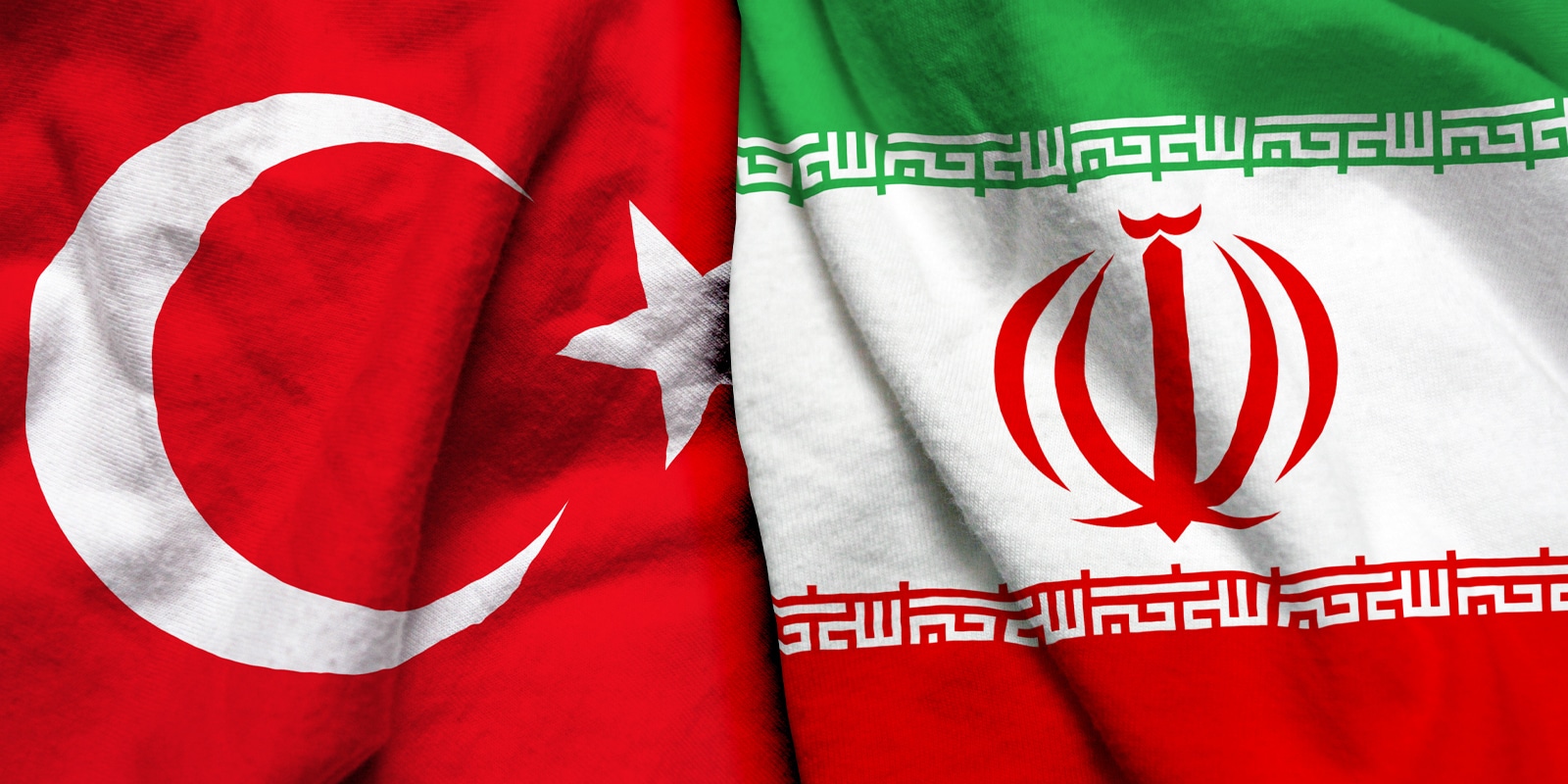
The decision to move the talks between Iran and the United States that began in Oman on February 6, 2026, after they were initially scheduled to be held Istanbul, sparked a firestorm of criticism in the Turkish media. The move, even though it was framed as a logistical and strategic necessity, exposed deep-seated structural tensions and a burgeoning rivalry between Ankara and Tehran. Turkey views the shift as an Iranian rejection of the “Istanbul Process,” a diplomatic framework Ankarahad meticulously constructed to position itself as the indispensable arbiter of regional stability. As the negotiations opened in Muscat, the rhetoric employed by Turkish commentators signaled the end of a period of “managed competition” and the beginning of a more confrontational era in Turkish-Iranian relations.
The Collapse of the Istanbul Framework and the Rise of Strategic Friction
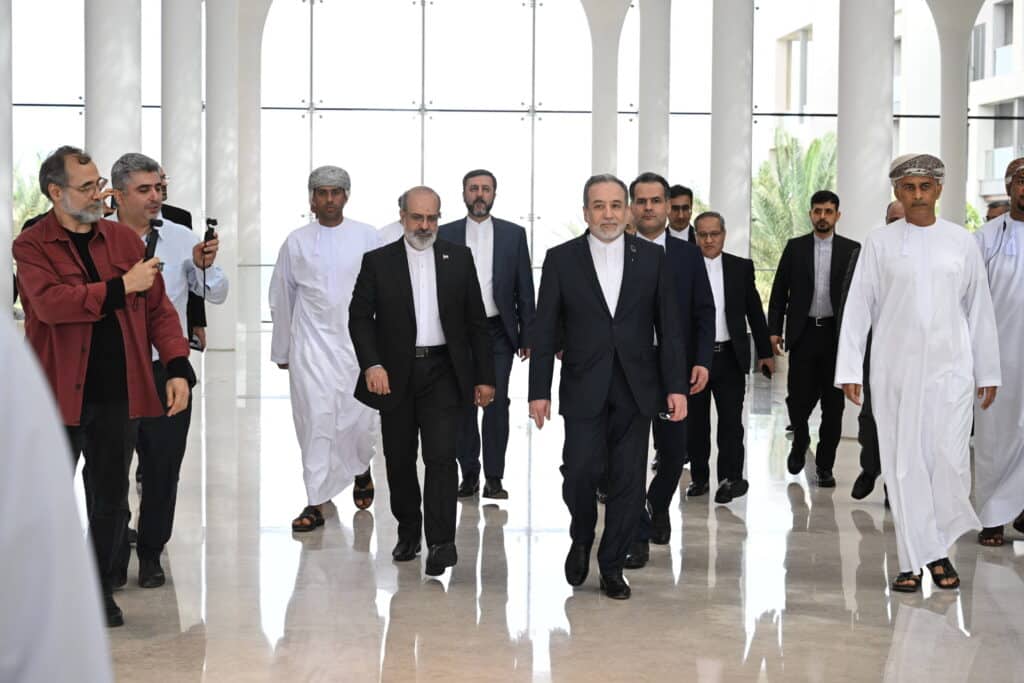
The anticipation surrounding the proposed Istanbul talks stemmed from Turkey’s historical ambition to serve as a bridge between the East and the West, particularly under the “Century of Turkey” initiative unveiled by President Recep Tayyip Erdoğan in October 2022 to mark the Republic’s centennial. Turkish officials, including Foreign Minister Hakan Fidan, spent the early weeks of 2026 coordinating with Iranian Foreign Minister Abbas Araghchi to establish a platform to address the nuclear issue and integrate regional security concerns. The initial consensus, or the perception thereof in Ankara, was that Turkey would host a multilateral summit involving Saudi Arabia, the United Arab Emirates, Qatar, Egypt, and Pakistan. This regionalized approach was intended to create a “comprehensive geostrategic deal” that could provide Iran with a pathway to economic recovery while offering regional powers guarantees against Iranian ballistic missile proliferation and proxy activities.
However, the collapse of this framework came abruptly on February 3, 2026, when reports from Axios and other international outlets indicated that Tehran had demanded a move to Muscat. The Iranian demand included not only a change of venue but also a narrowing of the agenda to a strictly bilateral, nuclear-focused format, excluding the regional observers Ankara had invited. In Turkey, this rejection was perceived as a calculated snub of President Erdoğan’s regional leadership and a deliberate attempt by the Iranian regime to keep Ankara in the dark about the “behind-the-scenes” details of its agreement with the Trump administration.
The Turkish tone shifted swiftly and with vitriol after the Iranian decision. Commentators who had previously maintained a neutral or cautiously friendly approach toward Tehran pivoted to a coordinated narrative of betrayal and strategic distrust. This rhetorical shift was most pronounced among pro-government analysts, who viewed the venue change as a direct assault on Turkey’s international prestige.
Political commentator Mehmet Ali Önel emerged as one of the most vocal critics, using harsh rhetoric that labeled the Iranian leadership a “Mullah regime.” Önel’s critique went beyond the logistical disagreement, framing the venue change as a symptom of Iran’s refusal to accept Turkey’s regional primacy. He argued that Tehran “cannot tolerate the diplomatic success and mediation efforts of Turkey” and is fundamentally incapable of participating in a transparent regional dialogue. Önel offered a structured list of what he called Iranian “bad behavior,” including accusations that Iran had “massacred millions of Sunnis” in pursuit of a “Shia Crescent” and that its ideology was rooted more in the principles of the Muslim Brotherhood than in pragmatic realpolitik.This sectarian framing reflects a deeper, long-standing competition for influence in the Islamic world, in which Ankara views itself as the protector of Sunni interests against a perceived Iranian expansionism.
Journalist Taha Hüseyin Karagöz expanded on this critique by noting Turkish support for Iran during periods of crisis. Karagöz reminded his audience that Iranian officials had historically “traveled to Ankara for weeks” to seek diplomatic cover and prevent American military strikes. He also remarked that Iran had used Turkish territory and financial systems to circumvent international sanctions, citing the sale of gold through Turkish markets. The rejection of Istanbul as a venue for the talks was presented as a profound act of ingratitude—a “biting of the hand that fed it.” Karagöz further alleged that while Tehran seeks Turkish support in times of weakness, it simultaneously orders its Friday imams to “curse the actions of the Turkish army in Syria,” highlighting the duplicity that Turkish pundits believe defines Iranian regional strategy.
On the Habertürk news channel, analyst Merve Sebnem Oruç questioned the motivations behind Iran’s preference for Oman, a site she described as a “special place” for Tehran because of its history of facilitating “secret talks” with the United States. Her analysis emphasized the lack of transparency in the Muscat channel, suggesting that “one cannot help but wonder what exactly Iran is hiding from Turkey.” Sinan Burhan echoed this sentiment on CNN Türk, arguing that Iran prefers a “weaker state” like Oman as a mediator because it lacks the “psychological, sociological, and diplomatic strength” of a powerful neighbor like Turkey. Ankara views Oman not as a neutral party but as a compliant facilitator that allows Tehran to evade the accountability a Turkish-led regional platform would demand.
The Diplomatic Etiquette of the Turkish Court
The shifting winds in Ankara are not merely a question of rhetoric: notably, criticism of Iran has been voiced by prominent professional analysts or pundits, yet it is not found in the op-eds of official print newspapers. Mostly, it appears on social media accounts and TV channels. Likewise, it is rare for Turkish analysts to refer directly to Iran without mincing words, using expressions such as the “mullah regime” or “sectarian Shi’a”. It seems that both the platforms of publication and the rhetoric are not accidental but part of a well-calculated approach: Turkey wants to voice its criticism of Iran while letting the Iranian regime know Ankara is well aware of Tehran’s “dirty games.”
However, Turkey is not interested in “burning bridges” with Tehran. Thus, pundits use unflattering references to Iran so they are not perceived as Ankara’s official position (which would make things worse in the long run). Calling a spade a spade (e.g., calling Iran a “mullah regime” or “sectarian Shi’a”) conflicts with the rules of Middle Eastern diplomatic etiquette. To that end, journalists and pundits who express their own opinions on social media are the most effective.
Another interesting detail is that, beyond the emotion-laden bemoaning of Iranian behavior, one can uncover very real geopolitical concerns, with the Zangezur issue being the most important.
The Geopolitical Core: The Zengezur Corridor and the Caucasus Theater
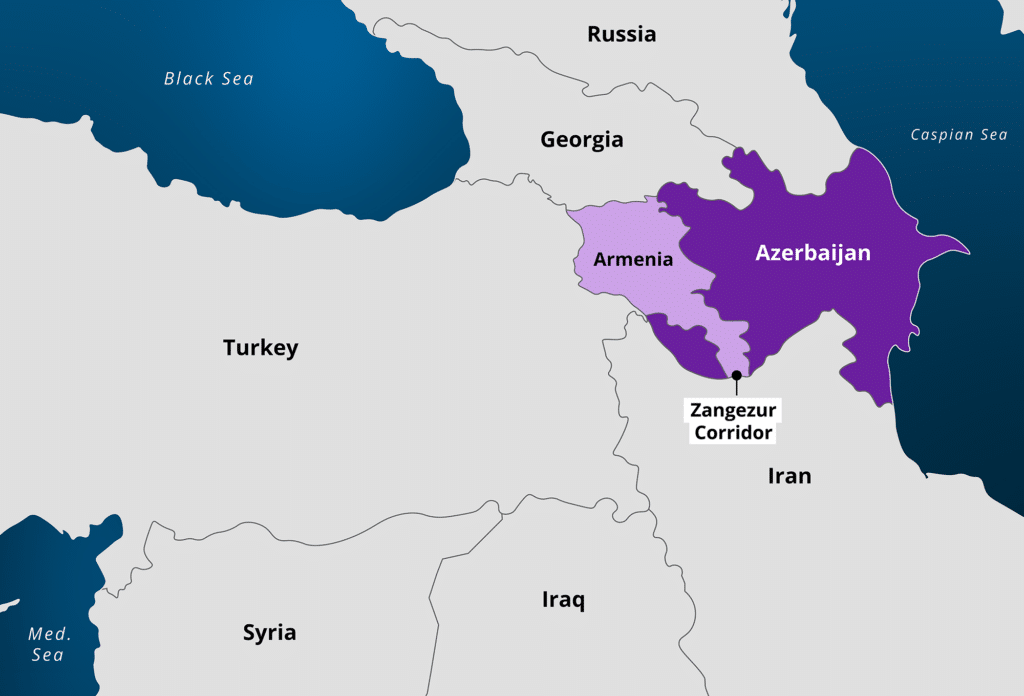
While the change of venue was the immediate catalyst for the media outcry, the underlying tension stems from competing visions for the South Caucasus, particularly the realization of the Zengezur Corridor. This proposed transport link, intended to connect mainland Azerbaijan to its Nakhichevan exclave through the Armenian province of Syunik, is a central pillar of Turkey’s “Middle Corridor” strategy. The Turkish media explicitly linked Iran’s rejection of Istanbul to Tehran’s “hostility” toward the project.
For Turkey, the Zengezur Corridor represents a historic opportunity to establish a direct overland link to the Turkic world in Central Asia and beyond to China. This would allow Ankara to bypass Russian and Iranian transit routes, significantly enhancing its role as a global logistics hub and reducing its dependence on the “Iranian bridge.” The principle of “two states, one people,” which defines the relationship between Turkey and Azerbaijan, makes the corridor a non-negotiable national priority for the Turkish government.
From Tehran’s perspective, the Zengezur Corridor is an existential threat to Iran’s northern geopolitical standing. Iranian state media and analysts argue that the corridor would physically sever Iran’s border with Armenia, its only overland gateway to the Caucasus and Europe. Tehran fears the corridor is a “Zionist-NATO” project designed to bring Turkish (and, by extension, Western) military presence directly to Iran’s northern border. The Turkish media has accused Iran of supporting Armenia against Azerbaijan as part of a broader strategy to “keep its grip on the strategic trade route in the Caucasus” and to prevent Turkey from becoming the primary regional power. This clash of interests in the Caucasus is a primary reason Tehran viewed an Istanbul-hosted negotiation as a “trap” in which it would be pressured to make concessions on the corridor in exchange for nuclear relief.
To understand why Tehran insisted on moving the talks to Muscat, it is necessary to examine the motivations articulated by both loyalist and opposition sources in Iran. For the Iranian leadership, choosing Oman was a calculated effort to preserve strategic autonomy, limit the scope of the talks, and ensure the regime’s survival amid intense internal and external pressure.
The “Muscat Channel” as a Proven Diplomatic Asset
Oman has served as the “familiar calm” in Iranian-US diplomacy for over a decade. The secret talks that led to the 2015 Joint Comprehensive Plan of Action (JCPOA) began in Muscat in 2012, and the “Omani Sultanate” has consistently demonstrated its ability to maintain confidentiality and provide a secure, indirect channel for communication. Iranian analysts, such as Hassan Beheshtipour, have argued that Muscat’s neutrality is “proven,” whereas Turkey’s NATO membership and its “zigzagging” foreign policy make it an unsuitable and biased mediator.Beheshtipour noted that Turkey often acts “according to its own interests rather than out of compassion for the Iranian people,” and that its involvement would inevitably lead to the “regionalization” of the talks.
Narrowing the Scope: The “Nuclear Only” Mandate
A primary driver of the venue shift was Tehran’s insistence that the negotiations be strictly limited to the nuclear file and the lifting of sanctions. The Turkish proposal for Istanbul was explicitly multilateral and broad, encompassing Iranian ballistic missiles and regional proxy activities—issues Tehran considers non-negotiable “defensive matters”. By moving the talks to Muscat and maintaining an indirect format, Iran successfully sidelined the regional countries that would have pushed for constraints on the “Axis of Resistance”. As Foreign Minister Araghchi stated upon his arrival in Muscat, “the subject of our conversation is strictly nuclear, and we are not talking about any other issue with the Americans”.
Turkish pundits identified a more cynical reason for Iran’s preference for Muscat: fear of the Turkish Intelligence Service (MIT). As a NATO ally with sophisticated signals and human intelligence capabilities, Turkey poses a significant risk to an Iranian delegation carrying sensitive documents and internal strategies. In contrast, the Omani palace at Al Alam provides a “protected space” with secure communications infrastructure and networks less likely to be compromised by regional rivals. Iranian officials sought “confidentiality” to prevent anything from the internal process from influencing external perceptions or leaking to the Turkish press, which is vibrant and often hostile.
The Internal Iranian Context: Domestic Crisis and Regime Survival
The 2026 negotiations are taking place amid severe domestic instability in Iran. Since late 2025, the country has been gripped by nationwide protests sparked by economic collapse that resulted in a bloody crackdown which left thousands dead and tens of thousands detained. Opposition sources argued that the regime’s engagement in Muscat was a desperate effort to “buy time” and ensure its survival.
For the Iranian leadership, the Muscat talks offered a diplomatic shield against the “bad things” President Trump threatened. By signaling a willingness to discuss the nuclear program, Tehran hopes to forestall targeted military strikes on its infrastructure and perhaps secure a limited lifting of sanctions to ease the economic pressure fueling the internal uprising. Opposition media highlighted the “Rhythm of Grief” in Iranian cities, where citizens have been increasingly vocal in rejecting any deal that would legitimize the regime. Wall messages in Tehran addressed to Trump. Such as “Do not deal with the killers of the Iranian people”, underscore the profound disconnect between the state’s diplomatic maneuvers and the population’s demands for change.
The urgency of the Muscat talks was heightened by the deployment of a massive American “Armada” to the Persian Gulf. President Trump is using this military buildup as a “maximum pressure” tactic, explicitly telling Supreme Leader Ali Khamenei to be “very worried.” The inclusion of Admiral Brad Cooper, the commander of CENTCOM, in the Muscat negotiations was a historic and highly symbolic move intended to remind the Iranian delegation that the military option remains “on the table.” While Araghchi maintained a public posture of defiance, warning that Iran would “strike American bases” in neighboring countries if attacked, the presence of the region’s highest-ranking U.S. military commander at the negotiating table signaled that Iran’s room to maneuver was narrower than ever.
Economic Dimensions: Sanctions, Gold, and the Fragile Turkish Gateway
A significant portion of the Turkish media’s anger stemmed from the perception that Iran was abandoning its most reliable economic partner. For years, Turkey had served as the “lungs” of the Iranian economy, facilitating the movement of gold and currency to circumvent Western sanctions. Pro-government journalists argued that by moving the talks to Muscat, Iran was attempting to bypass the “Turkish gatekeeper” and negotiate directly with Washington, potentially leaving Ankara with the diplomatic and economic costs of its past support without any of the benefits of a future deal.
The media critique also touched on the “shameful” reality of Iran’s internal economic mismanagement. Reports of the collapse of the Iranian Rial and the subsequent rationing of basic goods were used by Turkish pundits to contrast the “strong, stable Turkey” with the “fragile, failing Iran”. This comparison was intended to reinforce the narrative that Tehran’s rejection of Istanbul was not just a diplomatic mistake but a sign of a regime that has lost its internal and regional legitimacy.
The Role of Regional Observers and the Exclusion Gamble
The most contentious aspect of the shift from Istanbul to Muscat was the exclusion of regional countries. The “Istanbul Process” was designed as a “regional push for dialogue,” with the foreign ministers of Saudi Arabia, the UAE, Pakistan, Qatar, and Egypt invited to observe and participate. From Ankara’s perspective, these countries are the primary stakeholders in any nuclear deal, as they would be the first to face the consequences of a nuclear-armed Iran or a regional war.
The Trump administration initially “balked” at Iran’s demand to relocate to Muscat and exclude regional observers. However, the White House reportedly relented after urgent lobbying by at least nine Arab leaders, who urged Washington not to abandon the diplomatic track. Iranian sources, however, viewed this regional involvement as a “trap” meant to force Tehran to discuss its regional influence. Ahmed Bakhshayesh, a member of the Iranian National Security and Foreign Policy Commission, argued that Arab countries “do not want Iran to have regional influence.” Thus, their presence at the table would only hinder negotiations. By moving to Muscat, Tehran bet that it could secure a better deal by dealing solely with the United States, gambling that Trump’s desire for a “historic win” would outweigh his commitment to his regional allies.
In the final Muscat framework, only Qatar’s Prime Minister was reportedly considered a potential regional participant. This suggests that Qatar remains the only regional power with which Tehran feels comfortable sharing the diplomatic stage, underscoring the isolation the move from Istanbul produced. The Turkish media seized on this, noting that by preferring the “mediation of a small state like Qatar or Oman” over the “power of Turkey,” Iran was revealing its strategic weakness.
Symmetry of Mistrust: Intelligence, Information Security, and the MIT Factor
A nuanced layer of the Turkish media’s criticism—and a likely factor in Iran’s decision-making—was the role of intelligence services. The Turkish Intelligence Service (MIT) is among the region’s most capable organizations, with deep networks inside both Iran and the United States. Turkish commentators acknowledged that “the Iranians have the best reasons to fear for the information security of the talks” in Istanbul.
In a multilateral, highly transparent environment like Istanbul, the Iranian delegation would have faced a “media frenzy” and “external negotiation pressure.” Analysts noted that the presence of high-profile Western media outlets, such as CNN Turk, would have made it impossible for Tehran to control the narrative. Furthermore, MIT’s technical capabilities could have enabled the Turkish government to monitor the Iranian team’s internal deliberations, giving Ankara significant leverage in regional negotiations.
Muscat, by contrast, is not a “media center.” The Sultanate’s palace at Al Alam offers a highly controlled environment in which the host can ensure participants’ physical and informational security. This “familiarity” with Omani security protocols gave the Iranian delegation a sense of safety they lacked in Turkey, which they view as a “NATO-infiltrated” territory. The Turkish media interpreted this preference for security as evidence that Iran is “hiding the truth” from its neighbors, particularly regarding any concessions it might be willing to make to the Trump administration.
Synthesis and Second-Order Insights: The Strategic Divergence
The “Muscat Pivot” of 2026 reveals three critical second-order shifts in the regional order.
1. The death of the “Regional Platform” model
The failure of the Istanbul talks signals rejection of the notion that regional powers can or should manage the Iranian nuclear file. Tehran’s preference for bilateral “crisis management” in Muscat indicates that it continues to view its nuclear program not as a regional security concern but as a sovereign bargaining chip to be used exclusively with Washington. This marginalizes Turkey and the Arab states, forcing them back into a role as passive observers of a deal that directly affects their security.
2. The South Caucasus as a new primary friction point
The Zengezur Corridor dispute significantly shaped the Turkish media’s visceral reaction to the venue change. This suggests that the Turkish-Iranian rivalry has moved beyond the “proxy wars” in Syria and Iraq and is now focused on direct geopolitical competition in the Caucasus. The “Zengezur Dilemma” is a zero-sum game: its success would elevate Turkey to a Eurasian hegemon, while its failure would preserve Iran’s role as the indispensable transit bridge. The 2026 rupture in Istanbul indicates that neither side is willing to compromise on this front and that diplomatic forums are increasingly being used as instruments in this struggle.
The Zangezur issue is of utmost importance because it concerns both Israel and the West. At this focal point, Turkey’s interests fully align with those of the US and the West, as the success of the Zangezur project will remove Iran’s influence from that commercial trajectory.
3. Trump’s “personalized” and “military-heavy” diplomacy
The Muscat talks were dominated by “personal envoys” (Witkoff, Kushner) and military figures (Admiral Cooper) rather than traditional diplomats. This “Trumpian Architecture” favored a private, high-stakes environment, such as Muscat, over a multilateral, transparent one, such as Istanbul. Tehran correctly identified that Trump’s priority was a “deal” rather than “regional consensus,” and thus it successfully used the venue shift to peel the U.S. away from its Turkish and Arab partners.
Conclusions and Future Trajectories
The 2026 Muscat negotiations represent a significant tactical victory for the Islamic Republic of Iran in its effort to preserve its nuclear program and regime security through a bilateral “sanctuary.” However, this victory has exacted a severe diplomatic cost in Ankara. The Turkish media’s unprecedented critique of the “Mullah regime” and its emphasis on Iranian “ingratitude” signal that the period of managed Turkish-Iranian cooperation is coming to an end.
As the talks in Muscat continue, the focus of regional tension will likely shift to the Caucasus. If the Muscat process yields a limited nuclear deal that emboldens Tehran, Turkey is likely to respond by accelerating the Zengezur project and strengthening its military alliance with Azerbaijan, potentially triggering a confrontation along Iran’s northern border.Conversely, if the Muscat talks fail and the “bad things” threatened by the Trump administration occur, the Turkish media’s current rhetoric suggests that Ankara may no longer serve as the economic and diplomatic “lungs” that have historically kept the Iranian regime alive.
Despite the atmosphere of mistrust toward Iran, Turkey is keeping all its options open. For the time being, Ankara’s primary interest is to prevent an American attack, because it views the risks that would stem from the collapse of the Iranian regime as being more dangerous than verbal power games with Tehran.
JISS Policy Papers are published through the generosity of the Greg Rosshandler Family.