

Introduction
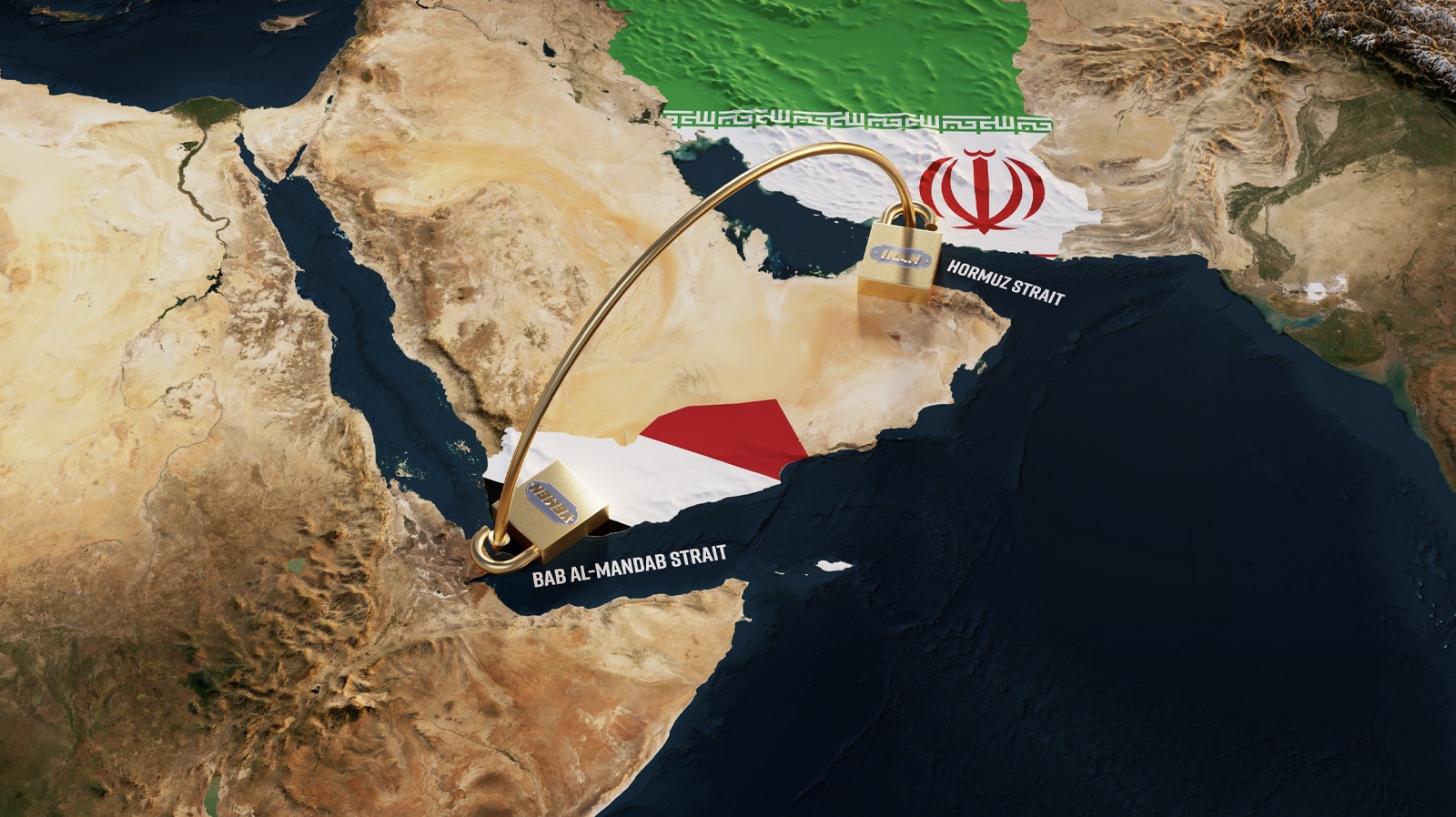
For many years, Israel’s security discourse focused on the Shiite ring of fire built by Iran. That ring combined revolutionary ideology, a network of armed proxies, missiles, rockets, and influence operations. Iran devoted extensive resources to promoting terrorism across the region, eroding Israel’s freedom of action, and undermining its legitimacy. It built the ring patiently and determinedly over decades around a concept intended to surround Israel with enemies from both outside and within and activate the proxy network when the order came.
While Israel is still confronting the Shiite ring of fire and working to dismantle its component elements in Gaza, Lebanon, Syria, and Yemen, a new ring of fire is taking shape in the form of a hostile Sunni ring that Turkey seeks to lead.
This emerging threat warrants examination now, before Israel finds itself facing a far broader, entrenched hostile structure in the future. The recent announcement of an alliance between Turkey, Pakistan, and Saudi Arabia, along with the possibility that additional Sunni actors will join, is the latest development on this front. These developments should not be dismissed even if some of the announcements are intended for cognitive, domestic political, or economic purposes. Alliances are measured not only by the documents that formalize them but also by the trajectory they establish. Israel cannot afford to dismiss as mere background noise the posturing of states with military, economic, religious, and demographic clout seeking to present themselves as a common front.
The Mecca Pact between Turkey, Saudi Arabia, and Pakistan was presented as a defensive framework built around the principle that an attack on one member would be considered an attack on all. This collective language has far-reaching significance. It allows the members to project power, establish public legitimacy for cooperation, and create ambiguity about their response in the event of a crisis. Such ambiguity can itself be an asset: it requires consideration not only of a single state’s capabilities but also of the possibility of a regional chain reaction.[1]
This article examines the nature of the developing Sunni ring of fire: its sources, the logic driving it, why it is gaining momentum now, and what Israel must do in response to this emerging alignment. Its central argument is that, alongside the continued dismantling of the Shiite ring of fire, Israel must formulate an initial operational doctrine for the emerging Sunni ring while it is still at an early stage. That doctrine should combine intelligence and technological superiority with strengthening competing alliances, along with deeper ties with India, Greece, Cyprus, and relevant Arab states. It should also preserve military freedom of action against any developing threat.
The Logic of the Sunni Ring of Fire
A ring of fire is not merely a geographic concept. It need not form a closed territorial continuum or a continuous border around Israel. Above all, a ring of fire is a systemic concept: the creation of a network encompassing actors, capabilities, infrastructure, legitimacy, narrative, and operational capacity designed to restrict Israel’s freedom of action and apply pressure on it across every dimension. The Iranian ring was built through armed ideological proxies. A Sunni version may rely less on militias and more on states, armies, economic power, defense industries, religion, influence, and trade corridors that compete with Israel.
This is the key difference. The Shiite ring of fire was built from the bottom up through non-state or quasi-state organizations: Hezbollah, Hamas, Islamic Jihad, militias in Iraq and Syria, and the Houthis in Yemen. A Sunni ring of fire may be built from the top down through defense agreements, defense procurement and development, joint exercises, defense-industrial cooperation, trade routes, diplomatic coordination, and efforts to present a broad Sunni Islamic front. It would not necessarily be a ring of proxies, but rather a ring of states. Its nature will be different to the Iranian ring, but it will be no less dangerous.
Ankara will be the key actor in the Sunni ring. Over the past several decades, Turkey has undergone a profound transformation. It has moved from seeking integration into the West on the basis of a secular identity to positioning itself as an independent regional power, with neo-Ottoman ambitions, influence in the Muslim world, a military presence beyond its borders, and an advanced defense industry. Turkey is a member of NATO, fields a large and experienced military, develops UAVs, advanced combat aircraft, and naval systems, and is developing extensive intelligence capabilities and defense industries. It operates in numerous theaters, including Syria, Iraq, Libya, the Caucasus, the eastern Mediterranean, and even Africa.
Another key member of the Sunni alliance is Pakistan, a nuclear-armed state with a large military, extensive operational experience, an ongoing confrontation with India, and deep historical ties with the Gulf states. Pakistan is not just another regional actor in South Asia; it is a state with nuclear capability. Its ties with major Arab states have implications that extend beyond the immediate military dimension.[2]
Saudi Arabia brings to the alliance a different dimension that includes money, religious standing, influence in the Sunni world, enormous procurement capacity, and a growing desire to reshape the region around it. The limitations of the Saudi military should not be minimized, but neither should Saudi Arabia’s ability to finance alliances, acquire technologies, influence markets, set a religious-political agenda, and incentivize other states to join regional initiatives. In the emerging alliance, Turkey supplies military and industrial power, Pakistan contributes depth in both the nuclear and cognitive domains, and Saudi Arabia supplies finance and religious legitimacy.
Egypt is in no hurry to join the alliance as a full member, but, nevertheless, Egypt’s role in the emerging framework should be considered. The mere possibility that Egypt may become part of a broad Sunni alliance changes its nature. That said, Egypt is proceeding cautiously; it is bound by a peace treaty with Israel, depends on aid and ties with the United States, manages complex relationships with Saudi Arabia and the United Arab Emirates, and fears becoming trapped in a framework that would restrict its freedom of maneuver. Cairo’s place in a Sunni ring of fire is therefore twofold: it could serve as a force multiplier if it joins, but also as an internal brake if it continues its policy of balance and caution. Israel should closely monitor developments on the Egyptian front, not only because of Cairo’s military power but also because of its ability to confer Arab legitimacy on any Sunni axis, provide strategic depth, and its control one of the world’s most important chokepoints.[3]
Syria under al-Sharaa/Jolani is also a potential member of the alliance, primarily because of its economic and military dependence on Erdoğan’s Turkey. Given that Syria shares a complex border with Israel, its inclusion could affect Israel’s ability to act to thwart emerging threats in this divided and war-torn country, as illustrated recently when Israel struck the Abu Duhur air base in the northwestern province of Idlib. Finally, there is Jordan: an economically underdeveloped state with a Palestinian majority among its citizens, a strong Muslim Brotherhood presence, and a 300-kilometer-long border with Israel.
The initiative’s name, the location of the declaration, and the tone of its public presentation are not minor details. When an agreement is unveiled in a place sacred to Sunnis—Mecca—or wrapped in language about defending the Islamic nation, the message is clear: this is not merely cooperation among governments, but an attempt to create a broader identity-based framework. Even if the interests of the various states do not fully align in practice, a shared narrative can become a mobilizing tool, especially when Israel is presented as a convenient, familiar, and unifying threat.
Turkey has become a major defense exporter in recent years, particularly in UAVs, land systems, electronic systems, missiles, and naval platforms. Part of its success stems from its systems having been tested in actual combat theaters; they are therefore marketed internationally as proven solutions. Saudi financing, combined with Pakistan’s need for cooperation in its competition with India, could give these capabilities considerable additional momentum, and accelerate joint projects, technology transfers, the establishment of production lines, and deeper mutual dependence in the defense sphere. The process would be gradual, but if it is not recognized in time, it could alter the regional balance of power.
The emerging alignment among Turkey, Pakistan and Saudi Arabia creates a natural division of labor. Turkey can contribute operational experience, defense industries, UAVs, training capabilities, and the ability to project power. Pakistan brings military depth, experience confronting a larger adversary, long-standing ties with the Gulf, and a nuclear-deterrence component, albeit one that is ambiguous and not necessarily formalized. Saudi Arabia can provide financing, a vast procurement market, religious influence, and a central position in the Sunni world. Together, these three contributions do not immediately amount to a unified operational alliance, but they do create force-buildup potential that cannot be ignored.
Iran, Israel, and the Contest Between Axes
The immediate threat to Turkey, Saudi Arabia, and Pakistan is not Israel but Iran. For years, Iran has operated proxies across the region, threatened shipping lanes, attacked energy infrastructure, armed radical organizations, and worked to destabilize Sunni regimes. Saudi Arabia has experienced attacks on its energy facilities firsthand; the Gulf states have faced threats in the maritime domain; and Turkey competes directly with Iran for influence in Syria, Iraq, and the Caucasus. Yet in the public and political discourse of some of these actors, Israel is increasingly portrayed the main threat. .
The first reason is religious and relates to public perceptions. Israel is a convenient target for political mobilization in the Muslim world. Even when Arab and Sunni states maintain overt or covert ties with Israel, and even when their security interests require coordination against Iran, portraying Israel as an enemy allows them to build domestic legitimacy, deflect public criticism, and present themselves as defenders of Islamic and Arab causes. Israel is not always the principal threat, but it is often the threat that looms largest in the political imagination Arab and Muslim leaders seek to shape.
In recent years, and especially since the large-scale attack on Israel and the War of Redemption that followed, Israel has demonstrated an ability to withstand attack, recover, and employ force effectively, backed by strong intelligence, an advanced defense industry, and close cooperation with the United States. Its ability to operate across multiple theaters, strike enemy infrastructure, employ precision capabilities, and continue functioning under regional and international pressure is changing how regional actors perceive it. Israel is no longer seen simply as a small state under threat, but also as a regional power with the ability to strike deep into enemy territory—and therefore as a power that others may seek to balance.
The third reason is economic. Competition over the trade and energy corridors linking Asia and Europe is becoming one of the region’s principal arenas of rivalry. The India–Middle East–Europe Economic Corridor( IMEC) initiative, which would connect India, the Gulf, Israel, and Europe through a new economic corridor, could bypass Turkey and diminish its importance as a bridge between East and West. For Ankara, this represents a first-order strategic challenge. If Israel becomes a major hub for goods, energy, communications, and infrastructure, this will strengthen Jerusalem’s regional position while weakening Turkey’s ability to capitalize on its geographic location and advance the “strategic depth” doctrine developed by former Turkish prime minister Ahmet Davutoğlu. That doctrine seeks to make Turkey the “master of the house” in the broader Middle East—a regional power controlling trade routes, energy resources, and the political-Islamic arena.[4]
The IMEC initiative announced at the G20 summit in New Delhi in 2023, aims to connect India, the Gulf, Israel, and Europe through a network of ports, railways, energy infrastructure, communications cables, and supply chains. Its significance is not merely economic. It could reshape perceptions of the region’s geography: Israel would no longer be at the geographic edge of the Middle East but would instead serve as a link between the Indian Ocean, the Mediterranean, and the European market. This poses a direct challenge to Turkey, which aspires to be an indispensable gateway between Asia and Europe. The contest over economic corridors is therefore also a contest over status, revenues, influence, and the ability to set the regional agenda.
This is where the security and economic dimensions converge. A Sunni ring of fire need not begin with rocket fire or forces deployed on Israel’s border. It could begin with the construction of alternatives that could erode the regional position Israel seeks to establish, undermine its cooperation with the Gulf states, exert pressure on Jordan and Egypt, and strengthen the narrative that Israel is a foreign and dangerous presence in the region. In this sense, trade corridors, ports, gas pipelines, defense industries, and defense agreements are all part of the same campaign.
Another factor is that some Sunni states are seeking to diversify the powers they rely on. Their ties with the United States remain important, but they are no longer certain that Washington alone can provide the support they need. They see the volatility of U.S. policy, the American public’s growing weariness with involvement in the Middle East, competition with China, and domestic political divisions in the United States. They are therefore seeking additional safeguards through ties with China, Russia, Turkey, Pakistan, and sometimes with one another. Israel must understand that new alliances do not necessarily replace old ones, but come in addition to them, creating another layer of complexity.
At the same time, uncertainty surrounding U.S. policy is pushing regional states to seek additional strategic insurance. This does not mean abandoning their ties with Washington; rather, they do not want to depend on Washington alone. Saudi Arabia seeks greater flexibility in its relations with the United States, China, and Pakistan. Turkey wants to retain its NATO membership while acting as an independent power and expanding its presence in Africa. Pakistan seeks resources and greater standing in the Muslim world. As these three trends converge, they create the basis for an alliance that is neither Western nor Iranian, but one that is Sunni, flexible, interest-driven, and which has long-term ambitions.
Implications for Israel and Recommendations
Israel’s response to the possible emergence of a Sunni ring of fire should be guided by several considerations. At present, this is not a military coalition that would employ combined force against Israel. Significant differences remain among Turkey, Saudi Arabia, Pakistan, Egypt, Syria, Jordan, and the Gulf states, including divergent interests, mutual suspicion, economic and security dependence on the United States, competition for leadership, military and economic constraints, and concern about becoming embroiled in conflict. Many regional alliances look impressive at signing ceremonies but prove far less robust when their members are required to bear real costs.
Precisely because the threat is still taking shape, now is the time to monitor it, map it, and influence it. Israel has already paid a heavy price in the past for failing to identify such processes early on. The Houthis in Yemen are a clear example: for years, many viewed them as a distant, local, and marginal nuisance, only to discover later that they were capable of threatening shipping lanes to Eilat and damaging the global economy. Israel must not repeat this mistake with the emerging Sunni axis.
Israel must complete its campaign against the remaining elements of the Shiite ring of fire. As long as Hamas, Hezbollah, the pro-Iranian militias, and other parts of the Iranian axis retain the ability to recover, Israel will struggle to redirect attention and resources toward new challenges. Dismantling Hamas’s military capabilities and rule in Gaza, inflicting deep and sustained damage on Hezbollah, preserving freedom of action in Syria, monitoring developments in Iraq and Yemen, and continuing to curb Iran are all prerequisites for strengthening Israel’s position in the face of any new regional alliance.
Turkey’s effort to expand its influence in the eastern Mediterranean requires Israel to strengthen and deepen its cooperation with Greece and Cyprus. This cooperation is not merely about energy or diplomacy; it is a component of the regional balance of power. Defense deals, joint exercises, maritime coordination, gas and electricity projects, and intelligence cooperation all serve as a counterweight to Turkey’s effort to become an indispensable gateway between the East and Europe.
Ties with India should be strengthened. India is a key player in the changing balance of power in Asia and the Middle East. It is Pakistan’s strategic rival, a rising economic and demographic power, a security and technological partner of Israel, and a central actor in any land or maritime corridor connecting Asia and Europe. Strengthening the Israel-India alliance is not only a matter of procurement, trade, or technology; it is a strategic lever against the possibility that Pakistan could become the military or nuclear anchor of a hostile Sunni axis. Deeper ties should also include consideration of the joint development of air and maritime platforms.[5]
At the same time, Israel should cautiously develop its ties with pragmatic Arab states. Not every Sunni state is part of a ring of fire, and not every form of cooperation among Sunni states is necessarily directed against Israel. On the contrary, some of these states share clear interests with Israel in countering Iran and radical political Islam and in addressing regional instability and promoting economic development. Israel should avoid pushing them into the arms of its adversaries through unnecessary statements or ill-considered diplomatic moves, while making clear that any attempt to turn regional cooperation into a hostile alignment against Israel will draw a response..
Israel also faces a challenge in the diplomatic and perceptual arenas. It must distinguish between Turkey as a potential strategic adversary and other Sunni states that may be drawn into hostile rhetoric but do not necessarily seek confrontation. The more Israel presents itself as a source of stability, military resilience, technology, energy, reconstruction, and economic benefit, the less room for maneuver there will be for those who seek to portray it as a threat to the Sunni world. Conversely, the more Israel is perceived as providing its adversaries with propaganda material, the easier it will be for them to assemble hostile coalitions.
Israel needs a dedicated mechanism to monitor the Sunni axis as it takes shape militarily, politically, and economically. This mechanism should integrate political, military, economic, industrial, and information intelligence. It should track procurement agreements, joint exercises, technology transfers, religious and political rhetoric, changes at military bases, infrastructure investment, port activity, cooperation on UAVs and missiles, and public discourse in the countries involved. A modern threat takes shape not only in military camps, but also through contracts, economic forums, the media, academia, online networks, and trade routes.
Israel must maintain absolute technological and intelligence superiority over each of the relevant states. This does not mean confronting them, but rather developing a deep understanding of their capabilities, limitations, vulnerabilities, and the points of friction among them. Such superiority will enable Israel to distinguish between empty declarations and substantive developments, between an alliance designed largely for appearances and a genuine capacity for joint action. Israel must be able to determine in real time when the alliance is shifting from declarations to construction of capabilities, and from there to a genuine threat.
Israel should build countervailing alliances oriented not necessarily against Muslim states, but are instead built on stability, trade, energy, and freedom of navigation. Israel, Greece, Cyprus, India, the United Arab Emirates, European states, and the United States can together form a broad network that serves as a counterbalance. As the economic corridor from India through the Middle East to Europe becomes more firmly established, and as Israel becomes a more central link in it, attempts to isolate or threaten Israel will carry a higher regional cost.
Israel should pursue diplomatic initiatives to broaden the circle of states in its vicinity with an interest in maintaining calm. A peace agreement or stable arrangement with Lebanon, if achievable under appropriate security conditions, could advance reconstruction and investment, promote stability, and help curb Iranian influence. The involvement of countries such as the United Arab Emirates and Saudi Arabia in Lebanon’s reconstruction could, under certain conditions, become a source of regional stability rather than a means of exerting pressure on Israel.
Israel must continue to reinforce its military freedom of action. Alliances, diplomacy, and economic ties are important tools, but they are no substitute for proven military capability. The Middle East respects power, especially power employed with precision, determination, and sound judgment. The clearer Israel’s achievement is at the conclusion of the campaign against the Shiite ring of fire, the less incentive other actors will have to test it. Conversely, if Israel is perceived as having been worn down, weakened, deterred, or having lost the initiative, it will invite new attempts to build additional rings of pressure around it.
Israel should give greater weight to the economic dimensions of national security. Trade corridors, ports, gas pipelines, communications cables, and electricity links should be treated as strategic assets in their own right. Israel should accelerate its integration into the India–Middle East–Europe Economic Corridor, strengthen the Port of Haifa and its connections with Jordan and the Gulf, and ensure that its ties with Europe are grounded not only in diplomacy but also in substantial economic interests. The greater the tangible benefits countries derive from their ties with Israel, the higher the cost to them of joining hostile moves against it.
Military intelligence collection alone is not enough. Israel must also understand the religious discourse, political language, influence networks, media, religious institutions, and digital communities through which legitimacy for such alliances is built. A state that understands its adversaries’ narrative can work to fracture it, moderate it, or expose its internal contradictions. In this case, the central contradiction is clear: states that are genuinely threatened by Iran may portray Israel as the enemy, but their publics and elites know very well where much of the real threat lies. Israel therefore needs an effective capability to compete in the online influence battle and shape international perceptions.
Conclusion
A Sunni ring of fire is a real possibility rooted in real developments, including Turkey’s growing strength, Pakistan’s standing and nuclear capability, Saudi capital, competition for leadership in the Sunni world, the competition over trade and energy corridors, and growing concern over Israel’s increasing power. Some of these elements remain loosely connected, some exist largely at the level of rhetoric and perception, and others may dissipate because of internal contradictions. Israel should not wait until the threat is fully formed. It must identify it in its early stages and act before it becomes a piece on a board where others set the rules.
Israel is in a strong position from a military, technological, and intelligence perspective, but that strength must be managed effectively. It must complete the dismantling of the Shiite ring of fire, build competing alliances, strengthen ties with India and deepen its partnerships with Greece and Cyprus, as well as cooperation with pragmatic Arab states, and closely monitor the emergence of a potential Sunni axis. It must do so without bluster, dismissiveness, or strategic blindness.
The first test of any alliance comes when it is called upon to translate words into deeds. If the Houthis strike Saudi energy facilities and the alliance members do not actually stand alongside Riyadh, that would demonstrate its limitations. But this should not be regarded as the final word; alliances sometimes take shape through early failures, adjustments, the creation of coordination mechanisms, and the accumulation of experience. The relevant measure is therefore not only how an alliance responds to a particular crisis but also the cumulative trend: whether more military exercises are being held, deals are being signed, forums are being established, shared language is expanding, and additional states are joining. Israel’s response should be based on monitoring trends, not on an impression formed by a one-off headline.
The main lesson to be drawn from the Iranian ring of fire is that regional developments often appear peripheral until they become major threats. The Houthis, Hezbollah, Hamas, and the pro-Iranian militias did not emerge overnight. They were built up over years, sometimes in plain sight, until they became a formidable threat. If Israel identifies the Sunni ring of fire in time, understands what is driving it, and acts wisely, it may be able to prevent it from becoming entrenched or at least limit the damage it can cause. And if necessary, Israel must be prepared to confront the new ring before it develops into a front that constrains Israel along its borders and undermines its regional position.
[1] . NATO, “Military Representative: Türkiye,” International Institute for Strategic Studies, The Military Balance 2024, IISS, 2024.
[2] Nuclear Threat Initiative, “Pakistan,” Arms Control Association, “Arms Control and Proliferation Profile: Pakistan,” August 2023.
[3] Ahmed Aboudouh, “Should Egypt Join the Mecca Pact?” Chatham House, August 14, 2026; International Institute for Strategic Studies, “A New Middle Eastern Quadrilateral Is Taking Shape,” May 6, 2026.
[4] Gabi Siboni and Erez Winer, “Turkey—From Partnership to an Imperialist Threat,” JISS, May 20, 2026.
[5] Gabi Siboni and Erez Winer, “Israel’s Path to Armaments Independence,” JISS, July 27, 2026.
JISS Policy Papers are published through the generosity of the Greg Rosshandler Family.
Source: https://jiss.org.il/en/siboni-winner-the-sunni-axis/